



'Parents post their kids’ photos online despite knowing it may cause harms'

Agencies
August 28, 2018

Aug 28: Although Indian parents are aware that images of their children posted online could end up in the wrong hands, most of them are still sharing their kids' images online often without any consent from them, a survey by global cyber security firm McAfee revealed on Tuesday.

The survey, titled The Age of Consent, found 40.5 per cent of parents in India (with Mumbai being the most active) post a photo or video of their child at least once a day on their social media accounts, with 36 per cent posting a picture of their child once a week.

Most parents identified the following concerns associated with sharing images online including paedophilia (16.5 per cent), stalking (32 per cent), kidnapping (43 per cent) and cyberbullying (23 per cent), but many (62 per cent) don't even consider if their child would consent to their image being posted online.

"What's even more alarming is that a whopping 76 per cent of parents say they are aware that the images of their children posted online could end up in the wrong hands," the survey noted.

Mumbai (66.5 per cent) was followed by Delhi (61 per cent) and Bengaluru (55 per cent) where majority of parents believed they have the right to share images of their child online without consulting them first.

"The survey reveals parents are not giving enough consideration to what they post online and how it could harm their children. Posting kids' information may compromise their personal information," said Venkat Krishnapur, Vice-President of Engineering and Managing Director - McAfee.

Responsibility lies with parents to understand the implications of their social media habits/actions and the repercussions the child may face, he added.

The survey found parents from Mumbai to be most active with 48 per cent posting a picture of their child on social media at least once per day in comparison to other metros like Delhi (38.5 per cent) and Bengaluru (31 per cent).

More than half of the parents surveyed (67 per cent) admit that they have or would share a photo of their child in their school uniform despite the risk of giving away personal information thus paving the way for stalkers to get added details on their child's whereabouts.

While 55 per cent of parents only share images of their child on private social media accounts, 42 per cent are still sharing images on public social media accounts.

"Parents from Bengaluru (59 per cent) exercise highest caution and post pictures of their children only from private social media accounts, closely followed by Mumbai (57 per cent) and Delhi (48.5 per cent)," the findings showed.

While it's clear that parents are worried about physical risks to their children's safety, results indicate less concern about the emotional risks.

Interestingly, it appears mothers consider the embarrassing side effect more than fathers, with 47 per cent mothers admitting that they would never post images their children would be embarrassed by, in comparison to 38 per cent of dads.

To reach this conclusion, McAfee commissioned market research firm OnePoll to conduct a survey of 1,000 parents of children aged 1 month to 16 years old across Mumbai, Delhi and Bengaluru.

"Many social networks will tag a user's location when a photo is uploaded. Parents should ensure this feature is turned off to avoid disclosing their location. This is especially important when posting photos away from home," said McAfee.

Parents should only share photos and other social media posts with their intended audience, it added.

Comments

Unknown
 - 
Tuesday, 28 Aug 2018

Sponsored survey I think. 

Ibrahim
 - 
Tuesday, 28 Aug 2018

How to avoid such threats..? Does a anti virus help from such situation? I did many times. How to save my family from threat

Ramprasad
 - 
Tuesday, 28 Aug 2018

Many people think that hackers, attackers, criminals use only big foots images. Wrong. They may use anyones. Less noticeable has more probability

Suresh Kumar
 - 
Tuesday, 28 Aug 2018

Should not post recent updates of your family. If you cant avoid posting on social media, then post after some years. Not recent one

Mohan Bhatt
 - 
Tuesday, 28 Aug 2018

People want publicity. They do not think about future threats.

anonymouse
 - 
Tuesday, 28 Aug 2018

This is the most uselss and senseless article i have ever read in my life .
Do you think a 3 year old or a 1 year old can give consent for the pictures ????

If you are at all living in 2018 , with facebook, twitte and instagram , you should know that nothing that you ever do is private .

Add new comment

  • Coastaldigest.com reserves the right to delete or block any comments.
  • Coastaldigset.com is not responsible for its readers’ comments.
  • Comments that are abusive, incendiary or irrelevant are strictly prohibited.
  • Please use a genuine email ID and provide your name to avoid reject.
News Network
December 19,2025

Mangaluru: Public transport in Mangaluru is set for a state-led transformation as the government moves to deploy 100 new electric govt buses to replace unreliable private services. The initiative aims to provide a dependable alternative to private operators who have been frequently "cutting trips," leaving thousands of commuters stranded.

The announcement was made by Deputy Commissioner and MCC Administrator Darshan HV during a public phone-in session. The move specifically targets routes where private bus service has become erratic, ensuring that citizens no longer have to rely on a fluctuating private sector for their daily commute.

Restoring the Govt Presence

The transport crisis was brought to the forefront by Ramayya, a resident of Bajal, who highlighted a growing trend of private buses skipping morning and night trips. With the previous KSRTC (govt) services discontinued, residents have been left without a fallback option.

To fix this, the DC confirmed that the PM-eBus Sewa Scheme will bring 100 government-owned electric buses to the city:

•    Phased Deployment: The first 50 of the new 100 government buses are scheduled to arrive by March 2026.

•    State Infrastructure: Two new government depots, including one at Mudipu, are being prepared for operations.

•    Recruitment: The state has already begun training a new batch of government bus drivers to ensure the fleet is operational the moment it arrives.

Comments

Add new comment

  • Coastaldigest.com reserves the right to delete or block any comments.
  • Coastaldigset.com is not responsible for its readers’ comments.
  • Comments that are abusive, incendiary or irrelevant are strictly prohibited.
  • Please use a genuine email ID and provide your name to avoid reject.
News Network
December 19,2025

Mangaluru: In a decisive move to tackle the city’s deteriorating sanitation infrastructure, the Mangaluru City Corporation (MCC) has announced a massive ₹1,200 crore action plan to overhaul its underground drainage (UGD) network.

The initiative, spearheaded by Deputy Commissioner and MCC Administrator Darshan HV, aims to bridge "missing links" in the current system that have left residents grappling with overflowing sewage and environmental hazards.

The Breaking Point

The announcement follows a high-intensity phone-in session on Thursday, where the DC was flooded with grievances from frustrated citizens. Residents, including Savithri from Yekkur, described a harrowing reality: raw sewage from apartments leaking into stormwater drains, creating a "permanent stink" and turning residential zones into mosquito breeding grounds.

"We are facing immense difficulties due to the stench and the health risks. Local officials have remained silent until now," one resident reported during the session.

The Strategy: A Six-Year Vision

DC Darshan HV confirmed that the proposed plan is not a temporary patch but a comprehensive six-year roadmap designed to accommodate Mangaluru’s projected population growth. Key highlights of the plan include:

•    Infrastructure Expansion: Laying additional pipelines to connect older neighborhoods to the main grid.

•    STP Crackdown: Stricter enforcement of Sewage Treatment Plant (STP) regulations. While new apartments are required to have functional STPs, many older buildings lack them entirely, and several newer units are reportedly non-functional.

•    Budgetary Push: The plan has already been discussed with the district in-charge minister and the Secretary of the Urban Development Department. It is slated for formal presentation in the upcoming state budget.

Comments

Add new comment

  • Coastaldigest.com reserves the right to delete or block any comments.
  • Coastaldigset.com is not responsible for its readers’ comments.
  • Comments that are abusive, incendiary or irrelevant are strictly prohibited.
  • Please use a genuine email ID and provide your name to avoid reject.
News Network
December 7,2025

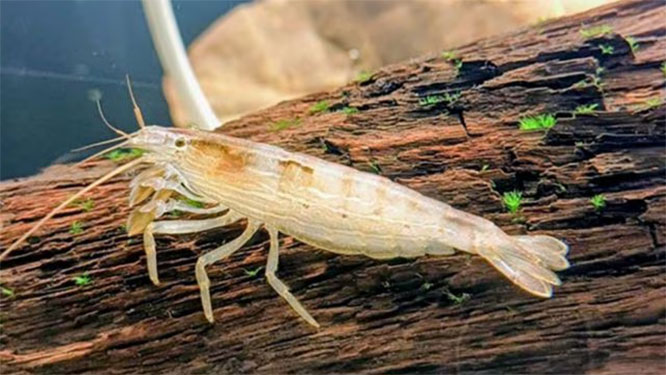
SHRIMP.jpg

Mangaluru, Dec 7: A rare bamboo shrimp has been rediscovered on mainland India more than 70 years after it was last reported, confirming for the first time the presence of Atyopsis spinipes in the country. The find was made by researchers from the Centre for Climate Change Studies at Sathyabama Institute of Science and Technology, Chennai, during surveys in Karnataka and Odisha.

The team — shrimp expert Dr S Prakash, PhD scholar K Kunjulakshmi, and Mangaluru-based researcher Maclean Antony Santos — combined field surveys, ecological assessments and DNA analysis to identify the elusive species. Their findings, published in Zootaxa, resolve decades of taxonomic confusion stemming from a 1951 report that misidentified the species as Atyopsis moluccensis without strong evidence.

The shrimp has now been confirmed at two locations: the Mulki–Pavanje estuary near Mangaluru and the Kuakhai River in Bhubaneswar. Historical specimens from the Andaman Islands, previously labelled as A. moluccensis, were also found to be misidentified and actually belong to A. spinipes.

The rediscovery began after an aquarium hobbyist in Odisha spotted a shrimp in 2022, prompting systematic surveys across Udupi, Karwar and Mangaluru. Four female specimens were collected in Mulki and one in Odisha, all genetically matching.

Researchers warn the species may exist in very small, vulnerable populations as freshwater habitats face increasing pressure from pollution, sand mining and infrastructure development. All verified specimens have been deposited with the Zoological Survey of India for future reference.

Comments

Add new comment

  • Coastaldigest.com reserves the right to delete or block any comments.
  • Coastaldigset.com is not responsible for its readers’ comments.
  • Comments that are abusive, incendiary or irrelevant are strictly prohibited.
  • Please use a genuine email ID and provide your name to avoid reject.