



Mohan Bhagwat Calls For Hindu Unity, Says Wild Dogs Can Destroy Lone Lion

Agencies
September 8, 2018

Chicago, Sept 9:Lamenting that the Hindus have been suffering for thousands of years, RSS chief Mohan Bhagwat has asked them to come together and organise themselves, saying "if a lion is alone, wild dogs can invade and destroy him".

Addressing a gathering of some 2,500 delegates attending the second World Hindu Congress, Mohan Bhagwat, however, said the Hindus have no aspiration of dominance.

"The Hindu society will prosper only when it works as a society," he said. "One of the key values to bring the whole world into a team is to have controlled ego and learn to accept the consensus. For example, Lord Krishna and Yudhishtra never contradicted each other," Mohan Bhagwat said.

Stating that it is very difficult to bring the Hindus together, he said: "Coming together of the Hindus is in itself a difficult thing."

"In initial days of our work, when our karkyakartas used to talk to Hindus about organising them, they used to say 'sher kabhi jhund mein nahi chalta' (a lion never walks in a group). But even that lion or a royal Bengal tiger who is the king of the jungle, if he is alone, wild dogs can invade and destroy him."

Mohan Bhagwat said a sense of idealism is good and described himself not as "anti-modern", but as "pro-future".

He sought to describe the Hindu dharma as "ancient and post-modern".

In this context, he alluded to the war and politics in the Hindu epic Mahabharat, and said politics cannot be conducted like a meditation session, and it should be politics.

"To work together, we have to accept the consensus. We are in a position to work together," Bhagwat said at the conference inspired by the Hindu principle 'Sumantrite Suvikrante' or 'Think Collectively, Achieve Valiantly'.

He urged the conference attendees to discuss and evolve a methodology to implement the idea of working collectively.

He said the Hindu society has the largest number of meritorious persons.

"But they never come together. Coming together of Hindus in itself is a difficult thing," he said.

He noted that Hindus had been suffering for thousands of years because they forgot to practice its basic principles and spiritualism.

"We have to come together," Mohan Bhagwat said, noting that all the people need not to register under one umbrella.

He noted that the Hindus had been suffering for thousands of years because they forgot to practice its basic principles and spiritualism.

Addressing the congress,' Mohan Bhagwat highlighted the need for such an action, and how Hindus should work together.

He said in Hindu dharma, even a pest is not killed, but controlled.

"Hindus don't live to oppose anybody. We even allow the pests to live. There are people who may oppose us. You have to tackle them without harming them," Mohan Bhagwat said.

Comments

FAIRMAN
 - 
Sunday, 9 Sep 2018

Bhagvatji  is just talking principles but not asking his Followers to follow what is taught in Hinduism,.


Secondly, if Hinduism has a valid basis, logics, they should come forward like Christians and Muslims and prove its ideologies to be acceptable in the international market, where still 6.5Billion people in the world are Non-Hindus,  which is about 10times Hindus live in India.


They should say what is HINDUTVA, does it go with science to be acceptable and comprehensive to accept it.


Now most of Hindus  contradict with its teachings. They are confused to accept it.

Unless you prove it is logically acceptable to prove, Hindus can not be united. If it is acceptable you don’t want worry to market it. It is the oldest culture than Christianity, it is not only not expanding, it is decaying.


Add new comment

  • Coastaldigest.com reserves the right to delete or block any comments.
  • Coastaldigset.com is not responsible for its readers’ comments.
  • Comments that are abusive, incendiary or irrelevant are strictly prohibited.
  • Please use a genuine email ID and provide your name to avoid reject.
News Network
December 15,2025

Mangaluru police have arrested a 27-year-old NRI on his return from Saudi Arabia in connection with an Instagram post allegedly containing derogatory and provocative remarks about the Hindu religion, officials said on Monday.

The accused, Abdul Khader Nehad, a resident of Ulaibettu in Mangaluru, was working in Saudi Arabia when the post was uploaded, police said.

A suo motu case was registered at the Bajpe police station on October 11 after an allegedly offensive post circulated from the Instagram account ‘team_sdpi_2025’. Police said the content was flagged for being provocative and derogatory in nature.

During the investigation, technical analysis traced the Instagram post to Nehad, who was residing abroad at the time, a senior police officer said. Based on these findings, a Look Out Circular (LOC) was issued against him.

On December 14, Nehad arrived from Saudi Arabia at Calicut International Airport in Kerala, where he was taken into custody on arrival. Police said further investigation is underway.

Comments

Add new comment

  • Coastaldigest.com reserves the right to delete or block any comments.
  • Coastaldigset.com is not responsible for its readers’ comments.
  • Comments that are abusive, incendiary or irrelevant are strictly prohibited.
  • Please use a genuine email ID and provide your name to avoid reject.
News Network
December 7,2025

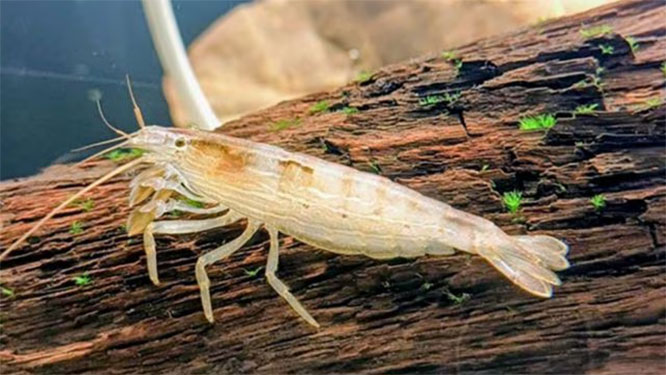
SHRIMP.jpg

Mangaluru, Dec 7: A rare bamboo shrimp has been rediscovered on mainland India more than 70 years after it was last reported, confirming for the first time the presence of Atyopsis spinipes in the country. The find was made by researchers from the Centre for Climate Change Studies at Sathyabama Institute of Science and Technology, Chennai, during surveys in Karnataka and Odisha.

The team — shrimp expert Dr S Prakash, PhD scholar K Kunjulakshmi, and Mangaluru-based researcher Maclean Antony Santos — combined field surveys, ecological assessments and DNA analysis to identify the elusive species. Their findings, published in Zootaxa, resolve decades of taxonomic confusion stemming from a 1951 report that misidentified the species as Atyopsis moluccensis without strong evidence.

The shrimp has now been confirmed at two locations: the Mulki–Pavanje estuary near Mangaluru and the Kuakhai River in Bhubaneswar. Historical specimens from the Andaman Islands, previously labelled as A. moluccensis, were also found to be misidentified and actually belong to A. spinipes.

The rediscovery began after an aquarium hobbyist in Odisha spotted a shrimp in 2022, prompting systematic surveys across Udupi, Karwar and Mangaluru. Four female specimens were collected in Mulki and one in Odisha, all genetically matching.

Researchers warn the species may exist in very small, vulnerable populations as freshwater habitats face increasing pressure from pollution, sand mining and infrastructure development. All verified specimens have been deposited with the Zoological Survey of India for future reference.

Comments

Add new comment

  • Coastaldigest.com reserves the right to delete or block any comments.
  • Coastaldigset.com is not responsible for its readers’ comments.
  • Comments that are abusive, incendiary or irrelevant are strictly prohibited.
  • Please use a genuine email ID and provide your name to avoid reject.
News Network
December 13,2025

New Delhi: School-going children are picking up drug and smoking habits and engaging in consumption of alcohol, with the average age of introduction to such harmful substances found to be around 13 years, suggesting a need for earlier interventions as early as primary school, a multi-city survey by AIIMS-Delhi said.

The findings also showed substance use increased in higher grades, with grade XI/XII students two times more likely to report use of substances when compared with grade VIII students. This emphasised the importance of continued prevention and intervention through middle and high school.

The study led by Dr Anju Dhawan of AIIMS's National Drug Dependence Treatment Centre, published in the National Medical Journal of India this month, looks at adolescent substance use across diverse regions.

The survey included 5,920 students from classes 8, 9, 11 and 12 in urban government, private and rural schools across 10 cities -- Bengaluru, Chandigarh, Delhi, Dibrugarh, Hyderabad, Imphal, Jammu, Lucknow, Mumbai, and Ranchi. The data were collected between May 2018 and June 2019.

The average age of initiation for any substance was 12.9 (2.8) years. It was lowest for inhalants (11.3 years) followed by heroin (12.3 years) and opioid pharmaceuticals (without prescription; 12.5 years).

Overall, 15.1 per cent of participants reported lifetime use, 10.3 per cent reported past year use, and 7.2 per cent reported use in the past month of any substance, the study found.

The most common substances used in the past year, after tobacco (4 per cent) and alcohol (3.8 per cent), were opioids (2.8 per cent), followed by cannabis (2 per cent) and inhalants (1.9 per cent). Use of non-prescribed pharmaceutical opioids was most common among opioid users (90.2 per cent).

On being asked, 'Do you think this substance is easily available for a person of your age' separately for each substance category, nearly half the students (46.3 per cent) endorsed that tobacco products and more than one-third of the students (36.5 per cent) agreed that a person of their age can easily procure alcohol products.

Similarly, for Bhang (21.9 per cent), ganja/charas (16.1 per cent), inhalants (15.2 per cent), sedatives (13.7 per cent), opium and heroin (10 per cent each), the students endorsed that these can be easily procured.

About 95 per cent of the children, irrespective of their grade, agreed with the statement that 'drug use is harmful'.

The rates of substance use (any) among boys were significantly higher than those of girls for substance use (ever), use in the past year and use in the past 30 days. Compared to grade VIII students, grade IX students were more likely, and grade XI/XII students were twice as likely to have used any substance (ever).

The likelihood of past-year use of any substance was also higher for grade IX students and for grade XI/XII students as compared to grade VIII students.

About 40 per cent of students mentioned that they had a family member who used tobacco or alcohol each. The use of cannabis (any product) and opioid (any product) by a family member was reported by 8.2 per cent and 3.9 per cent of students, respectively, while the use of other substances, such as inhalants/sedatives by family was 2-3 per cent, the study found.

A relatively smaller percentage of students reported use of tobacco or alcohol among peers as compared to among family members, while a higher percentage reported inhalants, sedatives, cannabis or opioid use among peers.

Children using substances (past year) compared to non-users reported significantly higher any substance use by their family members and peers.

There were 25.7 per cent students who replied 'yes' to the question 'conflicts/fights often occur in your family'. Most students also replied affirmatively to 'family members are aware of how their time is being spent' and 'damily members are aware of with whom they spend their time'.

Comments

Add new comment

  • Coastaldigest.com reserves the right to delete or block any comments.
  • Coastaldigset.com is not responsible for its readers’ comments.
  • Comments that are abusive, incendiary or irrelevant are strictly prohibited.
  • Please use a genuine email ID and provide your name to avoid reject.