Mukesh Ambani, the richest Asian, adds this much wealth while 128 tycoons lose $137 billion in 2018

Agencies
December 24, 2018

Dec 24: The world’s fastest growing source of mega-wealth hit a speed bump this year. The 128 people in Asia with enough money to crack the 500-member Bloomberg Billionaires Index lost a combined $137 billion in 2018, the first time wealth in the region has dropped since the ranking started in 2012.

Global trade tensions and concerns that stock valuations are too frothy hammered some of the area’s biggest fortunes. China’s tech sector was hit particularly hard, while India and South Korea weren’t spared. The declines occurred even as banks and money managers aggressively stepped up efforts to cater to Asia’s richest. Asian equities retreated again on Friday, with benchmarks slipping in Japan, China and Australia.

“Difficult stock market conditions this year and the uncertainty of the trade tensions likely have been a challenge to many businesses,” said Philip Wyatt, a Hong Kong-based economist for UBS Group AG, who doesn’t see the downdraft continuing through 2019 or significantly reducing the ranks of billionaires. Conditions are actually ripe for the region to create more of the mega rich as new technologies attract private capital and government support, he said.

For now, though, fear in the market is trampling fortunes. More than two-thirds of the 40 Chinese on the Bloomberg ranking saw their wealth dwindle. Wanda Group’s Wang Jianlin, whose property conglomerate is selling assets to cut debt, lost $10.8 billion, the most of anyone in Asia. JD.com founder Richard Liu, who was arrested in the U.S. in August for less than 24 hours on suspicion of rape before being released, took the heaviest losses in percentage terms, with his wealth cut almost in half to $4.8 billion. Liu won’t be charged, authorities in Minneapolis said Friday.

India’s 23 richest people, meanwhile, saw $21 billion vanish. Lakshmi Mittal, who controls the world’s largest steelmaker, led the way, losing $5.6 billion, or 29 percent of his net worth, followed by Dilip Shanghvi, the founder of Sun Pharmaceutical Industries, the world’s fourth-largest generic drugmaker, whose wealth declined $4.6 billion.

South Korea’s tycoons didn’t escape the carnage either. The market rout lopped $17.2 billion from the fortunes of the country’s seven richest people. The father and son who control Samsung Electronics, Lee Kun-Hee and son Jay Y Lee, account for more than a third of that decline. In Hong Kong, titans of real estate took a big hit. Li Ka-shing, who retired as chairman of CK Hutchison and CK Asset in March, lost $6 billion in 2018, while Lee Shau Kee, the city’s second-richest person, ends the year about $3.3 billion poorer. There were still plenty of winners to emerge from the wreckage of 2018.

Lei Jun, the chairman of Chinese smartphone maker Xiaomi Corp., added $8.7 billion, with a July initial public offering catapulting him into the Top 100 of the Bloomberg index after he started the year outside the ranking. The IPO also turned three of his co-founders into billionaires. Japan’s richest person, Tadashi Yanai, added $6.3 billion to his fortune as shares of Fast Retailing Co., the world’s largest apparel retailer, surged 30 percent. India’s Mukesh Ambani added $4 billion to his fortune and eclipsed Alibaba Group Holding Ltd.’s Jack Ma as Asia’s richest person, thanks in part to the performance of Reliance Industries Ltd. Among the winners, the Bloomberg Billionaires Index added new members in technology, consumer, biotech and pharmaceuticals.

E-commerce platform Pinduoduo Inc.’s Colin Huang was the second-largest winner in the region, adding $6.6 billion to his net worth. China’s third largest online retailer was targeted by short seller Blue Orca Capital in November for overstating financials, though its shares traded higher that week as the company denied the accusation and posted strong growth in sales. While most of the newcomers to Asia’s ranks of billionaires are from China, there are five from Korea and four from Japan. Two new billionaires were identified in Southeast Asia. The household “must-have” fish sauce condiment saw Nguyen Dang Quang, chairman of Vietnam’s consumer giant Masan Group, join the ultra-rich club. Indonesian real estate mogul Donald Sihombing, who works 20 hours a day, also joined the list. At least six Asian billionaires died, leaving behind a total of $29 billion.

Walter Kwok, the former chairman of Hong Kong’s biggest real estate developer Sun Hung Kai Properties Ltd. who was worth $9.1 billion, died in October at the age of 68. His two sons inherited a $3 billion stake from the company, according to regulatory filings. Vichai Srivaddhanaprabha, the founder of Thailand’s duty-free giant King Power Group, was killed in a helicopter crash in October. He owned English Premier League team Leicester City.

Comments

shaji
 - 
Wednesday, 26 Dec 2018

Ambani, Adani etc are earning billions mainly due to support from the Govt.    These looters are free to do any cheating / malpractice etc etc.   they are looting money from common indian and increasing their wealth which they will take with them at the time of death.  

Add new comment

  • Coastaldigest.com reserves the right to delete or block any comments.
  • Coastaldigset.com is not responsible for its readers’ comments.
  • Comments that are abusive, incendiary or irrelevant are strictly prohibited.
  • Please use a genuine email ID and provide your name to avoid reject.
News Network
December 16,2025

jordan.jpg

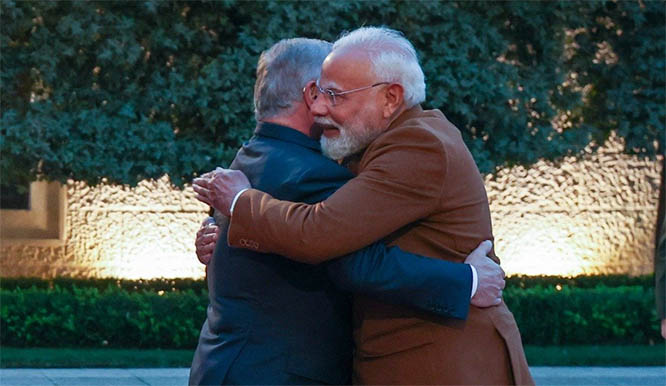
Prime Minister Narendra Modi on Monday held talks with Jordan’s King Abdullah II in Amman, during which the two leaders discussed ways to further strengthen bilateral relations, with the Prime Minister outlining an eight-point vision covering key areas of cooperation.

Describing the meeting as “productive”, PM Modi said he shared a roadmap focused on trade and economy, fertilisers and agriculture, information technology, healthcare, infrastructure, critical and strategic minerals, civil nuclear cooperation, and people-to-people ties.

In a post on social media platform X, the Prime Minister praised King Abdullah II’s personal commitment to advancing India–Jordan relations, particularly as both countries mark the 75th anniversary of the establishment of diplomatic ties this year.

“Held productive discussions with His Majesty King Abdullah II in Amman. His personal commitment towards vibrant India-Jordan relations is noteworthy. This year, we are celebrating the 75th anniversary of our bilateral diplomatic relations,” PM Modi said.

The meeting took place at the Al Husseiniya Palace, where the two leaders also exchanged views on regional and global issues of mutual interest. According to the Ministry of External Affairs (MEA), both sides agreed to further deepen cooperation in areas including trade and investment, defence and security, counter-terrorism and de-radicalisation, fertilisers and agriculture, infrastructure, renewable energy, tourism, and heritage.

The MEA said both leaders reaffirmed their united stand against terrorism.

PM Modi arrived in Amman earlier on Monday and was received by Jordanian Prime Minister Jafar Hassan, who accorded him a formal welcome. Following the talks, King Abdullah II hosted a banquet dinner in honour of the Prime Minister, reflecting the warmth of bilateral ties.

Jordan is the first leg of PM Modi’s three-nation tour. From Amman, the Prime Minister will travel to Ethiopia at the invitation of Prime Minister Abiy Ahmed Ali, marking his first official visit to the African nation. The tour will conclude with a visit to Oman.

Comments

Add new comment

  • Coastaldigest.com reserves the right to delete or block any comments.
  • Coastaldigset.com is not responsible for its readers’ comments.
  • Comments that are abusive, incendiary or irrelevant are strictly prohibited.
  • Please use a genuine email ID and provide your name to avoid reject.
News Network
December 20,2025

train.jpg

At least seven elephants were killed and one calf injured after a herd collided with the Sairang-New Delhi Rajdhani Express in Assam's Hojai on Saturday morning, leading to disruption of rail services. 

The Sairang-New Delhi Rajdhani Express struck a herd of elephants, resulting in the derailment of the locomotive and five coaches. No passenger casualties or injuries were reported, officials said.

The New Delhi-bound train met with the accident around 2.17 am, PTI reported. The Sairang-New Delhi Rajdhani Express connects Mizoram's Sairang (near Aizawl) to Anand Vihar Terminal (Delhi). 

Railway has issued helpline numbers at the Guwahati Railway Station:-

•    0361-2731621
•    0361-2731622
•    0361-2731623

The accident site is located about 126 km from Guwahati. Following the incident, accident relief trains and railway officials rushed to the spot to initiate rescue operations.

Train Services Disrupted

Sources said that due to the derailment and elephant body parts scattered on the tracks, train services to Upper Assam and other parts of the Northeast were affected.

Passengers from the affected coaches were temporarily accommodated in vacant berths available in other coaches of the train. Once the train reaches Guwahati, additional coaches will be attached to accommodate all passengers, after which the train will resume its onward journey.

The incident occurred at a location that is not a designated elephant corridor. The loco pilot, upon spotting the herd on the tracks, applied emergency brakes. Despite this, the elephants dashed into the train, leading to the collision and derailment.

Last month, an elephant was killed after being hit by a train in Dhupguri in West Bengal's Jalpaiguri district. The incident took place on November 30. 

The adult elephant was killed on the spot, and a calf was discovered lying injured beside the tracks. 

Over 70 Elephants Killed In Train Collisions Over Last 5 Years

At least 79 elephants have died in train collisions across the country in the last five years, the Environment Ministry had informed Parliament in August.

In a written reply in the Lok Sabha, Minister of State for Environment Kirti Vardhan Singh had said the figure is based on reports from state governments and Union Territory administrations for the period 2020-21 to 2024-25.

He said that the ministry does not maintain consolidated data on the deaths of other wild animals on railway tracks, including in designated elephant corridors.

Singh confirmed that three elephants, including a mother and her calf, were killed on July 18 this year after being hit by a speeding express train on the Kharagpur-Tatanagar section in West Bengal's Paschim Midnapore district. The incident took place near Banstala between Jhargram and Banstala stations.

The minister said several measures have been taken jointly by the Environment Ministry and the Railways to prevent such accidents.

These include imposing speed restrictions in elephant habitats, pilot projects such as seismic sensor-based detection of elephants near tracks and construction of underpasses, ramps and fencing at vulnerable points.

The Wildlife Institute of India, in consultation with the ministry and other stakeholders, has also issued guidelines titled 'Eco-friendly Measures to Mitigate Impacts of Linear Infrastructure' to help agencies design railways and other projects in ways that reduce human-animal conflicts.

Singh added that capacity-building workshops were conducted for railway officials at the Wildlife Institute of India in 2023 and 2024 to raise awareness on elephant conservation and protection.

A detailed report titled 'Suggested Measures to Mitigate Elephant & Other Wildlife Train Collisions on Vulnerable Railway Stretches in India' had also been prepared after surveys across 127 railway stretches covering 3,452 km.

Of these, 77 stretches spanning 1,965 km in 14 states were prioritised for mitigation, with site-specific interventions suggested. 

Comments

Add new comment

  • Coastaldigest.com reserves the right to delete or block any comments.
  • Coastaldigset.com is not responsible for its readers’ comments.
  • Comments that are abusive, incendiary or irrelevant are strictly prohibited.
  • Please use a genuine email ID and provide your name to avoid reject.
News Network
December 19,2025

Saudi Arabia has abolished fees on expatriate workers employed in licensed industrial establishments, signaling a strong push to empower national factories and enhance the Kingdom’s global industrial competitiveness. The move reflects the leadership’s commitment to building a sustainable and resilient industrial economy under Saudi Vision 2030.

The decision was approved by the Council of Ministers, chaired by Crown Prince and Prime Minister Mohammed bin Salman, following a recommendation from the Council of Economic and Development Affairs (CEDA). It forms part of a broader strategy to support, modernize, and strengthen the industrial sector.

By removing fees on foreign workers, industrial establishments gain greater operational flexibility and relief from financial pressures. This is expected to help factories expand production, improve efficiency, and compete more effectively in international markets, while reinforcing long-term sustainability.

The initiative aligns closely with Saudi Vision 2030, which identifies industry as a key pillar of economic diversification. A competitive and resilient industrial base is viewed as essential for driving innovation, attracting investment, and sustaining long-term economic growth.

Overall, the fee exemption underscores the Kingdom’s commitment to creating a supportive environment for industrial development and ensuring that Saudi factories remain globally competitive and capable of leading the nation’s economic transformation.

Comments

Add new comment

  • Coastaldigest.com reserves the right to delete or block any comments.
  • Coastaldigset.com is not responsible for its readers’ comments.
  • Comments that are abusive, incendiary or irrelevant are strictly prohibited.
  • Please use a genuine email ID and provide your name to avoid reject.