This septuagenarian 'Green-Revolutionary' leads way with sustainable model farming

Anusha N Bhat | coastaldigest.com
February 2, 2019

At 73-years of age, Mahalinga Naik breaks into a smile, when residents of Amai village at Bantwal taluk point towards him as the local 'Green-Revolutionary'. For a man who never received formal education, Naik has been solely credited for creating a sustainable eco-friendly farmland, which once was barren land and could not even bear a sapling.

At a hillock farmland in Adyanadka, approximately 52 kilometre from the Mangalore city, a two-acre land boasts of 200 banana trees, 300 areca nut trees, 75 coconut palm trees, along with different types of cocoa, pepper vines. The layout of the farmland is not only systematic but does not leave any loose end for wastage. "From mini-irrigational system, conservation of water, to harvesting organic manure, the farmland is equipped to look into each aspect of traditional farm land," says famed Editor of Adike Patrike Shree Padre.

While today the agricultural revolution at Adyanadka has awed several agriculturists, in fact it has even fetched Mahalinga Naik with awards including ‘Krushi Panditha’ conferred by the Karnataka government in 2010. Recently, he was honoured with ‘Mangalore Press Club Award 2018’. Shree Padre has also released a small booklet on Naik by the title ‘Guddada Melina Ekvyakti Sainya’.

It was about forty years ago, when Naik was just another sharecropper at a land owned by one Mahabala Bhat. Earning a daily wage between Rs 1.50 to Rs 5, Naik managed his household. However, pleased with his dedication for the farmland, in 1979, Bhat gave Naik a two-acre land from his property.

“I was overjoyed with emotions, and swiftly was able to build a humble hut for my family. But the land had no water source for cultivation, we had to walk for about a kilometre for it and the effort was futile. I realised that to take care of my farmland and feed my family, I had to do something,” he says.

For the need of drawing water, Naik eventually decided to carve a ‘Suranga’ (tunnel) to naturally draw water for his cultivation. However, given his financial condition, Naik says he was unable to hire labourers, therefore he decided to use his part time from agriculture to dig the Suranga.

Each day, Naik would return from cultivation and then religiously start digging ‘Suranga’ to find the source of water. “My search for water was more instinctive than scientific. I started digging at places approximately about 100 feet each, where I thought I could find water, but was repeatedly disappointed,” he says.

In the pursuit for water, Naik says he has been mocked and even called names by locals for wasting his time. “I didn’t mind being called names, but I continued my effort for about 6-7 hours, day or night. At times I had to either crawl or squeeze myself between tiny spaces to get through these tunnels and excavate soil. My wife would not be happy, when she would come searching late at night,” he says.

For close to five-years, Naik failed in his endeavour. “Except rainy season, I never gave up on the excavation work. But by then, I had dug about four tunnels and not coming face to face with water was a bit unsettling,” he says.

It was only when Naik struck the sixth Suranga, in a bit further location that Naik felt some wetness in soil, which was an indication for the presence of water in the area.

With the new found development, Naik’s optimism had no bounds, he immediately went further to a higher topography and aggressively dug to find water and he did.  “It made me confident to probe further and I dug another one for domestic consumption,” he says.

To boost the texture and moisture of the soil, Naik also created small ponds across several places in the farmland which would capture rainwater, which Naik had learnt in an agriculture workshop. Naik even placed close to over 5,000 laterite stones to build retaining walls and prevent soil erosion.

Slowly the efforts paid-off, the same land which earlier harboured fragmented grass patches, eventually saw the growth of banana, cocoa, pepper vines, coconuts and areca-nuts. Besides, the farmland also hosts eight to ten honeycombs, alongside a vegetable garden where he grows ladies finger, cucumber, brinjal and so on.

Naik’s farm has become a must see model-farmland and has over 500 visitors a year. “When people visit, I feel very happy,” says Naik.

Sticking to his principle of Hasige Iddastu Kaalu Chachu (Being content with what one has), Naik says he would use only one acre of land for cultivation. “In another, I have built a house and want the same land to grow as natural forest so that future generation can benefit from it. If my experience can help others learn to make profit out of farming, then that would make me content,” he says.


Comments

Ann Pinto
 - 
Thursday, 9 May 2019

Wonderful....for sharing your story on how it’s possible to revive water and increase the water table and make a living too..

SD
 - 
Monday, 4 Feb 2019

Well done, Mr. Naik! Very happy that all your hard work paid off.

Add new comment

  • Coastaldigest.com reserves the right to delete or block any comments.
  • Coastaldigset.com is not responsible for its readers’ comments.
  • Comments that are abusive, incendiary or irrelevant are strictly prohibited.
  • Please use a genuine email ID and provide your name to avoid reject.
News Network
January 23,2026

Karnataka Governor Thaawarchand Gehlot read only three lines from the 122-paragraph address prepared by the Congress-led state government while addressing the joint session of the Legislature on Thursday, effectively bypassing large sections critical of the BJP-led Union government.

The omitted portions of the customary Governor’s address outlined what the state government described as a “suppressive situation in economic and policy matters” under India’s federal framework. The speech also sharply criticised the Centre’s move to replace the Mahatma Gandhi National Rural Employment Guarantee Act (MGNREGA) with the Viksit Bharat–Guarantee for Rozgar and Ajeevika Mission (Gramin) Act, commonly referred to as the VB-GRAM (G) Act.

Governor Gehlot had earlier conveyed his objection to several paragraphs that were explicitly critical of the Union government. On Thursday, he confined himself to the opening lines — “I extend a warm welcome to all of you to the joint session of the State legislature. I am extremely pleased to address this august House” — before jumping directly to the concluding sentence of the final paragraph.

He ended the address by reading the last line of paragraph 122: “Overall, my government is firmly committed to doubling the pace of the State’s economic, social and physical development. Jai Hind — Jai Karnataka.”

According to the prepared speech, the Karnataka government demanded the scrapping of the VB-GRAM (G) Act, describing it as “contractor-centric” and detrimental to rural livelihoods, and called for the full restoration of MGNREGA. The state government argued that the new law undermines decentralisation, weakens labour protections, and centralises decision-making in violation of constitutional norms.

Key points from the unread sections of the speech:

•    Karnataka facing a “suppressive” economic and policy environment within the federal system

•    Repeal of MGNREGA described as a blow to rural livelihoods

•    VB-GRAM (G) Act accused of protecting corporate and contractor interests

•    New law alleged to weaken decentralised governance

•    Decision-making said to be imposed by the Centre without consulting states

•    Rights of Adivasis, women, backward classes and agrarian communities curtailed

•    Labourers allegedly placed under contractor control

•    States facing mounting fiscal stress due to central policies

•    VB-GRAM (G) Act accused of enabling large-scale corruption

Comments

Add new comment

  • Coastaldigest.com reserves the right to delete or block any comments.
  • Coastaldigset.com is not responsible for its readers’ comments.
  • Comments that are abusive, incendiary or irrelevant are strictly prohibited.
  • Please use a genuine email ID and provide your name to avoid reject.
coastaldigest.com news network
January 19,2026

badriya.jpg

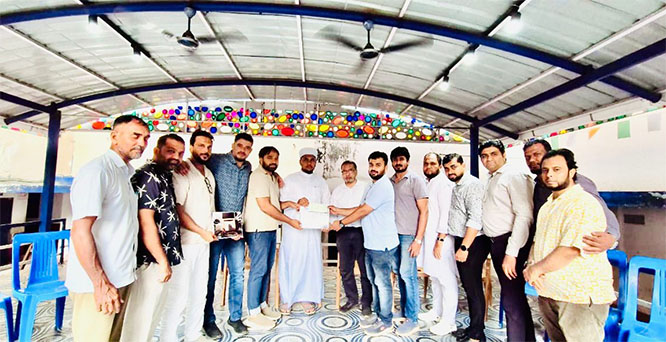
Mangaluru: The Phase I project of Badria Vision 2028 was formally launched at a ceremony held at the Badria Campus on January 17, marking an important step in the institution’s long-term development roadmap.

The programme was attended by P.B. Abdul Hameed, Secretary of the MEA, and P.C. Hasir, Correspondent of the MEA, who presided over the event and underscored the institution’s commitment to growth and academic excellence.

Office-bearers of the Badria Alumni Association were present in large numbers, including A.K. Sajid (President), Shamsuddin and S.M. Farooq (Vice-Presidents), Shaheed (General Secretary), and Khaleel (Treasurer), reflecting strong alumni engagement in the initiative.

The gathering was blessed by Sayyid Shamsuddeen Basith Thangal Kukkaje, Qateeb of Zeenat Yatheem Bakshi, who led a special dua seeking divine guidance and success for the project.

The ceremony also witnessed the participation of prominent alumnus and local corporate professional Abdul Latheef, along with alumni members Naushad, Kalandar, Safwan, members of the core committee, and several other former students.

A key moment of the event was the formal handover of a cheque to Ameen Woodland Architect, signalling the immediate commencement of construction work under Phase I of the project.

Organisers said the launch of Phase I reflects a shared vision, institutional unity, and collective resolve to realise the objectives of Badria Vision 2028.

Comments

Add new comment

  • Coastaldigest.com reserves the right to delete or block any comments.
  • Coastaldigset.com is not responsible for its readers’ comments.
  • Comments that are abusive, incendiary or irrelevant are strictly prohibited.
  • Please use a genuine email ID and provide your name to avoid reject.
coastaldigest.com news network
January 19,2026

rizwanzameer.jpg

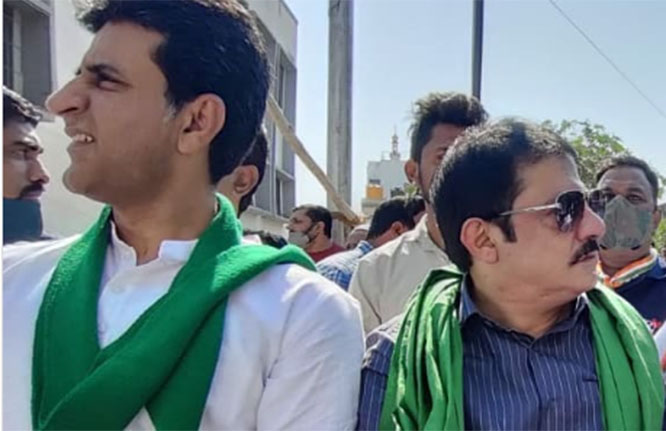
Bengaluru: As the dust settles on the recent legislative session, the corridors of Vidhana Soudha are buzzing with more than just policy talk. A high-stakes game of political musical chairs has begun, exposing a deepening rift within the Congress party’s Muslim leadership as a major Cabinet reshuffle looms.

With the party hierarchy signaling a "50% refresh" to gear up for the 2028 Assembly elections, the race to fill three projected Muslim ministerial berths has transformed from a strategic discussion into an all-out turf war.

The "Star Son" Spark

The internal friction turned public this week following provocative remarks by Zaid Khan, actor and son of Wakf Minister Zameer Ahmed Khan. Zaid’s claim—that his father "helped" secure a ticket for Shivajinagar MLA Rizwan Arshad in 2023—has acted as a lightning rod for resentment.

Rizwan’s camp was quick to fire back, dismissing the comment as a desperate attempt by Zameer to manufacture seniority. "Rizwan’s political pedigree was forged in the NSUI and Youth Congress long before Zameer even stepped into the party," a supporter noted, highlighting Rizwan’s tenure as an AICC secretary and his two-term presidency of the State Youth Congress.

A Tale of Two Loyalists

While both Zameer Ahmed Khan and Rizwan Arshad are staunch allies of Chief Minister Siddaramaiah and represent Bengaluru strongholds, their political DNA could not be more different:

•    Zameer Ahmed Khan: A four-time MLA who crossed over from JD(S) in 2018. Known for his "overzealous" and often polarizing outreach during communal flashpoints—from the DJ Halli riots to the recent Wakf land notice controversy—his style has frequently left the Congress high command in a state of "discomfort."

•    Rizwan Arshad: A homegrown organizational man. Seen as a "quiet performer," Arshad represents the sophisticated, moderate face of the party, preferred by those who find Zameer’s brand of politics too volatile.

The Outsiders Looking In

The bickering isn't limited to a duo. The "Beary" community, represented by leaders like N A Haris and Saleem Ahmed, is demanding its pound of flesh. Saleem Ahmed, the Chief Whip in the Legislative Council, has dropped the veil of diplomacy, openly declaring his ministerial aspirations.

"I was the only working president not included in the Cabinet last time," Saleem noted pointedly, signaling that the "loyalty quota" is no longer enough to keep the peace.

As Chief Minister Siddaramaiah prepares to finalize the list, he faces a delicate balancing act: rewarding the aggressive grassroots mobilization of Zameer’s camp without alienating the organizational stalwarts and minority sub-sects who feel increasingly sidelined by the "Chamarajpet-Shivajinagar" binary.

Comments

Add new comment

  • Coastaldigest.com reserves the right to delete or block any comments.
  • Coastaldigset.com is not responsible for its readers’ comments.
  • Comments that are abusive, incendiary or irrelevant are strictly prohibited.
  • Please use a genuine email ID and provide your name to avoid reject.