



'Bangladeshis are like Indians, originally Hindus'

News Network
January 1, 2020

Kolkata, Jan 1: US-based Bangladeshi author and playwright Sharbari Zohra Ahmed feels that the people of the country of her origin are more alike than different from Indians as they were originally Hindus.
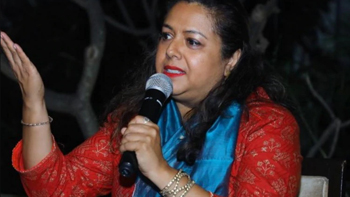
But Bangladeshis now want to forget their Hindu roots, said the author, who was born in Dhaka and moved to the United States when she was just three weeks old.

Ahmed, who is the co-writer of the Season 1 of 'Quantico', a popular American television drama thriller series starring Priyanka Chopra, rues that her identity as a Bengali is getting lost in Bangladesh due to the influence of right-wing religious groups.

"How can Bangladesh deny its Hindu heritage? We were originally Hindus. Islam came later," Ahmed said while speaking to PTI here recently.

"The British exploited us, stole from us and murdered us," she said about undivided India, adding that the colonialists destroyed the thriving Muslin industry in Dhaka.

Ahmed said the question of her belief and identity in Bangladesh, where the state religion is Islam, has prompted her to write her debut novel 'Dust Under Her Feet'.

The British exploitation of India and the country's partition based on religion has also featured in her novel in a big way.

Ahmed calls Winston Churchill, the British prime minister during World War II, a "racist".

"He took the rice from Bengal to feed his soldiers and didn't care when he was told about that.

"During my research, I learnt that two million Bengalis died in the artificial famine that was created by him. When people praise Churchill, it is like praising Hitler to the Jews. He was horrible," she said.

The author said her novel is an effort to tell the readers what actually happened.

"Great Britain owes us three trillion dollars. You have to put in inflation. Yet, they (the British) still have a colonial mentality and white colonisation is on the rise again," Ahmed, who was in the city to promote her novel, said.

The novel is based in Kolkata, then Calcutta, during World War II when American soldiers were coming to the city in large numbers.

The irony was that while these American soldiers were nice to the locals, they used to segregate the so-called "black" soldiers, the novelist said.

"Calcutta was a cosmopolitan and the rest of the world needs to know how the city's people were exploited, its treasures looted, people divided and hatred instilled in them," she said.

"Kolkata was my choice of place for my debut novel since my mother was born here. She witnessed the 'Direct Action Day' when she was a kid and was traumatised. She saw how a Hindu was killed by Muslims near her home in Park Circus area (in the city)," Ahmed said.

Direct Action Day, also known as the Great Calcutta Killings, was a massive communal riot in the city on August 16, 1946 that continued for the next few days.

Thousands of people were killed in the violence that ultimately paved the way for the partition of India.

'Dust Under Her Feet' is set in the Calcutta of the 1940s and Ahmed in her novel examines the inequities wrought by racism and colonialism.

The story is of young and lovely Yasmine Khan, a doyenne of the nightclub scene in Calcutta.

When the US sets up a large army base in the city to fight the Japanese in Burma, Yasmine spots an opportunity.

The nightclub is where Yasmine builds a family of singers, dancers, waifs and strays.

Every night, the smoke-filled club swarms with soldiers eager to watch her girls dance and sing.

Yasmine meets American soldier Lt Edward Lafaver in the club and for all her cynicism, finds herself falling helplessly for a married man who she is sure will never choose her over his wife.

Outside, the city lives in constant fear of Japanese bombardment at night. An attack and a betrayal test Yasmine's strength and sense of control and her relationship with Edward.

Ahmed teaches creative writing in the MFA program in Manhattanville College and is artist-in-residence in Sacred Heart University's graduate film and television programme.


Comments

abdullah
 - 
Wednesday, 1 Jan 2020

Is she trying to take over Shoorpanakhi Taslim Nasreen? 

Add new comment

  • Coastaldigest.com reserves the right to delete or block any comments.
  • Coastaldigset.com is not responsible for its readers’ comments.
  • Comments that are abusive, incendiary or irrelevant are strictly prohibited.
  • Please use a genuine email ID and provide your name to avoid reject.
News Network
December 19,2025

Mangaluru: In a decisive move to tackle the city’s deteriorating sanitation infrastructure, the Mangaluru City Corporation (MCC) has announced a massive ₹1,200 crore action plan to overhaul its underground drainage (UGD) network.

The initiative, spearheaded by Deputy Commissioner and MCC Administrator Darshan HV, aims to bridge "missing links" in the current system that have left residents grappling with overflowing sewage and environmental hazards.

The Breaking Point

The announcement follows a high-intensity phone-in session on Thursday, where the DC was flooded with grievances from frustrated citizens. Residents, including Savithri from Yekkur, described a harrowing reality: raw sewage from apartments leaking into stormwater drains, creating a "permanent stink" and turning residential zones into mosquito breeding grounds.

"We are facing immense difficulties due to the stench and the health risks. Local officials have remained silent until now," one resident reported during the session.

The Strategy: A Six-Year Vision

DC Darshan HV confirmed that the proposed plan is not a temporary patch but a comprehensive six-year roadmap designed to accommodate Mangaluru’s projected population growth. Key highlights of the plan include:

•    Infrastructure Expansion: Laying additional pipelines to connect older neighborhoods to the main grid.

•    STP Crackdown: Stricter enforcement of Sewage Treatment Plant (STP) regulations. While new apartments are required to have functional STPs, many older buildings lack them entirely, and several newer units are reportedly non-functional.

•    Budgetary Push: The plan has already been discussed with the district in-charge minister and the Secretary of the Urban Development Department. It is slated for formal presentation in the upcoming state budget.

Comments

Add new comment

  • Coastaldigest.com reserves the right to delete or block any comments.
  • Coastaldigset.com is not responsible for its readers’ comments.
  • Comments that are abusive, incendiary or irrelevant are strictly prohibited.
  • Please use a genuine email ID and provide your name to avoid reject.
News Network
December 7,2025

SHRIMP.jpg

Mangaluru, Dec 7: A rare bamboo shrimp has been rediscovered on mainland India more than 70 years after it was last reported, confirming for the first time the presence of Atyopsis spinipes in the country. The find was made by researchers from the Centre for Climate Change Studies at Sathyabama Institute of Science and Technology, Chennai, during surveys in Karnataka and Odisha.

The team — shrimp expert Dr S Prakash, PhD scholar K Kunjulakshmi, and Mangaluru-based researcher Maclean Antony Santos — combined field surveys, ecological assessments and DNA analysis to identify the elusive species. Their findings, published in Zootaxa, resolve decades of taxonomic confusion stemming from a 1951 report that misidentified the species as Atyopsis moluccensis without strong evidence.

The shrimp has now been confirmed at two locations: the Mulki–Pavanje estuary near Mangaluru and the Kuakhai River in Bhubaneswar. Historical specimens from the Andaman Islands, previously labelled as A. moluccensis, were also found to be misidentified and actually belong to A. spinipes.

The rediscovery began after an aquarium hobbyist in Odisha spotted a shrimp in 2022, prompting systematic surveys across Udupi, Karwar and Mangaluru. Four female specimens were collected in Mulki and one in Odisha, all genetically matching.

Researchers warn the species may exist in very small, vulnerable populations as freshwater habitats face increasing pressure from pollution, sand mining and infrastructure development. All verified specimens have been deposited with the Zoological Survey of India for future reference.

Comments

Add new comment

  • Coastaldigest.com reserves the right to delete or block any comments.
  • Coastaldigset.com is not responsible for its readers’ comments.
  • Comments that are abusive, incendiary or irrelevant are strictly prohibited.
  • Please use a genuine email ID and provide your name to avoid reject.
News Network
December 16,2025

bengal.jpg

The deletion of over 58 lakh names from West Bengal’s draft electoral rolls following a Special Intensive Revision (SIR) has sparked widespread concern and is likely to deepen political tensions in the poll-bound state.

According to the Election Commission, the revision exercise has identified 24 lakh voters as deceased, 19 lakh as relocated, 12 lakh as missing, and 1.3 lakh as duplicate entries. The draft list, published after the completion of the first phase of SIR, aims to remove errors and duplication from the electoral rolls.

However, the scale of deletions has raised fears that a large number of eligible voters may have been wrongly excluded. The Election Commission has said that individuals whose names are missing can file objections and seek corrections. The final voter list is scheduled to be published in February next year, after which the Assembly election announcement is expected. Notably, the last Special Intensive Revision in Bengal was conducted in 2002.

The development has intensified the political row over the SIR process. Chief Minister Mamata Banerjee and her Trinamool Congress have strongly opposed the exercise, accusing the Centre and the Election Commission of attempting to disenfranchise lakhs of voters ahead of the elections.

Addressing a rally in Krishnanagar earlier this month, Banerjee urged people to protest if their names were removed from the voter list, alleging intimidation during elections and warning of serious consequences if voting rights were taken away.

The BJP, meanwhile, has defended the revision and accused the Trinamool Congress of politicising the issue to protect what it claims is an illegal voter base. Leader of the Opposition Suvendu Adhikari alleged that the ruling party fears losing power due to the removal of deceased, fake, and illegal voters.

The controversy comes amid earlier allegations by the Trinamool Congress that excessive work pressure during the SIR led to the deaths by suicide of some Booth Level Officers (BLOs), for which the party blamed the Election Commission. With the draft list now out, another round of political confrontation appears imminent.

As objections begin to be filed, the focus will be on whether the correction mechanism is accessible, transparent, and timely—critical factors in ensuring that no eligible voter is denied their democratic right ahead of a crucial election.

Comments

Add new comment

  • Coastaldigest.com reserves the right to delete or block any comments.
  • Coastaldigset.com is not responsible for its readers’ comments.
  • Comments that are abusive, incendiary or irrelevant are strictly prohibited.
  • Please use a genuine email ID and provide your name to avoid reject.
