Killing of Iran's top nuclear scientist, aimed probably at making Tehran retaliate

News Network
December 1, 2020

Nicosia, Dec 1: Mohsen Fakhrizadeh, an Iranian Professor of physics who was the brains behind the Project Amad, Tehran's alleged covert programme for building a nuclear bomb, was killed near the city of Absard, 50 miles from Tehran last Friday in an ambush, by highly trained assassins, believed to be members of Mossad, the Israeli spy agency.

It is unclear how the attack actually took place, as a press report speaks about 12 assassins who exploded a Nissan car when Fakhrizadeh's convoy of three bulletproof cars was passing, and then the gunmen opened fire on the cars, killing the nuclear scientist and his guards. However, Iran's semi-official Fars news agency, quoting Iranian officials, says the assassination was carried out from distance with a remote-controlled automatic machinegun. "No human assets were present at the scene of the assassination and the shooting was carried out only with automatic weapons, " it claimed.

Iran immediately accused Israel of being behind Fakhrizadeh's death and for good reason. Since 2010 Israel had carried out 4 assassinations of scientists who were believed to be involved in Iran's nuclear programme and caused explosions at various facilities associated with the programme. As has been its usual practice, Israel did not publicly admit that it was behind the killings.

It should be mentioned that in 2018, Fakhrizadeh was named by Israeli Prime Minister Benjamin Netanyahu who said that secret documents concerning Iran's nuclear programme, which were stolen by Israel, showed that Fakhrizadeh secretly continued Project Amad.

Ayatollah Ali Khamenei, Iran's supreme leader, promised to retaliate for the killing of the prominent scientist, while President Hassan Rouhani declared that Iran would retaliate for the murder, but pointed out that it would do so at a time of its choosing. "In due time, they will answer for this crime," he said, adding that the assassination shows Iran's enemies despair and depth of their hatred".

An immediate response came from the Iranian Parliament which on Sunday approved a vote to raise the rate of uranium enrichment to 20% (from 4%) and gradually withdraw from the Joint Comprehensive Action Plan (Iran nuclear deal).

BBC reports that John Brennan, former head of the Central Intelligence Agency (CIA) said the killing of the scientist was a "criminal" and "highly reckless" act that "risks lethal retaliation and a new round of regional conflict".

However, although the Israeli government did not publicly admit that the assassination of the top Iranian nuclear scientist was its own doing, a senior Israeli official, speaking on condition of anonymity, told the New York Times on Sunday that the world should "thank Israel for killing the father of Iran's nuclear programme" and added that Israel would keep acting to curtail Iran's nuclear ambitions.

Many analysts believe that US President Donald Trump gave the green light to the Israelis to kill Fakhrizadeh, pointing out that Trump recently sought options for a military strike on Iran's nuclear programme, but was dissuaded from doing so by his senior advisers.

Amos Yadlin, Chairman of the Institute for National Security Studies of Israel told the Army Radio that whoever operated in Tehran "has one eye, maybe two on Washington. If the Iranians respond, it will enable President Donald Trump to order his generals to act against them. And if they don't, it could still possibly block the Biden administration from opening negotiations."

A similar view was expressed by Sweden's former Prime Minister Carl Bildt who said: "It's not unlikely that this targeted killing was part of efforts to prevent the Biden administration from reviving diplomacy with Iran and going back to the nuclear agreement".

Zvi Bar'el, Middle Eastern Affairs Analyst for Haaretz newspaper, points out that the timing of the assassination, "even if it was determined by purely operational considerations, is a clear message to President-elect Joe Biden, intended to show Israel's criticism of the intent to return to the nuclear accord with Iran and other issues, like freezing Iran's ballistic missile programme in return for economic cooperation".

Haaretz newspaper's diplomatic reporter Noa Landau writes that US President Donald Trump has more than a month before he leaves the White House, and on his way, he could set the world on fire. In starting this conflagration, it seems as though he plans to strike every match in the box. Standing beside him, Prime Minister Benjamin Netanyahu would be more than happy to lend him a lighter".

Iranian Government Spokesman Ali Rabiei stated on Sunday that the Islamic Republic "should not fall into the trap of linking the assassination to past nuclear negotiations". He added that the killing of Fakhrizadeh would not remain unanswered, but not at a time that they want or the way and place they expect. "Iran sets the time and the place," he concluded.

What is noteworthy is that President-elect Joe Biden and Vice President-elect Kamala Harris have maintained a deafening silence on the matter and did not utter a word about the assassination.

However, given that they publicly vowed to revive the nuclear deal with Iran, they probably think that by the targeted killing of Fakhrizadeh, the Israeli Prime Minister Benjamin Netanyahu was betting on a harsh response by Iran, and in this way tried to sabotage future US negotiations with Tehran. This is something that it will be difficult for Biden to forget.

Comments

Abdul Rehman
 - 
Wednesday, 9 Dec 2020

who want travel in dubai contact me on whaTsapp num 03117774313

Add new comment

  • Coastaldigest.com reserves the right to delete or block any comments.
  • Coastaldigset.com is not responsible for its readers’ comments.
  • Comments that are abusive, incendiary or irrelevant are strictly prohibited.
  • Please use a genuine email ID and provide your name to avoid reject.
News Network
January 28,2026

ajit.jpg

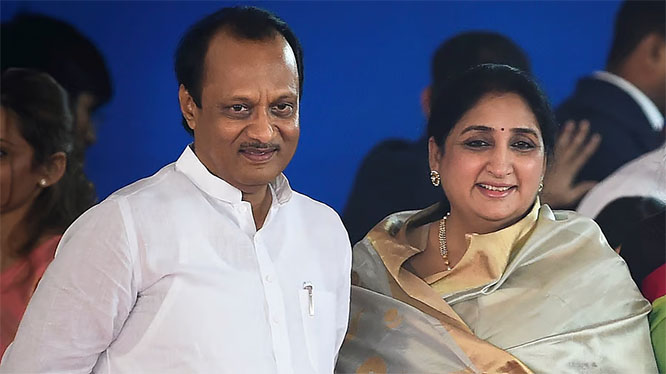
Mumbai: The sudden death of Maharashtra Deputy Chief Minister Ajit Pawar in a plane crash in his hometown of Baramati has plunged the state into political uncertainty, raising a pressing question for both the Nationalist Congress Party (NCP) and its rival faction, the Nationalist Congress Party (Sharadchandra Pawar): what next?

For the two factions that emerged after the dramatic split of June–July 2023, the moment marks their gravest challenge yet. Many believe the answer now rests with party founder Sharad Pawar.

Sharad Pawar, who founded the NCP in 1999 after parting ways with the Congress over Sonia Gandhi’s foreign origin, has already indicated his intention to step away from electoral politics once his Rajya Sabha term ends in April 2026.

Speaking at a public event in Baramati ahead of his 85th birthday on December 12, 2025, Pawar said he would not contest any further elections. “I have contested 14 elections. The younger generation needs to be given an opportunity,” he said, adding that he would decide later whether to seek another Rajya Sabha term.

Often described as the Bhishma Pitamah of Indian politics, Pawar also spoke of his gradual withdrawal from active leadership. “For the first 30 years, I handled everything. For the next 25–30 years, Ajit Dada handled responsibilities. Now, arrangements must be made for new leadership,” he said.

Ajit Pawar’s death has dramatically altered that transition, especially as he was working towards reunifying the two NCP factions.

“After the developments of June–July 2023 and the 2024 Lok Sabha and Vidhan Sabha elections, there were deep changes within the family and the party. In the last six months, serious efforts were made to reunite. Even workers from both sides wanted unity. This is a massive blow,” a Pawar family insider told DH over phone from Baramati.

Electoral outcomes over the past year reflected the split. In the 2024 Lok Sabha elections, NCP (SP) recorded the best strike rate in Maharashtra, winning eight of the 10 seats it contested. The NCP, by contrast, won just one seat out of four.

However, the trend reversed in the subsequent Vidhan Sabha elections, where the NCP emerged stronger, securing 41 of the 288 seats, while NCP (SP) managed only 10.

Within NCP (SP), Sharad Pawar’s daughter Supriya Sule serves as Working President, followed by leaders such as Rohit Pawar, state president Shashikant Shinde and former state chief Jayant Patil.

In the NCP, Praful Patel is the Working President and Raigad MP Sunil Tatkare heads the state unit. Ajit Pawar’s wife, Sunetra Pawar, is a Rajya Sabha MP, while their sons Parth and Jay are not actively involved in day-to-day politics. Parth Pawar briefly entered electoral politics in 2019 but lost the Lok Sabha election from Maval. Jay Pawar’s political debut was under consideration.

With Ajit Pawar gone, speculation has intensified that a member of the family may be asked to assume a larger role. For now, Sunetra Pawar is expected to play a key coordinating role in party affairs, alongside Patel and Tatkare.

The NCP continues to have several heavyweight leaders, including Chhagan Bhujbal, Hasan Mushrif, Dattatreya Bharne, Manikrao Kokate and Dhananjay Munde.

Ajit Pawar had already begun steps towards reconciliation between the two factions. While they contested the Pune and Pimpri-Chinchwad municipal elections separately, they later decided to fight the zilla parishad elections together under the ‘clock’ symbol—seen as the first formal step towards reunification.

Nagpur meet and party roadmap

Both NCP factions claim adherence to the ideology of ‘Shiv–Shahu–Phule–Ambedkar’. At the Rashtravadi Chintan Shivir held in Nagpur on September 19, 2025, the NCP reaffirmed its commitment to sarva dharma sambhav and discussed strengthening ties with the BJP “for the welfare and development of Maharashtra”.

In recent days, reports had suggested Ajit Pawar might return to the Maha Vikas Aghadi following the party’s poor performance in Pune municipal elections, but these claims were denied.

Big question for Maha Yuti

Ajit Pawar’s death also presents an immediate challenge for the Devendra Fadnavis-led Maha Yuti government. Pawar held crucial portfolios, including Finance, Planning and Excise. With the Budget Session approaching, appointing a new Finance Minister has become urgent.

Beyond numbers and portfolios, Maha Yuti has lost a swift decision-maker known for his administrative grip and political finesse—leaving a vacuum that will not be easy to fill.

Comments

Add new comment

  • Coastaldigest.com reserves the right to delete or block any comments.
  • Coastaldigset.com is not responsible for its readers’ comments.
  • Comments that are abusive, incendiary or irrelevant are strictly prohibited.
  • Please use a genuine email ID and provide your name to avoid reject.
News Network
January 20,2026

DGP.jpg

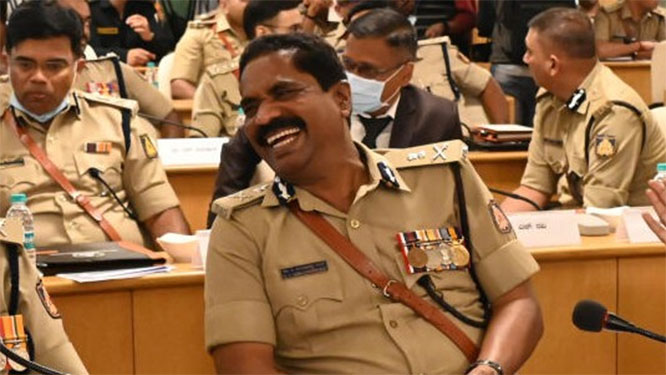
Karnataka DGP (Civil Rights Enforcement) K Ramachandra Rao was suspended with immediate effect, as per a state government order issued on Monday, 19 January. The order cited conduct unbecoming of a government servant and causing embarrassment to the state administration.

The Karnataka government suspended Rao after a purported video showed him in a compromising position with a woman inside his official chamber. The video went viral on social media. Rao rejected the videos outright, terming them "fabricated and false".

Who is K Ramachandra Rao?

Rao is a DGP-rank officer who was heading the Directorate of Civil Rights Enforcement until his suspension. He was promoted to DGP in September 2023 and assumed office in October 2023, the Sunday Guardian reported.

He also served as the Chairman and Managing Director of the Karnataka State Police Housing and Infrastructure Development Corporation Limited.

His stint as the Inspector General of Police (IGP) for the Southern Range was also marred by controversy. In 2014, during a cash seizure near Mysuru’s Yelwal, officials claimed the seized amount was ₹20 lakh, while the accused (Kerala-based merchants) claimed it was around ₹2.27 crore.

Rao, who was present during the seizure, denied all allegations. However, he was transferred soon after.

Allegations of collusion with a businessman surfaced, and a senior police officer was quoted by The Sunday Guardian as saying, “In Rao’s case, the CID has clearly mentioned that there was a great degree of lapse on the part of Rao and a deputy superintendent of police after it was brought to their notice that a few policemen, including a gunman attached to the IGP, were involved in the robbery.”

Rao had denied all wrongdoing in that incident. Despite past controversies, he rose to the state’s top police position, the Sunday Guardian reported.

Ranya Rao’s stepfather

Rao is the stepfather of Kannada actress Harshavardhini Ranya alias Ranya Rao, accused of orchestrating the illegal import of gold worth over ₹12.56 crore from Dubai to India along with two others — businessman Tarun Raju, and jewellery dealer Sahil Jain.

‘Obscene video’ controversy

A viral video showed Rao behaving inappropriately with a woman inside his office while in uniform.

The Karnataka government said in its Monday order that “vide videos and news reports widely broadcast on public news channels and media platforms, it is observed that Dr K Ramachandra Rao has acted in an obscene manner which is unbecoming of a Government Servant and also causing embarrassment to the Government.”

The order said the matter was examined by the state government, which found that the officer's conduct amounted to a violation of Rule 3 of the All India Services (Conduct) Rules, 1968.

The government said it is prima facie satisfied that "it is necessary to place Rao under suspension with immediate effect, pending inquiry".

During the suspension period, Rao will be entitled to subsistence allowance as per Rule 4 of the All India Services (Discipline and Appeal) Rules, 1969.

The order also places restrictions on his movement, stating that during the period of suspension, the officer must not leave headquarters under any circumstances without the written permission of the state government.

Comments

Add new comment

  • Coastaldigest.com reserves the right to delete or block any comments.
  • Coastaldigset.com is not responsible for its readers’ comments.
  • Comments that are abusive, incendiary or irrelevant are strictly prohibited.
  • Please use a genuine email ID and provide your name to avoid reject.
News Network
January 23,2026

Karnataka Governor Thaawarchand Gehlot read only three lines from the 122-paragraph address prepared by the Congress-led state government while addressing the joint session of the Legislature on Thursday, effectively bypassing large sections critical of the BJP-led Union government.

The omitted portions of the customary Governor’s address outlined what the state government described as a “suppressive situation in economic and policy matters” under India’s federal framework. The speech also sharply criticised the Centre’s move to replace the Mahatma Gandhi National Rural Employment Guarantee Act (MGNREGA) with the Viksit Bharat–Guarantee for Rozgar and Ajeevika Mission (Gramin) Act, commonly referred to as the VB-GRAM (G) Act.

Governor Gehlot had earlier conveyed his objection to several paragraphs that were explicitly critical of the Union government. On Thursday, he confined himself to the opening lines — “I extend a warm welcome to all of you to the joint session of the State legislature. I am extremely pleased to address this august House” — before jumping directly to the concluding sentence of the final paragraph.

He ended the address by reading the last line of paragraph 122: “Overall, my government is firmly committed to doubling the pace of the State’s economic, social and physical development. Jai Hind — Jai Karnataka.”

According to the prepared speech, the Karnataka government demanded the scrapping of the VB-GRAM (G) Act, describing it as “contractor-centric” and detrimental to rural livelihoods, and called for the full restoration of MGNREGA. The state government argued that the new law undermines decentralisation, weakens labour protections, and centralises decision-making in violation of constitutional norms.

Key points from the unread sections of the speech:

•    Karnataka facing a “suppressive” economic and policy environment within the federal system

•    Repeal of MGNREGA described as a blow to rural livelihoods

•    VB-GRAM (G) Act accused of protecting corporate and contractor interests

•    New law alleged to weaken decentralised governance

•    Decision-making said to be imposed by the Centre without consulting states

•    Rights of Adivasis, women, backward classes and agrarian communities curtailed

•    Labourers allegedly placed under contractor control

•    States facing mounting fiscal stress due to central policies

•    VB-GRAM (G) Act accused of enabling large-scale corruption

Comments

Add new comment

  • Coastaldigest.com reserves the right to delete or block any comments.
  • Coastaldigset.com is not responsible for its readers’ comments.
  • Comments that are abusive, incendiary or irrelevant are strictly prohibited.
  • Please use a genuine email ID and provide your name to avoid reject.