
The Idea of Students' Development

Muhammad Abdullah Javed
September 14, 2023

sudents.jpg

The true essence of educational process is that it continues with sustained progress and ends up with holistic development. In the pursuit of students’ progress, we often evaluate their performance with emphasis on improved test and exam results. However, in reality, the educational journey that students embark ultimately demands their comprehensive development, of which performance in exams is just one aspect. If one fails to recognise the other aspects of this process, students may in the long-run appear to be ill-equipped to solve their own problems. The proper utilization of their inbuilt soft skills may not always be possible to them. Therefore, focussing on the overall development of students becomes essential. This involves nurturing students, by cementing their growing age at the school premises, to emerge with abundant energy and enthusiasm to face the world. Students' comprehensive development can be of three dimensions: academic, moral, and social.

1) Academic Development

By academic development we mean (a) knowledge-enhancement (b) excellence and (c) knowledge-application.

(a) Knowledge: With the gradual advancement of the classes, students must expand their knowledge base. Students should not be seen as vessels for storing information; instead, they should embody the true essence of education. Else, there remain no distinction between a machine and a human being. The topics taught in any subject are brimming with information. When a teacher succeeds in transforming this information into understanding through effective teaching methods, it becomes knowledge that retains in students' memories for longer periods. Therefore, classroom lectures should not be restricted to the mere transmission of information; rather, they should be imbued with the art of transforming information into knowledge. As a result, students will grasp the essence of conceptual understanding, cultivate a culture of healthy argument and develop critical thinking skills.

(b) Excellence: The knowledge acquired through gradual process exerts a vigorous impact and enables students to excel in whatever they do. Therefore, focusing solely on scoring marks can impede their pursuit of excellence. This needs to be taught and should be considered as a parameter to gauge students' performance. From maintaining a decent physical appearance to excelling in both academic and non-academic activities, all aspects need to be in view to make excellence a synonymous with their persona.

(c) Application: The pragmatic approach towards acquired knowledge is pivotal when considering its beneficial aspects. Often, this aspect remains veiled from students, as at times they encounter difficulties in applying the knowledge they have acquired over the years. The knowledge-application aspect serves to identify the authenticity of education and paves the way for improvisation of teaching and learning methodologies. Knowledge acquired with excellence must be synchronized with its practical application. This enables students to know various answers to the question: What can students actually do with the knowledge they gain in every class?

2) Moral Development

The process of moral development for students is like teaching them how the wings of birds enable them to fly and soar high in the skies. The flip side of excellent performance is high moral standards. This implies that students have two sides: one sports their academic performance, and the other reflects their high moral standards. The moral development also has three prong prerequisites: 

(a) Self-awareness: The process of moral development begins with self-awareness. When students know who they are, the rest follows in accordance with their understanding. It sets them on untiring and exemplary journey towards excellence. By self-awareness we mean enabling students recognize their strengths and weaknesses and empowering them with the ability to enhance their strengths and overcome their weaknesses.

(b) Righteous deeds: It can serve as a parameter of one's moral character. The extension of being in good conduct involves performing good deeds. It's about benefiting others, lending a helping hand, speaking the truth, and even a simple smiling gesture….all have the power to exert a positive impact on others.

(c) Duty towards fellow being: It is the natural extension of moral deeds; it involves recognizing one’s obligation to others. The pinnacle of morality is when the people in one's vicinity benefit from either words or deeds. Morality can be summarized as 'loving for others what one loves for oneself. These shades of morality can be summarized as spirituality with the aid of which a person finds proximity with the God.

3) Social Development

Socializing students means synchronizing them with their surroundings. Every aspect, whether related to themselves, their homes, or society, has enormous potential for their educational and moral development. Socially aware students always fall under our jurisdiction. This jurisdiction doesn't rely solely on the four walls of an institution; rather, the entire city where students live becomes a kind of virtual school. Students perceive their surroundings in the way we guide them. When they leave their homes, they view every nook and corner and the surroundings through our perspectives. The influence of the school extends far beyond its physical walls, and the teaching and training process begins the moment students leave their homes.

This socialization requires a mentality of owning everything. Every person is connected to them. From the executives living in high-rise buildings to the individuals residing in small localities, to the beggars who extend their hands to earn a livelihood, all are interconnected with them in one way or another. This owning mentality helps students adopt realistic perspective. The high-rise executives can inspire them to dream big, while the beggars can motivate them to step forward and address this social evil. Their vision will be inclusive of a mission of serving people, and their earnings will be dedicated to the well-being of others through selfless service. This way, the dearth of highly qualified and educated individuals in small villages can be mitigated. This approach can encourage students to consider constructing their societies and actively contribute to the progress of the country in all spheres.

This idea of students’ development can help us make our teaching and learning system more efficient and foster a competitive spirit among both students and teachers alike.

The author is the Director of AJ Academy for Research and Development, Raichur. [email protected] 

Comments

Zaheer Ahmed
 - 
Saturday, 16 Sep 2023

Very well written article and very informative. Covered the topics in all the aspects and dimensions...

Add new comment

  • Coastaldigest.com reserves the right to delete or block any comments.
  • Coastaldigset.com is not responsible for its readers’ comments.
  • Comments that are abusive, incendiary or irrelevant are strictly prohibited.
  • Please use a genuine email ID and provide your name to avoid reject.
News Network
January 28,2026

ajit.jpg

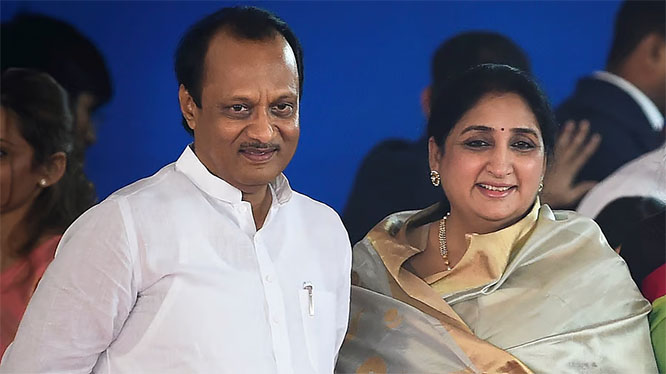
Mumbai: The sudden death of Maharashtra Deputy Chief Minister Ajit Pawar in a plane crash in his hometown of Baramati has plunged the state into political uncertainty, raising a pressing question for both the Nationalist Congress Party (NCP) and its rival faction, the Nationalist Congress Party (Sharadchandra Pawar): what next?

For the two factions that emerged after the dramatic split of June–July 2023, the moment marks their gravest challenge yet. Many believe the answer now rests with party founder Sharad Pawar.

Sharad Pawar, who founded the NCP in 1999 after parting ways with the Congress over Sonia Gandhi’s foreign origin, has already indicated his intention to step away from electoral politics once his Rajya Sabha term ends in April 2026.

Speaking at a public event in Baramati ahead of his 85th birthday on December 12, 2025, Pawar said he would not contest any further elections. “I have contested 14 elections. The younger generation needs to be given an opportunity,” he said, adding that he would decide later whether to seek another Rajya Sabha term.

Often described as the Bhishma Pitamah of Indian politics, Pawar also spoke of his gradual withdrawal from active leadership. “For the first 30 years, I handled everything. For the next 25–30 years, Ajit Dada handled responsibilities. Now, arrangements must be made for new leadership,” he said.

Ajit Pawar’s death has dramatically altered that transition, especially as he was working towards reunifying the two NCP factions.

“After the developments of June–July 2023 and the 2024 Lok Sabha and Vidhan Sabha elections, there were deep changes within the family and the party. In the last six months, serious efforts were made to reunite. Even workers from both sides wanted unity. This is a massive blow,” a Pawar family insider told DH over phone from Baramati.

Electoral outcomes over the past year reflected the split. In the 2024 Lok Sabha elections, NCP (SP) recorded the best strike rate in Maharashtra, winning eight of the 10 seats it contested. The NCP, by contrast, won just one seat out of four.

However, the trend reversed in the subsequent Vidhan Sabha elections, where the NCP emerged stronger, securing 41 of the 288 seats, while NCP (SP) managed only 10.

Within NCP (SP), Sharad Pawar’s daughter Supriya Sule serves as Working President, followed by leaders such as Rohit Pawar, state president Shashikant Shinde and former state chief Jayant Patil.

In the NCP, Praful Patel is the Working President and Raigad MP Sunil Tatkare heads the state unit. Ajit Pawar’s wife, Sunetra Pawar, is a Rajya Sabha MP, while their sons Parth and Jay are not actively involved in day-to-day politics. Parth Pawar briefly entered electoral politics in 2019 but lost the Lok Sabha election from Maval. Jay Pawar’s political debut was under consideration.

With Ajit Pawar gone, speculation has intensified that a member of the family may be asked to assume a larger role. For now, Sunetra Pawar is expected to play a key coordinating role in party affairs, alongside Patel and Tatkare.

The NCP continues to have several heavyweight leaders, including Chhagan Bhujbal, Hasan Mushrif, Dattatreya Bharne, Manikrao Kokate and Dhananjay Munde.

Ajit Pawar had already begun steps towards reconciliation between the two factions. While they contested the Pune and Pimpri-Chinchwad municipal elections separately, they later decided to fight the zilla parishad elections together under the ‘clock’ symbol—seen as the first formal step towards reunification.

Nagpur meet and party roadmap

Both NCP factions claim adherence to the ideology of ‘Shiv–Shahu–Phule–Ambedkar’. At the Rashtravadi Chintan Shivir held in Nagpur on September 19, 2025, the NCP reaffirmed its commitment to sarva dharma sambhav and discussed strengthening ties with the BJP “for the welfare and development of Maharashtra”.

In recent days, reports had suggested Ajit Pawar might return to the Maha Vikas Aghadi following the party’s poor performance in Pune municipal elections, but these claims were denied.

Big question for Maha Yuti

Ajit Pawar’s death also presents an immediate challenge for the Devendra Fadnavis-led Maha Yuti government. Pawar held crucial portfolios, including Finance, Planning and Excise. With the Budget Session approaching, appointing a new Finance Minister has become urgent.

Beyond numbers and portfolios, Maha Yuti has lost a swift decision-maker known for his administrative grip and political finesse—leaving a vacuum that will not be easy to fill.

Comments

Add new comment

  • Coastaldigest.com reserves the right to delete or block any comments.
  • Coastaldigset.com is not responsible for its readers’ comments.
  • Comments that are abusive, incendiary or irrelevant are strictly prohibited.
  • Please use a genuine email ID and provide your name to avoid reject.
News Network
January 23,2026

modIKERALA.jpg

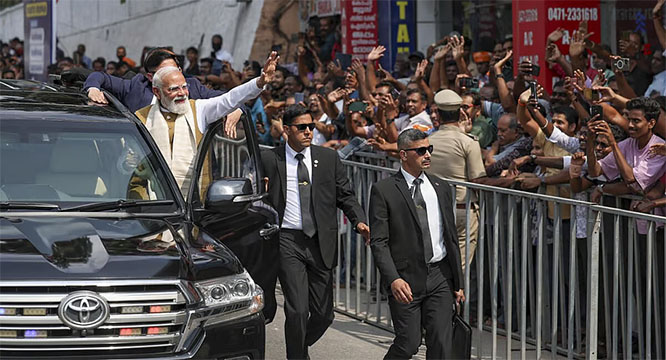
Prime Minister Narendra Modi, during his visit to Thiruvananthapuram on Friday, January 23, indicated that the Bharatiya Janata Party (BJP) is aiming to expand its political footprint in Kerala ahead of the Assembly elections scheduled in the coming months.

Speaking at a BJP-organised public meeting, Modi drew parallels between the party’s early electoral gains in Gujarat and its recent victory in the Thiruvananthapuram Municipal Corporation. The civic body win, which ended decades of Left control, was cited by the Prime Minister as a possible starting point for the party’s broader ambitions in the state.

Recalling BJP’s political trajectory in Gujarat, Modi said the party was largely insignificant before 1987 and received little media attention. He pointed out that the BJP’s first major breakthrough came with its victory in the Ahmedabad Municipal Corporation that year.

“Just as our journey in Gujarat began with one city, Kerala’s journey has also started with a single city,” Modi said, suggesting that the party’s municipal-level success could translate into wider electoral acceptance.

The Prime Minister alleged that successive governments led by the Left Democratic Front (LDF) and the United Democratic Front (UDF) had failed to adequately develop Thiruvananthapuram. He accused both fronts of corruption and neglect, claiming that basic infrastructure and facilities were denied to the capital city for decades.

According to Modi, the BJP’s control of the civic body represents a shift driven by public dissatisfaction with the existing political alternatives. He asserted that the BJP administration in Thiruvananthapuram had begun working towards development, though no specific details or timelines were outlined.

Addressing the gathering at Putharikandam Maidan, Modi said the BJP intended to project Thiruvananthapuram as a “model city,” reiterating his party’s commitment to governance-led change.

The Prime Minister’s visit to Kerala also included the inauguration of several development projects and the flagging off of new train services, as the BJP intensifies its political outreach in the poll-bound state.

Comments

Add new comment

  • Coastaldigest.com reserves the right to delete or block any comments.
  • Coastaldigset.com is not responsible for its readers’ comments.
  • Comments that are abusive, incendiary or irrelevant are strictly prohibited.
  • Please use a genuine email ID and provide your name to avoid reject.
coastaldigest.com news network
January 19,2026

rizwanzameer.jpg

Bengaluru: As the dust settles on the recent legislative session, the corridors of Vidhana Soudha are buzzing with more than just policy talk. A high-stakes game of political musical chairs has begun, exposing a deepening rift within the Congress party’s Muslim leadership as a major Cabinet reshuffle looms.

With the party hierarchy signaling a "50% refresh" to gear up for the 2028 Assembly elections, the race to fill three projected Muslim ministerial berths has transformed from a strategic discussion into an all-out turf war.

The "Star Son" Spark

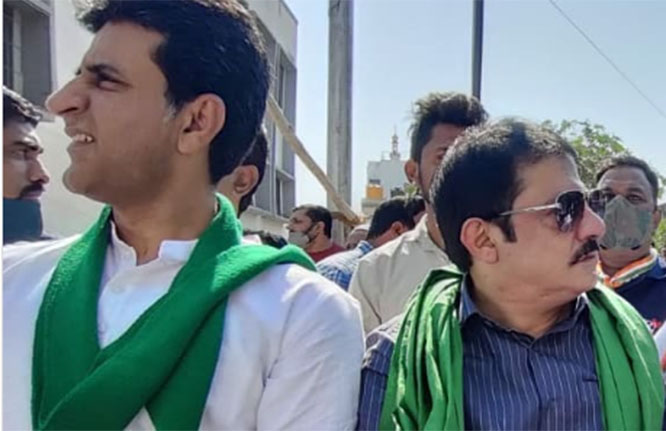
The internal friction turned public this week following provocative remarks by Zaid Khan, actor and son of Wakf Minister Zameer Ahmed Khan. Zaid’s claim—that his father "helped" secure a ticket for Shivajinagar MLA Rizwan Arshad in 2023—has acted as a lightning rod for resentment.

Rizwan’s camp was quick to fire back, dismissing the comment as a desperate attempt by Zameer to manufacture seniority. "Rizwan’s political pedigree was forged in the NSUI and Youth Congress long before Zameer even stepped into the party," a supporter noted, highlighting Rizwan’s tenure as an AICC secretary and his two-term presidency of the State Youth Congress.

A Tale of Two Loyalists

While both Zameer Ahmed Khan and Rizwan Arshad are staunch allies of Chief Minister Siddaramaiah and represent Bengaluru strongholds, their political DNA could not be more different:

•    Zameer Ahmed Khan: A four-time MLA who crossed over from JD(S) in 2018. Known for his "overzealous" and often polarizing outreach during communal flashpoints—from the DJ Halli riots to the recent Wakf land notice controversy—his style has frequently left the Congress high command in a state of "discomfort."

•    Rizwan Arshad: A homegrown organizational man. Seen as a "quiet performer," Arshad represents the sophisticated, moderate face of the party, preferred by those who find Zameer’s brand of politics too volatile.

The Outsiders Looking In

The bickering isn't limited to a duo. The "Beary" community, represented by leaders like N A Haris and Saleem Ahmed, is demanding its pound of flesh. Saleem Ahmed, the Chief Whip in the Legislative Council, has dropped the veil of diplomacy, openly declaring his ministerial aspirations.

"I was the only working president not included in the Cabinet last time," Saleem noted pointedly, signaling that the "loyalty quota" is no longer enough to keep the peace.

As Chief Minister Siddaramaiah prepares to finalize the list, he faces a delicate balancing act: rewarding the aggressive grassroots mobilization of Zameer’s camp without alienating the organizational stalwarts and minority sub-sects who feel increasingly sidelined by the "Chamarajpet-Shivajinagar" binary.

Comments

Add new comment

  • Coastaldigest.com reserves the right to delete or block any comments.
  • Coastaldigset.com is not responsible for its readers’ comments.
  • Comments that are abusive, incendiary or irrelevant are strictly prohibited.
  • Please use a genuine email ID and provide your name to avoid reject.