Cow may be biggest mammal if humans keep up extinctions: Study

Agencies
May 12, 2018

Oslo, May 12: The spread of humans around the world from Africa thousands of years ago wiped out big mammals in a shrinking trend that could make the cow the biggest mammal on Earth in a few centuries` time, a scientific study said on Thursday.

The spread of hominims - early humans and relatives such as Neanderthals - from Africa coincided with the extinction of mammals such as the mammoths, sabre-toothed tiger and glyptodon, an armadillo-like creature the size of a car.

"There is a very clear pattern of size-biased extinction that follows the migration of hominims out of Africa," lead author Felisa Smith of the University of New Mexico told Reuters of the study published in the journal Science.

Humans apparently targeted big species for meat, while smaller creatures such as rodents escaped, according to the report examining trends over 125,000 years.

In North America, for instance, the mean body mass of land-based mammals has shrunk to 7.6 kg (17 lbs) from 98.0 after humans arrived.

If the trend continues "the largest mammal on Earth in a few hundred years may well be a domestic cow at about 900 kg" (2,000 lbs), the U.S. team wrote.

That would mean the loss of creatures including elephants, giraffes and hippos. In March, the world`s last male northern white rhino died in Kenya.

But other research casts doubt on a continued shrinking of mammals, partly because of conservation efforts to stave off threats to wildlife such as climate change, loss of forest habitats and pollution and expanding cities.

Thomas Brooks, chief scientist of the International Union for Conservation of Nature (IUCN) who was not involved in the study, said the projection of ever smaller mammals was "doom and gloom."

"Happily I don`t think it`s very likely," he told Reuters, saying that other research suggests that large animals such as elephants are more likely to benefit in protected areas than smaller ones.

And a Red List of threatened species, maintained by the IUCN, also lists some wild mammals roughly the size of a cow - such as the African buffalo or the brown bear - as unendangered.

The Science study also excludes marine mammals such as the blue whale, the largest creature that has ever existed. It is endangered on the Red List but the populations are rising after a moratorium on hunts.

Smith said that "my optimist hat would like to say that it`s not going to happen because we love elephants`." But she said populations of large land mammals were falling and "declining population is the trajectory to extinction."

Comments

Add new comment

  • Coastaldigest.com reserves the right to delete or block any comments.
  • Coastaldigset.com is not responsible for its readers’ comments.
  • Comments that are abusive, incendiary or irrelevant are strictly prohibited.
  • Please use a genuine email ID and provide your name to avoid reject.
News Network
January 16,2026

tourism.jpg

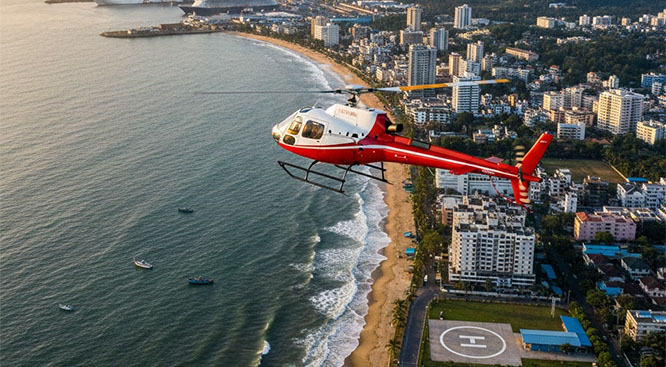
Following a record-breaking response to experimental joyrides during the Karavali Utsava, the Dakshina Kannada district administration has signaled a major shift toward high-end travel. Officials are now laying the groundwork to transform Mangaluru into a permanent heli-tourism hub, connecting the state’s most sacred pilgrim centers and untouched coastal gems via the skies.

The move comes as the Karnataka government readies a specialized tourism policy for the coast, aimed at drawing global investors. With Mangaluru already serving as a critical nexus for education, healthcare, and maritime trade, the introduction of a scheduled helicopter service is seen as the "missing link" in the region’s economic evolution.

By the Numbers: A Flying Success

The data from the recent 10-day trial (beginning December 26) paints a clear picture of high demand:

•    Total Passengers: 1,032
•    Ride Duration: 7 minutes
•    Ticket Price: ₹3,500 per person
•    Origin of Tourists: Significant turnout from Kerala, Udupi, and Karwar.

Bridging the Gap for Global Travelers

Deputy Commissioner Darshan HV emphasized that the vision extends far beyond festival joyrides. Currently, international tourists arriving via luxury cruises at the New Mangalore Port (peak season December–April) often find themselves "landlocked" by time.

"Foreign visitors staying for just 24 to 48 hours currently struggle to visit inland attractions like Chikkamagaluru or Kodagu due to road travel times," a senior official noted. "A permanent heli-link would make these Western Ghats destinations accessible in under 30 minutes."

Beyond Tourism: Medical and Logistics

The administration is also looking at the humanitarian and logistical benefits. As a medical powerhouse, Mangaluru’s private hospitals could utilize the proposed permanent helipads for:

1.    Cardiac Emergencies: Rapid transfer of critical patients.
2.    Organ Transplants: Vital "green corridors" through the air to save lives.
3.    Regional Connectivity: Linking remote areas like Puttur, Sullia, and Beltangady to the main city.

While the Karavali Utsava has traditionally focused on beach-side festivities, the DC confirmed that the district is now evaluating formal proposals from private operators. The goal is to establish a network of permanent helipads that will eventually offer regular sorties to Kudremukh National Park and the scenic heights of the Western Ghats.

Comments

Add new comment

  • Coastaldigest.com reserves the right to delete or block any comments.
  • Coastaldigset.com is not responsible for its readers’ comments.
  • Comments that are abusive, incendiary or irrelevant are strictly prohibited.
  • Please use a genuine email ID and provide your name to avoid reject.
News Network
January 23,2026

Mangaluru: The Karnataka Government Polytechnic (KPT), Mangaluru, has achieved autonomous status from the All India Council for Technical Education (AICTE), becoming the first government polytechnic in the country to receive such recognition in its 78-year history. The status was granted by AICTE, New Delhi, and subsequently approved by the Karnataka Board of Technical Education in October last year.

Officials said the autonomy was conferred a few months ago. Until recently, AICTE extended autonomous status only to engineering colleges, excluding diploma institutions. However, with a renewed national focus on skill development, several government polytechnics across India have now been granted autonomy.

KPT, the second-largest polytechnic in Karnataka, was established in 1946 with four branches and has since expanded to offer eight diploma programmes, including computer science and polymer technology. The institution is spread across a 19-acre campus.

Ravindra M Keni, the first dean of the institution, told The Times of India that AICTE had proposed autonomous status for polytechnic institutions that are over 25 years old. “Many colleges applied. In the first round, 100 institutions were shortlisted, which was further narrowed down to 15 in the second round. We have already completed one semester after becoming an autonomous institution,” he said. He added that nearly 500 students are admitted annually across eight three-year diploma courses.

Explaining the factors that helped KPT secure autonomy, Keni said the institution has consistently recorded 100 per cent admissions and placements for its graduates. He also noted its strong performance in sports, with the college emerging champions for 12 consecutive years, along with active student participation in NCC and NSS activities.

Autonomous status allows KPT to design industry-oriented curricula, conduct examinations, prepare question papers, and manage academic documentation independently. The institution can also directly collaborate with industries and receive priority funding from AICTE or the Ministry of Education. While academic autonomy has been granted, financial control will continue to rest with the state government.

“There will be separate committees for examinations, question paper setting, boards of studies, and boards of examiners. The institution will now have the freedom to conduct admissions without government notifications and issue its own marks cards,” Keni said, adding that new academic initiatives would be planned after a year of functioning under the autonomous framework.

Comments

Add new comment

  • Coastaldigest.com reserves the right to delete or block any comments.
  • Coastaldigset.com is not responsible for its readers’ comments.
  • Comments that are abusive, incendiary or irrelevant are strictly prohibited.
  • Please use a genuine email ID and provide your name to avoid reject.
coastaldigest.com news network
January 19,2026

rizwanzameer.jpg

Bengaluru: As the dust settles on the recent legislative session, the corridors of Vidhana Soudha are buzzing with more than just policy talk. A high-stakes game of political musical chairs has begun, exposing a deepening rift within the Congress party’s Muslim leadership as a major Cabinet reshuffle looms.

With the party hierarchy signaling a "50% refresh" to gear up for the 2028 Assembly elections, the race to fill three projected Muslim ministerial berths has transformed from a strategic discussion into an all-out turf war.

The "Star Son" Spark

The internal friction turned public this week following provocative remarks by Zaid Khan, actor and son of Wakf Minister Zameer Ahmed Khan. Zaid’s claim—that his father "helped" secure a ticket for Shivajinagar MLA Rizwan Arshad in 2023—has acted as a lightning rod for resentment.

Rizwan’s camp was quick to fire back, dismissing the comment as a desperate attempt by Zameer to manufacture seniority. "Rizwan’s political pedigree was forged in the NSUI and Youth Congress long before Zameer even stepped into the party," a supporter noted, highlighting Rizwan’s tenure as an AICC secretary and his two-term presidency of the State Youth Congress.

A Tale of Two Loyalists

While both Zameer Ahmed Khan and Rizwan Arshad are staunch allies of Chief Minister Siddaramaiah and represent Bengaluru strongholds, their political DNA could not be more different:

•    Zameer Ahmed Khan: A four-time MLA who crossed over from JD(S) in 2018. Known for his "overzealous" and often polarizing outreach during communal flashpoints—from the DJ Halli riots to the recent Wakf land notice controversy—his style has frequently left the Congress high command in a state of "discomfort."

•    Rizwan Arshad: A homegrown organizational man. Seen as a "quiet performer," Arshad represents the sophisticated, moderate face of the party, preferred by those who find Zameer’s brand of politics too volatile.

The Outsiders Looking In

The bickering isn't limited to a duo. The "Beary" community, represented by leaders like N A Haris and Saleem Ahmed, is demanding its pound of flesh. Saleem Ahmed, the Chief Whip in the Legislative Council, has dropped the veil of diplomacy, openly declaring his ministerial aspirations.

"I was the only working president not included in the Cabinet last time," Saleem noted pointedly, signaling that the "loyalty quota" is no longer enough to keep the peace.

As Chief Minister Siddaramaiah prepares to finalize the list, he faces a delicate balancing act: rewarding the aggressive grassroots mobilization of Zameer’s camp without alienating the organizational stalwarts and minority sub-sects who feel increasingly sidelined by the "Chamarajpet-Shivajinagar" binary.

Comments

Add new comment

  • Coastaldigest.com reserves the right to delete or block any comments.
  • Coastaldigset.com is not responsible for its readers’ comments.
  • Comments that are abusive, incendiary or irrelevant are strictly prohibited.
  • Please use a genuine email ID and provide your name to avoid reject.