Criminalising marital rape will destabilise marriage: govt

Agencies
August 29, 2017

New Delhi, Aug 29: Marital rape cannot be made a criminal offence as it could become a phenomenon which may destabilise the institution of marriage and an easy tool for harassing the husbands, government today submitted before the Delhi High Court.
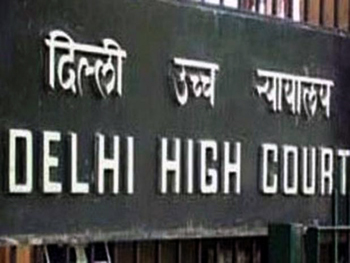
The Centre, in an affidavit filed in response to pleas seeking criminalising marital rape, said the Supreme Court and various High Courts have already observed the growing misuse of section 498A (harassment caused to a married woman by her husband and in-laws) of IPC.

The reply, filed before a bench of Acting Chief Justice Gita Mittal and Justice C Hari Shankar, also sought to implead state governments in the matter to know their opinion to avoid any complication at a later stage.

"It has to be ensured adequately that marital rape does not become a phenomenon which may destabilise the institution of marriage apart from being an easy tool for harassing the husbands," the affidavit, filed through central government standing counsel Monika Arora, said.

The government was responding to various petitions seeking declaration of Section 375 (offence of rape) of the IPC as unconstitutional on the ground that it discriminated against married women being sexually assaulted by their husbands.

During the day's hearing, senior advocate advocate Colin Gonsalves, appearing for one of the petitioners, argued that marriage cannot be viewed as giving a husband the right to coerced intercourse on demand.

He said a marriage licence cannot be viewed as licence for a husband to forcibly rape his wife with impunity and a married woman has the same right of full control over her body as an unmarried woman. He also referred to various judgments of foreign countries.
The hearing in the matter would continue tomorrow.

Marital rape (or spousal rape) is an act in which one of the spouses indulges in sexual intercourse without the consent of the other.

The Centre said in the affidavit that marital rape has not been defined in a statute or law, while the offence of rape is defined under section 375 IPC. Hence, defining marital rape would call for a broad based consensus of the society.

"What may appear to be marital rape to an individual wife, it may not appear so to others. As to what constitutes marital rape and what would constitute marital non-rape needs to be defined precisely before a view on its criminalisation is taken," it said.

It said merely deleting the exception which provides protection to husbands from prosecution for the offence of rape, may not stop marital rape. "Moral and social awareness" plays a vital role in stopping such an act, it added.

"If all sexual acts by a man with his own wife will qualify to be marital rape, then the judgment as to whether it is a marital rape or not will singularly rest with the wife.

"The question is what evidences the courts will rely upon in such circumstances, as there can be no lasting evidence in case of sexual acts between a man and his own wife," the affidavit read.

It also referred to the reports of Law Commission and Parliamentary Standing Committee on Home Affairs, saying they have examined the matter and did not recommend criminalisation of marital rape.

Citing the Justice J S Verma Committee Report on "Amendments to Criminal Law", it said it was recommended that the exception to marital rape be removed, but it also pointed out that it is also important that legal prohibition on marital rape is accompanied by changes in the attitude of the prosecutors, police officers and those in society generally.

Regarding the petitioners' submission that other countries, mostly western, have criminalised marital rape, the Centre said it does not necessarily mean India should also follow them blindly.

"This country has its own unique problems due to various factors like literacy, lack of financial empowerment of the majority of females, mindset of the society, vast diversity, poverty, etc. and these should be considered carefully before criminalising marital rape," it said.

The affidavit said that criminal law is in the Concurrent List and implemented by the states and there is a vast diversity in the cultures of these states.

The high court had earlier asked the Centre to spell out its stand on petitions seeking to make marital rape a criminal offence.

It has agreed to examine the issue raised in PILs by NGOs RIT Foundation, All India Democratic Women's Association, represented through advocate Karuna Nandy, and a man and a woman, who have sought striking down of the exception in the Indian penal law that did not consider sexual intercourse with a minor wife, above 15 years of age, as rape.

The court has also agreed to hear a plea by NGO Men Welfare Trust, representing men victimised by alleged misuse of gender laws, opposing the petitions to make marital rape a criminal offence.

Earlier, the Centre had defended its legislation, saying child marriages were taking place in India and the decision to retain a girl's minimum age as 15 years to marry was taken under the amended rape law to protect a couple against criminalisation of their sexual activity.

Comments

Add new comment

  • Coastaldigest.com reserves the right to delete or block any comments.
  • Coastaldigset.com is not responsible for its readers’ comments.
  • Comments that are abusive, incendiary or irrelevant are strictly prohibited.
  • Please use a genuine email ID and provide your name to avoid reject.
News Network
January 23,2026

modIKERALA.jpg

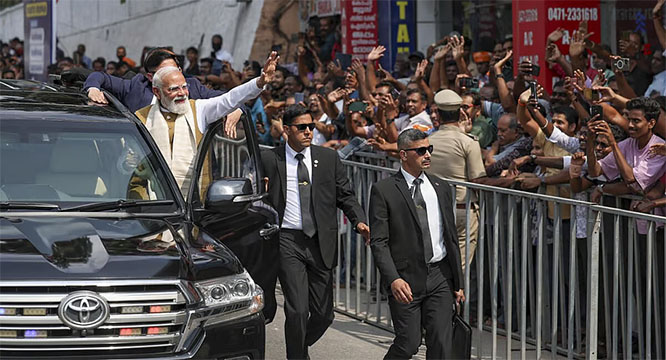
Prime Minister Narendra Modi, during his visit to Thiruvananthapuram on Friday, January 23, indicated that the Bharatiya Janata Party (BJP) is aiming to expand its political footprint in Kerala ahead of the Assembly elections scheduled in the coming months.

Speaking at a BJP-organised public meeting, Modi drew parallels between the party’s early electoral gains in Gujarat and its recent victory in the Thiruvananthapuram Municipal Corporation. The civic body win, which ended decades of Left control, was cited by the Prime Minister as a possible starting point for the party’s broader ambitions in the state.

Recalling BJP’s political trajectory in Gujarat, Modi said the party was largely insignificant before 1987 and received little media attention. He pointed out that the BJP’s first major breakthrough came with its victory in the Ahmedabad Municipal Corporation that year.

“Just as our journey in Gujarat began with one city, Kerala’s journey has also started with a single city,” Modi said, suggesting that the party’s municipal-level success could translate into wider electoral acceptance.

The Prime Minister alleged that successive governments led by the Left Democratic Front (LDF) and the United Democratic Front (UDF) had failed to adequately develop Thiruvananthapuram. He accused both fronts of corruption and neglect, claiming that basic infrastructure and facilities were denied to the capital city for decades.

According to Modi, the BJP’s control of the civic body represents a shift driven by public dissatisfaction with the existing political alternatives. He asserted that the BJP administration in Thiruvananthapuram had begun working towards development, though no specific details or timelines were outlined.

Addressing the gathering at Putharikandam Maidan, Modi said the BJP intended to project Thiruvananthapuram as a “model city,” reiterating his party’s commitment to governance-led change.

The Prime Minister’s visit to Kerala also included the inauguration of several development projects and the flagging off of new train services, as the BJP intensifies its political outreach in the poll-bound state.

Comments

Add new comment

  • Coastaldigest.com reserves the right to delete or block any comments.
  • Coastaldigset.com is not responsible for its readers’ comments.
  • Comments that are abusive, incendiary or irrelevant are strictly prohibited.
  • Please use a genuine email ID and provide your name to avoid reject.
News Network
January 23,2026

Mangaluru: The Karnataka Government Polytechnic (KPT), Mangaluru, has achieved autonomous status from the All India Council for Technical Education (AICTE), becoming the first government polytechnic in the country to receive such recognition in its 78-year history. The status was granted by AICTE, New Delhi, and subsequently approved by the Karnataka Board of Technical Education in October last year.

Officials said the autonomy was conferred a few months ago. Until recently, AICTE extended autonomous status only to engineering colleges, excluding diploma institutions. However, with a renewed national focus on skill development, several government polytechnics across India have now been granted autonomy.

KPT, the second-largest polytechnic in Karnataka, was established in 1946 with four branches and has since expanded to offer eight diploma programmes, including computer science and polymer technology. The institution is spread across a 19-acre campus.

Ravindra M Keni, the first dean of the institution, told The Times of India that AICTE had proposed autonomous status for polytechnic institutions that are over 25 years old. “Many colleges applied. In the first round, 100 institutions were shortlisted, which was further narrowed down to 15 in the second round. We have already completed one semester after becoming an autonomous institution,” he said. He added that nearly 500 students are admitted annually across eight three-year diploma courses.

Explaining the factors that helped KPT secure autonomy, Keni said the institution has consistently recorded 100 per cent admissions and placements for its graduates. He also noted its strong performance in sports, with the college emerging champions for 12 consecutive years, along with active student participation in NCC and NSS activities.

Autonomous status allows KPT to design industry-oriented curricula, conduct examinations, prepare question papers, and manage academic documentation independently. The institution can also directly collaborate with industries and receive priority funding from AICTE or the Ministry of Education. While academic autonomy has been granted, financial control will continue to rest with the state government.

“There will be separate committees for examinations, question paper setting, boards of studies, and boards of examiners. The institution will now have the freedom to conduct admissions without government notifications and issue its own marks cards,” Keni said, adding that new academic initiatives would be planned after a year of functioning under the autonomous framework.

Comments

Add new comment

  • Coastaldigest.com reserves the right to delete or block any comments.
  • Coastaldigset.com is not responsible for its readers’ comments.
  • Comments that are abusive, incendiary or irrelevant are strictly prohibited.
  • Please use a genuine email ID and provide your name to avoid reject.
coastaldigest.com news network
January 19,2026

badriya.jpg

Mangaluru: The Phase I project of Badria Vision 2028 was formally launched at a ceremony held at the Badria Campus on January 17, marking an important step in the institution’s long-term development roadmap.

The programme was attended by P.B. Abdul Hameed, Secretary of the MEA, and P.C. Hasir, Correspondent of the MEA, who presided over the event and underscored the institution’s commitment to growth and academic excellence.

Office-bearers of the Badria Alumni Association were present in large numbers, including A.K. Sajid (President), Shamsuddin and S.M. Farooq (Vice-Presidents), Shaheed (General Secretary), and Khaleel (Treasurer), reflecting strong alumni engagement in the initiative.

The gathering was blessed by Sayyid Shamsuddeen Basith Thangal Kukkaje, Qateeb of Zeenat Yatheem Bakshi, who led a special dua seeking divine guidance and success for the project.

The ceremony also witnessed the participation of prominent alumnus and local corporate professional Abdul Latheef, along with alumni members Naushad, Kalandar, Safwan, members of the core committee, and several other former students.

A key moment of the event was the formal handover of a cheque to Ameen Woodland Architect, signalling the immediate commencement of construction work under Phase I of the project.

Organisers said the launch of Phase I reflects a shared vision, institutional unity, and collective resolve to realise the objectives of Badria Vision 2028.

Comments

Add new comment

  • Coastaldigest.com reserves the right to delete or block any comments.
  • Coastaldigset.com is not responsible for its readers’ comments.
  • Comments that are abusive, incendiary or irrelevant are strictly prohibited.
  • Please use a genuine email ID and provide your name to avoid reject.