



Dead whale shark washes ashore on Panambur beach

[email protected] (CD Network)
September 29, 2014

Mangalore, Sep 29: A dead young whale shark has washed ashore at the Panambur beach, on the outskirts of the city, far from the endangered giant fish's traditional feeding grounds.

The 10-foot corpse took locals by surprise on the beach on Sunday morning. œIt was near the shore, we thought it was some kind of a deadly shark. When we approached, we saw it was not moving anymore,  said a visitor.

œIt was a young shark. We believe that it washed ashore after death in the sea,  said Yatish Baikampady, chief executive officer of Panambur Beach Tourism Development Project (PBTDP).

He said that probably it was the first incident of a whale shark found washed ashore at Panambur. The cause of death is yet to be established as the fish bore no external marks.

œIt is 10 feet long and very wide and weighs heavy. As we could not move it, we dug a pit on the beach and buried the shark there,  said Mr. Baikampady.

The whale shark, among the largest fish species in the world, is commonly found in deep seas around the Lakshadweep Islands. An average whale shark is around 30 feet in length and weighs around 9,000 kg.
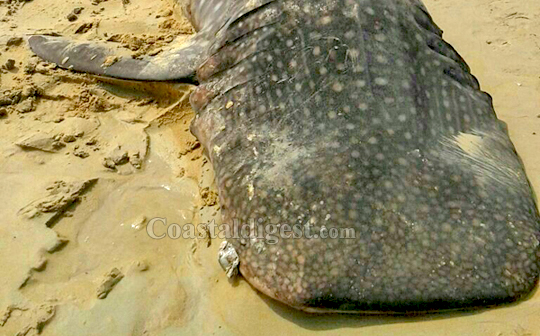
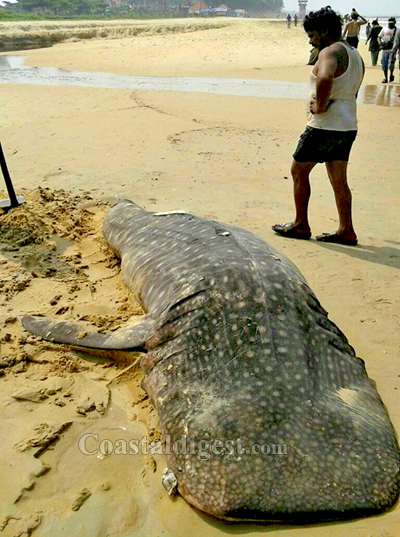
Panambur whalefish1

Panambur whalefish

Comments

Add new comment

  • Coastaldigest.com reserves the right to delete or block any comments.
  • Coastaldigset.com is not responsible for its readers’ comments.
  • Comments that are abusive, incendiary or irrelevant are strictly prohibited.
  • Please use a genuine email ID and provide your name to avoid reject.
News Network
December 7,2025

Mangaluru, Dec 7: A 34-year-old fruit and vegetable trader in Mangaluru has reportedly lost ₹33.1 lakh after falling victim to an online investment scam run through a fake mobile app.

Police said the scam began in September, when the victim received a link on Facebook. Clicking it connected him to a WhatsApp number, where an unidentified person introduced a high-return investment scheme and instructed him to download an app.

To build trust, the fraudster asked him to invest ₹30,000 on September 24. The trader soon received ₹34,000 as “profit,” convincing him the scheme was genuine. Over the next two months, he transferred money in multiple instalments via Google Pay and IMPS to different scanner codes and bank accounts shared by the scammers. Between September 24 and December 3, he ended up sending a total of ₹33.1 lakh.

When he later requested a refund of his investment and promised returns, the scammers demanded additional payments, claiming he needed to pay a “service tax” first. Even after he paid a small amount, no money was returned, and the scammers continued pressuring him for more.

A case has been registered at the CEN Crime Police Station.

Comments

Add new comment

  • Coastaldigest.com reserves the right to delete or block any comments.
  • Coastaldigset.com is not responsible for its readers’ comments.
  • Comments that are abusive, incendiary or irrelevant are strictly prohibited.
  • Please use a genuine email ID and provide your name to avoid reject.
