



From Delhi to Thailand, by road? Gadkari says possible in 2016

December 20, 2015

New Delhi, Dec 20: When it's about highways, Nitin Gadkari -- the 'flyover man from Maharashtra' -- seems to know the way to take it to a new high and his latest is linking Delhi with Thailand for an over 4,000-km road trip in 2016.
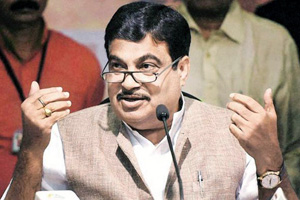
nitin-gadkari

"I don't believe in empty words... What I say I do," the Union Minister for Road Transport and Highways said while listing out his priorities for the new year.

As he sought to implement a number of initiatives in the year passing by to expand the road network in the country and removing the bottlenecks, Gadkari said his target is now to take the road building capacity to 100 km a day.

"We are building 18 km a day at present from a mere 2 km a day inherited by us from previous government," said Gadkari who had earlier this year set himself a target of 30 kms per day within two years.

"We will meet our previously announced target of 30 km a day in March 2016," he added.

"The way you travel to Mumbai on your car via Delhi, the same way you will be able to reach Thailand, hopefully, by the next year. It is a revolutionary work... People will not believe (now)," Gadkari told PTI in an interview here.

Talking about the progress made on various fronts in the roads and highways sector during 2015, Gadkari said projects worth lakhs of crores of rupees are being completed.

"Driving through India and its congested cities, towns and villages would be a breeze. Not only you can reach Bhutan and Myanmar through bigger, wider and better road network but once the Chabahar deal in Iran is clinched, you will be driving all the way to Russia and Europe via Iran and Afghanistan once you reach Chabahar via sea or air from India.

"This is the dream for which government is willing to pump lakhs of crores of rupees," he said.

"Nothing is impossible," said Gadkari who has been known as one of the key persons behind the former Prime Minister Atal Bihari Vajpayee's ambitious 'Pradhan Mantri Gram Sadak Yojna' project. The "Flyover man from Maharashtra" tag comes from his work on creating a network of flyovers and the Mumbai-Pune Expressway before he came to Centre.

"A trilateral pact between India-Myanmar-Thailand (IMT) is expected by March 2016," Gadkari said while adding that the landmark Bangladesh, Bhutan, India, Nepal (BBIN) Motor Pact has already been inked with identification of 14 routes for passenger services and 7 routes for cargo movement.

"Work on the USD 8 billion road connectivity BBIN project is likely to be completed soon with ADB funding," he said.

Once BBIN and IMT are operationalised, a seamless vehicular movement between SAARC and ASEAN nations will become a reality and "I hope that this will happen very soon", he said.

He said India will soon begin work on building a sea-bridge and a tunnel connecting Sri Lanka, while ADB is ready to fully-finance the Rs 24,000 crore project connecting Rameshwaram to Sri Lanka.

On domestic front, the targets include building up to 16 express highways, making Delhi congestion free by 2017 and laying a green canopy on thousands of kilometres of national highways. India has the world's second largest road network.

"At least Rs 5,000 crore, one per cent of the Rs 5 lakh crore worth of road projects, will be spent on greening of highways," Gadkari said.

To transform India's 96,000-km network of National Highways (NHs) into green corridors, the government has come out with a Green Highways Policy under which it will be mandatory to set aside 1 per cent of the total project cost for plantation.

"I will transform India's infrastructure in a manner that after five years, people would not be able to believe what they are seeing," Gadkari said while listing out his 'incredible-sounding' ideas.

Gadkari said he inherited Rs 3.8 lakh crore worth of stuck projects on account of land and environmental disputes. This forced developers into debt and the problem has been further compounded by the fact that 30 per cent of all loans are to the infrastructure sector.

A confident Gadkari however said the government is committed to providing at least 50 lakh jobs to people in the highways and shipping sectors.

"Our government has already awarded projects worth Rs 1 lakh crore," the minister said.

"Last year there were only 5 PPP projects. But this year, so far 9 big PPP projects are starting and bids are over. We are doing 17 projects on hybrid model and many more would follow. We would contribute at least 2 percentage points to India's GDP," he said.

"We have had a series of meetings with bankers and barring 19 of the 77 stuck projects have rolled out," Road Transport and Highways Secretary Vijay Chhiber said.

Government plans to sell 112 projects completed through government funds to foreign insurance and pension funds.

Highways Ministry has Rs 42,000 crore budgetary allocations. NHAI will raise Rs 70,000 crore from tax exempted bonds. Govt may securitise annual Rs 7,000-8,000 crore toll collection for 15 years to get Rs 1,20,000 crore.

To woo bidders, the government has allowed them to divest 100 per cent equity in highway projects two years after completion.

There are 80 Build, Operate and Transfer (BOT) projects awarded prior to 2009 that have been completed and the locked in equity in these projects works out to approximately Rs 4,500 crore.

Barely days after the policy announcement, Gammon Infrastructure, in one of the largest asset sales at one go in the infrastructure space, exited 9 projects valued at Rs 6,750 crore to Brookfield and Core Infra India Fund. The deal fetched the company Rs 563 crore and will help it reduce its debt by Rs 1,718 crore.

NHAI Chief Raghav Chandra said such deals will result in the companies ploughing back funds in highway projects.

Rating agency India Ratings estimates that out of the 86 completed projects equivalent to 5,200 km that have been completed under public private partnership, around Rs 4,000 crore of additional residual equity can be released under the proposed divestment scheme.

Projecting the country's highways sector as a "unique opportunity" for investments, the government has rolled out projects worth USD 93 billion saying investment opportunities include "new models being rolled out both for greenfield (hybrid annuity) and brownfield projects (monetisation).

Gadkari said plan is to build durable concrete roads and a portal with the initiative has resulted in booking of 95 lakh tonnes of cement online for highways apart from sale of 3 lakh tonnes by 37 cement makers.

A similar portal is planned to make available steel at competitive prices as domestic producers face an onslaught of cheaper imports from China, Japan and Korea.

Gadkari also hoped that the Bill to transform India's transport sector will soon see the light of the day.

The Road Transport and Safety Bill seeks to clamp down heavily on traffic offenders and proposes a steep penalty of up to Rs 3 lakh, along with a minimum 7-year imprisonment for death of a child, besides huge fines for other driving violations. The legislation also aims to bring down fatalities in road accidents by two lakh in the first five years.

India sees 5 lakh road accidents annually -- one of the highest in the world -- in which 1.5 lakh people lose lives while another 3 lakh are crippled for life.

As per Gadkari, other ambitious projects include a Rs 4,000 crore Metrino project that will connect the 70-km stretch from Dhaula Kuan in the national capital to Manesar in Haryana. A detailed report is being worked out for the project, under which, fully-automatic and driverless small pods would travel independently suspended over an overhead network, which is usually 5-10 meters above ground.

In an eco-friendly initiative, ISRO in collaboration with the Road Ministry is developing cost-effective lithium-ion batteries that will power electric buses in Delhi.

The government has plans to run at least 15 electric buses driven by indigenous economically viable battery.

Also on anvil is a 1,000-km Chaar Dhaam Yatra project to connect the four holy towns of Yamunotri, Gangotri, Kedarnath and Badrinath with highways at a cost of Rs 11,000 crore and a 5000-km of road network along the borders and coastal areas under 'Bharat Mala' at an estimated Rs 80,000 crore.

India has the world's second-largest road network at 4.80 million kilometers and national highways comprise 2 per cent of total road network bearing 40 per cent of total traffic and 65 per cent of freight and 80 per cent of passenger traffic. The National Highways length is about one lakh km.

Having set such ambitious targets, Gadkari has also given a stern 'perform or take VRS' warning to officials sitting on files and has asked them not to become obstacles in the way of "India achieving world class infrastructure".

The government has decided to use ISRO-aided satellites and drones to monitor its highways construction programme to fast-track building of roads.


Comments

Add new comment

  • Coastaldigest.com reserves the right to delete or block any comments.
  • Coastaldigset.com is not responsible for its readers’ comments.
  • Comments that are abusive, incendiary or irrelevant are strictly prohibited.
  • Please use a genuine email ID and provide your name to avoid reject.
News Network
December 20,2025

train.jpg

At least seven elephants were killed and one calf injured after a herd collided with the Sairang-New Delhi Rajdhani Express in Assam's Hojai on Saturday morning, leading to disruption of rail services. 

The Sairang-New Delhi Rajdhani Express struck a herd of elephants, resulting in the derailment of the locomotive and five coaches. No passenger casualties or injuries were reported, officials said.

The New Delhi-bound train met with the accident around 2.17 am, PTI reported. The Sairang-New Delhi Rajdhani Express connects Mizoram's Sairang (near Aizawl) to Anand Vihar Terminal (Delhi). 

Railway has issued helpline numbers at the Guwahati Railway Station:-

•    0361-2731621
•    0361-2731622
•    0361-2731623

The accident site is located about 126 km from Guwahati. Following the incident, accident relief trains and railway officials rushed to the spot to initiate rescue operations.

Train Services Disrupted

Sources said that due to the derailment and elephant body parts scattered on the tracks, train services to Upper Assam and other parts of the Northeast were affected.

Passengers from the affected coaches were temporarily accommodated in vacant berths available in other coaches of the train. Once the train reaches Guwahati, additional coaches will be attached to accommodate all passengers, after which the train will resume its onward journey.

The incident occurred at a location that is not a designated elephant corridor. The loco pilot, upon spotting the herd on the tracks, applied emergency brakes. Despite this, the elephants dashed into the train, leading to the collision and derailment.

Last month, an elephant was killed after being hit by a train in Dhupguri in West Bengal's Jalpaiguri district. The incident took place on November 30. 

The adult elephant was killed on the spot, and a calf was discovered lying injured beside the tracks. 

Over 70 Elephants Killed In Train Collisions Over Last 5 Years

At least 79 elephants have died in train collisions across the country in the last five years, the Environment Ministry had informed Parliament in August.

In a written reply in the Lok Sabha, Minister of State for Environment Kirti Vardhan Singh had said the figure is based on reports from state governments and Union Territory administrations for the period 2020-21 to 2024-25.

He said that the ministry does not maintain consolidated data on the deaths of other wild animals on railway tracks, including in designated elephant corridors.

Singh confirmed that three elephants, including a mother and her calf, were killed on July 18 this year after being hit by a speeding express train on the Kharagpur-Tatanagar section in West Bengal's Paschim Midnapore district. The incident took place near Banstala between Jhargram and Banstala stations.

The minister said several measures have been taken jointly by the Environment Ministry and the Railways to prevent such accidents.

These include imposing speed restrictions in elephant habitats, pilot projects such as seismic sensor-based detection of elephants near tracks and construction of underpasses, ramps and fencing at vulnerable points.

The Wildlife Institute of India, in consultation with the ministry and other stakeholders, has also issued guidelines titled 'Eco-friendly Measures to Mitigate Impacts of Linear Infrastructure' to help agencies design railways and other projects in ways that reduce human-animal conflicts.

Singh added that capacity-building workshops were conducted for railway officials at the Wildlife Institute of India in 2023 and 2024 to raise awareness on elephant conservation and protection.

A detailed report titled 'Suggested Measures to Mitigate Elephant & Other Wildlife Train Collisions on Vulnerable Railway Stretches in India' had also been prepared after surveys across 127 railway stretches covering 3,452 km.

Of these, 77 stretches spanning 1,965 km in 14 states were prioritised for mitigation, with site-specific interventions suggested. 

Comments

Add new comment

  • Coastaldigest.com reserves the right to delete or block any comments.
  • Coastaldigset.com is not responsible for its readers’ comments.
  • Comments that are abusive, incendiary or irrelevant are strictly prohibited.
  • Please use a genuine email ID and provide your name to avoid reject.
News Network
December 13,2025

New Delhi: School-going children are picking up drug and smoking habits and engaging in consumption of alcohol, with the average age of introduction to such harmful substances found to be around 13 years, suggesting a need for earlier interventions as early as primary school, a multi-city survey by AIIMS-Delhi said.

The findings also showed substance use increased in higher grades, with grade XI/XII students two times more likely to report use of substances when compared with grade VIII students. This emphasised the importance of continued prevention and intervention through middle and high school.

The study led by Dr Anju Dhawan of AIIMS's National Drug Dependence Treatment Centre, published in the National Medical Journal of India this month, looks at adolescent substance use across diverse regions.

The survey included 5,920 students from classes 8, 9, 11 and 12 in urban government, private and rural schools across 10 cities -- Bengaluru, Chandigarh, Delhi, Dibrugarh, Hyderabad, Imphal, Jammu, Lucknow, Mumbai, and Ranchi. The data were collected between May 2018 and June 2019.

The average age of initiation for any substance was 12.9 (2.8) years. It was lowest for inhalants (11.3 years) followed by heroin (12.3 years) and opioid pharmaceuticals (without prescription; 12.5 years).

Overall, 15.1 per cent of participants reported lifetime use, 10.3 per cent reported past year use, and 7.2 per cent reported use in the past month of any substance, the study found.

The most common substances used in the past year, after tobacco (4 per cent) and alcohol (3.8 per cent), were opioids (2.8 per cent), followed by cannabis (2 per cent) and inhalants (1.9 per cent). Use of non-prescribed pharmaceutical opioids was most common among opioid users (90.2 per cent).

On being asked, 'Do you think this substance is easily available for a person of your age' separately for each substance category, nearly half the students (46.3 per cent) endorsed that tobacco products and more than one-third of the students (36.5 per cent) agreed that a person of their age can easily procure alcohol products.

Similarly, for Bhang (21.9 per cent), ganja/charas (16.1 per cent), inhalants (15.2 per cent), sedatives (13.7 per cent), opium and heroin (10 per cent each), the students endorsed that these can be easily procured.

About 95 per cent of the children, irrespective of their grade, agreed with the statement that 'drug use is harmful'.

The rates of substance use (any) among boys were significantly higher than those of girls for substance use (ever), use in the past year and use in the past 30 days. Compared to grade VIII students, grade IX students were more likely, and grade XI/XII students were twice as likely to have used any substance (ever).

The likelihood of past-year use of any substance was also higher for grade IX students and for grade XI/XII students as compared to grade VIII students.

About 40 per cent of students mentioned that they had a family member who used tobacco or alcohol each. The use of cannabis (any product) and opioid (any product) by a family member was reported by 8.2 per cent and 3.9 per cent of students, respectively, while the use of other substances, such as inhalants/sedatives by family was 2-3 per cent, the study found.

A relatively smaller percentage of students reported use of tobacco or alcohol among peers as compared to among family members, while a higher percentage reported inhalants, sedatives, cannabis or opioid use among peers.

Children using substances (past year) compared to non-users reported significantly higher any substance use by their family members and peers.

There were 25.7 per cent students who replied 'yes' to the question 'conflicts/fights often occur in your family'. Most students also replied affirmatively to 'family members are aware of how their time is being spent' and 'damily members are aware of with whom they spend their time'.

Comments

Add new comment

  • Coastaldigest.com reserves the right to delete or block any comments.
  • Coastaldigset.com is not responsible for its readers’ comments.
  • Comments that are abusive, incendiary or irrelevant are strictly prohibited.
  • Please use a genuine email ID and provide your name to avoid reject.