



Demonetisation sucked in cash like vacuum cleaner: IMF official

February 24, 2017

Washington, Feb 24: India's demonetisation led to huge cash shortages that have "adversely affected" consumption and like a "vacuum cleaner" it sucked in cash and then was slowly replacing the currency, a senior IMF official has said.
imf

"You've heard about so-called 'helicopter drops' of money with unconventional monetary policies, so one way to characterise this demonetisation initiative is as a vacuum cleaner," Paul A Cashin, Assistant Director in the IMF's Asia and Pacific Department, and mission chief of India, told PTI.

"It's sucking in cash, withdrawing it from the economy, and then the vacuum cleaner is going in reverse, slowly replacing cash but as I said, at a fairly modest pace. That's led to a lot of cash shortages that have adversely affected consumption," Cashin said in response to a question as the IMF released its annual country-report on India.

Given the shortage of cash in the market, IMF in its report urged the Indian Government to continue to enhance the supply of new banknotes, and if needed consider extending or expanding targeted temporary exemptions, including on use of old banknotes, particularly for rural and remote areas.

"While the financial system is expected to weather the currency exchange-induced temporary growth slowdown, the authorities should remain vigilant given the potential further build-up of NPAs and elevated corporate sector vulnerabilities, and ensure prudent support to the economic sectors affected by the currency exchange initiative," the IMF said.

IMF said the repercussions from India's currency exchange initiative will likely persist through the first quarter of 2017.

Real GDP growth is projected to slow to 6.6 per cent in FY2016/17 and then rebound to 7.2 per cent in FY2017/18, due to temporary disruptions (primarily to private consumption) caused by cash shortages accompanying the currency exchange initiative.

"These effects are expected to gradually dissipate by March 2017 as cash shortages ease and would be offset by tailwinds from a favourable monsoon and low oil prices, and continued progress in resolving supply-side bottlenecks," it said adding that consumer sentiment remains strong, which will support near-term growth recovery as cash shortages ease.

Prime Minister Modi in November last year announced withdrawal of the legal tender of Rs 500 and Rs 1000 currency notes in circulation.

This was replaced with a new series of Rs 500 and Rs 2000 currency notes, with an objective to unearth unaccounted wealth and eliminate counterfeit currencies from circulation.

In its report, the IMF said the currency exchange initiative and its associated cash shortages are weighing heavily on activity, and its impact on financial institutions should be monitored carefully.

Given the dominance of cash in everyday transactions, the decreased availability of cash and associated payment disruptions caused by the currency exchange initiative have strained consumption and business activity and the operations of the financial system, posing a new challenge to sustaining the growth momentum.

The supply of new banknotes in the first month following the initiative was insufficient, even as the authorities took multiple steps to ease the currency transition, the report said.

According to IMF, while the financial system is expected to weather the currency exchange-induced temporary growth slowdown, the authorities should remain vigilant to risks—in view of the potential further build-up of NPAs, including among private banks and elevated corporate sector vulnerabilities—and ensure prudent support to the affected economic sectors.

Comments

Add new comment

  • Coastaldigest.com reserves the right to delete or block any comments.
  • Coastaldigset.com is not responsible for its readers’ comments.
  • Comments that are abusive, incendiary or irrelevant are strictly prohibited.
  • Please use a genuine email ID and provide your name to avoid reject.
News Network
December 19,2025

Mangaluru: Public transport in Mangaluru is set for a state-led transformation as the government moves to deploy 100 new electric govt buses to replace unreliable private services. The initiative aims to provide a dependable alternative to private operators who have been frequently "cutting trips," leaving thousands of commuters stranded.

The announcement was made by Deputy Commissioner and MCC Administrator Darshan HV during a public phone-in session. The move specifically targets routes where private bus service has become erratic, ensuring that citizens no longer have to rely on a fluctuating private sector for their daily commute.

Restoring the Govt Presence

The transport crisis was brought to the forefront by Ramayya, a resident of Bajal, who highlighted a growing trend of private buses skipping morning and night trips. With the previous KSRTC (govt) services discontinued, residents have been left without a fallback option.

To fix this, the DC confirmed that the PM-eBus Sewa Scheme will bring 100 government-owned electric buses to the city:

•    Phased Deployment: The first 50 of the new 100 government buses are scheduled to arrive by March 2026.

•    State Infrastructure: Two new government depots, including one at Mudipu, are being prepared for operations.

•    Recruitment: The state has already begun training a new batch of government bus drivers to ensure the fleet is operational the moment it arrives.

Comments

Add new comment

  • Coastaldigest.com reserves the right to delete or block any comments.
  • Coastaldigset.com is not responsible for its readers’ comments.
  • Comments that are abusive, incendiary or irrelevant are strictly prohibited.
  • Please use a genuine email ID and provide your name to avoid reject.
News Network
December 7,2025

Mangaluru, Dec 7: A 34-year-old fruit and vegetable trader in Mangaluru has reportedly lost ₹33.1 lakh after falling victim to an online investment scam run through a fake mobile app.

Police said the scam began in September, when the victim received a link on Facebook. Clicking it connected him to a WhatsApp number, where an unidentified person introduced a high-return investment scheme and instructed him to download an app.

To build trust, the fraudster asked him to invest ₹30,000 on September 24. The trader soon received ₹34,000 as “profit,” convincing him the scheme was genuine. Over the next two months, he transferred money in multiple instalments via Google Pay and IMPS to different scanner codes and bank accounts shared by the scammers. Between September 24 and December 3, he ended up sending a total of ₹33.1 lakh.

When he later requested a refund of his investment and promised returns, the scammers demanded additional payments, claiming he needed to pay a “service tax” first. Even after he paid a small amount, no money was returned, and the scammers continued pressuring him for more.

A case has been registered at the CEN Crime Police Station.

Comments

Add new comment

  • Coastaldigest.com reserves the right to delete or block any comments.
  • Coastaldigset.com is not responsible for its readers’ comments.
  • Comments that are abusive, incendiary or irrelevant are strictly prohibited.
  • Please use a genuine email ID and provide your name to avoid reject.
News Network
December 7,2025

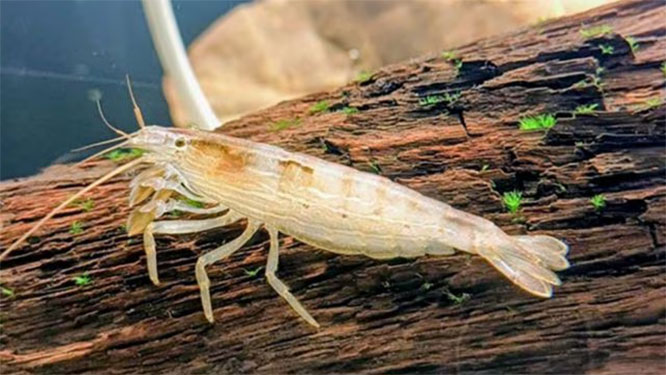
SHRIMP.jpg

Mangaluru, Dec 7: A rare bamboo shrimp has been rediscovered on mainland India more than 70 years after it was last reported, confirming for the first time the presence of Atyopsis spinipes in the country. The find was made by researchers from the Centre for Climate Change Studies at Sathyabama Institute of Science and Technology, Chennai, during surveys in Karnataka and Odisha.

The team — shrimp expert Dr S Prakash, PhD scholar K Kunjulakshmi, and Mangaluru-based researcher Maclean Antony Santos — combined field surveys, ecological assessments and DNA analysis to identify the elusive species. Their findings, published in Zootaxa, resolve decades of taxonomic confusion stemming from a 1951 report that misidentified the species as Atyopsis moluccensis without strong evidence.

The shrimp has now been confirmed at two locations: the Mulki–Pavanje estuary near Mangaluru and the Kuakhai River in Bhubaneswar. Historical specimens from the Andaman Islands, previously labelled as A. moluccensis, were also found to be misidentified and actually belong to A. spinipes.

The rediscovery began after an aquarium hobbyist in Odisha spotted a shrimp in 2022, prompting systematic surveys across Udupi, Karwar and Mangaluru. Four female specimens were collected in Mulki and one in Odisha, all genetically matching.

Researchers warn the species may exist in very small, vulnerable populations as freshwater habitats face increasing pressure from pollution, sand mining and infrastructure development. All verified specimens have been deposited with the Zoological Survey of India for future reference.

Comments

Add new comment

  • Coastaldigest.com reserves the right to delete or block any comments.
  • Coastaldigset.com is not responsible for its readers’ comments.
  • Comments that are abusive, incendiary or irrelevant are strictly prohibited.
  • Please use a genuine email ID and provide your name to avoid reject.