



DMK chief Karunanidhi, who served as Tamil Nadu CM for 5 times, passes away at 94

Agencies
August 7, 2018

Chennai, Aug 7: DMK chief M Karunanidhi - five-time Chief Minister of Tamil Nadu who dominated the state's politics for six decades along with arch-rivals MG Ramachandran and later, J Jayalalithaa - died at a hospital in Chennai Tuesday evening. The 94-year-old leader was admitted to Kauvery Hospital on July 28 after he contracted urinary tract infection and developed a high fever.

He died at 6.10 pm. "Despite the best possible efforts by our team of doctors and nurses to resuscitate him, he failed to respond," the hospital said in a statement.

On July 29, Mr Karunanidhi's vital signs had weakened triggering huge concern, but the crisis passed within hours. The hospital later called it a "transient setback" and the doctors advised a longer stay, citing "age related overall decline, altered liver function and haematological parameters".

On Monday evening, his health took a downturn again. In a bulletin, the hospital said maintaining his vital organ functions remains "a challenge" in view of his age-related ailments and the next 24 hours would be crucial.

The body of the DMK president was taken to his home in Gopalapuram in Chennai and was later shifted to his other residence in CIT Colony. It will next be taken to Rajaji Hall for people to pay their last respects. Karunanidhi's mortal remains will be laid to rest on Wednesday.

Prime Minister Narendra Modi tweeted his condolence for the death of Mr Karunanidhi, calling him a deep-rooted mass leader, prolific thinker, accomplished writer and a stalwart devoted to the welfare of the poor. 

PM Modi will travel to Chennai this morning to pay his last respects to Mr Karunanidhi. So will Congress president Rahul Gandhi.

For more than a year, Mr Karunanaidhi has been in and out of hospital while recovering from a long ailment. He lived a secluded life - making no public appearance except occasional visits to his party office.

During the last stretch of his illness, President Ram Nath Kovind, Vice President Venkiah Naidu and a number of political leaders across party lines visited him -- initially at his home and then at the hospital. Among them were Congress chief Rahul Gandhi, union minister Nitin Gadkari, Trinamool Congress leader Derek O'Brien, actor-politicians Kamal Haasan and Rajinikanth.

Like MG Ramachandran and J Jayalalithaa, Mr Karunanidhi quit a flourishing career in movies to devote himself to politics and the Dravidian movement led by Periyar EVR -- which he joined soon after it started in 1949. The "Kalaignar" (artiste) was known for his film scripts - a skill that greatly helped him in his political career. His powers of oratory bestowed on him a cult status much similar to Jayalalithaa.

In 1969, Mr Karunanidhi became a Chief Minister after DMK ideologue CN Annadurai died in office. Three years later, he fell out with MG Ramachandran and shunted him out of the party - leading to the formation of life-long rival All India Anna Dravida Munnetra Kazhagamor AIADMK.

The AIADMK came to power in 1977 and MGR ensured that Mr Karunanidhi's party stayed out of power as long as he was alive. Mr Karunanidhi regained to power in power in 1989 after MGR's death. But in the emotional aftermath of Rajiv Gandhi's assassination, he was shunted out as he was seen to be close to the Lankan outfit LTTE, responsible for the bomb attack on the former Prime Minister.

He returned to power again in 1996, after corruption charges caused a major loss of face for Jayalalithaa. Since then, the two parties have been voted in alternately - a tradition that was broken in 2016, when Jayalalithaa was elected for a second straight term.

Comments

Add new comment

  • Coastaldigest.com reserves the right to delete or block any comments.
  • Coastaldigset.com is not responsible for its readers’ comments.
  • Comments that are abusive, incendiary or irrelevant are strictly prohibited.
  • Please use a genuine email ID and provide your name to avoid reject.
News Network
December 15,2025

Mangaluru, Dec 15: Air India Express has announced that it will resume direct flight services between Mangaluru and Muscat from March 2026, restoring an important international air link for passengers from the coastal region.

Airport authorities said the service will operate twice a week—on Sundays and Tuesdays—from March 1. The initial flights are scheduled on March 3, 8 and 10, followed by March 15 and 17, with the same operating pattern to continue thereafter. The flight duration is approximately three hours and 25 minutes.

The Mangaluru–Muscat route was earlier operated under the 2025 summer schedule, with services beginning on July 14. At that time, Air India Express had operated four flights a week before suspending the service.

Officials said the summer schedule will come into effect from March 29, after which changes in flight timings and departure schedules from Mangaluru are expected. Passengers have been advised to check the latest schedules while planning their travel.

The resumption of direct flights to Muscat is expected to significantly benefit expatriates, business travellers and others, further strengthening Mangaluru’s air connectivity with the Gulf region.

Comments

Add new comment

  • Coastaldigest.com reserves the right to delete or block any comments.
  • Coastaldigset.com is not responsible for its readers’ comments.
  • Comments that are abusive, incendiary or irrelevant are strictly prohibited.
  • Please use a genuine email ID and provide your name to avoid reject.
News Network
December 16,2025

jordan.jpg

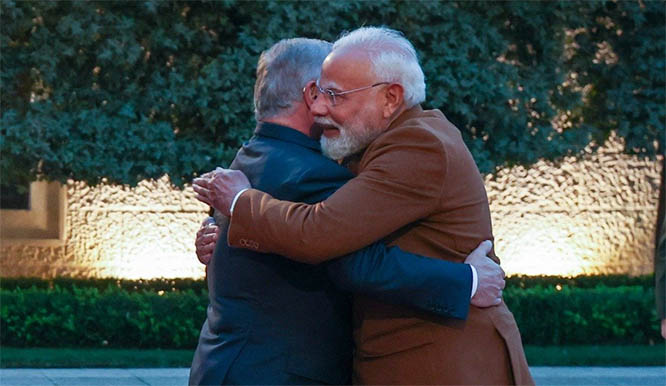
Prime Minister Narendra Modi on Monday held talks with Jordan’s King Abdullah II in Amman, during which the two leaders discussed ways to further strengthen bilateral relations, with the Prime Minister outlining an eight-point vision covering key areas of cooperation.

Describing the meeting as “productive”, PM Modi said he shared a roadmap focused on trade and economy, fertilisers and agriculture, information technology, healthcare, infrastructure, critical and strategic minerals, civil nuclear cooperation, and people-to-people ties.

In a post on social media platform X, the Prime Minister praised King Abdullah II’s personal commitment to advancing India–Jordan relations, particularly as both countries mark the 75th anniversary of the establishment of diplomatic ties this year.

“Held productive discussions with His Majesty King Abdullah II in Amman. His personal commitment towards vibrant India-Jordan relations is noteworthy. This year, we are celebrating the 75th anniversary of our bilateral diplomatic relations,” PM Modi said.

The meeting took place at the Al Husseiniya Palace, where the two leaders also exchanged views on regional and global issues of mutual interest. According to the Ministry of External Affairs (MEA), both sides agreed to further deepen cooperation in areas including trade and investment, defence and security, counter-terrorism and de-radicalisation, fertilisers and agriculture, infrastructure, renewable energy, tourism, and heritage.

The MEA said both leaders reaffirmed their united stand against terrorism.

PM Modi arrived in Amman earlier on Monday and was received by Jordanian Prime Minister Jafar Hassan, who accorded him a formal welcome. Following the talks, King Abdullah II hosted a banquet dinner in honour of the Prime Minister, reflecting the warmth of bilateral ties.

Jordan is the first leg of PM Modi’s three-nation tour. From Amman, the Prime Minister will travel to Ethiopia at the invitation of Prime Minister Abiy Ahmed Ali, marking his first official visit to the African nation. The tour will conclude with a visit to Oman.

Comments

Add new comment

  • Coastaldigest.com reserves the right to delete or block any comments.
  • Coastaldigset.com is not responsible for its readers’ comments.
  • Comments that are abusive, incendiary or irrelevant are strictly prohibited.
  • Please use a genuine email ID and provide your name to avoid reject.
News Network
December 16,2025

bengal.jpg

The deletion of over 58 lakh names from West Bengal’s draft electoral rolls following a Special Intensive Revision (SIR) has sparked widespread concern and is likely to deepen political tensions in the poll-bound state.

According to the Election Commission, the revision exercise has identified 24 lakh voters as deceased, 19 lakh as relocated, 12 lakh as missing, and 1.3 lakh as duplicate entries. The draft list, published after the completion of the first phase of SIR, aims to remove errors and duplication from the electoral rolls.

However, the scale of deletions has raised fears that a large number of eligible voters may have been wrongly excluded. The Election Commission has said that individuals whose names are missing can file objections and seek corrections. The final voter list is scheduled to be published in February next year, after which the Assembly election announcement is expected. Notably, the last Special Intensive Revision in Bengal was conducted in 2002.

The development has intensified the political row over the SIR process. Chief Minister Mamata Banerjee and her Trinamool Congress have strongly opposed the exercise, accusing the Centre and the Election Commission of attempting to disenfranchise lakhs of voters ahead of the elections.

Addressing a rally in Krishnanagar earlier this month, Banerjee urged people to protest if their names were removed from the voter list, alleging intimidation during elections and warning of serious consequences if voting rights were taken away.

The BJP, meanwhile, has defended the revision and accused the Trinamool Congress of politicising the issue to protect what it claims is an illegal voter base. Leader of the Opposition Suvendu Adhikari alleged that the ruling party fears losing power due to the removal of deceased, fake, and illegal voters.

The controversy comes amid earlier allegations by the Trinamool Congress that excessive work pressure during the SIR led to the deaths by suicide of some Booth Level Officers (BLOs), for which the party blamed the Election Commission. With the draft list now out, another round of political confrontation appears imminent.

As objections begin to be filed, the focus will be on whether the correction mechanism is accessible, transparent, and timely—critical factors in ensuring that no eligible voter is denied their democratic right ahead of a crucial election.

Comments

Add new comment

  • Coastaldigest.com reserves the right to delete or block any comments.
  • Coastaldigset.com is not responsible for its readers’ comments.
  • Comments that are abusive, incendiary or irrelevant are strictly prohibited.
  • Please use a genuine email ID and provide your name to avoid reject.
