Don’t interfere in Kashmir, stop ‘eyeing’ Punjab: Amarinder Singh warns Pakistan

News Network
November 10, 2019

Gurdaspur, Nov 10: Before he left for Kartarpur on Saturday, Punjab Chief Minister Amarinder Singh warned Pakistan against interfering in Kashmir and to stop “eyeing” Punjab, and said it won’t succeed in its “nefarious designs”.

Singh also said he hoped Pakistan would understand that India wants friendly relations with it.

The Punjab chief minister was part of the first batch of over 550 Indian pilgrims that entered Pakistan through the Kartarpur corridor, which was thrown open days ahead of the 550th birth anniversary of Sikhism founder Guru Nanak Dev on November 12.

The corridor links Gurdwara Darbar Sahib in Pakistan, the final resting place of Guru Nanak Dev, to Dera Baba Nanak shrine in Punjab’s Gurdaspur.

Singh said he had repeatedly asked Pakistan to desist from its “nefarious” activities.

“In Kashmir, they are taking up cudgels against our forces and now they have an eye on Punjab. I have told them many times to desist from such things, Punjabis will not tolerate such things. You will not succeed in your nefarious designs either in Kashmir or in Punjab.

“Punjabis are brave, we are not wearing bangles that you can do whatever and try to foment trouble,” the Punjab chief minister said.

He was addressing a gathering at Shikhaar Masiahan near here in the presence of Prime Minister Narendra Modi, who inaugurated the Kartarpur corridor on the Indian side.

Singh said Pakistan should concentrate on development, building schools, improving roads and providing clean drinking water to its people.

He wondered aloud what Pakistan will gain by harbouring enmity.

“I hope that they (Pakistan) understand that our country wants friendship with them. I have spoken to the prime minister (Narendra Modi) many times and he too wishes that peace should prevail and the two nations should come close,” he said.

The chief minister called upon the people to follow the path shown by Guru Nanak Dev.

On the opening of the Kartarpur corridor, Singh said he was blessed and privileged to witness the historic day.

“‘Khulle darshan deedar’ (unhindered access) of Kartarpur Sahib has been a cherished dream of every Sikh and it has become a reality today. I am truly fortunate to have this chance to be a part of the jatha and bow my head in the land of my beloved guru,” he said.

“For the last 70 years, every Sikh used to pray for ‘khulle darshan’. In 1947, when India was partitioned, Punjab was divided into two parts and some of our religious shrines remained there (in Pakistan).

“I have had the opportunity to go to Gurdwara Nankana Sahib twice, but for the first time I will be visiting the gurdwara at Kartarpur Sahib. I really wished that I could go there and today the prime minister has fulfilled my wish. I am thankful to the PM for this. Entire Punjab and the Sikh community are happy,” he said.

Later, in a tweet, Singh dubbed the Kartarpur corridor as a “historic” people-to-people initiative which offered a “glimmer of hope for the two countries”.

The Punjab chief minister also touched upon the stubble burning issue and called on people to protect the environment.

“Our water is getting scarce and experts say if we don’t conserve it, Punjab will turn into a desert in another 25 years. We have to ponder over this. If we think about this today, only then can we save our future and our coming generations,” he said.

Earlier, Shiromani Gurdwara Parbandhak Committee (SGPC) chief Gobind Singh Longowal said the opening of the Kartarpur corridor was a long-pending demand of the Sikh community and the Centre had given it a gift.

Speaking on the occasion, former Punjab chief minister Parkash Singh Badal said opening of the corridor was a matter of great happiness.

He said the area should be developed as the biggest centre of religious tourism.

Badal credited Modi with fulfilling the Sikh community’s demand.

“He (PM Modi) has a special bond with Punjab. Be it any issue of Punjab, religious, economic or political, he tries to find a solution,” he said.

Comments

Add new comment

  • Coastaldigest.com reserves the right to delete or block any comments.
  • Coastaldigset.com is not responsible for its readers’ comments.
  • Comments that are abusive, incendiary or irrelevant are strictly prohibited.
  • Please use a genuine email ID and provide your name to avoid reject.
News Network
December 16,2025

jordan.jpg

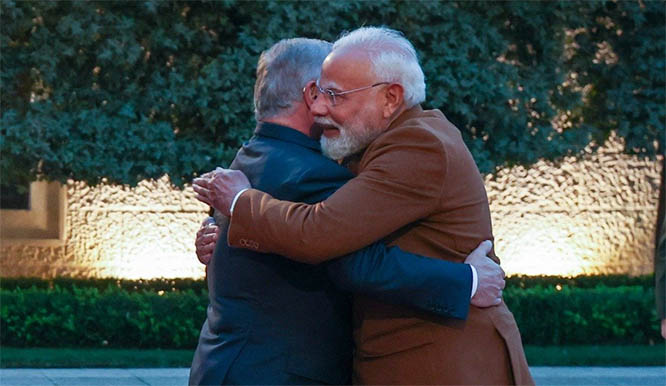
Prime Minister Narendra Modi on Monday held talks with Jordan’s King Abdullah II in Amman, during which the two leaders discussed ways to further strengthen bilateral relations, with the Prime Minister outlining an eight-point vision covering key areas of cooperation.

Describing the meeting as “productive”, PM Modi said he shared a roadmap focused on trade and economy, fertilisers and agriculture, information technology, healthcare, infrastructure, critical and strategic minerals, civil nuclear cooperation, and people-to-people ties.

In a post on social media platform X, the Prime Minister praised King Abdullah II’s personal commitment to advancing India–Jordan relations, particularly as both countries mark the 75th anniversary of the establishment of diplomatic ties this year.

“Held productive discussions with His Majesty King Abdullah II in Amman. His personal commitment towards vibrant India-Jordan relations is noteworthy. This year, we are celebrating the 75th anniversary of our bilateral diplomatic relations,” PM Modi said.

The meeting took place at the Al Husseiniya Palace, where the two leaders also exchanged views on regional and global issues of mutual interest. According to the Ministry of External Affairs (MEA), both sides agreed to further deepen cooperation in areas including trade and investment, defence and security, counter-terrorism and de-radicalisation, fertilisers and agriculture, infrastructure, renewable energy, tourism, and heritage.

The MEA said both leaders reaffirmed their united stand against terrorism.

PM Modi arrived in Amman earlier on Monday and was received by Jordanian Prime Minister Jafar Hassan, who accorded him a formal welcome. Following the talks, King Abdullah II hosted a banquet dinner in honour of the Prime Minister, reflecting the warmth of bilateral ties.

Jordan is the first leg of PM Modi’s three-nation tour. From Amman, the Prime Minister will travel to Ethiopia at the invitation of Prime Minister Abiy Ahmed Ali, marking his first official visit to the African nation. The tour will conclude with a visit to Oman.

Comments

Add new comment

  • Coastaldigest.com reserves the right to delete or block any comments.
  • Coastaldigset.com is not responsible for its readers’ comments.
  • Comments that are abusive, incendiary or irrelevant are strictly prohibited.
  • Please use a genuine email ID and provide your name to avoid reject.
News Network
December 17,2025

melkar1.jpg

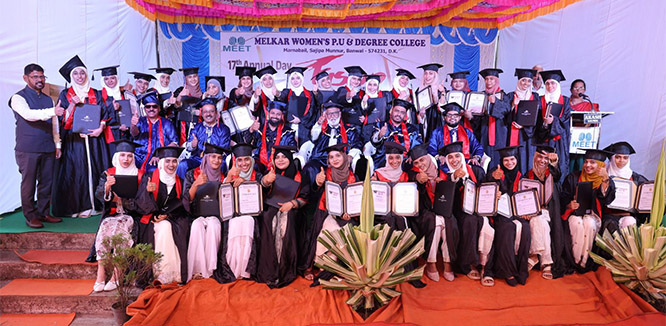
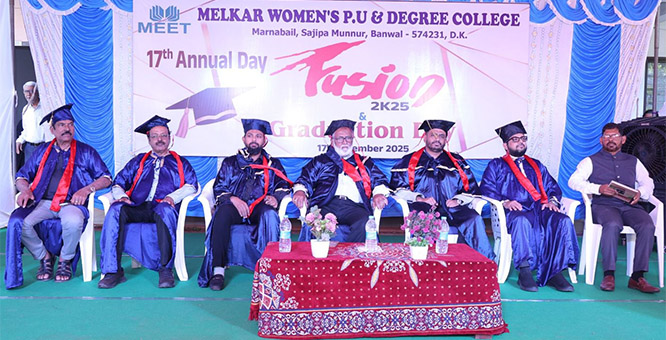
Melkar, Dec 17: The 17th Annual Day and Graduation Ceremony of Melkar Women’s PU and Degree College, themed “Fusion-2K25,” was celebrated with dignity and enthusiasm, marking a significant milestone in the institution’s academic journey. The programme reflected the college’s steadfast commitment to academic excellence, character building, and the holistic development of students.

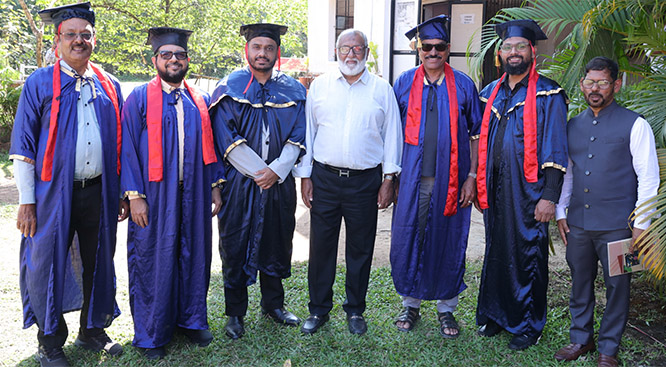
The event was inaugurated by Mr. Asif Mohammed, whose presence greatly enriched the occasion. The celebration was further graced by the chief guests Mr. P. B. Ahmed Mudassir and Mr. Nissar Fakeer Mohammed, along with the distinguished guests of honour Mr. B. A. Nazeer and Mr. Ibrahim Gadiyar. In their inspiring addresses, the guests encouraged the graduating students and appreciated the dedicated efforts of the management, faculty, and students.

The annual report was presented by the Principal, Mr. Abdul Majeed S, highlighting the institution’s academic progress, notable achievements, and extracurricular accomplishments during the academic year.

The presidential address was delivered by the esteemed Chairman of Melkar Women’s PU and Degree College, Dr. Haji S. M. Rasheed, who emphasized the vital role of education in empowering women and shaping responsible citizens. He also stressed the importance of discipline, dedication, and perseverance in achieving success.

Cultural programmes and academic recognitions formed an integral part of the celebration, showcasing the talents and achievements of the students. The graduation ceremony was a proud moment for the outgoing students as they were formally conferred degrees and wished success in their future endeavours.

Ms. Mashmooma Fathima served as the Master of Ceremonies. The welcome address was delivered by Ms. Fathima Nida, and the programme concluded with a vote of thanks proposed by Ms. Ayisha Suhana.

The event successfully achieved its objectives and was highly appreciated by the guests and attendees.

melkar3.jpg

melkar2.jpg

Comments

Add new comment

  • Coastaldigest.com reserves the right to delete or block any comments.
  • Coastaldigset.com is not responsible for its readers’ comments.
  • Comments that are abusive, incendiary or irrelevant are strictly prohibited.
  • Please use a genuine email ID and provide your name to avoid reject.
News Network
December 13,2025

New Delhi: School-going children are picking up drug and smoking habits and engaging in consumption of alcohol, with the average age of introduction to such harmful substances found to be around 13 years, suggesting a need for earlier interventions as early as primary school, a multi-city survey by AIIMS-Delhi said.

The findings also showed substance use increased in higher grades, with grade XI/XII students two times more likely to report use of substances when compared with grade VIII students. This emphasised the importance of continued prevention and intervention through middle and high school.

The study led by Dr Anju Dhawan of AIIMS's National Drug Dependence Treatment Centre, published in the National Medical Journal of India this month, looks at adolescent substance use across diverse regions.

The survey included 5,920 students from classes 8, 9, 11 and 12 in urban government, private and rural schools across 10 cities -- Bengaluru, Chandigarh, Delhi, Dibrugarh, Hyderabad, Imphal, Jammu, Lucknow, Mumbai, and Ranchi. The data were collected between May 2018 and June 2019.

The average age of initiation for any substance was 12.9 (2.8) years. It was lowest for inhalants (11.3 years) followed by heroin (12.3 years) and opioid pharmaceuticals (without prescription; 12.5 years).

Overall, 15.1 per cent of participants reported lifetime use, 10.3 per cent reported past year use, and 7.2 per cent reported use in the past month of any substance, the study found.

The most common substances used in the past year, after tobacco (4 per cent) and alcohol (3.8 per cent), were opioids (2.8 per cent), followed by cannabis (2 per cent) and inhalants (1.9 per cent). Use of non-prescribed pharmaceutical opioids was most common among opioid users (90.2 per cent).

On being asked, 'Do you think this substance is easily available for a person of your age' separately for each substance category, nearly half the students (46.3 per cent) endorsed that tobacco products and more than one-third of the students (36.5 per cent) agreed that a person of their age can easily procure alcohol products.

Similarly, for Bhang (21.9 per cent), ganja/charas (16.1 per cent), inhalants (15.2 per cent), sedatives (13.7 per cent), opium and heroin (10 per cent each), the students endorsed that these can be easily procured.

About 95 per cent of the children, irrespective of their grade, agreed with the statement that 'drug use is harmful'.

The rates of substance use (any) among boys were significantly higher than those of girls for substance use (ever), use in the past year and use in the past 30 days. Compared to grade VIII students, grade IX students were more likely, and grade XI/XII students were twice as likely to have used any substance (ever).

The likelihood of past-year use of any substance was also higher for grade IX students and for grade XI/XII students as compared to grade VIII students.

About 40 per cent of students mentioned that they had a family member who used tobacco or alcohol each. The use of cannabis (any product) and opioid (any product) by a family member was reported by 8.2 per cent and 3.9 per cent of students, respectively, while the use of other substances, such as inhalants/sedatives by family was 2-3 per cent, the study found.

A relatively smaller percentage of students reported use of tobacco or alcohol among peers as compared to among family members, while a higher percentage reported inhalants, sedatives, cannabis or opioid use among peers.

Children using substances (past year) compared to non-users reported significantly higher any substance use by their family members and peers.

There were 25.7 per cent students who replied 'yes' to the question 'conflicts/fights often occur in your family'. Most students also replied affirmatively to 'family members are aware of how their time is being spent' and 'damily members are aware of with whom they spend their time'.

Comments

Add new comment

  • Coastaldigest.com reserves the right to delete or block any comments.
  • Coastaldigset.com is not responsible for its readers’ comments.
  • Comments that are abusive, incendiary or irrelevant are strictly prohibited.
  • Please use a genuine email ID and provide your name to avoid reject.