



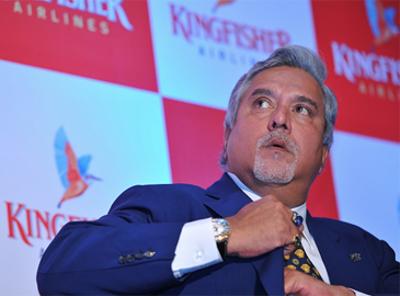
End of Good Times Now? Mallya wants Arnab behind bars for slander, deceit

March 11, 2016

mallya3
New Delhi, Mar 11: Under fire from the media, politicians and middle class, liquor baron Vijay Mallya, who owes Rs 9,000 crore to various banks, has reiterated that he is not an absconder but an international business man who travels to and from India frequently.

Mallya had left the country on 2 March, the day the State Bank of India filed a petition in the Bengaluru debt recovery tribunal seeking to impound his passport.

In a series of tweets, Mallya said he has not fled from India:

He has also accused the media of carrying out a witch hunt:

And also a veiled threat to the media:

The banks, who gave him loans after loans to keep his dying aircraft afloat, also came under fire:

It is the second time in as many weeks that Mallya is clarifying that he is not an absconder.

However, this time his clarification raises serious questions since this has come at a time when media reports have details about how he managed to fly out the country just a day after he attended the Rajya Sabha session.

A report in The Times of India on Friday says "the "wilful defaulter's" flight out of India (on 2 March) was in the lap of luxury". Giving out further details, the report citing a government official says that Mallya flew out in Jet Airways' Delhi-London flight 9W 122 on 2 March on a first class ticket. He was also accompanied by a woman and had seven huge baggages, the report says, which doesn't quite seem like a business trip.

Also if he is indeed not an absconder why did he not disclose his location in at least his tweets?

However, PTI had earlier reported that he may be in his country home in an English village about an hour's drive north of London.

The UB Group chairman and Rajya Sabha member is thought to have driven to his 'Ladywalk' estate in the village of Tiwen near St Albans in Hertfordshire from his London home near Baker Street area earlier this week, the report said.

This is likely to be true as he had only last month after his sweetheart deal with Diageo said that he wanted to move to the UK to be closer to his children.

"My statement as to my personal future after quitting Diageo/USL — that I want to spend more time in England closer to my children — has been grossly distorted and mis-portrayed.

I wish to reduce my business commitments gradually and devote more time to my family, and that my resignation from United Spirits was a step in this direction," he had said in the statement after the deal.

As part of the deal he resigned as chairman and director of United Spirits, the company he had sold to Diageo; agreed not to compete with Diageo in spirits business the world over for the next five years; and not to interfere in its Indian arm's business matters. Mallya was also to get a severance package of $75 million of which he may have already received $40 million as initial payment.

Even his tweet about the asset declaration in the Rajya Sabha has to be taken with a pinch of salt. A report in NDTV says the affidavit he filed in 2010, when he became the Rajya Sabha member for the second time, shows that he has no property and debt.

However, contrary to the declaration that he owns no property, PTI report says Mallya owns plush properties in California and the UK, has one of the biggest country homes on Queen Hoo Lane in the village of Tewin.

Moreover, attorney general Mukul Rohatgi had told the Supreme Court that abroad Mallya has assets, both movable and immovable, which are far excessive to loans secured by him here.

The Supreme Court on Monday ordered to issue notice for him to return to India with his passport. It is expected to be served to him via the Indian High Commission in London some time this week, the sources have told PTI.

However, the Indian mission has so far issued no statement on the timeline of the notice.

He likes to drop in at the local pubs during his visits there but has not been spotted around the village so far this week, choosing to stay inside his 30-acre estate guarded by customary iron gates that mark most sprawling country estates in English villages, the PTI report said.

Comments

Add new comment

  • Coastaldigest.com reserves the right to delete or block any comments.
  • Coastaldigset.com is not responsible for its readers’ comments.
  • Comments that are abusive, incendiary or irrelevant are strictly prohibited.
  • Please use a genuine email ID and provide your name to avoid reject.
News Network
December 13,2025

New Delhi: School-going children are picking up drug and smoking habits and engaging in consumption of alcohol, with the average age of introduction to such harmful substances found to be around 13 years, suggesting a need for earlier interventions as early as primary school, a multi-city survey by AIIMS-Delhi said.

The findings also showed substance use increased in higher grades, with grade XI/XII students two times more likely to report use of substances when compared with grade VIII students. This emphasised the importance of continued prevention and intervention through middle and high school.

The study led by Dr Anju Dhawan of AIIMS's National Drug Dependence Treatment Centre, published in the National Medical Journal of India this month, looks at adolescent substance use across diverse regions.

The survey included 5,920 students from classes 8, 9, 11 and 12 in urban government, private and rural schools across 10 cities -- Bengaluru, Chandigarh, Delhi, Dibrugarh, Hyderabad, Imphal, Jammu, Lucknow, Mumbai, and Ranchi. The data were collected between May 2018 and June 2019.

The average age of initiation for any substance was 12.9 (2.8) years. It was lowest for inhalants (11.3 years) followed by heroin (12.3 years) and opioid pharmaceuticals (without prescription; 12.5 years).

Overall, 15.1 per cent of participants reported lifetime use, 10.3 per cent reported past year use, and 7.2 per cent reported use in the past month of any substance, the study found.

The most common substances used in the past year, after tobacco (4 per cent) and alcohol (3.8 per cent), were opioids (2.8 per cent), followed by cannabis (2 per cent) and inhalants (1.9 per cent). Use of non-prescribed pharmaceutical opioids was most common among opioid users (90.2 per cent).

On being asked, 'Do you think this substance is easily available for a person of your age' separately for each substance category, nearly half the students (46.3 per cent) endorsed that tobacco products and more than one-third of the students (36.5 per cent) agreed that a person of their age can easily procure alcohol products.

Similarly, for Bhang (21.9 per cent), ganja/charas (16.1 per cent), inhalants (15.2 per cent), sedatives (13.7 per cent), opium and heroin (10 per cent each), the students endorsed that these can be easily procured.

About 95 per cent of the children, irrespective of their grade, agreed with the statement that 'drug use is harmful'.

The rates of substance use (any) among boys were significantly higher than those of girls for substance use (ever), use in the past year and use in the past 30 days. Compared to grade VIII students, grade IX students were more likely, and grade XI/XII students were twice as likely to have used any substance (ever).

The likelihood of past-year use of any substance was also higher for grade IX students and for grade XI/XII students as compared to grade VIII students.

About 40 per cent of students mentioned that they had a family member who used tobacco or alcohol each. The use of cannabis (any product) and opioid (any product) by a family member was reported by 8.2 per cent and 3.9 per cent of students, respectively, while the use of other substances, such as inhalants/sedatives by family was 2-3 per cent, the study found.

A relatively smaller percentage of students reported use of tobacco or alcohol among peers as compared to among family members, while a higher percentage reported inhalants, sedatives, cannabis or opioid use among peers.

Children using substances (past year) compared to non-users reported significantly higher any substance use by their family members and peers.

There were 25.7 per cent students who replied 'yes' to the question 'conflicts/fights often occur in your family'. Most students also replied affirmatively to 'family members are aware of how their time is being spent' and 'damily members are aware of with whom they spend their time'.

Comments

Add new comment

  • Coastaldigest.com reserves the right to delete or block any comments.
  • Coastaldigset.com is not responsible for its readers’ comments.
  • Comments that are abusive, incendiary or irrelevant are strictly prohibited.
  • Please use a genuine email ID and provide your name to avoid reject.