




Excessive texting can cause 'WhatsAppitis'

March 29, 2014

WhatsAppitis
London, Mar 29: What if you are told that excessive chatting or texting on 'WhatsApp' messenger service can hamper your health to an extent that you get a thumb disease! "WhatsAppitis" is real, and happening.

A report in the prestigious medical journal, The Lancet, said that "WhatsAppitis" is a credible disease, after a doctor in Spain diagnosed a 34-year-old female patient with bilateral wrist pain induced by excessive use of 'WhatsApp'.

"She held her mobile phone for at least six hours and continuously used both thumbs to send messages to relatives and friends," Spanish physician Ines M Fernandez-Guerrero wrote in the journal.

The next morning, that woman woke up with aching wrists.

"The diagnosis for the bilateral wrist pain was 'WhatsAppitis'," Fernandez-Guerrero added.

He treated the woman with non-steroidal, anti-inflammatory drugs and asked her to completely avoid using the cell phone to send messages.

"Initially reported in children, such cases are now seen in adults. 'Tenosynovitis' caused by texting with mobile phones could well be an emerging disease," the doctor has warned.

Physicians need to be careful of these new disorders coming to the fore owing to the hand-held technology, Fernandez-Guerrero cautioned.

Comments

Add new comment

  • Coastaldigest.com reserves the right to delete or block any comments.
  • Coastaldigset.com is not responsible for its readers’ comments.
  • Comments that are abusive, incendiary or irrelevant are strictly prohibited.
  • Please use a genuine email ID and provide your name to avoid reject.
News Network
December 7,2025

SHRIMP.jpg

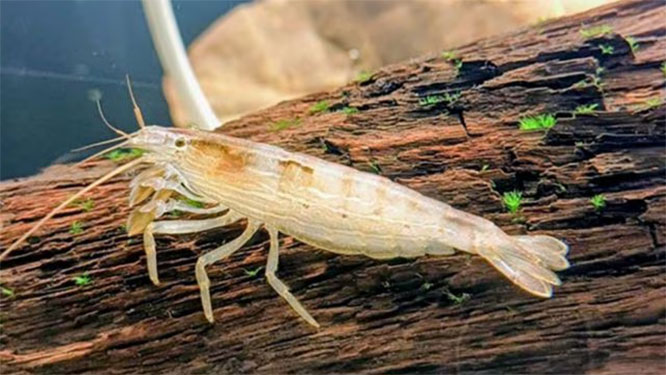
Mangaluru, Dec 7: A rare bamboo shrimp has been rediscovered on mainland India more than 70 years after it was last reported, confirming for the first time the presence of Atyopsis spinipes in the country. The find was made by researchers from the Centre for Climate Change Studies at Sathyabama Institute of Science and Technology, Chennai, during surveys in Karnataka and Odisha.

The team — shrimp expert Dr S Prakash, PhD scholar K Kunjulakshmi, and Mangaluru-based researcher Maclean Antony Santos — combined field surveys, ecological assessments and DNA analysis to identify the elusive species. Their findings, published in Zootaxa, resolve decades of taxonomic confusion stemming from a 1951 report that misidentified the species as Atyopsis moluccensis without strong evidence.

The shrimp has now been confirmed at two locations: the Mulki–Pavanje estuary near Mangaluru and the Kuakhai River in Bhubaneswar. Historical specimens from the Andaman Islands, previously labelled as A. moluccensis, were also found to be misidentified and actually belong to A. spinipes.

The rediscovery began after an aquarium hobbyist in Odisha spotted a shrimp in 2022, prompting systematic surveys across Udupi, Karwar and Mangaluru. Four female specimens were collected in Mulki and one in Odisha, all genetically matching.

Researchers warn the species may exist in very small, vulnerable populations as freshwater habitats face increasing pressure from pollution, sand mining and infrastructure development. All verified specimens have been deposited with the Zoological Survey of India for future reference.

Comments

Add new comment

  • Coastaldigest.com reserves the right to delete or block any comments.
  • Coastaldigset.com is not responsible for its readers’ comments.
  • Comments that are abusive, incendiary or irrelevant are strictly prohibited.
  • Please use a genuine email ID and provide your name to avoid reject.