Firecrackers, beef, child abduction rumours: India's lynching spectrum widens

Agencies
July 13, 2018

New Delhi, Jul 13: Jatin Das, a labourer, was beaten to death by an angry crowd at a wedding venue in Assam three days ago for allegedly demanding that revellers stop bursting firecrackers, laying bare once again the veneer of tolerance that gives way only too easily to extreme rage and aggression.

The 35-year-old labourer's tragic death this week is only the latest in a series of lynchings that have shocked India, and forced experts to introspect on collective anger that kills and the why and how of public violence.

According to reports, at least 20 people were killed in 14 separate incidents between May and July 2018 in various parts of India.

Though the National Crimes Records Bureau (NCRB) does not specifically track lynchings, the incidence of mob killings and vigilantism has been on the rise.

The killing of Das, who wanted the fireworks be stopped because he had been hit by a splinter, is one end of the lynching spectrum. If his ask triggered irrational fury, the other cases are fuelled by righteousness with mobs believing they were doing the good thing.

Some of the victims were believed to be beef eaters or indulging in cow slaughter, others were thought to be kidney smugglers, and in many cases the victims were suspected to be child abductors.

The reasons for this vigilante justice were varied but the root cause was often the same -- suspicion based on rumours fanned by messages on social media platforms like WhatsApp.

According to Mumbai-based psychologist Harish Shetty. India is caught in a "state of post-disaster syndrome", contributing significantly towards the making of an angst driven "fickle" population which can be easily instigated.

"One needs to understand that something or the other is always happening in this country...children are being stolen... suicides and murders are happening. All of this leaves people in a state of hyper-arousal and a small trigger can channel their frustration," he said.

In Dhule in Maharashtra, where five people were killed on July 1, violence in the predominantly adivasi region was triggered following rumours of child kidnappers on WhatsApp.

"Rumours of child kidnappers were doing rounds on Whatsapp, and people became suspicious of the victims who belonged to the nomadic Gosavi community due to their alien attire and language," Superintendent of Police M Ramkumar told .

A police team of "eight people", heavily outnumbered by the mob, reached the spot within 40 minutes, only to find that the victims had already succumbed to the attacks.

The deaths bring to light the horrors of mob fury when a group of people, sometimes 50 and sometimes as many as 3,500 like in Dhule, decide to take law in their hands and kill somebody. Last month, the deaths of 29-year-old Nilotpal Das and 30-year-old Abhijeet Nath in Assam's Karbi Anglong district shook the country. The two were beaten to death by over 500 angry people, again on the suspicion of being child abductors.

"It is an uncivilised notion of justice," said city-based lawyer Kirti Singh.

Equating the act of lynching with a kangaroo court where "the mob seems to be doing what it thinks is right", she said people build up the fury on "fake news".

She rued the absolute lack of political will to put an end to these "rumours" and blamed the absence of a policy of "zero-tolerance" towards the heinous crime for the lives lost.

"Lynching is illegal. It is brutal murder. The ruling dispensation needs to tell people they cannot take the law in their hands. There should be widespread condemnation of such actions. They should set an example by talking extensively about its horrors," the lawyer said.

Singh also stressed on the need for police to act immediately and efficiently to stop incidents of violence from escalating, particularly by getting more forces.

Agreeing with her, Shetty said, "The police needs to be 10 steps ahead of the rumours."

Putting a check on the anti-social elements spreading fake news, effectively communicating with the general public and making them aware about marginalised communities are some of key steps the police must keep in mind, Shetty said.

Cyber law expert Pawan Duggal suggested "data localisation" to supervise the disemmination of content on Whatsapp and similar platforms.

According to him, having servers of Whatsapp and Twitter in India will help bring the data that needs to be controlled within the physical boundary of India, thereby bringing it within the purview of Indian law.

"This could have a substantial impact on reducing the dissemination of fake news," Duggal said.

In 2015, the lynching of Mohammed Akhlaq following rumours that he was storing beef in his home in Dadri village shocked the nation and prompted a nationwide debate. Three years later, the cases continue to pile up but the outrage seems to have dulled, prompting the question -- is lynching the new normal?


Comments

saad Khan
 - 
Saturday, 14 Jul 2018

One Word  "ACHA DIN"

Add new comment

  • Coastaldigest.com reserves the right to delete or block any comments.
  • Coastaldigset.com is not responsible for its readers’ comments.
  • Comments that are abusive, incendiary or irrelevant are strictly prohibited.
  • Please use a genuine email ID and provide your name to avoid reject.
News Network
December 16,2025

bengal.jpg

The deletion of over 58 lakh names from West Bengal’s draft electoral rolls following a Special Intensive Revision (SIR) has sparked widespread concern and is likely to deepen political tensions in the poll-bound state.

According to the Election Commission, the revision exercise has identified 24 lakh voters as deceased, 19 lakh as relocated, 12 lakh as missing, and 1.3 lakh as duplicate entries. The draft list, published after the completion of the first phase of SIR, aims to remove errors and duplication from the electoral rolls.

However, the scale of deletions has raised fears that a large number of eligible voters may have been wrongly excluded. The Election Commission has said that individuals whose names are missing can file objections and seek corrections. The final voter list is scheduled to be published in February next year, after which the Assembly election announcement is expected. Notably, the last Special Intensive Revision in Bengal was conducted in 2002.

The development has intensified the political row over the SIR process. Chief Minister Mamata Banerjee and her Trinamool Congress have strongly opposed the exercise, accusing the Centre and the Election Commission of attempting to disenfranchise lakhs of voters ahead of the elections.

Addressing a rally in Krishnanagar earlier this month, Banerjee urged people to protest if their names were removed from the voter list, alleging intimidation during elections and warning of serious consequences if voting rights were taken away.

The BJP, meanwhile, has defended the revision and accused the Trinamool Congress of politicising the issue to protect what it claims is an illegal voter base. Leader of the Opposition Suvendu Adhikari alleged that the ruling party fears losing power due to the removal of deceased, fake, and illegal voters.

The controversy comes amid earlier allegations by the Trinamool Congress that excessive work pressure during the SIR led to the deaths by suicide of some Booth Level Officers (BLOs), for which the party blamed the Election Commission. With the draft list now out, another round of political confrontation appears imminent.

As objections begin to be filed, the focus will be on whether the correction mechanism is accessible, transparent, and timely—critical factors in ensuring that no eligible voter is denied their democratic right ahead of a crucial election.

Comments

Add new comment

  • Coastaldigest.com reserves the right to delete or block any comments.
  • Coastaldigset.com is not responsible for its readers’ comments.
  • Comments that are abusive, incendiary or irrelevant are strictly prohibited.
  • Please use a genuine email ID and provide your name to avoid reject.
News Network
December 7,2025

envoy.jpg

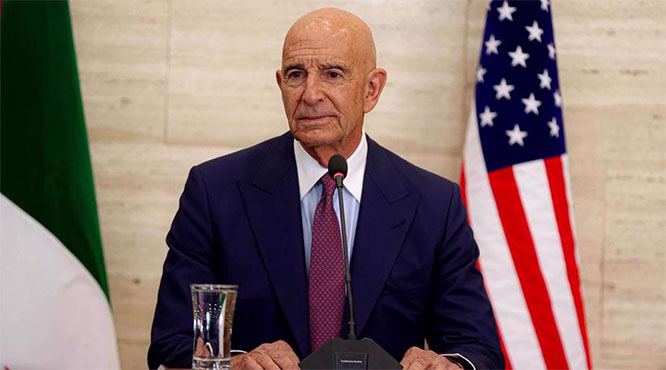
Since 1946, the United States has attempted 93 coups or “regime change” operations across the world — including two in Iran, US Special Envoy for Syria Tom Barrack has admitted.

Speaking to the UAE-based IMI Media Group, in remarks published by The National, Barrack said Washington tried twice to overthrow the Iranian government but failed both times. 

“For (Trump) then to be imputed with regime change — we had two regime changes in Iran already. Neither one worked. So I think wisely leave it to the region to solve,” said Barrack, who also serves as the US ambassador to Turkey.

His comments come six months after the US joined Israel in airstrikes against Iran during ongoing indirect nuclear negotiations between Tehran and Washington.

On June 13, Israel launched an attack on Iran that killed at least 1,064 people and hit civilian infrastructure. Days later, the United States targeted three nuclear facilities — Fordow, Natanz and Isfahan — in what Iran called a clear violation of international law. Iranian retaliation eventually forced a halt to the assault on June 24.

Barrack further claimed that US President Donald Trump and Foreign Secretary Marco Rubio are “not into regime change” and prefer a regional approach driven by Middle Eastern countries themselves. According to him, regional dialogue and non-interference by outside powers offer a more durable path forward.

He added that Washington is still open to an agreement with Tehran if Iranian authorities show “seriousness” and willingness to engage constructively.

However, Iran maintains the US has not shown readiness for meaningful talks. In an interview with Japan’s Kyodo News, Iranian Foreign Minister Abbas Araghchi said negotiations could advance only if Washington acknowledges Iran’s right to peaceful nuclear energy and lifts unilateral sanctions.

Comments

Add new comment

  • Coastaldigest.com reserves the right to delete or block any comments.
  • Coastaldigset.com is not responsible for its readers’ comments.
  • Comments that are abusive, incendiary or irrelevant are strictly prohibited.
  • Please use a genuine email ID and provide your name to avoid reject.
News Network
December 16,2025

bengal.jpg

The deletion of over 58 lakh names from West Bengal’s draft electoral rolls following a Special Intensive Revision (SIR) has sparked widespread concern and is likely to deepen political tensions in the poll-bound state.

According to the Election Commission, the revision exercise has identified 24 lakh voters as deceased, 19 lakh as relocated, 12 lakh as missing, and 1.3 lakh as duplicate entries. The draft list, published after the completion of the first phase of SIR, aims to remove errors and duplication from the electoral rolls.

However, the scale of deletions has raised fears that a large number of eligible voters may have been wrongly excluded. The Election Commission has said that individuals whose names are missing can file objections and seek corrections. The final voter list is scheduled to be published in February next year, after which the Assembly election announcement is expected. Notably, the last Special Intensive Revision in Bengal was conducted in 2002.

The development has intensified the political row over the SIR process. Chief Minister Mamata Banerjee and her Trinamool Congress have strongly opposed the exercise, accusing the Centre and the Election Commission of attempting to disenfranchise lakhs of voters ahead of the elections.

Addressing a rally in Krishnanagar earlier this month, Banerjee urged people to protest if their names were removed from the voter list, alleging intimidation during elections and warning of serious consequences if voting rights were taken away.

The BJP, meanwhile, has defended the revision and accused the Trinamool Congress of politicising the issue to protect what it claims is an illegal voter base. Leader of the Opposition Suvendu Adhikari alleged that the ruling party fears losing power due to the removal of deceased, fake, and illegal voters.

The controversy comes amid earlier allegations by the Trinamool Congress that excessive work pressure during the SIR led to the deaths by suicide of some Booth Level Officers (BLOs), for which the party blamed the Election Commission. With the draft list now out, another round of political confrontation appears imminent.

As objections begin to be filed, the focus will be on whether the correction mechanism is accessible, transparent, and timely—critical factors in ensuring that no eligible voter is denied their democratic right ahead of a crucial election.

Comments

Add new comment

  • Coastaldigest.com reserves the right to delete or block any comments.
  • Coastaldigset.com is not responsible for its readers’ comments.
  • Comments that are abusive, incendiary or irrelevant are strictly prohibited.
  • Please use a genuine email ID and provide your name to avoid reject.