Forced into prostitution: 629 Pakistani girls sold as brides to China

News Network
December 4, 2019

Lahore, Dec 4: Page after page, the names stack up: 629 girls and women from across Pakistan who were sold as brides to Chinese men and taken to China. The list, obtained by The Associated Press, was compiled by Pakistani investigators determined to break up trafficking networks exploiting the country's poor and vulnerable.
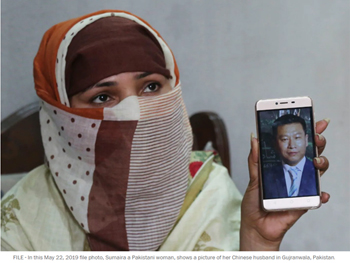
The list gives the most concrete figure yet for the number of women caught up in the trafficking schemes since 2018.

But since the time it was put together in June, investigators' aggressive drive against the networks has largely ground to a halt. Officials with knowledge of the investigations say that is because of pressure from government officials fearful of hurting Pakistan's lucrative ties to Beijing.

The biggest case against traffickers has fallen apart. In October, a court in Faisalabad acquitted 31 Chinese nationals charged in connection with trafficking. Several of the women who had initially been interviewed by police refused to testify because they were either threatened or bribed into silence, according to a court official and a police investigator familiar with the case. The two spoke on condition of anonymity because they feared retribution for speaking out.

At the same time, the government has sought to curtail investigations, putting "immense pressure" on officials from the Federal Investigation Agency pursuing trafficking networks, said Saleem Iqbal, a Christian activist who has helped parents rescue several young girls from China and prevented others from being sent there.

"Some (FIA officials) were even transferred," Iqbal said in an interview. "When we talk to Pakistani rulers, they don't pay any attention."

Asked about the complaints, Pakistan's interior and foreign ministries refused to comment.

Several senior officials familiar with the events said investigations into trafficking have slowed, the investigators are frustrated, and Pakistani media have been pushed to curb their reporting on trafficking. The officials spoke on condition of anonymity because they feared reprisals.

"No one is doing anything to help these girls," one of the officials said. "The whole racket is continuing, and it is growing. Why? Because they know they can get away with it. The authorities won't follow through, everyone is being pressured to not investigate. Trafficking is increasing now."

He said he was speaking out "because I have to live with myself. Where is our humanity?"

China's Foreign Ministry said it was unaware of the list.

"The two governments of China and Pakistan support the formation of happy families between their people on a voluntary basis in keeping with laws and regulations, while at the same time having zero tolerance for and resolutely fighting against any person engaging in illegal cross-border marriage behavior," the ministry said in a statement faxed Monday to AP's Beijing bureau.

An AP investigation earlier this year revealed how Pakistan's Christian minority has become a new target of brokers who pay impoverished parents to marry off their daughters, some of them teenagers, to Chinese husbands who return with them to their homeland. Many of the brides are then isolated and abused or forced into prostitution in China, often contacting home and pleading to be brought back. The AP spoke to police and court officials and more than a dozen brides some of whom made it back to Pakistan, others who remained trapped in China as well as remorseful parents, neighbors, relatives and human rights workers.

Christians are targeted because they are one of the poorest communities in Muslim-majority Pakistan. The trafficking rings are made up of Chinese and Pakistani middlemen and include Christian ministers, mostly from small evangelical churches, who get bribes to urge their flock to sell their daughters. Investigators have also turned up at least one Muslim cleric running a marriage bureau from his madrassa, or religious school.

Investigators put together the list of 629 women from Pakistan's integrated border management system, which digitally records travel documents at the country's airports. The information includes the brides' national identity numbers, their Chinese husbands' names and the dates of their marriages.

All but a handful of the marriages took place in 2018 and up to April 2019. One of the senior officials said it was believed all 629 were sold to grooms by their families.

It is not known how many more women and girls were trafficked since the list was put together. But the official said, "the lucrative trade continues." He spoke to the AP in an interview conducted hundreds of kilometers from his place of work to protect his identity. "The Chinese and Pakistani brokers make between 4 million and 10 million rupees ($25,000 and $65,000) from the groom, but only about 200,000 rupees ($1,500), is given to the family," he said.

The official, with years of experience studying human trafficking in Pakistan, said many of the women who spoke to investigators told of forced fertility treatments, physical and sexual abuse and, in some cases, forced prostitution. Although no evidence has emerged, at least one investigation report contains allegations of organs being harvested from some of the women sent to China.

In September, Pakistan's investigation agency sent a report it labeled "fake Chinese marriages cases" to Prime Minister Imran Khan. The report, a copy of which was attained by the AP, provided details of cases registered against 52 Chinese nationals and 20 of their Pakistani associates in two cities in eastern Punjab province Faisalabad, Lahore as well as in the capital Islamabad. The Chinese suspects included the 31 later acquitted in court.

The report said police discovered two illegal marriage bureaus in Lahore, including one operated from an Islamic center and madrassa the first known report of poor Muslims also being targeted by brokers. The Muslim cleric involved fled police.

After the acquittals, there are other cases before the courts involving arrested Pakistani and at least another 21 Chinese suspects, according to the report sent to the prime minister in September. But the Chinese defendants in the cases were all granted bail and left the country, say activists and a court official.

Activists and human rights workers say Pakistan has sought to keep the trafficking of brides quiet so as not to jeopardize Pakistan's increasingly close economic relationship with China.

China has been a steadfast ally of Pakistan for decades, particularly in its testy relationship with India. China has provided Islamabad with military assistance, including pre-tested nuclear devices and nuclear-capable missiles.

Today, Pakistan is receiving massive aid under China's Belt and Road Initiative, a global endeavor aimed at reconstituting the Silk Road and linking China to all corners of Asia. Under the $75 billion China-Pakistan Economic Corridor project, Beijing has promised Islamabad a sprawling package of infrastructure development, from road construction and power plants to agriculture.

The demand for foreign brides in China is rooted in that country's population, where there are roughly 34 million more men than women a result of the one-child policy that ended in 2015 after 35 years, along with an overwhelming preference for boys that led to abortions of girl children and female infanticide.

A report released this month by Human Rights Watch, documenting trafficking in brides from Myanmar to China, said the practice is spreading. It said Pakistan, Cambodia, Indonesia, Laos, Myanmar, Nepal, North Korea and Vietnam have "all have become source countries for a brutal business."

"One of the things that is very striking about this issue is how fast the list is growing of countries that are known to be source countries in the bride trafficking business," Heather Barr, the HRW report's author, told AP.

Omar Warriach, Amnesty International's campaigns director for South Asia, said Pakistan "must not let its close relationship with China become a reason to turn a blind eye to human rights abuses against its own citizens" either in abuses of women sold as brides or separation of Pakistani women from husbands from China's Muslim Uighur population sent to "re-education camps" to turn them away from Islam.

"It is horrifying that women are being treated this way without any concern being shown by the authorities in either country. And it's shocking that it's happening on this scale," he said.

Comments

Add new comment

  • Coastaldigest.com reserves the right to delete or block any comments.
  • Coastaldigset.com is not responsible for its readers’ comments.
  • Comments that are abusive, incendiary or irrelevant are strictly prohibited.
  • Please use a genuine email ID and provide your name to avoid reject.
News Network
January 31,2026

files.jpg

A fresh cache of files related to the investigation into the late convicted sex offender Jeffrey Epstein contains documents that reference President Donald Trump and other high-profile figures including Microsoft co-founder Bill Gates, Commerce Secretary Howard Lutnick and British billionaire Richard Branson.

Here are key details about mentions of the celebrities, none of whom have been accused of wrongdoing:

Donald Trump

The files included an FBI-compiled list of sexual assault allegations related to President Donald Trump -- many of them involving anonymous callers and unverified tips.

The allegations -- some secondhand -- were sent to the FBI's National Threat Operations Center which receives information by phone and electronically.

The document suggests that investigators followed up on a number of the tips. Some were deemed to lack credibility.

Trump has long denied any wrongdoing related to Epstein.

In a statement accompanying Friday's file dump, the Justice Department said: "Some of the documents contain untrue and sensationalist claims against President Trump that were submitted to the FBI right before the 2020 election. To be clear, the claims are unfounded and false."

Bill Gates

In a draft email among the documents, Epstein alleged Gates had engaged in extramarital affairs.

In the mail, Epstein wrote that his relationship with Gates had ranged from "helping Bill to get drugs, in order to deal with consequences of sex with russian girls, to facilitating his illicit trysts, with married women."

Richard Branson

Files show friendly relations between the two billionaires.

In an email sent to Epstein on Sept 11, 2013, Branson wrote "It was really nice seeing you yesterday. The boys in Watersports can't stop speaking about it! Any time you're in the area would love to see you. As long as you bring your harem!"

Elon Musk

The files contain numerous mail exchanges between Epstein and billionaire entrepreneur Elon Musk.

In November 2012, Epstein sent Musk an email asking "how many people will you be for the heli to island."

"Probably just Talulah and me. What day/night will be the wildest party on your island?" Musk replied.

Andrew Mountbatten-Windsor

The disgraced former prince invited Epstein to visit him at Buckingham Palace in September 2010 while the financier was making a trip to London.

An email exchange shows Epstein contacting Andrew to ask: "What time would you like me... we will also need... private time."

Andrew replied: "we could have dinner at Buckingham Palace and lots of privacy."

Howard Lutnick

Emails show that Epstein and businessman Lutnick -- currently Trump's commerce secretary -- made plans in December 2012 to lunch on Epstein's Caribbean island.

"We are heading towards you from St. Thomas" Lutnick's wife wrote to Epstein's secretary, asking where they should anchor.

Steve Tisch

Several mails suggested Epstein connected Steve Tisch, 76, producer of the movies "Forrest Gump" and "Risky Business" and the co-owner of the New York Giants football team, with multiple women.

In one exchange with Tisch, Epstein describes a woman as "russian, and rarely tells the full truth, but fun."

Zohran Mamdani's Mother, Filmmaker Mira Nair 

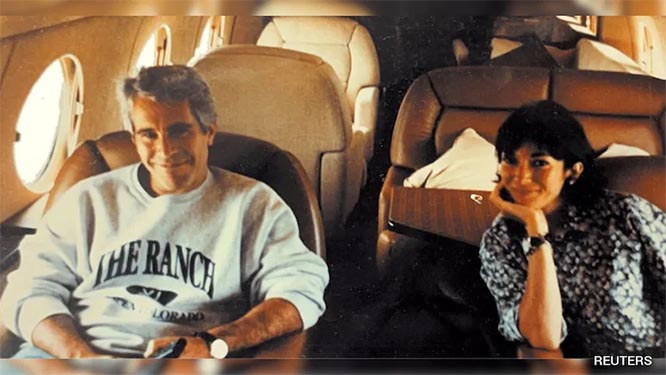
New York City Mayor Zohran Mamdani's mother, Mira Nair, attended an afterparty at convicted sex trafficker Ghislaine Maxwell's house for her 2009 film "Amelia", reveals a new set of Epstein files.

An email dated October 21, 2009, sent by publicist Peggy Siegal to Jeffrey Epstein, also surfaced in documents. The email, sent in the early hours, right after Siegal left the gathering, gives an insight into the afterparty. 

The party was also attended by former President Bill Clinton and Amazon CEO Jeff Bezos.

"Just left Ghislaine's townhouse...after party for film. Bill Clinton and Jeff Bezos were there...Jean Pigoni, director Mira Nair....etc," the email read.

The email described the reaction of guests to Nair's film as "tepid."

"Film received tepid reaction although women like it much more...Hillary Swank and Gen: at stupid party in Bloomingdales cheap sportwear department....very weird. Studio went for free party from store and windows for a month....Going to be in Wall Street 2 tomorrow ....more to come. xoxo Peg," the email read.

Comments

Add new comment

  • Coastaldigest.com reserves the right to delete or block any comments.
  • Coastaldigset.com is not responsible for its readers’ comments.
  • Comments that are abusive, incendiary or irrelevant are strictly prohibited.
  • Please use a genuine email ID and provide your name to avoid reject.
News Network
January 23,2026

Karnataka Governor Thaawarchand Gehlot read only three lines from the 122-paragraph address prepared by the Congress-led state government while addressing the joint session of the Legislature on Thursday, effectively bypassing large sections critical of the BJP-led Union government.

The omitted portions of the customary Governor’s address outlined what the state government described as a “suppressive situation in economic and policy matters” under India’s federal framework. The speech also sharply criticised the Centre’s move to replace the Mahatma Gandhi National Rural Employment Guarantee Act (MGNREGA) with the Viksit Bharat–Guarantee for Rozgar and Ajeevika Mission (Gramin) Act, commonly referred to as the VB-GRAM (G) Act.

Governor Gehlot had earlier conveyed his objection to several paragraphs that were explicitly critical of the Union government. On Thursday, he confined himself to the opening lines — “I extend a warm welcome to all of you to the joint session of the State legislature. I am extremely pleased to address this august House” — before jumping directly to the concluding sentence of the final paragraph.

He ended the address by reading the last line of paragraph 122: “Overall, my government is firmly committed to doubling the pace of the State’s economic, social and physical development. Jai Hind — Jai Karnataka.”

According to the prepared speech, the Karnataka government demanded the scrapping of the VB-GRAM (G) Act, describing it as “contractor-centric” and detrimental to rural livelihoods, and called for the full restoration of MGNREGA. The state government argued that the new law undermines decentralisation, weakens labour protections, and centralises decision-making in violation of constitutional norms.

Key points from the unread sections of the speech:

•    Karnataka facing a “suppressive” economic and policy environment within the federal system

•    Repeal of MGNREGA described as a blow to rural livelihoods

•    VB-GRAM (G) Act accused of protecting corporate and contractor interests

•    New law alleged to weaken decentralised governance

•    Decision-making said to be imposed by the Centre without consulting states

•    Rights of Adivasis, women, backward classes and agrarian communities curtailed

•    Labourers allegedly placed under contractor control

•    States facing mounting fiscal stress due to central policies

•    VB-GRAM (G) Act accused of enabling large-scale corruption

Comments

Add new comment

  • Coastaldigest.com reserves the right to delete or block any comments.
  • Coastaldigset.com is not responsible for its readers’ comments.
  • Comments that are abusive, incendiary or irrelevant are strictly prohibited.
  • Please use a genuine email ID and provide your name to avoid reject.
News Network
January 23,2026

oscar.jpg

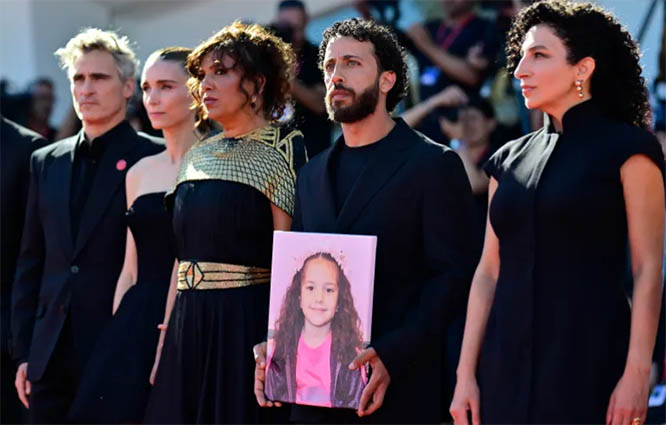
The Voice of Hind Rajab, inspired by the tragic final moments of a young Palestinian girl killed by Israeli fire in Gaza, has been nominated for an Academy Award in the Best International Feature Film category.

Directed by Tunisian filmmaker Kaouther Ben Hania, the film recounts the true story of five-year-old Hind Rajab, who lost her life in January 2024 while fleeing Israeli bombardment with her family.

The film features the real audio of Hind’s desperate call to the Palestinian Red Crescent Society, where she pleaded for help moments before the vehicle she was in was struck by 355 bullets.

The haunting narrative begins with a brief call made from the besieged Tel al-Hawa neighborhood of Gaza, where gunfire and armored vehicles drowned out every sound.

After witnessing the brutal killing of her family, she made a trembling call, her voice reduced to a whisper as she spoke of the massacre and her unbearable loneliness as the sole survivor.

Premiering at the Venice International Film Festival in September 2025, The Voice of Hind Rajab garnered widespread acclaim, receiving a record-setting 23-minute standing ovation and the Silver Lion Grand Jury Prize, the festival’s second-highest honor.

In her acceptance speech, Ben Hania dedicated the film to humanitarian workers and first responders in Gaza, emphasizing that Hind's voice symbolizes countless civilians affected by war.

She aims to give voice to victims often reduced to mere statistics, highlighting the broader suffering of civilians in war zones.

The film’s Oscar nomination underscores its powerful storytelling and ethical approach to depicting real-life tragedy, making it a crucial piece of contemporary cinema.

It serves not only as a narration of individual tragedy but also as an artistic and documentary response to the silence and censorship that often overshadow West Asian struggles and wars.

Using an innovative method she calls docufiction, Ben Hania bridges unvarnished reality and narrative structure, creating a work that is both artistically valuable and socially impactful.

Born in 1977 in Sidi Bouzid—later the epicenter of the Arab revolution—her background profoundly influenced her worldview and artistic approach.

She is a graduate of the Higher School of Audiovisual Arts of Tunis, Pantheon-Sorbonne University, and La Fémis in Paris, where her studies equipped her with the technical and theoretical tools needed to address complex subjects. 

Comments

Add new comment

  • Coastaldigest.com reserves the right to delete or block any comments.
  • Coastaldigset.com is not responsible for its readers’ comments.
  • Comments that are abusive, incendiary or irrelevant are strictly prohibited.
  • Please use a genuine email ID and provide your name to avoid reject.