



Former IPS Sanjiv Bhatt, a vocal critic of PM Modi, arrested in 22-yr-old case

Agencies
September 5, 2018

Ahmedabad, Sept 5: Former IPS officer Sanjiv Bhatt was arrested Wednesday by the Gujarat CID in connection with a 22-year-old case of alleged planting of drugs to arrest a man, police said.
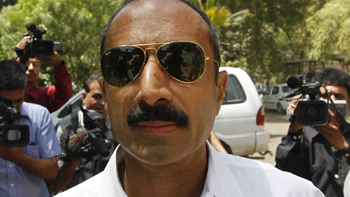
Bhatt and seven others, including some former policemen attached with the Banaskantha Police, were initially detained for questioning in the case.

Shortly after being questioned, Bhatt was arrested by the Crime Investigation Department while others are still kept under detention, Director General of Police, CID, Ashish Bhatia said.

Bhatt was the Banaskantha district superintendent of police in 1996. He was dismissed from the service in 2015.

As per the case details, the Banaskantha Police under Bhatt had arrested one Sumersingh Rajpurohit, an advocate, in 1996 on charges of possessing around one kg of drugs.

At that time, the Banaskantha Police had claimed that drugs were found in a hotel room occupied by Rajpurohit in the district's Palanpur town.

However, a probe by the Rajasthan Police had revealed that Rajpurohit was allegedly falsely implicated by the Banaskantha Police to compel him to transfer a disputed property at Pali in Rajasthan.

It had also found that Rajpurohit was allegedly abducted by the Banaskantha Police from his residence at Pali in Rajasthan.

Following the Rajasthan Police's investigation, former police inspector of Banaskantha, I B Vyas, had moved the Gujarat High Court in 1999 demanding a thorough inquiry into the matter.

In June this year, the high court had handed over the probe in the case to the CID while hearing the petition.

The high court had asked the CID to complete the probe in three months.

Bhatt was in August 2015 sacked by the union home ministry on grounds of "unauthorised absence" from service.He has been a vocal critic of the ruling BJP and Prime Minister Narendra Modi on social media platforms.

Bhatt had last week met Patidar leader Hardik Patel, who is on an indefinite fast since August 25 at his residence demanding reservation for his community and farm loan waiver.

Recently, the BJP-ruled Ahmedabad Municipal Corporation razed illegal construction at Bhatt's residence here after the Supreme Court dismissed his plea seeking a stay on the demolition.

Bhatt had several run-ins with the BJP government in the past over the issue of the 2002 post Godhra riots.


Comments

SD
 - 
Wednesday, 5 Sep 2018

BJP leaders  have realized that the end  is near, out of desperation they have arrested him

Add new comment

  • Coastaldigest.com reserves the right to delete or block any comments.
  • Coastaldigset.com is not responsible for its readers’ comments.
  • Comments that are abusive, incendiary or irrelevant are strictly prohibited.
  • Please use a genuine email ID and provide your name to avoid reject.
News Network
December 21,2025

hadith.jpg

Invoking the teachings of Prophet Muhammad—“pay the worker before his sweat dries”—the Madras High Court has directed a municipal corporation to settle long-pending legal dues owed to a former counsel. The court observed that this principle reflects basic fairness and applies equally to labour and service-related disputes.

Justice G. R. Swaminathan made the observation while hearing a petition filed by advocate P. Thirumalai, who claimed that the Madurai City Municipal Corporation failed to pay him legal fees amounting to ₹13.05 lakh. Earlier, the High Court had asked the corporation to consider his representation. However, a later order rejected a major portion of his claim, prompting the present petition.

The court allowed Thirumalai to approach the District Legal Services Authority (DLSA) and submit a list of cases in which he had appeared. It also directed the corporation to settle the verified fee bills within two months, without interest. The court noted that the petitioner had waited nearly 18 years before challenging the non-payment and that the corporation could not be fully blamed, as the fee bills were not submitted properly.

‘A Matter of Embarrassment’

Justice Swaminathan described it as a “matter of embarrassment” that the State has nearly a dozen Additional Advocate Generals. He observed that appointing too many law officers often leads to unnecessary allocation of work and frequent adjournments, as government counsel claim that senior officers are engaged elsewhere.

He expressed hope that such practices would end at least in the Madurai Bench of the High Court and added that Additional Advocate Generals should “turn a new leaf” from 2026 onwards.

‘Scandalously High Amounts’

While stating that the court cannot examine the exact fees paid to senior counsel or law officers, Justice Swaminathan stressed that good governance requires public funds to be used prudently. He expressed concern over the “scandalously high amounts” paid by government and quasi-government bodies to a few favoured law officers.

In contrast, the court noted that Thirumalai’s total claim was “a pittance” considering the large number of cases he had handled.

Background

Thirumalai served as the standing counsel for the Madurai City Municipal Corporation for more than 14 years, from 1992 to 2006. During this period, he represented the corporation in about 818 cases before the Madurai District Courts.

As the former counsel was unable to hire a clerk to obtain certified copies of judgments in all 818 cases, the court directed the District Legal Services Authority to collect the certified copies within two months. The court further ordered the corporation to bear the cost incurred by the DLSA and deduct that amount from the final settlement payable to the petitioner.

Comments

Add new comment

  • Coastaldigest.com reserves the right to delete or block any comments.
  • Coastaldigset.com is not responsible for its readers’ comments.
  • Comments that are abusive, incendiary or irrelevant are strictly prohibited.
  • Please use a genuine email ID and provide your name to avoid reject.
News Network
December 6,2025

pilot.jpg

New Delhi: IndiGo, India’s largest airline, faced major operational turbulence this week after failing to prepare for new pilot-fatigue regulations issued by the Directorate General of Civil Aviation (DGCA). The stricter rules—designed to improve flight safety—took effect in phases through 2024, with the latest implementation on November 1. IndiGo has acknowledged that inadequate roster planning led to widespread cancellations and delays.

Below are the key DGCA rules that affected IndiGo’s operations:

1. Longer Mandatory Weekly Rest

Weekly rest for pilots has been increased from 36 hours to 48 hours.

The government says the extended break is essential to curb cumulative fatigue. This rule remains in force despite the current crisis.

2. Cap on Night Landings

Pilots can now perform only two night landings per week—a steep reduction from the earlier limit of six.

Night hours, defined as midnight to early morning, are considered the least alert period for pilots.

Given the disruptions, this rule has been temporarily relaxed for IndiGo until February 10.

3. Reduced Maximum Night Flight Duty

Flight duty that stretches into the night is now capped at 10 hours.

This measure has also been kept on hold for IndiGo until February 10 to stabilize operations.

4. Weekly Rest Cannot Be Replaced With Personal Leave

Airlines can no longer count a pilot’s personal leave as part of the mandatory 48-hour rest.

Pilots say this closes a loophole that previously reduced actual rest time.

Currently, all airlines are exempt from this rule to normalise travel.

5. Mandatory Fatigue Monitoring

Airlines must submit quarterly fatigue reports along with corrective actions to DGCA.

This system aims to create a transparent fatigue-tracking framework across the industry.

The DGCA has stressed that these rules were crafted to strengthen flight safety and align India with global fatigue-management standards. The temporary relaxations are expected to remain until February 2025, giving IndiGo time to stabilise its schedules and restore normal air travel.

Comments

Add new comment

  • Coastaldigest.com reserves the right to delete or block any comments.
  • Coastaldigset.com is not responsible for its readers’ comments.
  • Comments that are abusive, incendiary or irrelevant are strictly prohibited.
  • Please use a genuine email ID and provide your name to avoid reject.
News Network
December 16,2025

Mangaluru, Dec 16: The Mangaluru City police have significantly escalated their campaign against drug trafficking, arresting 25 individuals and booking 12 cases under the Narcotic Drugs and Psychotropic Substances (NDPS) Act between November 30 and December 13. The crackdown resulted in the seizure of a substantial quantity of illicit substances, including 685.6 grams of MDMA and 1.5 kg of ganja.

The success of this recent drive has been significantly boosted by the city’s innovative, QR code-based anonymous reporting system.

"The anonymous reporting system has received an encouraging response. Several recent arrests were made based on inputs received through this system, helping police tighten the noose around drug peddlers," said the City Police Commissioner.

The latest arrests contribute to a robust year-to-date record, underscoring the police's relentless commitment to combating the drug menace.

Up to December 14 this year, the police have registered a total of 107 cases of drug peddling, leading to the arrest of 219 peddlers. Furthermore, they have booked 562 cases of drug consumption, resulting in the arrest of 671 individuals.

The scale of the seizure for the year reflects the magnitude of the problem being tackled: police have seized 320.6 kg of ganja worth ₹88.7 lakh and 1.4 kg of MDMA valued at ₹1.2 crore. Other significant seizures include hydro-weed ganja worth ₹94.7 lakh and cocaine worth ₹1.9 lakh, among others.

The Commissioner emphasized a policy of rigorous enforcement: "We ensure that peddlers are caught red-handed so that they cannot later dispute the case or claim innocence."

To counter the rising trend of substance abuse among youth, the Mangaluru City police have rolled out uniform guidelines for random drug testing across educational institutions.

As part of the drive, tests were conducted in approximately 100 institutions, screening an estimated 5,500 to 6,000 students in the first phase. 20 students tested positive for drug consumption during the initial screening.

Students who tested positive have been provided counselling and are scheduled for re-testing in the second quarter. The testing will also be expanded to students not covered in the first phase. In a move to ensure strict implementation, police personnel were deployed in mufti in some institutions. Reiterating a zero-tolerance stance, the Commissioner confirmed that random testing will continue, and colleges have also been instructed to conduct drug tests at the time of admission to deter substance abuse from an early stage.

Comments

Add new comment

  • Coastaldigest.com reserves the right to delete or block any comments.
  • Coastaldigset.com is not responsible for its readers’ comments.
  • Comments that are abusive, incendiary or irrelevant are strictly prohibited.
  • Please use a genuine email ID and provide your name to avoid reject.
