



Pune, Apr 1: Women can no longer be barred from entering temples in Maharashtra with the Bombay High Court today holding that it is their fundamental right to go into places of worship and the government's duty to protect it.
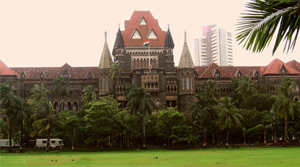
A division bench of Chief Justice D H Waghela and Justice M S Sonak gave the directions while hearing a public interest litigation by senior advocate Nilima Vartak and social activist Vidya Bal, challenging prohibition of entry of women in temples like Shani Shingnapur in Maharashtra.
The PIL sought implementation of the provisions of Maharashtra Hindu Place of Worship (Entry Authorisation) Act 1956.
The Maharashtra government has said it would take all steps to comply with the order by enforcing the law that provides six months in prison for preventing anyone from entering a temple.
Welcoming the court direction, activist Trupti Desai, heading the campaign for gender equality in temples, said she and her followers would head to Shani Shingnapur tomorrow itself.
Following critical remarks from the high court two days back, the state government told the court that it was completely against gender discrimination and would implement the Act.
"The provisions of the Act shall be scrupulously implemented. The government is completely against gender discrimination. A circular or directive shall be issued to all district authorities informing them about the Act and its provisions," Acting Advocate General Rohit Deo told the court.
The bench, while accepting the statement, directed the secretary of Maharashtra's Home Department to ensure that the policy and purpose of the Act is fully carried out, and directions are issued to all district collectors and Superintendents of Police.
"The Maharashtra government shall take all necessary steps to implement the Act. Ultimately it is the fundamental right of a woman and your (government) fundamental duty to protect this right," Chief Justice Waghela said.
"The acting Advocate General has assured the court that the government is against gender discrimination.
Keeping in view Article 14, 15 and 25 of the Constitution of India, the government can take pro-active steps to ensure that the fundamental rights of a citizen are fully realised and not allowed to be encroached upon by any authority," the HC said.
The bench, after accepting the government's statement, disposed of the petition and said, "This court can only pass a general direction. We cannot go into individual or specific cases. If any person has grievance that the Act is not being implemented, then he or she can approach local authority with their complaint."
Terming the High Court direction as a "boost" to the movement for equal rights, Desai said in Pune, "we are planning to head to Shani Shingnapur tomorrow itself."
The acting AG, however, clarified to HC that if a temple in the state does not allow any person, irrespective of their gender, inside the sanctum sanctorum, then this Act and its provisions will not be of any help.
"However, if a temple allows men in the sanctum sanctorum but prohibits women, then this Act and its provisions can be used," he said.
The court noted that while the government's statement was "good enough", steps should be taken to strengthen the hands of the authority who is on the field.
"Making a statement that the Act and its provisions will be implemented and enforced and that you (government) are against gender discrimination is good enough. But you have to strengthen the hands of the authority who is on field and has to take action as per the Act," the court said.
The high court had on Wednesday observed that if men are allowed in a place of worship, then women should also be permitted as no law prevents them from doing so.
The HC, while underlining the need for giving equal access to women, also stated that any temple or person imposing restrictions can face a six-month jail term under the Act, and asked the government to make a statement if it is worried about the sanctity of a deity.
The court had also said that the government should give wide publicity to the Act and issue circulars, informing the general public at large about the Act and its provisions.
The petition had said that the prohibition is arbitrary, illegal and in violation of fundamental rights of citizens.
The debate over the issue in Maharashtra escalated after a woman last year tried to enter and offer prayers at the Shani Shingnapur temple in 'breach' of the age-old practice of prohibiting entry of women.
This had prompted the temple committee to suspend seven security men and the villagers to perform purification rituals.
Subsequently, the Bhumata Brigade led by Trupti Desai had on January 26 launched a high-voltage campaign to breach the ban at the temple and vowed to carry on with its movement for gender justice.
Besides, around 150 women under the banner of outfit had last month headed to the famous Trimbakeshwar temple in Nashik district seeking to break the bar on female devotees at the inner sanctum of the Lord Shiva shrine. Their attempts were, however, foiled by the police.


Comments
Add new comment