



New Delhi, Mar 4: The GST Council today fixed a 5 per cent tax rate on small hotels and restaurants and approved draft of key supporting legislations to enable rollout of the new indirect tax regime from July 1. The all-powerful Council approved the final draft of Central GST (C-GST) and Integrated GST (I-GST) and will take up for approval the State-GST and Union Territory-GST (UT-GST) laws at its next meeting on March 16.
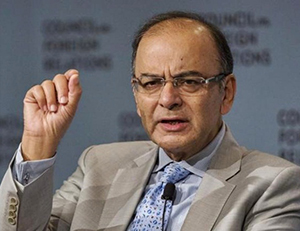
The C-GST, which will give powers to Centre to levy GST on goods and services after union levies like excise and service tax are subsumed, and I-GST that is to be levied on inter-state supplies, will go to Parliament for approval in the second half of the Budget session beginning March 9, Finance Minister Arun Jaitley said.
The S-GST, which will allow states to levy the tax after VAT and other state levies are subsumed in the GST, will have to be passed by each of the state legislative assemblies. UT-GST will also go to Parliament for approval.
Jaitley said the model GST Law will have a clause to enable levy of up to 40 per cent tax (20 per cent by the Centre and an equal amount by the states) but the effective tax rates will be kept at the previously approved levels of 5, 12, 18 and 28 per cent.
"The rates will be what has been decided by the Council. There won't be a higher rate of taxation. But the cap rate in the legislation is always put at a higher level to leave a headspace, just as in the Customs Act you have a difference between the bound rate and applied rate. So the applied rate is going to be what the council has decided," Jaitley said.
This is being done to obviate the need for going to Parliament in case the levy is to be raised on certain goods and services. This will also help in a scenario where the cess on de-merit goods being proposed to compensate states for loss of revenue from GST, is to be merged with the tax rate itself, he told reporters after the meeting.
"As it looks like, it looks on track. Hopefully the laws would be before Parliament this session and subject to the Parliament approving them, July 1 this year now optimistically looks like the possible date for GST implementation," he said.
The Council, headed by Jaitley and comprising representatives of all states, decided to levy a 5 per cent GST (2.5 per cent by Centre and 2.5 per cent by state) on small hotels, restaurants and dhabas with an annual turnover of up to Rs 50 lakh.
Revenue Secretary Hasmukh Adhia said there were demands that restaurants should be included in the composition scheme, particularly those with less turnover. "So the Council decided that there would be a composition scheme for restaurants up to a turnover of Rs 50 lakh and the rate for them is 5 per cent. So the remaining restaurants, they will come in the regular service tax rate," Adhia said.
Adhia said the first meeting of GST Council had decided that composition scheme in GST regime would be applicable on trading and manufacturing units with up to Rs 50 lakh turnover.
The composition scheme provides for a easier method of calculating tax liability and allows GST registration for dealers with turnover below the compounding cut-off.
The scheme has been introduced to reduce the administrative cost associated with collection of tax from small traders. Hence, businesses below a turnover of Rs 50 lakh can pay taxes at a defined floor rate of 1 per cent, and manufacturers can pay at 2 per cent, much lower than the GST rate. For services, it would be 5 per cent. Jaitley said the Council will have its 12th meeting on March 16 in which SGST and UTGST bills will be cleared.
"In a nutshell, compensation law was approved in last meeting (and) today (GST Council) approved the CGST and IGST law and in next meeting we will be approving the SGST and UTGST law which will then complete the legislative exercise and enable us to take these before Parliament.
"If they are approved, then four laws -- Compensation Law, CGST law, UTGST law and IGST law -- will get cleared by Cabinet and taken to Parliament in the forthcoming session. SGST law will go to state legislatures," he said.
After this, the officers will start work on putting different goods and services in the four tax slabs of 5, 12, 18 and 28 per cent. "...the exercise is substantially arithmetical except in certain products where the Council will decide to grade it accordingly," Jaitley said, adding it would be discussed at the 13th meeting of the Council.
The GST Compensation Law provides for compensating states that incur losses because of implementation of the Goods and Service Tax (GST) in first five years. The compensation will be funded by imposing cess on demerit and luxury goods.
"The maximum cess rate will be mentioned in the compensation law. But the applicability of it would be what the Council has decided so far," Jaitley said. GST, which will replace a plethora of central and state taxes, is a consumption-based tax levied on sale, manufacture and consumption on goods and services at a national level. Under it, C-GST will be levied by the Centre, S-GST by states and I-GST on inter-state supply of goods and services.
Various indirect taxes of central excise duty, central sales tax and service tax are to be merged with C-GST, while S-GST will subsume state sales tax, VAT, luxury tax and entertainment tax.


Comments
Add new comment