



Gujarat Governor Kamla transferred to Mizoram

July 7, 2014

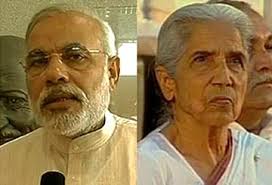
New Delhi, July 7: Gujarat Governor Kamla Beniwal, who had a testy relationship with Narendra Modi during his tenure as the chief minister, was transferred to remote Mizoram on Sunday.
guj

The move is seen as an indication to Beniwal to quit the gubernatorial post before her term ends on October 14. Sources said she had not responded to the Centre’s recent nudge to quit the post. A Rashtrapati Bhawan communiqué said Rajasthan Governor Margaret Alva would be in-charge governor of Gujarat until regular arrangements were made.

Mizoram Governor Vakkom Purushothaman has been transferred to Nagaland. Former CBI director Ashwani Kumar, considered close to the Congress leadership, resigned as the governor of Nagaland recently. Purushothaman would also hold additional charge as governor of Tripura, a post that fell vacant after the superannuation of Devananda Konwar on June 28.

Beniwal and Modi were at loggerheads when she appointed Justice (retd) R A Mehta as the Lokayukta without consulting the Gujarat government in 2011. She had contended that her actions were within the ambit of the law which gave the governor the right to make the appointment without consulting the state government when there is an extreme delay. The Gujarat government, then led by Modi, had moved the Supreme Court which upheld the appointment.

Beniwal’s name had also figured in an alleged land scam in which she was accused of being “gifted” land at a cheap price by the Rajasthan government headed by the then Chief Minister Ashok Gehlot.

Beniwal’s transfer has also set in motion the process to appoint new governors following the resignation of B L Joshi (Uttar Pradesh), Shekhar Dutt (Chhattisgarh), Ashwani Kumar (Nagaland), M K Narayanan (West Bengal) and B V Wanchoo (Goa). The five former governors were considered to be close to the UPA government.

The names of BJP leaders Kalyan Singh, Lalji Tandon, O Rajagopal, Ram Naik, Keshari Nath Tripathi are doing the rounds. While Rajagopal is tipped to be the Governor of Karnataka, Kalyan Singh and Lalji Tandon are yet to give their consent for their appointment as governors. BJP sources said Singh and Tandon were unwilling to give up their stakes in Uttar Pradesh politics.

A few other governors appointed by the UPA continue to remain in office. They include K Sankaranarayanan (Maharashtra), Sheila Dikshit (Kerala), Jagannath Pahadia (Haryana) and Shivraj Patil (Punjab) among others.

Comments

Add new comment

  • Coastaldigest.com reserves the right to delete or block any comments.
  • Coastaldigset.com is not responsible for its readers’ comments.
  • Comments that are abusive, incendiary or irrelevant are strictly prohibited.
  • Please use a genuine email ID and provide your name to avoid reject.
News Network
December 13,2025

New Delhi: School-going children are picking up drug and smoking habits and engaging in consumption of alcohol, with the average age of introduction to such harmful substances found to be around 13 years, suggesting a need for earlier interventions as early as primary school, a multi-city survey by AIIMS-Delhi said.

The findings also showed substance use increased in higher grades, with grade XI/XII students two times more likely to report use of substances when compared with grade VIII students. This emphasised the importance of continued prevention and intervention through middle and high school.

The study led by Dr Anju Dhawan of AIIMS's National Drug Dependence Treatment Centre, published in the National Medical Journal of India this month, looks at adolescent substance use across diverse regions.

The survey included 5,920 students from classes 8, 9, 11 and 12 in urban government, private and rural schools across 10 cities -- Bengaluru, Chandigarh, Delhi, Dibrugarh, Hyderabad, Imphal, Jammu, Lucknow, Mumbai, and Ranchi. The data were collected between May 2018 and June 2019.

The average age of initiation for any substance was 12.9 (2.8) years. It was lowest for inhalants (11.3 years) followed by heroin (12.3 years) and opioid pharmaceuticals (without prescription; 12.5 years).

Overall, 15.1 per cent of participants reported lifetime use, 10.3 per cent reported past year use, and 7.2 per cent reported use in the past month of any substance, the study found.

The most common substances used in the past year, after tobacco (4 per cent) and alcohol (3.8 per cent), were opioids (2.8 per cent), followed by cannabis (2 per cent) and inhalants (1.9 per cent). Use of non-prescribed pharmaceutical opioids was most common among opioid users (90.2 per cent).

On being asked, 'Do you think this substance is easily available for a person of your age' separately for each substance category, nearly half the students (46.3 per cent) endorsed that tobacco products and more than one-third of the students (36.5 per cent) agreed that a person of their age can easily procure alcohol products.

Similarly, for Bhang (21.9 per cent), ganja/charas (16.1 per cent), inhalants (15.2 per cent), sedatives (13.7 per cent), opium and heroin (10 per cent each), the students endorsed that these can be easily procured.

About 95 per cent of the children, irrespective of their grade, agreed with the statement that 'drug use is harmful'.

The rates of substance use (any) among boys were significantly higher than those of girls for substance use (ever), use in the past year and use in the past 30 days. Compared to grade VIII students, grade IX students were more likely, and grade XI/XII students were twice as likely to have used any substance (ever).

The likelihood of past-year use of any substance was also higher for grade IX students and for grade XI/XII students as compared to grade VIII students.

About 40 per cent of students mentioned that they had a family member who used tobacco or alcohol each. The use of cannabis (any product) and opioid (any product) by a family member was reported by 8.2 per cent and 3.9 per cent of students, respectively, while the use of other substances, such as inhalants/sedatives by family was 2-3 per cent, the study found.

A relatively smaller percentage of students reported use of tobacco or alcohol among peers as compared to among family members, while a higher percentage reported inhalants, sedatives, cannabis or opioid use among peers.

Children using substances (past year) compared to non-users reported significantly higher any substance use by their family members and peers.

There were 25.7 per cent students who replied 'yes' to the question 'conflicts/fights often occur in your family'. Most students also replied affirmatively to 'family members are aware of how their time is being spent' and 'damily members are aware of with whom they spend their time'.

Comments

Add new comment

  • Coastaldigest.com reserves the right to delete or block any comments.
  • Coastaldigset.com is not responsible for its readers’ comments.
  • Comments that are abusive, incendiary or irrelevant are strictly prohibited.
  • Please use a genuine email ID and provide your name to avoid reject.