



Gulf storm played bigger role in Delhi air pollution

Agencies
November 17, 2017

New Delhi, Nov 17:  A West Asian dust storm has been identified as the chief trigger behind the recent air pollution crisis in Delhi.

While stubble burning was said to be a key cause for the toxic smog in the national capital, prompting a spat between Delhi government and governments of neighbouring states, a Centre-run monitoring agency said the particulates from the dust storm that entered the upper atmospheric layer of Delhi and the larger region also contributed to a spike in air pollution levels.

On November 8, the contribution of the dust storm was 40 per cent, eclipsing the role of emissions from stubble burning, which stood at 25 per cent, the Pune-based System of Air Quality And Weather Forecasting And Research (SAFAR) said.

That was the day pollution levels peaked with PM2.5 concentration reaching 640 micrograms per cubic metre, according to the SAFAR scientific assessment report of the week-long pollution crisis accessed by news agency.

"Rest was made up of emissions from local sources such vehicular combustion. If external sources did not have any role, levels of PM2.5 during this period could have been around 200 micrograms per cubic metre," the report has stated.

Uptick in air pollution levels prompted Aam Admi Party led Delhi government to impose a swries of emergency measures in the national capital such as a ban on the entry of trucks and construction activities yielded positive results, the agency said, putting the gains at around 15 per cent in terms of percentage.

PM2.5 are ultrafine particulates, up to 30 times finer than a width of a human hair, which can lodge deep in the lungs and enter the bloodstream, causing irreparable harm to living beings.

The 24-hour prescribed standard of this variety of suspended particulate matter is 60 micrograms per cubic metre.

SAFAR, an arm of the Indian Institute of Tropical Meteorology, said particulates from the dust storm, which swept across Iraq, Kuwait, and Saudi Arabia between the last week of October and November 4, entered the upper atmospheric layer of Delhi and the larger region.

Moreover, according to the report, stubble burning in Punjab, Uttar Pradesh and Haryana were very high on November 6 and as upper air winds became North Westerly (towards Delhi), pollutants were strongly pumped in, exacerbating the situation.

"As per SAFAR forecasting model, the pollution contribution of Gulf Dust Storm on peak day (8th Nov 2017) was around 40 per cent and 25 per cent from stubble burning," the report said.

Till about November 6, the mean PM2.5 level remained between 140-190 ug/m3, usual for this time of the year, SAFAR, the only agency which puts out pollution forecast bulletins in India, said.

Subsequently, from around November 10, there was no pumping of dust from West Asia. Influence of stubble burning also came down as upper air winds slowed down and changed direction, resulting in a brief respite from pollution.

"However, localized weather took over by the evening of November 11. Before pollutants could be flushed, inversion layer (beyond which pollutants cannot escape) fell down from 1600 metres to just 45 metres in eight hours and Delhi entered the severe zone again which delayed full recovery by two days," SAFAR said.

Comments

Add new comment

  • Coastaldigest.com reserves the right to delete or block any comments.
  • Coastaldigset.com is not responsible for its readers’ comments.
  • Comments that are abusive, incendiary or irrelevant are strictly prohibited.
  • Please use a genuine email ID and provide your name to avoid reject.
News Network
November 21,2025

Tejas.jpg

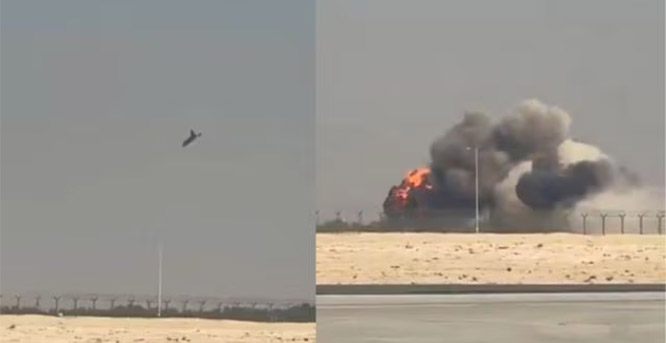
An Indian Air Force (IAF) Tejas fighter jet crashed on Friday, November 21, afternoon during its aerial demonstration at the Dubai Air Show, plunging to the ground at around 2:10 pm local time while performing a manoeuvre before thousands of spectators.

The IAF confirmed the incident, stating that a Tejas aircraft participating in the show had crashed and that further details were being gathered. An Air Force spokesperson said more information would be shared after initial assessments.

The crash sent thick black smoke billowing into the sky near the airport, causing panic among visitors, including families and children who had gathered to watch the display. Authorities have not yet confirmed whether the pilot managed to eject before the aircraft went down. Emergency response teams rushed to the scene, and officials have not released information on casualties or damage so far.

The Tejas is a 4.5-generation, multi-role fighter aircraft developed indigenously by Hindustan Aeronautics Limited (HAL). Designed for versatility, it is capable of offensive air support, close combat, ground attack missions and maritime operations. The aircraft family includes single-seat fighters and twin-seat trainers for both the Air Force and Navy.

HAL describes the latest version, the LCA Mk1A, as the most advanced in the series, featuring an AESA radar, an upgraded electronic warfare suite with radar-warning and self-protection jamming, smart multifunction displays, a digital map generator, a combined interrogator–transponder system and a modern radio altimeter. These enhancements significantly improve the aircraft’s combat capability and survivability.

Further updates from IAF and UAE authorities are awaited.

Comments

Add new comment

  • Coastaldigest.com reserves the right to delete or block any comments.
  • Coastaldigset.com is not responsible for its readers’ comments.
  • Comments that are abusive, incendiary or irrelevant are strictly prohibited.
  • Please use a genuine email ID and provide your name to avoid reject.
News Network
November 21,2025

Bengaluru, Nov 21: The Karnataka government is facing pressure to overhaul its employment system after a high-level Cabinet sub-committee recommended the complete phase-out of job outsourcing in government offices, boards, and corporations by March 2028. The move is aimed at tackling a systemic issue that has led to the potential violation of constitutional reservation policies and the exploitation of workers.

The Call for Systemic Change

With over three lakh vacant posts currently being filled through private agencies on an outsource, insource, or daily wage basis, the sub-committee highlighted a significant lapse. "As a result, reservations are not being followed as per the Constitution and state laws. It’s an urgent need to take serious steps to change the system. It has been recommended to completely stop the system of outsourcing by March 2028," the panel stated in a document.

The practice of outsourcing involves private companies hiring workers to perform duties for a government agency. Critics argue this model results in lesser salaries, a lack of social security benefits (otherwise available to permanent government employees), and a failure to adhere to the provisions of Articles 14 and 15 of the Constitution, which guarantee equality before the law and prohibit discrimination.

The 'Bidar Model' as a Stop-Gap Solution

To regulate the current mode of employment and reduce worker exploitation until the 2028 deadline, the government plans to establish workers’ services multi-purpose cooperative societies across all districts, following the successful "Bidar Model."

The Bidar District Services of Labour Multi-purpose Cooperative Society Ltd., which operates under the District Commissioner, is cited as a successful example of providing a measure of social security to outsourced staff. Labour Department officials argue this society ensures workers receive their due wages and statutory facilities like ESI (Employees' State Insurance) and PF (Provident Fund), in exchange for a 1% service fee collected from the employees.

legislative push and Priority Insourcing

The recommendations, led by the sub-committee headed by Law and Parliamentary Affairs Minister H K Patil, are set to be discussed at the next Cabinet meeting. The committee has proposed the introduction of the Karnataka Outsourced Employees (Regulation, Placement and Welfare) Bill 2025.

In a move addressing immediate concerns, Labour Minister Santosh Lad, a member of the sub-committee, has reportedly assured that steps will be taken over the next 2-3 years to insource workers in "life-threatening services" on a priority basis. This includes essential personnel like pourakarmikas (sanitation workers), drivers, electrical staff in the Energy Department, and Health Department staff handling contagious diseases. The transition aims to grant these workers the long-term security and benefits they currently lack under the outsourcing system. 

Comments

Add new comment

  • Coastaldigest.com reserves the right to delete or block any comments.
  • Coastaldigset.com is not responsible for its readers’ comments.
  • Comments that are abusive, incendiary or irrelevant are strictly prohibited.
  • Please use a genuine email ID and provide your name to avoid reject.
News Network
November 26,2025

Mangaluru, Nov 26: Assembly Speaker and local MLA U.T. Khader has initiated a high-level push to resolve one of Mangaluru’s longest-standing traffic headaches: the narrow, high-density stretch of National Highway-66 between Nanthoor and Talapady.

He announced on Tuesday that a formal proposal has been submitted to the Union Ministry of Road Transport and Highways (MoRTH) seeking approval to prepare a Detailed Project Report (DPR) for the widening of this crucial corridor.

The plan specifically aims to expand the existing 45-meter road width to a full 60 meters, coupled with the construction of dedicated service roads. Khader highlighted that land for a 60-meter highway was originally acquired during the initial four-laning project, but only 45 meters were developed, leading to a perpetual bottleneck.

"With vehicle density rising sharply, the expansion has become unavoidable," Khader stated, stressing that the upgrade is essential for ensuring smoother traffic flow and improving safety at the city's main entry and exit points.

The stretch between Nanthoor and Talapady is a vital link on the busy Kochi-Panvel coastal highway and connects to major city junctions. The move to utilize the previously acquired land for the full 60-meter width is seen as a necessary measure to catch up with the region's rapid vehicular growth and prevent further traffic gridlocks.

Comments

Add new comment

  • Coastaldigest.com reserves the right to delete or block any comments.
  • Coastaldigset.com is not responsible for its readers’ comments.
  • Comments that are abusive, incendiary or irrelevant are strictly prohibited.
  • Please use a genuine email ID and provide your name to avoid reject.