66% health workers had mild post-vaccination symptoms: Survey

Agencies
February 14, 2021

1200.jpg

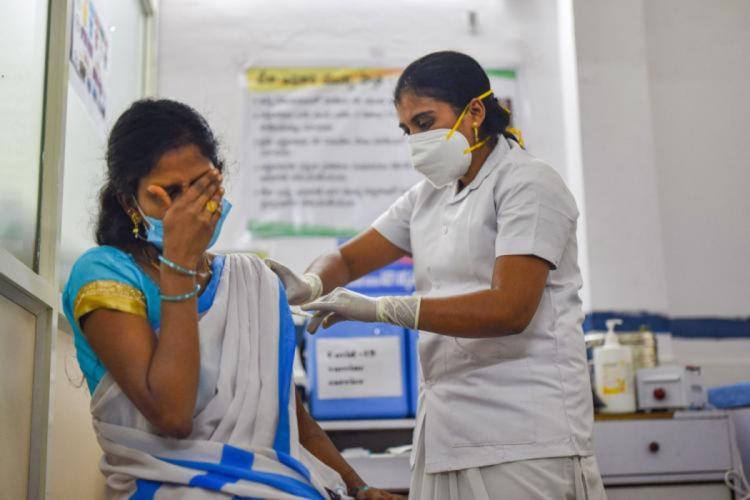
New Delhi, Feb 14: Side-effects after COVID-19 vaccination — 'reactogenicity' in medical linguistic — was reported in 66% of the healthcare workers, which mostly subside within a day of their onset, said a survey conducted by noted public health experts for the Kochi chapter of the Indian Medical Association (IMA). A total of 5,396 healthcare professionals across India, who had received COVID-19 vaccines were surveyed for the study, which was led by Dr Rajeev Jayadevan, a gastroenterologist and former president of IMA Cochin.

In the survey, the respondents in the survey stated that the most commonly reported symptoms they experienced after immunisation were Myalgia or pain in the muscle (44%), fever (34%), headache (28%), local pain at the injection site (27%), joint pain (12%), nausea (8%) and Diarrhoea (3%). Tiredness (45%) was the most prevailing symptoms. "The occurrence of other symptoms such as sore throat, insomnia, giddiness, rigour, an allergic rash, chills, vomiting, syncope were reported 1% or less cases," study said.

It also noted that the symptoms reported by the respondents were not severe in nature or required hospitalisation. Besides, the survey also pointed out that in 90% of the cases, the symptoms were either milder than expected or met the expectation of the vaccine recipient. Experts have also pointed out that experiencing side-effects is normal in any vaccine.

My study on post vaccination symptoms among 5396 healthcare workers is available on medRxiv.

Symptoms were more among women and among younger people. Onset within 11 hours, duration mostly less than 48 hours.

Thanks Dr Ramesh Shenoy & Ms Anithadevi TS https://t.co/DzIaiAm2IN pic.twitter.com/wXKM6MU0Gr

— Rajeev Jayadevan (@RajeevJayadevan) February 13, 2021
 

Meanwhile, the survey illustrated that side effects among most of the respondents did not last beyond the duration of 24 hours of the onset. "Thirty-seven per cent (1,225) of the respondents revealed that their symptoms did not prolong more than a day while 31% showed that their symptoms lingered for 48 hours, while only 6% claimed that their symptoms stretched beyond the duration of 48 hours," the survey showed.

Speaking to IANS, Dr Rajeev Jayadevan, who is one of the researchers of the survey, said that one of the key takeaways from the survey is that vaccines are safe and there is no need to fear that it will harm ones' body.

"If over 5,000 people who took it (vaccines) and reported no serious problem, then that is a considerable reassurance that the general public can take the vaccine," he said.

Another key finding of the survey was the linear correlation between age and post-vaccination symptoms suggested that the reactogenicity of the vaccine declined with age; means the chance of having post-vaccination symptoms decreased with advancing of age.

The frequency of symptoms was found highest, 81.34%, in respondents aged between 20-29 years followed by 30-39 years (79.57%), 40-49 years (67.94%), 50-59 years (58.23%), 60-69 years (44.76%), 70-79 years (33.73%), and 80-89 years (7.43%).

Jayadevan said that younger people produce a lot of inflammatory cytokines, which elicit reactogenicity (symptoms). This is why they have a vigorous response to the vaccines, whereas it is found lower in the elder population. However, he added that the reactogenicity is not considered a reliable sign of producing antibodies.

"There is a misconception among people and even healthcare professionals who believe that the symptoms are associated with the development of antibodies. Everyone responds differently to the vaccines and elicit varied levels of reactogenicity depending upon age and other factors at play. It cannot be considered as a sign to determine that one's body is producing an immune response to the vaccines," Jayadevan explained.

Dr Ramesh Shenoy, another author of the survey, who is a senior radiologist at a hospital in Kochi, Kerala, said that the conclusions derived from the survey could be that the vaccines are safe while its side-effects are mild in nature and short-lived. "The testimonies of the two-third of the respondents vouch for it," he added.

Comments

Add new comment

  • Coastaldigest.com reserves the right to delete or block any comments.
  • Coastaldigset.com is not responsible for its readers’ comments.
  • Comments that are abusive, incendiary or irrelevant are strictly prohibited.
  • Please use a genuine email ID and provide your name to avoid reject.
News Network
November 30,2025

airportmetro.jpg

Udupi: The pontiffs of Sri Paryaya Puttige Mutt, the sacred seat of Jagadguru Shrimad Madhvacharya Moola Samsthanam, have submitted a proposal to the Prime Minister seeking comprehensive development for Udupi district. 

Proposal for International Airport

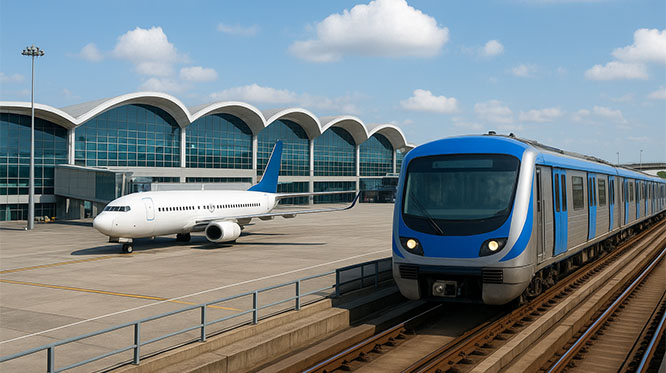
A key request is the establishment of an international airport. Highlighting that around 1,000 acres of land are available and suitable, the pontiffs noted that the existing Mangalore Airport provides limited international connectivity. They suggested the airport be developed under a Public-Private Partnership (PPP) or as a Greenfield Airport to boost trade, education, healthcare, and spiritual tourism.

Metro and Rapid Transit Connectivity

The proposal also calls for Metro Rail or Rapid Transit between Mangaluru and Udupi. The 55 km coastal stretch experiences heavy daily commuter traffic, causing congestion. The district administration is ready to prepare an initial project report for a Mass Rapid Transit corridor and requested inclusion under national urban mobility programmes to ensure safe, green, and time-efficient regional transport.

Port and Coastal Development

The pontiffs urged the development of an international-standard port with a cruise terminal along Udupi’s coast. They also requested fast-tracking of pending coastal tourism projects and revising Coastal Regulation Zone (CRZ) norms to encourage sustainable infrastructure and hospitality investment.

IT, AI and Technological Infrastructure

Support was sought for an IT and AI Innovation Park with incubation facilities under Digital India and Startup India initiatives. The proposal also emphasized the need for strengthened data security and cloud computing infrastructure to boost India’s technological independence.

Sports and Education Initiatives

The pontiffs requested national sports status for Kambala, along with financial and infrastructure support. They also sought the establishment of an AIIMS in Udupi, a new IIT campus, and approval for an IIM to promote higher education in the district.

Representation to the Prime Minister

Sri Sugunendra Tirtha Pontiff and Sri Sushrendra Tirtha Swamiji represented the pontiffs in submitting the comprehensive development proposal to the Prime Minister during his recent visit.

Comments

Add new comment

  • Coastaldigest.com reserves the right to delete or block any comments.
  • Coastaldigset.com is not responsible for its readers’ comments.
  • Comments that are abusive, incendiary or irrelevant are strictly prohibited.
  • Please use a genuine email ID and provide your name to avoid reject.
News Network
November 21,2025

Tejas.jpg

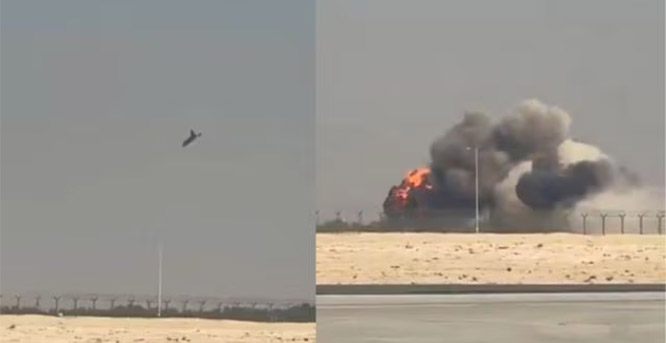
An Indian Air Force (IAF) Tejas fighter jet crashed on Friday, November 21, afternoon during its aerial demonstration at the Dubai Air Show, plunging to the ground at around 2:10 pm local time while performing a manoeuvre before thousands of spectators.

The IAF confirmed the incident, stating that a Tejas aircraft participating in the show had crashed and that further details were being gathered. An Air Force spokesperson said more information would be shared after initial assessments.

The crash sent thick black smoke billowing into the sky near the airport, causing panic among visitors, including families and children who had gathered to watch the display. Authorities have not yet confirmed whether the pilot managed to eject before the aircraft went down. Emergency response teams rushed to the scene, and officials have not released information on casualties or damage so far.

The Tejas is a 4.5-generation, multi-role fighter aircraft developed indigenously by Hindustan Aeronautics Limited (HAL). Designed for versatility, it is capable of offensive air support, close combat, ground attack missions and maritime operations. The aircraft family includes single-seat fighters and twin-seat trainers for both the Air Force and Navy.

HAL describes the latest version, the LCA Mk1A, as the most advanced in the series, featuring an AESA radar, an upgraded electronic warfare suite with radar-warning and self-protection jamming, smart multifunction displays, a digital map generator, a combined interrogator–transponder system and a modern radio altimeter. These enhancements significantly improve the aircraft’s combat capability and survivability.

Further updates from IAF and UAE authorities are awaited.

Comments

Add new comment

  • Coastaldigest.com reserves the right to delete or block any comments.
  • Coastaldigset.com is not responsible for its readers’ comments.
  • Comments that are abusive, incendiary or irrelevant are strictly prohibited.
  • Please use a genuine email ID and provide your name to avoid reject.
News Network
November 26,2025

students.jpg

Bengaluru, Nov 26: Karnataka is taking its first concrete steps towards lifting a three-decade-old ban on student elections in colleges and universities. Deputy Chief Minister D.K. Shivakumar announced Wednesday that the state government will form a small committee to study the reintroduction of campus polls, a practice halted in 1989 following incidents of violence.

Speaking at a 'Constitution Day' event organised by the Karnataka Congress, Mr. Shivakumar underscored the move's aim: nurturing new political leadership from the grassroots.

"Recently, (Leader of the Opposition in Lok Sabha) Rahul Gandhi wrote a letter to me and Chief Minister (Siddaramaiah) asking us to think about restarting student elections," Shivakumar stated. "I'm announcing today that we'll form a small committee and seek a report on this."

Student elections were banned in Karnataka in 1989, largely due to concerns over violence and the infiltration of political party affiliates into campus life. The ban effectively extinguished vibrant student bodies and the pipeline of young leaders they often produced.

Mr. Shivakumar, who also serves as the Karnataka Congress president, said that former student leaders will be consulted to "study the pros and cons" of the re-introduction.

Acknowledging the history of the ban, he added, "There were many criminal activities taking place back then. We’ll see how we can conduct (student) elections by regulating such criminal activities."

The Deputy CM reminisced about his own journey, which began on campus. He recalled his political activism at Sri Jagadguru Renukacharya College leading to his first Assembly ticket in 1985 at the age of 23. "That's how student leadership was at the time. Such leadership has gone today. College elections have stopped," he lamented, adding that for many, college elections were "like a big movement" where leaders were forged.

The move, driven by the Congress high command's push to cultivate young talent, will face scrutiny from academics and university authorities who have, in the past, expressed concern that the return of polls could disrupt the peaceful academic environment and turn campuses into political battlegrounds.

Comments

Add new comment

  • Coastaldigest.com reserves the right to delete or block any comments.
  • Coastaldigset.com is not responsible for its readers’ comments.
  • Comments that are abusive, incendiary or irrelevant are strictly prohibited.
  • Please use a genuine email ID and provide your name to avoid reject.