



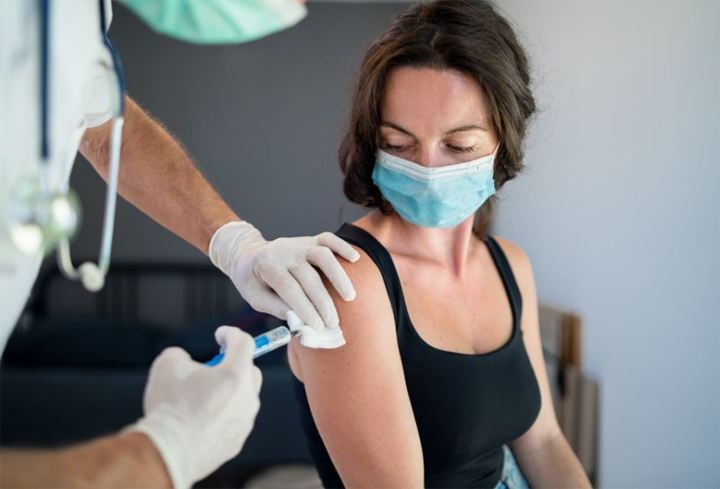
Here is why vaccinated people still need to wear mask

News Network
December 9, 2020

vaccine.JPG

Dec 9: The new Covid-19 vaccines from Pfizer and Moderna seem to be remarkably good at preventing serious illness. But it’s unclear how well they will curb the spread of the coronavirus.

That’s because the Pfizer and Moderna trials tracked only how many vaccinated people became sick with Covid-19. That leaves open the possibility that some vaccinated people get infected without developing symptoms and could then silently transmit the virus — especially if they come in close contact with others or stop wearing masks.

If vaccinated people are silent spreaders of the virus, they may keep it circulating in their communities, putting unvaccinated people at risk.

“A lot of people are thinking that once they get vaccinated, they’re not going to have to wear masks anymore,” said Michal Tal, an immunologist at Stanford University. “It’s really going to be critical for them to know if they have to keep wearing masks because they could still be contagious.”

In most respiratory infections, including the new coronavirus, the nose is the main port of entry. The virus rapidly multiplies there, jolting the immune system to produce a type of antibodies that are specific to the mucosa, the moist tissue lining the nose, mouth, lungs and stomach. If the same person is exposed to the virus a second time, those antibodies, as well as immune cells that remember the virus, rapidly shut down the virus in the nose before it gets a chance to take hold elsewhere in the body.

The coronavirus vaccines, in contrast, are injected deep into the muscles and quickly absorbed into the blood, where they stimulate the immune system to produce antibodies. This appears to be enough protection to keep the vaccinated person from getting ill.

Some of those antibodies will circulate to the nasal mucosa and stand guard there, but it’s not clear how much of the antibody pool can be mobilized or how quickly. If the answer is not much, then viruses could bloom in the nose — and be sneezed or breathed out to infect others.

“It’s a race: It depends whether the virus can replicate faster, or the immune system can control it faster,” said Marion Pepper, an immunologist at the University of Washington in Seattle. “It’s a really important question.”

This is why mucosal vaccines, like nasal spray FluMist or the oral polio vaccine, are better than intramuscular injections at fending off respiratory viruses, experts said.

The next generation of coronavirus vaccines may elicit immunity in the nose and the rest of the respiratory tract, where it’s most needed. Or people could get an intramuscular injection followed by a mucosal boost that produces protective antibodies in the nose and throat.

The coronavirus vaccines have proved to be powerful shields against severe illness, but that is no guarantee of their efficacy in the nose. The lungs — the site of severe symptoms — are much more accessible to the circulating antibodies than the nose or throat, making them easier to safeguard.

“Preventing severe disease is easiest, preventing mild disease is harder, and preventing all infections is the hardest,” said Deepta Bhattacharya, an immunologist at the University of Arizona. “If it’s 95% effective at preventing symptomatic disease, it’s going to be something less than that in preventing all infections, for sure.”

Still, he and other experts said they were optimistic that the vaccines would suppress the virus enough even in the nose and throat to prevent immunized people from spreading it to others.

“My feeling is that once you develop some form of immunity with the vaccine, your ability to get infected will also go down,” said Akiko Iwasaki, an immunologist at Yale University. “Even if you’re infected, the level of virus that you replicate in your nose should be reduced.”

The vaccine trials have not produced data on how many vaccinated people were infected with the virus but did not have symptoms. Some hints are emerging, however.

AstraZeneca, which announced some of its trial results in November, said that volunteers had been testing themselves regularly for the virus and that those results suggested that the vaccine might prevent some infections.

Pfizer will test a subset of its trial participants for antibodies against a viral protein called N. Because the vaccines have nothing to do with this protein, N antibodies would reveal whether the volunteers had become infected with the virus after immunization, said Jerica Pitts, a spokeswoman for the company.

Moderna also plans to analyze blood from all its participants and test for N antibodies.

“It will take several weeks before we can expect to see those results,” said Colleen Hussey, a spokeswoman for Moderna.

The trials have so far analyzed only blood, but testing for antibodies in mucosa would confirm that the antibodies can travel to the nose and mouth. Tal’s team is planning to analyze matched blood and saliva samples from volunteers in the Johnson & Johnson trial to see how the two antibody levels compare.

In the meantime, Bhattacharya said, he was encouraged by recent work showing that people who received an intramuscular flu vaccine had abundant antibodies in the nose. And a study of Covid-19 patients found that antibody levels in saliva and blood were closely matched — suggesting that a strong immune response in the blood would also protect mucosal tissues.

Only people who have virus teeming in their nose and throat would be expected to transmit the virus, and the lack of symptoms in the immunized people who became infected suggests that the vaccine may have kept the virus levels in check.

But some studies have suggested that even people with no symptoms can have high amounts of coronavirus in their nose, noted Dr. Yvonne Maldonado, who represents the American Academy of Pediatrics at meetings of the Federal Advisory Committee on Immunization Practices. The first person confirmed to be reinfected with the coronavirus, a 33-year-old man in Hong Kong, also did not have symptoms but harboured enough virus to infect others.

Vaccinated people who have a high viral load but don’t have symptoms “would actually be, in some ways, even worse spreaders because they may be under a false sense of security,” Maldonado said.

Tal said she was concerned by monkey studies showing that some vaccinated animals did not get ill but still had virus in their nose.

But those monkeys were intentionally exposed to massive amounts of virus and still had less virus than unvaccinated animals, said John Moore, a virus expert at Weill Cornell Medicine in New York.

“The more you reduce viral load, the less likely you are to be transmissible,” Moore said. But “all of these are things where data trumps theory, and we need the data.”

Comments

Add new comment

  • Coastaldigest.com reserves the right to delete or block any comments.
  • Coastaldigset.com is not responsible for its readers’ comments.
  • Comments that are abusive, incendiary or irrelevant are strictly prohibited.
  • Please use a genuine email ID and provide your name to avoid reject.
News Network
November 24,2025

Mangaluru, Nov 24: The original departure time of 11.10 pm was a distant memory for scores of Dammam-bound passengers at Mangaluru International Airport last Friday night, as their Air India Express flight was abruptly cancelled at the eleventh hour, sparking hours of frustration and chaos.

The flight, IX 885, initially scheduled to depart at 11.10 pm on November 22, was subject to two back-to-back reschedules—first pushed to 11.45 pm and then significantly postponed to 1.40 am—before the final, crushing announcement of cancellation was made. For the travellers, many of whom are likely expatriate workers with tight schedules, the last-minute change marked the beginning of a distressing ordeal.

"There was no drinking water, no food, and absolutely no proper guidance. We were left stranded like refugees," complained a stranded passenger.

According to multiple passenger accounts, the airline's ground staff failed to provide adequate support or essential amenities following the cancellation. Complaints poured in about the total absence of drinking water, food provisions, and any reliable guidance from the carrier's representatives. Travellers alleged they were left stranded for a considerable period, with no immediate arrangements or clear communication offered regarding accommodation or alternative travel to send them back home.

The incident has highlighted serious concerns over the carrier's contingency planning and customer service protocols during flight disruptions at one of India's key international gateways. The airline is yet to issue a comprehensive statement addressing the alleged lapse in passenger care.
 

Comments

Add new comment

  • Coastaldigest.com reserves the right to delete or block any comments.
  • Coastaldigset.com is not responsible for its readers’ comments.
  • Comments that are abusive, incendiary or irrelevant are strictly prohibited.
  • Please use a genuine email ID and provide your name to avoid reject.
News Network
November 29,2025

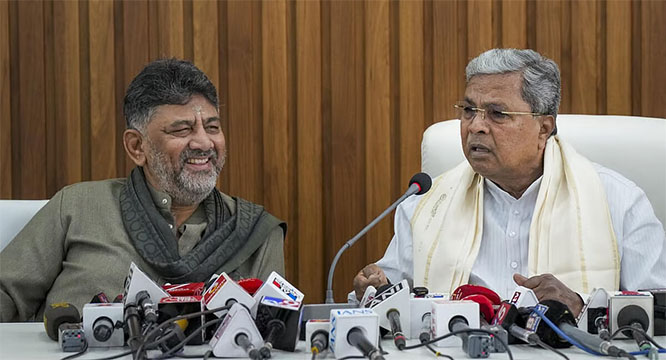
DKSsiddu.jpg

New Delhi: Karnataka chief minister Siddaramaiah and deputy CM DK Shivakumar on Saturday put up a dramatic display of unity at a closely watched joint press briefing, firmly dismissing weeks of speculation about a power-sharing tussle within the Congress. With the high command nudging both leaders to sit together and settle the dust, the meeting became a political spectacle, ending with the duo declaring that there was “no confusion, no differences.”

Calling the reports of a rift “manufactured confusion,” Siddaramaiah said the talks had gone smoothly, even joking about their breakfast. “Breakfast was very good. All three of us enjoyed it,” he said. “We want to end this confusion once and for all. For local elections and for 2028, our mission is clear — Congress must return to power. There is no difference between me and DKS, not now, not before.”

He blamed the media for fuelling rumours and reiterated absolute adherence to the party leadership. “From tomorrow, let there be no confusion. What the high command says, we will follow.”

Siddaramaiah also assured that the Assembly session starting December 8 would run smoothly and vowed that Congress would take on the BJP and JD(S) “together.”

Shivakumar echoed the chief minister word for word, stressing loyalty and discipline. “People have given us a massive mandate. It is our duty to deliver,” he said. “This government was formed under Siddaramaiah’s leadership. We both have complete trust in the high command. If they tell me to wait, I will wait.”

He added that the two leaders had discussed strategy for the 2028 Assembly elections. “Whatever the CM says, I agree. We are loyal soldiers of the party. The party may be facing challenges nationally, but we will keep it strong in Karnataka.”

Shivakumar also said Siddaramaiah would soon visit his home for lunch or dinner — another symbolic gesture meant to underline their unity.

Both leaders later posted on social media describing the breakfast meeting as “productive” and focused on “Karnataka’s priorities.”

The BJP, however, rejected the show of camaraderie as “pure bunkum,” accusing Congress of trying to paper over an internal power struggle. But Siddaramaiah and Shivakumar insisted their united front would continue — and that there was “no confusion” within the state leadership.

Comments

Add new comment

  • Coastaldigest.com reserves the right to delete or block any comments.
  • Coastaldigset.com is not responsible for its readers’ comments.
  • Comments that are abusive, incendiary or irrelevant are strictly prohibited.
  • Please use a genuine email ID and provide your name to avoid reject.
News Network
November 21,2025

Bengaluru, Nov 21: The Karnataka government is facing pressure to overhaul its employment system after a high-level Cabinet sub-committee recommended the complete phase-out of job outsourcing in government offices, boards, and corporations by March 2028. The move is aimed at tackling a systemic issue that has led to the potential violation of constitutional reservation policies and the exploitation of workers.

The Call for Systemic Change

With over three lakh vacant posts currently being filled through private agencies on an outsource, insource, or daily wage basis, the sub-committee highlighted a significant lapse. "As a result, reservations are not being followed as per the Constitution and state laws. It’s an urgent need to take serious steps to change the system. It has been recommended to completely stop the system of outsourcing by March 2028," the panel stated in a document.

The practice of outsourcing involves private companies hiring workers to perform duties for a government agency. Critics argue this model results in lesser salaries, a lack of social security benefits (otherwise available to permanent government employees), and a failure to adhere to the provisions of Articles 14 and 15 of the Constitution, which guarantee equality before the law and prohibit discrimination.

The 'Bidar Model' as a Stop-Gap Solution

To regulate the current mode of employment and reduce worker exploitation until the 2028 deadline, the government plans to establish workers’ services multi-purpose cooperative societies across all districts, following the successful "Bidar Model."

The Bidar District Services of Labour Multi-purpose Cooperative Society Ltd., which operates under the District Commissioner, is cited as a successful example of providing a measure of social security to outsourced staff. Labour Department officials argue this society ensures workers receive their due wages and statutory facilities like ESI (Employees' State Insurance) and PF (Provident Fund), in exchange for a 1% service fee collected from the employees.

legislative push and Priority Insourcing

The recommendations, led by the sub-committee headed by Law and Parliamentary Affairs Minister H K Patil, are set to be discussed at the next Cabinet meeting. The committee has proposed the introduction of the Karnataka Outsourced Employees (Regulation, Placement and Welfare) Bill 2025.

In a move addressing immediate concerns, Labour Minister Santosh Lad, a member of the sub-committee, has reportedly assured that steps will be taken over the next 2-3 years to insource workers in "life-threatening services" on a priority basis. This includes essential personnel like pourakarmikas (sanitation workers), drivers, electrical staff in the Energy Department, and Health Department staff handling contagious diseases. The transition aims to grant these workers the long-term security and benefits they currently lack under the outsourcing system. 

Comments

Add new comment

  • Coastaldigest.com reserves the right to delete or block any comments.
  • Coastaldigset.com is not responsible for its readers’ comments.
  • Comments that are abusive, incendiary or irrelevant are strictly prohibited.
  • Please use a genuine email ID and provide your name to avoid reject.