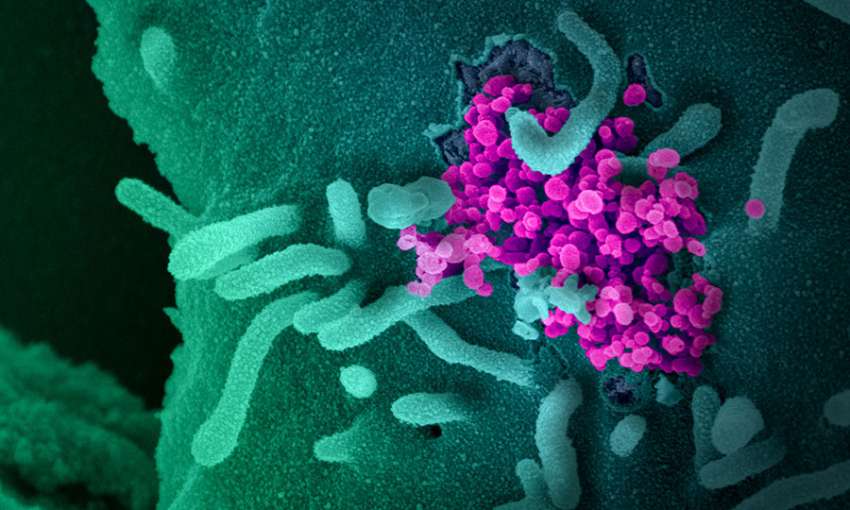
How does the new strain of novel coronavirus spread?

International New York Times
January 1, 2021

bsite.jpg

Washington, Jan 1: A more contagious form of the coronavirus has begun circulating in the United States.

In Britain, where it was first identified, the new variant became the predominant form of the coronavirus in just three months, accelerating that nation’s surge and filling its hospitals. It may do the same in the United States, exacerbating an unrelenting rise in deaths and overwhelming the already strained health care system, experts warned.

A variant that spreads more easily also means that people will need to religiously adhere to precautions like social distancing, mask-wearing, hand hygiene and improved ventilation — unwelcome news to many Americans already chafing against restrictions.

“The bottom line is that anything we do to reduce transmission will reduce transmission of any variants, including this one,” said Angela Rasmussen, a virus expert affiliated with Georgetown University. But “it may mean that the more targeted measures that are not like a full lockdown won’t be as effective.”

What does it mean for this variant to be more transmissible? What makes this variant more contagious than previous iterations of the virus? And why should we worry about a variant that spreads more easily but does not seem to make anyone sicker?

We asked experts to weigh in on the evolving research into this new version of the coronavirus.

The new variant seems to spread more easily between people

Many variants of the coronavirus have cropped up since the pandemic began. But all evidence so far suggests that the new mutant, called B.1.1.7, is more transmissible than previous forms. It first surfaced in September in Britain but already accounts for more than 60% of new cases in London and neighboring areas.

The new variant seems to infect more people than earlier versions of the coronavirus, even when the environments are the same. It’s not clear what gives the variant this advantage, although there are indications that it may infect cells more efficiently.

It’s also difficult to say exactly how much more transmissible the new variant may be, because scientists have not yet done the kind of lab experiments that are required. Most of the conclusions have been drawn from epidemiological observations, and “there’s so many possible biases in all the available data,” cautioned Muge Cevik, an infectious disease expert at the University of St. Andrews in Scotland and a scientific adviser to the British government.

Scientists initially estimated that the new variant was 70% more transmissible, but a recent modeling study pegged that number at 56%. Once researchers sift through all the data, it’s possible that the variant will turn out to be just 10% to 20% percent more transmissible, said Trevor Bedford, an evolutionary biologist at the Fred Hutchinson Cancer Research Center in Seattle.

Even so, Bedford said, it is likely to catch on rapidly and become the predominant form in the United States by March. Scientists like Bedford are tracking all the known variants closely to detect any further changes that might alter their behavior.

Apart from greater transmissibility, the variant behaves like earlier versions

The new mutant virus may spread more easily, but in every other way it seems little different than its predecessors.

The variant does not seem to make people any sicker or lead to more deaths. Still, there is cause for concern: A variant that is more transmissible will increase the death toll simply because it will spread faster and infect more people.

“In that sense, it’s just a numbers game,” Rasmussen said. The effect will be amplified “in places like the US and the UK, where the health care system is really at its breaking point.”

The routes of transmission — by large and small droplets, and tiny aerosolized particles adrift in crowded indoor spaces — have not changed. That means masks, limiting time with others and improving ventilation in indoor spaces will all help contain the variant’s spread, as these measures do with other variants of the virus.

“By minimizing your exposure to any virus, you’re going to reduce your risk of getting infected, and that’s going to reduce transmission overall,” Rasmussen said.

Infection with the new variant may increase the amount of virus in the body

Some preliminary evidence from Britain suggests that people infected with the new variant tend to carry greater amounts of the virus in their noses and throats than those infected with previous versions.

“We’re talking in the range between 10-fold greater and 10,000-fold greater,” said Michael Kidd, a clinical virologist at Public Health England and a clinical adviser to the British government who has studied the phenomenon.

There are other explanations for the finding — Kidd and his colleagues did not have access to information about when in their illness people were tested, for example, which could affect their so-called viral loads.

Still, the finding does offer one possible explanation for why the new variant spreads more easily. The more virus that infected people harbor in their noses and throats, the more they expel into the air and onto surfaces when they breathe, talk, sing, cough or sneeze.

As a result, situations that expose people to the virus carry a greater chance of seeding new infections. Some new data indicate that people infected with the new variant spread the virus to more of their contacts.

With previous versions of the virus, contact tracing suggested that about 10% of people who have close contact with an infected person — within 6 feet for at least 15 minutes — inhaled enough virus to become infected.

“With the variant, we might expect 15% of those,” Bedford said. “Currently risky activities become more risky.”

Scientists are still learning how the mutations have changed the virus

The variant has 23 mutations, compared with the version that erupted in Wuhan, China, a year ago. But 17 of those mutations appeared suddenly, after the virus diverged from its most recent ancestor.

Each infected person is a crucible, offering opportunities for the virus to mutate as it multiplies. With more than 83 million people infected worldwide, the coronavirus is amassing mutations faster than scientists expected at the start of the pandemic.

The vast majority of mutations provide no advantage to the virus and die out. But mutations that improve the virus’s fitness or transmissibility have a greater chance to catch on.

At least one of the 17 new mutations in the variant contributes to its greater contagiousness. The mechanism is not yet known. Some data suggest that the new variant may bind more tightly to a protein on the surface of human cells, allowing it to more readily infect them.

It’s possible that the variant blooms in an infected person’s nose and throat, but not in the lungs, for example — which may explain why patients spread it more easily but do not develop illnesses more severe than those caused by earlier versions of the virus. Some influenza viruses behave similarly, experts noted.

“We need to look at this evidence as preliminary and accumulating,” Cevik said of the growing data on the new variant.

Still, the research suggests an urgent need to cut down on transmission of the variant, she added: “We need to be much more careful overall, and look at the gaps in our mitigation measures.”

Comments

Add new comment

  • Coastaldigest.com reserves the right to delete or block any comments.
  • Coastaldigset.com is not responsible for its readers’ comments.
  • Comments that are abusive, incendiary or irrelevant are strictly prohibited.
  • Please use a genuine email ID and provide your name to avoid reject.
Agencies
November 22,2025

indiapak.jpg

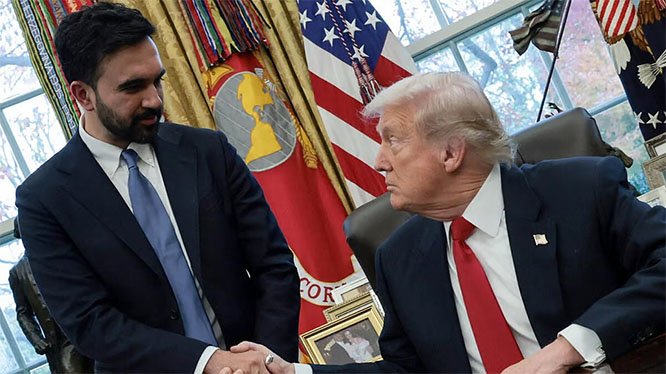
New York/Washington: US President Donald Trump has again claimed to have solved the conflict between India and Pakistan, repeating his assertion during a meeting with New York City Mayor-elect Zohran Mamdani in the Oval Office.

Mamdani flew to Washington DC for his first meeting with Trump in the White House on Friday. Trump said he “enjoyed” the meeting, which he described as “great.”

During remarks in the Oval Office, with Mamdani standing next to him, Trump repeated his claim that he solved the May conflict between India and Pakistan.

"I did eight peace deals of countries, including India and Pakistan,” he said.

On Wednesday, Trump had said he threatened to put 350 per cent tariffs on India and Pakistan if they did not end their conflict, repeating his claim that he solved the fighting between the nuclear-armed neighbours and that Prime Minister Narendra Modi had called him to say “we're not going to go to war.”

Since May 10, when Trump announced on social media that India and Pakistan had agreed to a “full and immediate” ceasefire after a “long night” of talks mediated by Washington, he has repeated his claim over 60 times that he “helped settle” the tensions between India and Pakistan.

India has consistently denied any third-party intervention. India launched Operation Sindoor on May 7, targeting terror infrastructure in Pakistan and Pakistan-occupied Kashmir in retaliation for the April 22 Pahalgam attack that killed 26 civilians. India and Pakistan reached an understanding on May 10 to end the conflict after four days of intense cross-border drone and missile strikes.

Mamdani emerged victorious in the closely-watched battle for New York City Mayor, becoming the first South Asian and Muslim to be elected to sit at the helm of the largest city in the US.

He had been the front-runner in the NYC Mayoral election for months and defeated Republican nominee Curtis Sliwa and political heavyweight former New York State Governor Andrew Cuomo, who ran as an independent candidate and was officially endorsed by Trump just hours before the elections.

Indian-descent Mamdani is the son of renowned filmmaker Mira Nair and Columbia University professor Mahmood Mamdani. He was born and raised in Kampala, Uganda and moved to New York City with his family when he was 7. Mamdani became a naturalised US citizen only recently, in 2018.

Comments

Add new comment

  • Coastaldigest.com reserves the right to delete or block any comments.
  • Coastaldigset.com is not responsible for its readers’ comments.
  • Comments that are abusive, incendiary or irrelevant are strictly prohibited.
  • Please use a genuine email ID and provide your name to avoid reject.
News Network
November 21,2025

Tejas.jpg

An Indian Air Force (IAF) Tejas fighter jet crashed on Friday, November 21, afternoon during its aerial demonstration at the Dubai Air Show, plunging to the ground at around 2:10 pm local time while performing a manoeuvre before thousands of spectators.

The IAF confirmed the incident, stating that a Tejas aircraft participating in the show had crashed and that further details were being gathered. An Air Force spokesperson said more information would be shared after initial assessments.

The crash sent thick black smoke billowing into the sky near the airport, causing panic among visitors, including families and children who had gathered to watch the display. Authorities have not yet confirmed whether the pilot managed to eject before the aircraft went down. Emergency response teams rushed to the scene, and officials have not released information on casualties or damage so far.

The Tejas is a 4.5-generation, multi-role fighter aircraft developed indigenously by Hindustan Aeronautics Limited (HAL). Designed for versatility, it is capable of offensive air support, close combat, ground attack missions and maritime operations. The aircraft family includes single-seat fighters and twin-seat trainers for both the Air Force and Navy.

HAL describes the latest version, the LCA Mk1A, as the most advanced in the series, featuring an AESA radar, an upgraded electronic warfare suite with radar-warning and self-protection jamming, smart multifunction displays, a digital map generator, a combined interrogator–transponder system and a modern radio altimeter. These enhancements significantly improve the aircraft’s combat capability and survivability.

Further updates from IAF and UAE authorities are awaited.

Comments

Add new comment

  • Coastaldigest.com reserves the right to delete or block any comments.
  • Coastaldigset.com is not responsible for its readers’ comments.
  • Comments that are abusive, incendiary or irrelevant are strictly prohibited.
  • Please use a genuine email ID and provide your name to avoid reject.
News Network
December 2,2025

Puttur: The long-cherished dream of a government medical college in Puttur has moved a decisive step closer to reality, with the Karnataka State Finance Department granting its official approval for the construction of a new 300-bed hospital.

Puttur MLA Ashok Kumar Rai announced the crucial development to reporters on Monday, confirming that the official communication from the finance department was issued on November 27. This 300-bed facility is intended to be the cornerstone for the establishment of the government medical college, a project announced in the state budget.

Fast-Track Implementation

The MLA outlined an aggressive timeline for the project:

•    A Detailed Project Report (DPR) for the hospital is expected to be ready within 45 days.

•    The tender process for the construction will be completed within two months.

Following the completion of the tender process, Chief Minister Siddaramaiah is scheduled to lay the foundation stone for the project.

"Setting up a medical college in Puttur is a historical decision by the Congress government in Karnataka," Rai stated. The project has an estimated budget allocation of Rs 1,000 crore for the medical college.

Focus on Medical Education Department

The MLA highlighted a key strategic move: requesting the government to implement the hospital construction through the Medical Education Department instead of the Health and Family Welfare Department. This is intended to streamline the entire process of establishing the full medical college, ensuring the facilities—including labs, operation theatres, and other necessary infrastructure—adhere to the strict guidelines set by the Medical Council of India (MCI). The proposed site for the project is in Bannur.

Rai also took the opportunity to address political criticism, stating that the government has fulfilled its promise despite "apprehensions" and "mocking and criticising" from opposition parties who had failed to take similar initiatives when they were in power. "Chief Minister Siddaramaiah has kept his word," he added.

Comments

Add new comment

  • Coastaldigest.com reserves the right to delete or block any comments.
  • Coastaldigset.com is not responsible for its readers’ comments.
  • Comments that are abusive, incendiary or irrelevant are strictly prohibited.
  • Please use a genuine email ID and provide your name to avoid reject.