



High air pollution cuts most Indian lives by 3 years

February 21, 2015

Chicago, Feb 21: India's high air pollution, ranked by the World Health Organisation among the worst in the world, is adversely impacting the lifespans of its citizens, reducing most Indian lives by over three years, a new study has said.
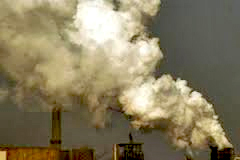
High air pollution
Over half of India's population – 660 million people – live in areas where fine particulate matter pollution is above India's standards for what is considered safe, said the study by economists from the University of Chicago, Harvard and Yale published in this week's 'Economic & Political Weekly'.

If India reverses this trend to meet its air standards, those 660 million people would gain about 3.2 years onto their lives, the study said.

Put another way, compliance with Indian air quality standards would save 2.1 billion life-years, it said.

"India's focus is necessarily on growth. However, for too long, the conventional definition of growth has ignored the health consequences of air pollution," said Michael Greenstone, an author of the study and director of the Energy Policy Institute at the University of Chicago (EPIC).

"This study demonstrates that air pollution retards growth by causing people to die prematurely. Other studies have also shown that air pollution reduces productivity at work, increases the incidence of sick days, and raises health care expenses that could be devoted to other goods."

The new figures come after the WHO estimates showed 13 of the 20 most polluted cities in the world were in India, including the worst-ranked city, Delhi.

India has the highest rate of death caused by chronic respiratory diseases anywhere in the world.

"The loss of more than two billion life years is a substantial price to pay for air pollution," said Rohini Pande, also an author and director of Evidence for Policy Design at the Harvard Kennedy School.

"It is in India's power to change this in cost effective ways that allow hundreds of millions of its citizens to live longer, healthier, and more productive lives. Reforms of the current form of regulation would allow for health improvements that lead to increased growth," Pande said.

The authors – who also include Nicholas Ryan of Yale, Janhavi Nilekani and Anish Sugathan of Harvard, and Anant Sudarshan, director of EPIC's India office – offer three policy solutions that would help to cost-effectively decrease India's pollution.

One initial step would be to increase its monitoring efforts and take advantage of new technology that allows for real-time monitoring, the authors said.

Further, there is not enough pollution monitoring stations for the public to learn about ambient concentrations. As one point of comparison, Beijing has 35 monitoring stations, while the Indian city with the most monitoring stations, Kolkata, has only 20.

The authors argue increased monitoring would put more pressure on polluters to comply with existing regulations.

While the government has taken important steps to improve monitoring, there is room for further expansion.

Additionally, the authors say a greater reliance on civil rather than criminal penalties would instill a "polluter pays" system that would provide polluters with an incentive to reduce pollution.

India's flagship environmental laws, the authors write, are built on an outdated criminal system with draconian penalties such as imprisonment or industry closure. Because these penalties are so severe, they are difficult to enforce.

Building on more rigorous monitoring and financial penalties, the authors suggest India should begin to adopt a market-based approach toward regulating emissions, like an emissions trading system.

Such an approach has been proven to reduce pollution at the lowest possible cost, making it compatible with the continued economic growth that is vital for India's future.

The study draws from an earlier study by Greenstone conducted in China in which he and his coauthors compared pollution in north China – where a policy subsidised coal use for home heating – to south China.

Through this study, he was able to separate the effect of pollution from other factors that also affect mortality to find an important metric: Every additional 100 micrograms of total suspended particulate matter per cubic meter in the atmosphere lowers life expectancy at birth by three years. That metric was then applied to the Indian data.

Comments

Add new comment

  • Coastaldigest.com reserves the right to delete or block any comments.
  • Coastaldigset.com is not responsible for its readers’ comments.
  • Comments that are abusive, incendiary or irrelevant are strictly prohibited.
  • Please use a genuine email ID and provide your name to avoid reject.
News Network
December 7,2025

Mangaluru, Dec 7: A 34-year-old fruit and vegetable trader in Mangaluru has reportedly lost ₹33.1 lakh after falling victim to an online investment scam run through a fake mobile app.

Police said the scam began in September, when the victim received a link on Facebook. Clicking it connected him to a WhatsApp number, where an unidentified person introduced a high-return investment scheme and instructed him to download an app.

To build trust, the fraudster asked him to invest ₹30,000 on September 24. The trader soon received ₹34,000 as “profit,” convincing him the scheme was genuine. Over the next two months, he transferred money in multiple instalments via Google Pay and IMPS to different scanner codes and bank accounts shared by the scammers. Between September 24 and December 3, he ended up sending a total of ₹33.1 lakh.

When he later requested a refund of his investment and promised returns, the scammers demanded additional payments, claiming he needed to pay a “service tax” first. Even after he paid a small amount, no money was returned, and the scammers continued pressuring him for more.

A case has been registered at the CEN Crime Police Station.

Comments

Add new comment

  • Coastaldigest.com reserves the right to delete or block any comments.
  • Coastaldigset.com is not responsible for its readers’ comments.
  • Comments that are abusive, incendiary or irrelevant are strictly prohibited.
  • Please use a genuine email ID and provide your name to avoid reject.
News Network
December 15,2025

Mangaluru, Dec 15: Air India Express has announced that it will resume direct flight services between Mangaluru and Muscat from March 2026, restoring an important international air link for passengers from the coastal region.

Airport authorities said the service will operate twice a week—on Sundays and Tuesdays—from March 1. The initial flights are scheduled on March 3, 8 and 10, followed by March 15 and 17, with the same operating pattern to continue thereafter. The flight duration is approximately three hours and 25 minutes.

The Mangaluru–Muscat route was earlier operated under the 2025 summer schedule, with services beginning on July 14. At that time, Air India Express had operated four flights a week before suspending the service.

Officials said the summer schedule will come into effect from March 29, after which changes in flight timings and departure schedules from Mangaluru are expected. Passengers have been advised to check the latest schedules while planning their travel.

The resumption of direct flights to Muscat is expected to significantly benefit expatriates, business travellers and others, further strengthening Mangaluru’s air connectivity with the Gulf region.

Comments

Add new comment

  • Coastaldigest.com reserves the right to delete or block any comments.
  • Coastaldigset.com is not responsible for its readers’ comments.
  • Comments that are abusive, incendiary or irrelevant are strictly prohibited.
  • Please use a genuine email ID and provide your name to avoid reject.
News Network
December 19,2025

Mangaluru: Public transport in Mangaluru is set for a state-led transformation as the government moves to deploy 100 new electric govt buses to replace unreliable private services. The initiative aims to provide a dependable alternative to private operators who have been frequently "cutting trips," leaving thousands of commuters stranded.

The announcement was made by Deputy Commissioner and MCC Administrator Darshan HV during a public phone-in session. The move specifically targets routes where private bus service has become erratic, ensuring that citizens no longer have to rely on a fluctuating private sector for their daily commute.

Restoring the Govt Presence

The transport crisis was brought to the forefront by Ramayya, a resident of Bajal, who highlighted a growing trend of private buses skipping morning and night trips. With the previous KSRTC (govt) services discontinued, residents have been left without a fallback option.

To fix this, the DC confirmed that the PM-eBus Sewa Scheme will bring 100 government-owned electric buses to the city:

•    Phased Deployment: The first 50 of the new 100 government buses are scheduled to arrive by March 2026.

•    State Infrastructure: Two new government depots, including one at Mudipu, are being prepared for operations.

•    Recruitment: The state has already begun training a new batch of government bus drivers to ensure the fleet is operational the moment it arrives.

Comments

Add new comment

  • Coastaldigest.com reserves the right to delete or block any comments.
  • Coastaldigset.com is not responsible for its readers’ comments.
  • Comments that are abusive, incendiary or irrelevant are strictly prohibited.
  • Please use a genuine email ID and provide your name to avoid reject.