



I oppose BJP more because cancer is dangerous than cold and cough: Prakash Raj

coastaldigest.com news network
April 20, 2018

Bengaluru, Apr 20: Multilingual actor and activist Prakash Raj today said that he opposed BJP more not because loved other parties but because the saffron party was worse than all.

Replying to a question on his silence on Congress and JD(S), the actor who founded #JustAsking campaign said he will start questioning them at a time when he considers it appropriate. He said he has been training his guns on the BJP more than Congress or the Janata Dal (S) because he is worried more about cancer than cough or cold.

“I am not in support of any party. But I am against any party that seeks to rule through communalism. Right now, we see national leaders speaking in a dictatorial tone about ‘ruling’ the entire country by ridding it of opposition parties. We need to remind them that they have been elected to serve the people, not rule them,” he said.

He said that during his tour of the state over the last few days, he had to clarify to election officials time and again that he was not speaking in support of any political leader. “I am not  asking people to vote for a particular party. I am only telling them not to vote for BJP. It is left to them to act on it,” he said.

To a question on contesting as a Congress candidate from Mangaluru Lok Sabha constituency in the 2019 elections, Raj replied in the negative and said the foundation would never turn into a political party.

“I am meeting leaders and asking them questions because I chose not to believe the rumours. I meet (Telangana chief minister) KCR or JD(S) leaders Deve Gowda and Kumaraswamy, to ensure that there are enough leaders to fight communalism. If people misunderstand me, I am prepared to explain,” he said.

Stating that his campaign is aimed at spreading political awareness among common people, he gave the example of the ongoing case against Mysuru MP Pratap Simha to explain that questioning people in power as citizens, must be our natural right.

Asked for his stand on the Cauvery row at a time when statements by actors Rajinikanth and Kamal Hassan have angered people in the state, Prakash Raj said he chose not to speak about the issue till he has the facts. “I have been meeting experts to learn about it. The issue has been politicised to such an extent that they say it is impossible to reach a one-time solution,” he said.

Comments

Add new comment

  • Coastaldigest.com reserves the right to delete or block any comments.
  • Coastaldigset.com is not responsible for its readers’ comments.
  • Comments that are abusive, incendiary or irrelevant are strictly prohibited.
  • Please use a genuine email ID and provide your name to avoid reject.
News Network
December 7,2025

SHRIMP.jpg

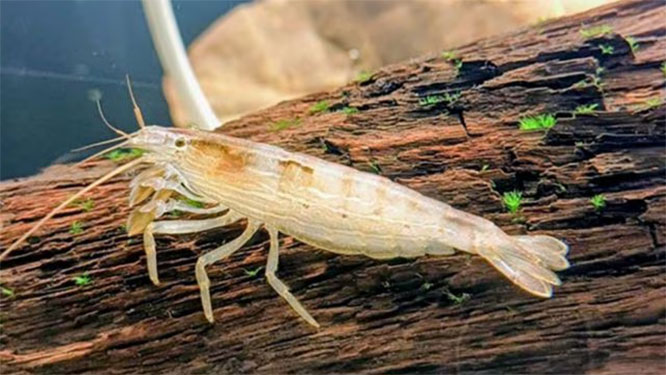
Mangaluru, Dec 7: A rare bamboo shrimp has been rediscovered on mainland India more than 70 years after it was last reported, confirming for the first time the presence of Atyopsis spinipes in the country. The find was made by researchers from the Centre for Climate Change Studies at Sathyabama Institute of Science and Technology, Chennai, during surveys in Karnataka and Odisha.

The team — shrimp expert Dr S Prakash, PhD scholar K Kunjulakshmi, and Mangaluru-based researcher Maclean Antony Santos — combined field surveys, ecological assessments and DNA analysis to identify the elusive species. Their findings, published in Zootaxa, resolve decades of taxonomic confusion stemming from a 1951 report that misidentified the species as Atyopsis moluccensis without strong evidence.

The shrimp has now been confirmed at two locations: the Mulki–Pavanje estuary near Mangaluru and the Kuakhai River in Bhubaneswar. Historical specimens from the Andaman Islands, previously labelled as A. moluccensis, were also found to be misidentified and actually belong to A. spinipes.

The rediscovery began after an aquarium hobbyist in Odisha spotted a shrimp in 2022, prompting systematic surveys across Udupi, Karwar and Mangaluru. Four female specimens were collected in Mulki and one in Odisha, all genetically matching.

Researchers warn the species may exist in very small, vulnerable populations as freshwater habitats face increasing pressure from pollution, sand mining and infrastructure development. All verified specimens have been deposited with the Zoological Survey of India for future reference.

Comments

Add new comment

  • Coastaldigest.com reserves the right to delete or block any comments.
  • Coastaldigset.com is not responsible for its readers’ comments.
  • Comments that are abusive, incendiary or irrelevant are strictly prohibited.
  • Please use a genuine email ID and provide your name to avoid reject.