IAF Sukhoi SU-30 MKI to carry Spice-2000 bombs used to decimate JeM camps in Pak

Agencies
March 5, 2019

New Delhi, Mar 5: The Indian Air Force (IAF) is equipping its Su-30MKI combat aircraft with the Israeli Spice-2000 bombs which were used by the force to carry out air strikes on the Jaish-e-Mohammed (JeM) terrorists training camp inside Pakistan.

Talking about the quick deployment of forces by the Air Force on the western frontier of Pakistan, top IAF sources told ANI that the force has been successful in doing so due to the exercise Gagan Shakti held last year where the service practiced to carry out high tempo operations on both the possible fronts.

“At the moment, the only aircraft which is capable of delivering the bombs on enemy targets is the Mirage 2000. But now the Air Force is putting them on the Su-30s as well to further enhance their firepower,” government sources said.

India had acquired more than 200 of these bombs from Israel a few years back and the Su-30MKI has already carried out trials of launching the Spice-2000 on ground targets, they said.

"After a few more trials, the Su-30 fleet would be equipped with these bombs which rely on coordinates and satellite pictures of the target to home in and destroy the intended targets," the sources said.

Once the integration is successful, it would be a big force multiplier for the Air force as the only planes which can launch these bombs right now are the Mirage 2000s.

The IAF has only around three squadrons of these planes whereas the service has already inducted more than 250 of these aircraft and has planes of getting around 20 more by the end of next year.

The Air Force used the Spice-2000 bombs extensively during the air strikes on Pakistan on February 26 decimating the intended target in Balakote in Khyber Pakhtunwa province of Pakistan in form of the Jaish-e-Mohammed terrorist training camp.

The attacks were carried out by the Air force to avenge the Pulwama suicide terrorist attack in which 40 CRPF troopers were killed.

Jaish-e-Mohammed chief Masood Azhar has been active against India for the last almost 20 years after he was released from jail during the Kandhar hijack where terrorists were released in exchange for passengers of the Indian Airlines flight number IC-814.


Comments

Anti-gaddar
 - 
Tuesday, 5 Mar 2019

you will lose badly...india is becoming losers country nowdays,... all around people are laughing about our capability and the fake bombing on terror camp.


we all know these BJP marons, only fit to attach poor innocent people inside india.


Add new comment

  • Coastaldigest.com reserves the right to delete or block any comments.
  • Coastaldigset.com is not responsible for its readers’ comments.
  • Comments that are abusive, incendiary or irrelevant are strictly prohibited.
  • Please use a genuine email ID and provide your name to avoid reject.
News Network
December 13,2025

New Delhi: School-going children are picking up drug and smoking habits and engaging in consumption of alcohol, with the average age of introduction to such harmful substances found to be around 13 years, suggesting a need for earlier interventions as early as primary school, a multi-city survey by AIIMS-Delhi said.

The findings also showed substance use increased in higher grades, with grade XI/XII students two times more likely to report use of substances when compared with grade VIII students. This emphasised the importance of continued prevention and intervention through middle and high school.

The study led by Dr Anju Dhawan of AIIMS's National Drug Dependence Treatment Centre, published in the National Medical Journal of India this month, looks at adolescent substance use across diverse regions.

The survey included 5,920 students from classes 8, 9, 11 and 12 in urban government, private and rural schools across 10 cities -- Bengaluru, Chandigarh, Delhi, Dibrugarh, Hyderabad, Imphal, Jammu, Lucknow, Mumbai, and Ranchi. The data were collected between May 2018 and June 2019.

The average age of initiation for any substance was 12.9 (2.8) years. It was lowest for inhalants (11.3 years) followed by heroin (12.3 years) and opioid pharmaceuticals (without prescription; 12.5 years).

Overall, 15.1 per cent of participants reported lifetime use, 10.3 per cent reported past year use, and 7.2 per cent reported use in the past month of any substance, the study found.

The most common substances used in the past year, after tobacco (4 per cent) and alcohol (3.8 per cent), were opioids (2.8 per cent), followed by cannabis (2 per cent) and inhalants (1.9 per cent). Use of non-prescribed pharmaceutical opioids was most common among opioid users (90.2 per cent).

On being asked, 'Do you think this substance is easily available for a person of your age' separately for each substance category, nearly half the students (46.3 per cent) endorsed that tobacco products and more than one-third of the students (36.5 per cent) agreed that a person of their age can easily procure alcohol products.

Similarly, for Bhang (21.9 per cent), ganja/charas (16.1 per cent), inhalants (15.2 per cent), sedatives (13.7 per cent), opium and heroin (10 per cent each), the students endorsed that these can be easily procured.

About 95 per cent of the children, irrespective of their grade, agreed with the statement that 'drug use is harmful'.

The rates of substance use (any) among boys were significantly higher than those of girls for substance use (ever), use in the past year and use in the past 30 days. Compared to grade VIII students, grade IX students were more likely, and grade XI/XII students were twice as likely to have used any substance (ever).

The likelihood of past-year use of any substance was also higher for grade IX students and for grade XI/XII students as compared to grade VIII students.

About 40 per cent of students mentioned that they had a family member who used tobacco or alcohol each. The use of cannabis (any product) and opioid (any product) by a family member was reported by 8.2 per cent and 3.9 per cent of students, respectively, while the use of other substances, such as inhalants/sedatives by family was 2-3 per cent, the study found.

A relatively smaller percentage of students reported use of tobacco or alcohol among peers as compared to among family members, while a higher percentage reported inhalants, sedatives, cannabis or opioid use among peers.

Children using substances (past year) compared to non-users reported significantly higher any substance use by their family members and peers.

There were 25.7 per cent students who replied 'yes' to the question 'conflicts/fights often occur in your family'. Most students also replied affirmatively to 'family members are aware of how their time is being spent' and 'damily members are aware of with whom they spend their time'.

Comments

Add new comment

  • Coastaldigest.com reserves the right to delete or block any comments.
  • Coastaldigset.com is not responsible for its readers’ comments.
  • Comments that are abusive, incendiary or irrelevant are strictly prohibited.
  • Please use a genuine email ID and provide your name to avoid reject.
News Network
December 6,2025

pilot.jpg

New Delhi: IndiGo, India’s largest airline, faced major operational turbulence this week after failing to prepare for new pilot-fatigue regulations issued by the Directorate General of Civil Aviation (DGCA). The stricter rules—designed to improve flight safety—took effect in phases through 2024, with the latest implementation on November 1. IndiGo has acknowledged that inadequate roster planning led to widespread cancellations and delays.

Below are the key DGCA rules that affected IndiGo’s operations:

1. Longer Mandatory Weekly Rest

Weekly rest for pilots has been increased from 36 hours to 48 hours.

The government says the extended break is essential to curb cumulative fatigue. This rule remains in force despite the current crisis.

2. Cap on Night Landings

Pilots can now perform only two night landings per week—a steep reduction from the earlier limit of six.

Night hours, defined as midnight to early morning, are considered the least alert period for pilots.

Given the disruptions, this rule has been temporarily relaxed for IndiGo until February 10.

3. Reduced Maximum Night Flight Duty

Flight duty that stretches into the night is now capped at 10 hours.

This measure has also been kept on hold for IndiGo until February 10 to stabilize operations.

4. Weekly Rest Cannot Be Replaced With Personal Leave

Airlines can no longer count a pilot’s personal leave as part of the mandatory 48-hour rest.

Pilots say this closes a loophole that previously reduced actual rest time.

Currently, all airlines are exempt from this rule to normalise travel.

5. Mandatory Fatigue Monitoring

Airlines must submit quarterly fatigue reports along with corrective actions to DGCA.

This system aims to create a transparent fatigue-tracking framework across the industry.

The DGCA has stressed that these rules were crafted to strengthen flight safety and align India with global fatigue-management standards. The temporary relaxations are expected to remain until February 2025, giving IndiGo time to stabilise its schedules and restore normal air travel.

Comments

Add new comment

  • Coastaldigest.com reserves the right to delete or block any comments.
  • Coastaldigset.com is not responsible for its readers’ comments.
  • Comments that are abusive, incendiary or irrelevant are strictly prohibited.
  • Please use a genuine email ID and provide your name to avoid reject.
News Network
December 7,2025

SHRIMP.jpg

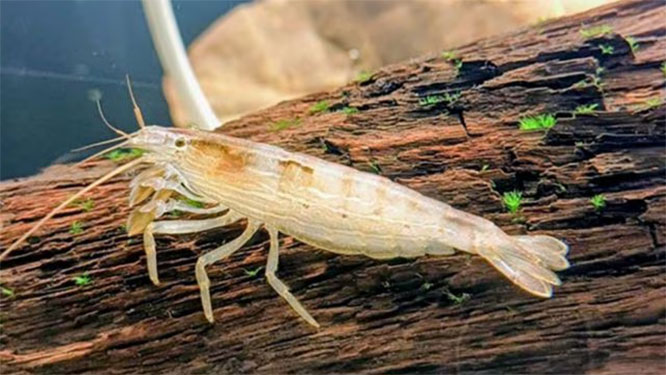
Mangaluru, Dec 7: A rare bamboo shrimp has been rediscovered on mainland India more than 70 years after it was last reported, confirming for the first time the presence of Atyopsis spinipes in the country. The find was made by researchers from the Centre for Climate Change Studies at Sathyabama Institute of Science and Technology, Chennai, during surveys in Karnataka and Odisha.

The team — shrimp expert Dr S Prakash, PhD scholar K Kunjulakshmi, and Mangaluru-based researcher Maclean Antony Santos — combined field surveys, ecological assessments and DNA analysis to identify the elusive species. Their findings, published in Zootaxa, resolve decades of taxonomic confusion stemming from a 1951 report that misidentified the species as Atyopsis moluccensis without strong evidence.

The shrimp has now been confirmed at two locations: the Mulki–Pavanje estuary near Mangaluru and the Kuakhai River in Bhubaneswar. Historical specimens from the Andaman Islands, previously labelled as A. moluccensis, were also found to be misidentified and actually belong to A. spinipes.

The rediscovery began after an aquarium hobbyist in Odisha spotted a shrimp in 2022, prompting systematic surveys across Udupi, Karwar and Mangaluru. Four female specimens were collected in Mulki and one in Odisha, all genetically matching.

Researchers warn the species may exist in very small, vulnerable populations as freshwater habitats face increasing pressure from pollution, sand mining and infrastructure development. All verified specimens have been deposited with the Zoological Survey of India for future reference.

Comments

Add new comment

  • Coastaldigest.com reserves the right to delete or block any comments.
  • Coastaldigset.com is not responsible for its readers’ comments.
  • Comments that are abusive, incendiary or irrelevant are strictly prohibited.
  • Please use a genuine email ID and provide your name to avoid reject.