



If I speak on the beef ban, I will lose my job, says Chief Economic Adviser

March 9, 2016

Mumbai, Mar 9: Days after he warned of social divisions hurting development, Chief Economic Adviser Arvind Subramanian today refused to answer a question on beef ban saying he did not want "to lose his job".

arvind
"You know that if I answer this question I will lose my job. But thank you nevertheless for asking the question," he said while interacting with students of the Mumbai University here.

He had been asked if the beef ban will have any adverse impact on the farmers' incomes or the rural economy, and his matter-of-fact reply was met with a round of applause.

The remark by Subramanian, who is on leave from the Peterson Institute for International Economics in Washington since October 2014, comes days after he spoke about the adverse impact of social tensions on development.

"The way you react to social cleavages has a critical impact on economic development. India is a wonderful example. What have reservations done, what have they not done, what has religion done, what has it not done, illustrate the general principle that these things have a huge impact," he had said during a lecture in Bengaluru.

Beef ban became a national issue after a man was lynched by a mob on the outskirts of the national capital last year on the suspicion of stocking beef at house.

Comments

Nnor
 - 
Wednesday, 9 Mar 2016

90 percent chaddi people eat beef and drink whisky

Abu Muhammad
 - 
Wednesday, 9 Mar 2016

The opinion of President Pranabh Mukharji, Rangarajan, Narayan Murthy, Subramaniyan and thousands of eminent persons from different walks of life, artists, thinkers, academicians, leaders, religious figures, and crores of voiceless citizens ... what will be the future of our motherland... Dictatorship? anarchy? fascism? OR Democracy. Truth & Justice will prevail? Will there be freedom from Hunger, Fear, intolerance and casteism??

Haneef
 - 
Wednesday, 9 Mar 2016

Yes Mr.Siraj exactly you are right,comment of the day.

One of indian
 - 
Wednesday, 9 Mar 2016

Even for Mass media.Cannot highlight True matter.

Siraj
 - 
Wednesday, 9 Mar 2016

In fact, these kind of fear among the people itself is the main setback for development of this world's biggest democratic country. The citizens should start expressing their feelings fearlessly, so that in the long run it will benefit. External forces can't bring peace to us.

Add new comment

  • Coastaldigest.com reserves the right to delete or block any comments.
  • Coastaldigset.com is not responsible for its readers’ comments.
  • Comments that are abusive, incendiary or irrelevant are strictly prohibited.
  • Please use a genuine email ID and provide your name to avoid reject.
News Network
December 7,2025

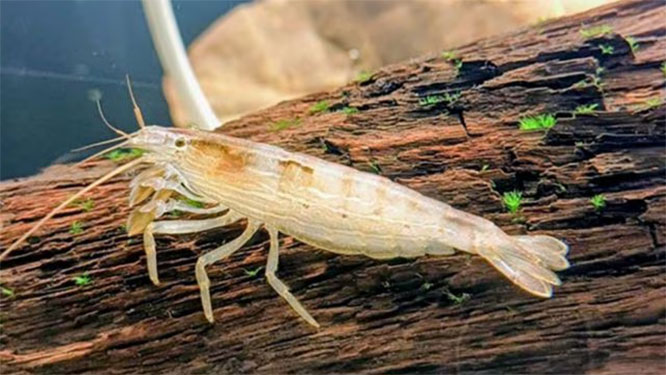
SHRIMP.jpg

Mangaluru, Dec 7: A rare bamboo shrimp has been rediscovered on mainland India more than 70 years after it was last reported, confirming for the first time the presence of Atyopsis spinipes in the country. The find was made by researchers from the Centre for Climate Change Studies at Sathyabama Institute of Science and Technology, Chennai, during surveys in Karnataka and Odisha.

The team — shrimp expert Dr S Prakash, PhD scholar K Kunjulakshmi, and Mangaluru-based researcher Maclean Antony Santos — combined field surveys, ecological assessments and DNA analysis to identify the elusive species. Their findings, published in Zootaxa, resolve decades of taxonomic confusion stemming from a 1951 report that misidentified the species as Atyopsis moluccensis without strong evidence.

The shrimp has now been confirmed at two locations: the Mulki–Pavanje estuary near Mangaluru and the Kuakhai River in Bhubaneswar. Historical specimens from the Andaman Islands, previously labelled as A. moluccensis, were also found to be misidentified and actually belong to A. spinipes.

The rediscovery began after an aquarium hobbyist in Odisha spotted a shrimp in 2022, prompting systematic surveys across Udupi, Karwar and Mangaluru. Four female specimens were collected in Mulki and one in Odisha, all genetically matching.

Researchers warn the species may exist in very small, vulnerable populations as freshwater habitats face increasing pressure from pollution, sand mining and infrastructure development. All verified specimens have been deposited with the Zoological Survey of India for future reference.

Comments

Add new comment

  • Coastaldigest.com reserves the right to delete or block any comments.
  • Coastaldigset.com is not responsible for its readers’ comments.
  • Comments that are abusive, incendiary or irrelevant are strictly prohibited.
  • Please use a genuine email ID and provide your name to avoid reject.