IIT scientists use waste onion skin to generate electricity

Agencies
December 18, 2017

New Delhi, Dec 18: Scientists at IIT Kharagpur have used waste onion skins to develop an inexpensive device that can generate 'green' electricity from body movements and may power pacemakers, smart pills and wearable electronics.

The non-toxic, biodegradable and biocompatible device takes advantage of the suitable piezoelectric properties of the onion skin, researchers said.

Piezoelectric materials have the ability to convert energy from everyday mechanical motions into electricity.

"This homespun inexpensive innovative finding can be a breakthrough scientific research in a new direction; even common people can generate energy in any circumstances using this simple novel cost-effective idea," Bhanu Bhusan Khatua, a professor at Indian Institute of Technology (IIT) Kharagpur in West Bengal said.

Increasing population, industrialisation, and ubiquitous use of electronics and vehicles are playing a huge role in destroying the environment day by day.

The rising burden on fossil fuels and depletion of natural resources has made the development of sustainable and alternative green energy technologies a pressing requirement in current energy deficiency world, researchers said.

Piezoelectric materials can be used to convert simple body movements into green energy without adding any pollution to our environments.

However, piezoelectric nanogenerators are difficult to synthesise and are often very expensive. They are also usually highly toxic or pose environmental hazards, which means their use in real life application remains limited.

These drawbacks prompted researchers at IIT Kharagpur and Pohang University of Science and Technology in South Korea to develop a non-toxic, biodegradable and biocompatible piezoelectric nanogenerator (BPNG).

Among various cellulose containing bio-materials, onion skin is the most abundant bio-waste, said Khatua.

"This motivated us to study the piezoelectric coefficient of the onion skin and its suitability as a bio- piezoelectric material," Khatua said.

"The uniqueness of our work lies in the novelty of utilising naturally abundant biocompatible and biodegradable onion skin directly as efficient piezoelectric material, which is thrown as tonne-scale garbage in every day worldwide," he said.

The device could be used in various biomedical applications such as pacemakers powered by heartbeats or edible devices that can track health from inside the body.

Researchers estimate that the device could be manufactured easily at a cost of less than a rupee, with existing technologies. This would make the system accessible to people the economically weaker sections of the society.

To build the device, the researchers coated an onion skin with a thin layer of gold and added copper wires with silver paste. It was then encapsulated in polymers.

The nanogenerator is capable of harvesting several types of mechanical energies, including body movements, wind flow and even machine vibrations.

The device developed by researchers has an output of 18 volts and can turn on 30 green LEDs under repeated human finger touch response, according to the study published in the journal NanoEnergy.

The device could withstand repeated cycles of pressing and releasing for up to five months. The voltage generated remained almost unchanged even after long cycles, indicating good mechanical stability of the device for bio-medical applications, researchers said.

"We also studied the durability of the device under sewing machine vibration for 10,000 cycles. From the result it can easily be said that the device had enough mechanical durability and chemical stability for realistic applications," Khatua said.

The researchers, including Sumanta Kumar Karan and Sandip Maiti from IIT, are optimistic about commercialising the technology soon, although more research is required before it can be realised in practical applications.

Comments

Add new comment

  • Coastaldigest.com reserves the right to delete or block any comments.
  • Coastaldigset.com is not responsible for its readers’ comments.
  • Comments that are abusive, incendiary or irrelevant are strictly prohibited.
  • Please use a genuine email ID and provide your name to avoid reject.
News Network
January 20,2026

Mangaluru: In a major step towards strengthening rural innovation, the Office of the Principal Scientific Adviser (PSA) to the Government of India is supporting the establishment of RuTAGe Smart Village Centres (RSVCs) across the country through collaborations with academic institutions, civil society organisations and philanthropic partners.

As part of this national initiative, Nitte (Deemed to be University) will set up the first RSVCs in the region at Nitte GP in Udupi district and at the Nitte Health Centre, Sevanjali Trust, Farangipete, in Dakshina Kannada district. The centres will be inaugurated on January 21. In South India, the programme is being implemented by the Section Infin-8 Foundation (SI-8).

Speaking to reporters on Monday, SI-8 founder-director Vishwas US said experts from Nitte University and SI-8 would work closely with farmers, students, youth and local entrepreneurs to adapt and deploy technologies tailored to local needs.

Project head Prof Iddya Karunasagar, representing Nitte DU, said the RSVCs at Nitte and Farangipete would serve as demonstration hubs for a wide range of agriculture, energy, skill-development and assistive technologies. These include solar dryers for fruits, vegetables and crops; soil-testing solutions; power weeders and women-friendly farm tools; wind-powered devices for rural artisans; grain storage systems; grass-cutting and tree-climbing equipment; and liquid fertiliser production using cowshed waste.

SI-8 CEO Aravind C Kumar said the centres would also provide access to digital and knowledge-based platforms such as ISRO applications, government scheme portals, market linkage tools and gamified learning resources, along with assistive technologies for persons with visual impairments.

Highlighting the broader impact of the initiative, Principal Scientific Adviser Prof Ajay Kumar Sood said it demonstrated how applied research could bridge the rural–urban divide and help create self-reliant, technology-enabled villages.

The initiative has been made possible through philanthropic support from Dr NC Murthy of ACM Business Solutions, LLC, USA. Dr Sapna Poti, Director (Strategic Alliances) at the Office of the Principal Scientific Adviser, said the long-term objective is to build self-sufficient, technology-driven communities capable of generating sustainable livelihoods on their own.

Comments

Add new comment

  • Coastaldigest.com reserves the right to delete or block any comments.
  • Coastaldigset.com is not responsible for its readers’ comments.
  • Comments that are abusive, incendiary or irrelevant are strictly prohibited.
  • Please use a genuine email ID and provide your name to avoid reject.
News Network
January 20,2026

DGP.jpg

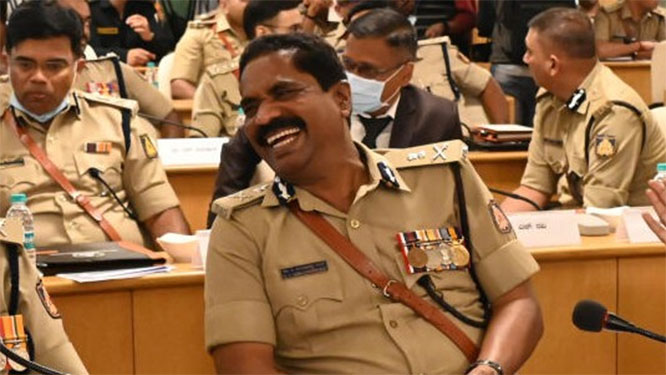
Karnataka DGP (Civil Rights Enforcement) K Ramachandra Rao was suspended with immediate effect, as per a state government order issued on Monday, 19 January. The order cited conduct unbecoming of a government servant and causing embarrassment to the state administration.

The Karnataka government suspended Rao after a purported video showed him in a compromising position with a woman inside his official chamber. The video went viral on social media. Rao rejected the videos outright, terming them "fabricated and false".

Who is K Ramachandra Rao?

Rao is a DGP-rank officer who was heading the Directorate of Civil Rights Enforcement until his suspension. He was promoted to DGP in September 2023 and assumed office in October 2023, the Sunday Guardian reported.

He also served as the Chairman and Managing Director of the Karnataka State Police Housing and Infrastructure Development Corporation Limited.

His stint as the Inspector General of Police (IGP) for the Southern Range was also marred by controversy. In 2014, during a cash seizure near Mysuru’s Yelwal, officials claimed the seized amount was ₹20 lakh, while the accused (Kerala-based merchants) claimed it was around ₹2.27 crore.

Rao, who was present during the seizure, denied all allegations. However, he was transferred soon after.

Allegations of collusion with a businessman surfaced, and a senior police officer was quoted by The Sunday Guardian as saying, “In Rao’s case, the CID has clearly mentioned that there was a great degree of lapse on the part of Rao and a deputy superintendent of police after it was brought to their notice that a few policemen, including a gunman attached to the IGP, were involved in the robbery.”

Rao had denied all wrongdoing in that incident. Despite past controversies, he rose to the state’s top police position, the Sunday Guardian reported.

Ranya Rao’s stepfather

Rao is the stepfather of Kannada actress Harshavardhini Ranya alias Ranya Rao, accused of orchestrating the illegal import of gold worth over ₹12.56 crore from Dubai to India along with two others — businessman Tarun Raju, and jewellery dealer Sahil Jain.

‘Obscene video’ controversy

A viral video showed Rao behaving inappropriately with a woman inside his office while in uniform.

The Karnataka government said in its Monday order that “vide videos and news reports widely broadcast on public news channels and media platforms, it is observed that Dr K Ramachandra Rao has acted in an obscene manner which is unbecoming of a Government Servant and also causing embarrassment to the Government.”

The order said the matter was examined by the state government, which found that the officer's conduct amounted to a violation of Rule 3 of the All India Services (Conduct) Rules, 1968.

The government said it is prima facie satisfied that "it is necessary to place Rao under suspension with immediate effect, pending inquiry".

During the suspension period, Rao will be entitled to subsistence allowance as per Rule 4 of the All India Services (Discipline and Appeal) Rules, 1969.

The order also places restrictions on his movement, stating that during the period of suspension, the officer must not leave headquarters under any circumstances without the written permission of the state government.

Comments

Add new comment

  • Coastaldigest.com reserves the right to delete or block any comments.
  • Coastaldigset.com is not responsible for its readers’ comments.
  • Comments that are abusive, incendiary or irrelevant are strictly prohibited.
  • Please use a genuine email ID and provide your name to avoid reject.
News Network
January 16,2026

tourism.jpg

Following a record-breaking response to experimental joyrides during the Karavali Utsava, the Dakshina Kannada district administration has signaled a major shift toward high-end travel. Officials are now laying the groundwork to transform Mangaluru into a permanent heli-tourism hub, connecting the state’s most sacred pilgrim centers and untouched coastal gems via the skies.

The move comes as the Karnataka government readies a specialized tourism policy for the coast, aimed at drawing global investors. With Mangaluru already serving as a critical nexus for education, healthcare, and maritime trade, the introduction of a scheduled helicopter service is seen as the "missing link" in the region’s economic evolution.

By the Numbers: A Flying Success

The data from the recent 10-day trial (beginning December 26) paints a clear picture of high demand:

•    Total Passengers: 1,032
•    Ride Duration: 7 minutes
•    Ticket Price: ₹3,500 per person
•    Origin of Tourists: Significant turnout from Kerala, Udupi, and Karwar.

Bridging the Gap for Global Travelers

Deputy Commissioner Darshan HV emphasized that the vision extends far beyond festival joyrides. Currently, international tourists arriving via luxury cruises at the New Mangalore Port (peak season December–April) often find themselves "landlocked" by time.

"Foreign visitors staying for just 24 to 48 hours currently struggle to visit inland attractions like Chikkamagaluru or Kodagu due to road travel times," a senior official noted. "A permanent heli-link would make these Western Ghats destinations accessible in under 30 minutes."

Beyond Tourism: Medical and Logistics

The administration is also looking at the humanitarian and logistical benefits. As a medical powerhouse, Mangaluru’s private hospitals could utilize the proposed permanent helipads for:

1.    Cardiac Emergencies: Rapid transfer of critical patients.
2.    Organ Transplants: Vital "green corridors" through the air to save lives.
3.    Regional Connectivity: Linking remote areas like Puttur, Sullia, and Beltangady to the main city.

While the Karavali Utsava has traditionally focused on beach-side festivities, the DC confirmed that the district is now evaluating formal proposals from private operators. The goal is to establish a network of permanent helipads that will eventually offer regular sorties to Kudremukh National Park and the scenic heights of the Western Ghats.

Comments

Add new comment

  • Coastaldigest.com reserves the right to delete or block any comments.
  • Coastaldigset.com is not responsible for its readers’ comments.
  • Comments that are abusive, incendiary or irrelevant are strictly prohibited.
  • Please use a genuine email ID and provide your name to avoid reject.