



Illegal immigrants in Jeddah draw fear of 'infiltrators'

March 28, 2013
saudi
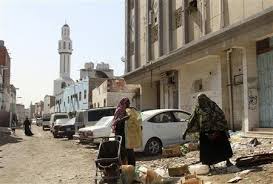
Jeddah, Mar 28: Down a narrow alleyway deep in Jeddah's Karantina, three women from Sudan have set up stalls under colorful parasols, selling peanuts, hibiscus petals, dried pulses, baskets, frankincense, calabashes and sandalwood.

They laugh and gossip in the sunshine, swathed in bright printed cloth. But when approached by a stranger, they are cautious. Jeddah has attracted outsiders for centuries, being the main port of arrival for Muslims making the Hajj pilgrimage to Makkah. It is this history that gives Karantina its name: older residents can remember when it was “quarantine” for pilgrims.

But the people who now live in this part in the south of Saudi Arabia's second biggest city were drawn not only by religious devotion but also the Kingdom's wealth. They live in a legal limbo, sometimes for generations.

“This is the forgotten area,” said a bearded Sudanese man in his 40s. “Here are many illegal immigrants who don't have official papers. Government supervision is scarce.”

Hundreds of thousands of illegal immigrants are not counted among the millions of expatriates who reside legally in the Kingdom. Instead they live on the margins, ineligible for government services and outside of the law, but often unofficially tolerated because of the expense and administrative obstacles in the way of expelling them.

In recent months, however, their status has caught the attention of Saudi media, who have been calling them “infiltrators” and warning readers of their supposed links to crime, disease and terror.

“The infiltrators will carry with them all their social ills including security threats, criminal behavior and ethical issues,” wrote commentator Hamoud Abu Talib in an opinion piece in Okaz daily this month.

Interior Ministry spokesman Mansour Al-Turki said the media has exaggerated the number of crimes committed by illegal immigrants and added that Saudi citizens themselves contributed to the problem by using them for cheap labor.

Many illegal immigrants have now lived in Saudi Arabia for decades, having children and grandchildren who now live without nationality or residence papers, and prompting government officials to speak of a “humanitarian crisis”.

Last week local media reported police in Asir province bordering Yemen as saying 1,470 illegal immigrants had been arrested in just two days.

“Dealing with these problems is not easy once they're in the country ... Sometimes you can't prove their nationality,” Al-Turki told Reuters. “You cannot send them back to Yemen. They will not take them.”

In Karantina, people sit out on doorsteps or high metal benches covered with strips of loose carpet, chatting with neighbors. Old sofas and armchairs sit propped against houses. Rubbish carpets both sides of the road, and abandoned, broken-down cars and trucks gather dust, sinking onto flat tires.

In a large open space near a highway where trucks park, old cars lie in deep puddles of water and mud, some submerged up to their axles, while wading birds strut between them on long legs.

One 15-year-old girl, speaking to Reuters as she watched a television soap opera in a room choked with wood smoke, said her family came from Chad before she was born. The girl's family — mother, brother, father, his three other wives and their children — are among the luckier residents of Karantina, giving out food as charity to those in need.

“I'm happy. There is nothing more that I can ask for. My father provides me with everything. I have a television,” she said.

Immigrants who do not have a residency permit, known as an iqama, face restricted access to medical care and other services. Residents of Karantina said they have to pay more for treatment, which by law should only be provided to people who can show valid identification papers.

A small private school in Karantina teaches the Qur'an to local children, but it is unregulated. Prince Khaled Al-Faisal, Emir of Makkah region, said last year there were around 1 million illegal residents in the province's slums. For the government, the presence of so many undocumented people has a big impact on its efforts to strengthen labor laws. The country is trying to encourage firms to hire more Saudi citizens, who now make up only about a tenth of private-sector employees.

This month the Labor Ministry said it would fine companies found employing illegal immigrants. It also offered incentives to firms that employed Palestinian and Burmese refugees with legitimate residency papers.

On Sunday, Prince Khaled said the government would give legal residency to 250,000 Burmese Muslims already living as refugees in Saudi Arabia.

As holders of the iqama they will be able to access government services more easily and work, drive and rent accommodation legally, in common with millions of other foreigners living in Saudi Arabia.

“I never thought of returning to Burkina Faso. All my children were born here. Thank God, we live with the help of charitable people,” said Sadiq Basheer Al-Sadiq, who came to Saudi Arabia for Haj by sea in 1970 and is now the patriarch of a family 60 strong. He said he and all his family members, including 15 children by four wives, had legal residency.

They live in a small plot of land in the Ruwais district of central Jeddah, their open-air rooms covered by aluminum roofs and divided by wooden beams and cement bricks.

Sadiq, now 85, has retired after working as a construction worker in Makkah, and is now dependent on his children. His son, Ibrahim, was born in Saudi Arabia.

Comments

Add new comment

  • Coastaldigest.com reserves the right to delete or block any comments.
  • Coastaldigset.com is not responsible for its readers’ comments.
  • Comments that are abusive, incendiary or irrelevant are strictly prohibited.
  • Please use a genuine email ID and provide your name to avoid reject.
News Network
December 15,2025

Mangaluru police have arrested a 27-year-old NRI on his return from Saudi Arabia in connection with an Instagram post allegedly containing derogatory and provocative remarks about the Hindu religion, officials said on Monday.

The accused, Abdul Khader Nehad, a resident of Ulaibettu in Mangaluru, was working in Saudi Arabia when the post was uploaded, police said.

A suo motu case was registered at the Bajpe police station on October 11 after an allegedly offensive post circulated from the Instagram account ‘team_sdpi_2025’. Police said the content was flagged for being provocative and derogatory in nature.

During the investigation, technical analysis traced the Instagram post to Nehad, who was residing abroad at the time, a senior police officer said. Based on these findings, a Look Out Circular (LOC) was issued against him.

On December 14, Nehad arrived from Saudi Arabia at Calicut International Airport in Kerala, where he was taken into custody on arrival. Police said further investigation is underway.

Comments

Add new comment

  • Coastaldigest.com reserves the right to delete or block any comments.
  • Coastaldigset.com is not responsible for its readers’ comments.
  • Comments that are abusive, incendiary or irrelevant are strictly prohibited.
  • Please use a genuine email ID and provide your name to avoid reject.
News Network
December 4,2025

Udupi: A 40-year-old NRI from Udupi has reportedly lost more than Rs 12.25 lakh in an online investment scam operated through Telegram.

According to a complaint filed at the CEN police station, Leo Jerome Mendonsa, who has been working in Dubai for the past 15 years in computer accessories sales, maintains NRI accounts in Karkala and Nitte.

On November 12, 2025, Mendonsa was added to a Telegram group called Instaflow Earnings by unknown individuals. Users identified as Priya and Dipannita persuaded him to invest in “Revenue Tasks.” Initially, Mendonsa transferred Rs 1,100 multiple times and received the promised returns, encouraging him to continue.

On November 14, another user, Nishmitha Shetty, directed him to register on a website, digitvisionuoce.cc, and invest Rs 4 lakh in various shares. Over the next few days, he made multiple transfers totaling Rs 12,25,000, including Rs 50,000 via Google Pay, believing the scheme was legitimate.

After receiving the money, the alleged handlers stopped responding, and neither the invested amount nor the promised profits were returned.

The CEN police have registered a case under Sections 66(C) and 66(D) of the IT Act and Section 318(4) of the Bharatiya Nyaya Sanhita (BNS), and investigations are ongoing.

Comments

Add new comment

  • Coastaldigest.com reserves the right to delete or block any comments.
  • Coastaldigset.com is not responsible for its readers’ comments.
  • Comments that are abusive, incendiary or irrelevant are strictly prohibited.
  • Please use a genuine email ID and provide your name to avoid reject.
News Network
December 7,2025

SHRIMP.jpg

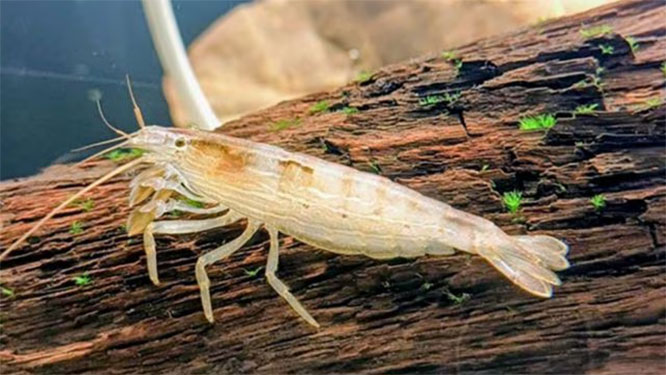
Mangaluru, Dec 7: A rare bamboo shrimp has been rediscovered on mainland India more than 70 years after it was last reported, confirming for the first time the presence of Atyopsis spinipes in the country. The find was made by researchers from the Centre for Climate Change Studies at Sathyabama Institute of Science and Technology, Chennai, during surveys in Karnataka and Odisha.

The team — shrimp expert Dr S Prakash, PhD scholar K Kunjulakshmi, and Mangaluru-based researcher Maclean Antony Santos — combined field surveys, ecological assessments and DNA analysis to identify the elusive species. Their findings, published in Zootaxa, resolve decades of taxonomic confusion stemming from a 1951 report that misidentified the species as Atyopsis moluccensis without strong evidence.

The shrimp has now been confirmed at two locations: the Mulki–Pavanje estuary near Mangaluru and the Kuakhai River in Bhubaneswar. Historical specimens from the Andaman Islands, previously labelled as A. moluccensis, were also found to be misidentified and actually belong to A. spinipes.

The rediscovery began after an aquarium hobbyist in Odisha spotted a shrimp in 2022, prompting systematic surveys across Udupi, Karwar and Mangaluru. Four female specimens were collected in Mulki and one in Odisha, all genetically matching.

Researchers warn the species may exist in very small, vulnerable populations as freshwater habitats face increasing pressure from pollution, sand mining and infrastructure development. All verified specimens have been deposited with the Zoological Survey of India for future reference.

Comments

Add new comment

  • Coastaldigest.com reserves the right to delete or block any comments.
  • Coastaldigset.com is not responsible for its readers’ comments.
  • Comments that are abusive, incendiary or irrelevant are strictly prohibited.
  • Please use a genuine email ID and provide your name to avoid reject.