



Income tax concession, farm relief may figure in Modi govt’s pre-poll Budget

Agencies
January 31, 2019

New Delhi, Jan 31: Income tax concessions for individuals, a farm relief package, support for small businesses and possible populist spending measures may be part of the Budget that Finance Minister Piyush Goyal will present Friday as the government makes a last-ditch attempt to woo voters ahead of the general elections.

Prime Minister Narendra Modi-led government's sixth and final budget before the polls due by May is supposed to be an interim budget or a Vote on Account. 

But it is widely expected that Goyal may go beyond seeking Parliament nod for government expenditure for four months of next fiscal and announce sops to woo rural and urban middle-class voters, industry sources and experts said.

As per convention, the outgoing government only seeks parliamentary approval for limited period spending, leaving the full Budget presentation for the new regime in July.

Under pressure from a resurgent Congress which is going all out to lure voters with the promise of debt waiver for farmers and a minimum income for the poor if voted to power, Goyal may announce some form of a direct transfer of cash to farmers. 

This may or may not replace subsidies that the farmer gets but will certainly be aimed at addressing rural distress, which was primarily blamed for BJP's defeat in recent assembly elections in key states.

The farm relief package may cost anywhere between Rs 70,000 crore to Rs 1 lakh crore, according to sources.

Goyal, who stepped in as interim finance minister after Arun Jaitley had to fly to New York for medical treatment, is widely expected to raise income tax exemption thresholds.

Basic exemption limit may be raised from Rs 2.5 lakh to Rs 3 lakh for individuals of less than 60 years of age and from Rs 3 lakh to Rs 3.5 lakh for those aged 60 years or more but less than 80.

Women taxpayers may get higher basic exemption of Rs 3.25 lakh or even at par with senior citizens, as per sources.

An alternative to raising the exemption limit is to raise the 80C deduction to Rs 2 lakh from Rs 1.5 lakh to encourage taxpayers to save more for their future.

Considering delay in housing projects and also rising interest rates, deduction of interest amount on housing loan for a self-occupied house property may be enhanced to Rs 2.5 lakh from Rs 2 lakh. 

The set off cap of adjusting loss from house property against other heads of income may also be accordingly raised to Rs 2.5 lakh from Rs 2 lakh, according to sources.

The increase in personal income tax exemption limit is unlikely to meaningfully reduce collections unless the successive tax slabs are also changed. 

Also being speculated are cheap loans for small businesses and increased rural spending.

For the farm sector, the possible options include direct transfer of money to farmers like in the Telangana model of Rythu Bandhu, interest free crop loan for those farmers who pay on time and zero premium for insurance of food grain crops. 

The measures, industry and informed sources say, could include those to create employment as the government faces a tag of giving a jobless high GDP growth.

For investors, these sops may translate into another breach in the budget deficit target of 3.3 per cent of GDP for the current fiscal and a possible record borrowing in the coming financial year.

In 2018-19, the largest downside to revenues has been from the GST collections with the shortfall likely at around Rs 1.4 lakh crore.

Goyal may also look at higher interim dividend from RBI and deferring subsidy payouts on fertiliser as well as LPG and kerosene to provide funds for the populist schemes.

Credit rating agencies have warned that without bringing down other spending, a higher farm subsidy bill will increase future fiscal deficits.

Fitch Ratings Thursday warned of a second consecutive year of fiscal slippage in the event of Goyal resorting to populist spending to win over lost vote base.

"Higher pre-election spending could risk a second consecutive year of fiscal slippage relative to the government's targets and would further delay plans to reduce the high general government fiscal deficit and debt burden," it said.

Sources said the interim budget would provide an opportunity for the government to outline its medium-term economic priorities, specifically with regards to improving farm/rural incomes. 

It would be important to continue its focus on overall infrastructure expansion, especially as private sector investments remain tepid and a nascent recovery hinges on government spending.

There is also a talk of the government looking at the idea of a Quasi-Universal Basic Income Scheme (QUBI).

The concept of a Universal Basic Income (UBI) in the context of India was outlined in the Economic Survey 2016-17. 

However, a UBI for the entire population (and even for the BPL population) will entail a prohibitively high fiscal outgo. In fact, without a commensurate reduction in various transfers (subsidies and social programmes), it might not be feasible to implement a UBI for the entire population.

However, the government could target the poorest of the poor (possibly 40 per cent of the BPL population) based on the 2011 census.

Some say a hypothetical Rs 700 to Rs 1,200 per month can be provided to the poorest of the population (around 12 crore people). This will entail an outgo of Rs 1 lakh crore or 0.5 per cent of the GDP.

Comments

Add new comment

  • Coastaldigest.com reserves the right to delete or block any comments.
  • Coastaldigset.com is not responsible for its readers’ comments.
  • Comments that are abusive, incendiary or irrelevant are strictly prohibited.
  • Please use a genuine email ID and provide your name to avoid reject.
News Network
December 6,2025

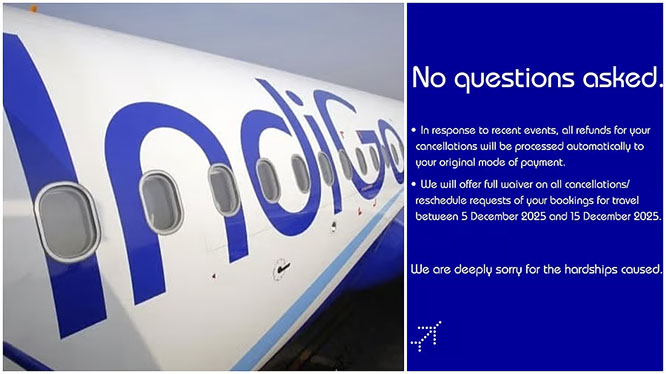
indigoticket.jpg

With IndiGo flight disruptions impacting thousands of passengers, the airline on Saturday said that it will offer full waiver on all cancellations/reschedule requests for travel bookings between December 5, 2025 and December 15, 2025.

Earlier in the day, the civil aviation ministry had directed the airline to complete the ticket refund process for the cancelled flights by Sunday evening, as well as ensure baggage separated from the travellers are delivered in the next two days.

In a post on X, titled 'No questions asked', IndiGo wrote, "In response to recent events, all refunds for your cancellations will be processed automatically to your original mode of payment."

"We are deeply sorry for the hardships caused," it further added.

Several passengers, however, complained of not getting full refund as promised by the airline.

Netizens have shared screenchots of getting charged for airline cancellation fee and convenience fee.

"Please tell me why u have did this airline cancellation charges when u say full amount will be refunded (sic)," a user wrote sharing a screenshot of the refund page.

"Well, but you have still debited the convenience charges," wrote another.

Passengers have also raised concerns about the "cancel" option being disabled on the IndiGo app. "First enable the 'Cancel' button on your App & offer full refund on tickets cancelled by customers between the said dates," wrote a user.

A day after the country's largest airline, IndiGo, cancelled more than 1,000 flights and caused disruptions for the fifth day on Saturday, the ministry said that any delay or non-compliance in refund processing will invite immediate regulatory action.

The refund process for all cancelled or disrupted flights must be completed by 8 pm on Sunday, the ministry said in a statement.

"Airlines have also been instructed not to levy any rescheduling charges for passengers whose travel plans were affected by cancellations," it said.

On Saturday, more than 400 flights were cancelled at various airports.

IndiGo has also been instructed to set up dedicated passenger support and refund facilitation cells.

Comments

Add new comment

  • Coastaldigest.com reserves the right to delete or block any comments.
  • Coastaldigset.com is not responsible for its readers’ comments.
  • Comments that are abusive, incendiary or irrelevant are strictly prohibited.
  • Please use a genuine email ID and provide your name to avoid reject.
News Network
December 19,2025

Mangaluru: Public transport in Mangaluru is set for a state-led transformation as the government moves to deploy 100 new electric govt buses to replace unreliable private services. The initiative aims to provide a dependable alternative to private operators who have been frequently "cutting trips," leaving thousands of commuters stranded.

The announcement was made by Deputy Commissioner and MCC Administrator Darshan HV during a public phone-in session. The move specifically targets routes where private bus service has become erratic, ensuring that citizens no longer have to rely on a fluctuating private sector for their daily commute.

Restoring the Govt Presence

The transport crisis was brought to the forefront by Ramayya, a resident of Bajal, who highlighted a growing trend of private buses skipping morning and night trips. With the previous KSRTC (govt) services discontinued, residents have been left without a fallback option.

To fix this, the DC confirmed that the PM-eBus Sewa Scheme will bring 100 government-owned electric buses to the city:

•    Phased Deployment: The first 50 of the new 100 government buses are scheduled to arrive by March 2026.

•    State Infrastructure: Two new government depots, including one at Mudipu, are being prepared for operations.

•    Recruitment: The state has already begun training a new batch of government bus drivers to ensure the fleet is operational the moment it arrives.

Comments

Add new comment

  • Coastaldigest.com reserves the right to delete or block any comments.
  • Coastaldigset.com is not responsible for its readers’ comments.
  • Comments that are abusive, incendiary or irrelevant are strictly prohibited.
  • Please use a genuine email ID and provide your name to avoid reject.
News Network
December 19,2025

Saudi Arabia has abolished fees on expatriate workers employed in licensed industrial establishments, signaling a strong push to empower national factories and enhance the Kingdom’s global industrial competitiveness. The move reflects the leadership’s commitment to building a sustainable and resilient industrial economy under Saudi Vision 2030.

The decision was approved by the Council of Ministers, chaired by Crown Prince and Prime Minister Mohammed bin Salman, following a recommendation from the Council of Economic and Development Affairs (CEDA). It forms part of a broader strategy to support, modernize, and strengthen the industrial sector.

By removing fees on foreign workers, industrial establishments gain greater operational flexibility and relief from financial pressures. This is expected to help factories expand production, improve efficiency, and compete more effectively in international markets, while reinforcing long-term sustainability.

The initiative aligns closely with Saudi Vision 2030, which identifies industry as a key pillar of economic diversification. A competitive and resilient industrial base is viewed as essential for driving innovation, attracting investment, and sustaining long-term economic growth.

Overall, the fee exemption underscores the Kingdom’s commitment to creating a supportive environment for industrial development and ensuring that Saudi factories remain globally competitive and capable of leading the nation’s economic transformation.

Comments

Add new comment

  • Coastaldigest.com reserves the right to delete or block any comments.
  • Coastaldigset.com is not responsible for its readers’ comments.
  • Comments that are abusive, incendiary or irrelevant are strictly prohibited.
  • Please use a genuine email ID and provide your name to avoid reject.