



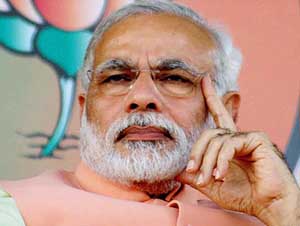
The editorial then goes on to add, despite Modi's humble beginnings as a tea-seller, the sectarian riots under him must not be ignored. The piece says, "Mr Modi had helped organise a march on the holy site at Ayodhya in 1990 which, two years later, led to the deaths of 2,000 in Hindu-Muslim clashes...he made speeches early in his career that shamelessly whipped up Hindus against Muslims. In 2002 Mr Modi was chief minister and he was accused of allowing or even abetting the pogrom." The editorial adds that Modi's defenders simply argue that no investigation has found the man guilty and that he has worked for drawing investment and economic growth to the state of Gujarat. Countering this defence, the editorial argues that investigations into the riots were actually inconclusive due to the loss of critical evidence, and that Modi never apologised or showed remorse. Modi's past, his RSS roots, the infamous 'puppy' remark, that he refused to wear the skullcap, all find mention. "By refusing to put Muslim fears to rest, Mr Modi feeds them. By clinging to the anti-Muslim vote, he nurtures it," the editorial says. It continues, "If Mr Modi were to explain his role in the violence and show genuine remorse, we would consider backing him, but he never has; it would be wrong for a man who has thrived on division to become prime minister of a country as fissile as India. We do not find the prospect of a government led by Congress under Mr Gandhi an inspiring one. But we have to recommend it to Indians as the less disturbing option." Modi is still to be associated with sectarian hatred and India deserves better, it concludes.


Comments
Add new comment