India largest remittance-receiving country in the world; expats sent home USD 69 billion in 2017

Agencies
May 13, 2018

New York, May 13: India was the largest remittance-receiving country in the world, with migrant workers from the country sending home USD 69 billion in 2017, according to a report which said remittances to the Asia-Pacific region amounted to US 256 billion last year.

The report ‘RemitSCOPE - Remittance markets and opportunities – Asia and the Pacific’ said India (USD 69 billion), China (USD 64 billion) and the Philippines (USD 33 billion) are the three largest remittance-receiving countries in the world in 2017. Pakistan (USD 20 billion), and Vietnam (USD 14 billion) are also in the top 10.

About 70 percent of remittances sent to Asia and the Pacific come from outside the region and in particular from the Gulf States (32 percent), North America (26 percent) and Europe (12 percent). By 2030, around USD 6 trillion in remittances are expected to be sent to developing countries by 2030: over half of these flows will arrive in the Asia Pacific regions, very often in small towns and villages.

Last year, migrant workers sent USD 256 billion to their families in the Asia-Pacific region, the report released by the International Fund for Agricultural Development (IFAD) said. The remittances represented 53 percent of flows worldwide, growing 4.87 percent since 2008, with rates flattening in recent years. Remittance outflows from the region amount to USD 78 billion and 93 percent of the flows remain in the region.

Remittances are particularly crucial in rural areas where poverty is the highest. Worldwide, an estimated 40 percent of the total value of remittances go to rural areas.

However, in the Asia- Pacific region, remittances go disproportionally to countries with a majority of rural populations such as Nepal (81 percent), India (67 percent), Vietnam (66 percent), Bangladesh (65 percent), Pakistan (61 percent) and the Philippines (56 percent). Remittances to rural areas are generally costlier due to expenses associated with offering access points in distant locations.

Remittances contribute to the region more than 10 times the official development assistance in the region, the report said. In the region, 400 million people, one out of every 10 people, are directly affected by remittances either as a sender or as a receiver.

The report said while remittances benefit about 320 million family members in the region, most of them in rural areas, remittance markets still need to transform to ensure that families can benefit fully from the flows.

"The promise of technological innovation in the remittance marketplace could bring about a fundamental transformation for hundreds of millions benefiting from these flows. But this transformative change has not yet happened," IFAD Senior remittance expert Pedro De Vasconcelos said. 

In addition, De Vasconcelos pointed out that outdated regulatory barriers on both sending and receiving ends result in higher and less transparent costs for the 2 billion transactions a year – most amounting to just USD 200 to USD 300 each. They also make it less likely and more difficult to convert remittances into savings and investments.

According to the report, cash-to-cash transactions remain by far the most common form of transfer. It is only recently that technology is beginning to move markets towards account-to-account transfers through digital operations. There are now more than one million payment locations through the region, reflecting a greater digitalisation of transactions. 

"For digitalisation of transfers to happen, regulators and private sector companies need to work further together to harmonize legal and regulatory frameworks between countries and support the design of products driven by customer needs," De Vasconcelos said.

In the region, families generally spent about 70 percent of remittances to meet basic needs, such as food, clothing, healthcare and education. The remaining 30 percent, amounting to USD 77 billion, could be saved and invested in asset-building or income-generating activities, helping families to build livelihoods and their future, De Vasconcelos added.

The report said while financial inclusion has increased since 2011 with half of the adults in the region having a bank account (excluding high-income economies) this does not represent the reality of the substantial majority of remittance receiving families where financial exclusion remains predominant. 

Comments

Add new comment

  • Coastaldigest.com reserves the right to delete or block any comments.
  • Coastaldigset.com is not responsible for its readers’ comments.
  • Comments that are abusive, incendiary or irrelevant are strictly prohibited.
  • Please use a genuine email ID and provide your name to avoid reject.
News Network
December 15,2025

Mangaluru, Dec 15: Air India Express has announced that it will resume direct flight services between Mangaluru and Muscat from March 2026, restoring an important international air link for passengers from the coastal region.

Airport authorities said the service will operate twice a week—on Sundays and Tuesdays—from March 1. The initial flights are scheduled on March 3, 8 and 10, followed by March 15 and 17, with the same operating pattern to continue thereafter. The flight duration is approximately three hours and 25 minutes.

The Mangaluru–Muscat route was earlier operated under the 2025 summer schedule, with services beginning on July 14. At that time, Air India Express had operated four flights a week before suspending the service.

Officials said the summer schedule will come into effect from March 29, after which changes in flight timings and departure schedules from Mangaluru are expected. Passengers have been advised to check the latest schedules while planning their travel.

The resumption of direct flights to Muscat is expected to significantly benefit expatriates, business travellers and others, further strengthening Mangaluru’s air connectivity with the Gulf region.

Comments

Add new comment

  • Coastaldigest.com reserves the right to delete or block any comments.
  • Coastaldigset.com is not responsible for its readers’ comments.
  • Comments that are abusive, incendiary or irrelevant are strictly prohibited.
  • Please use a genuine email ID and provide your name to avoid reject.
News Network
December 16,2025

Mangaluru, Dec 16: The Mangaluru City police have significantly escalated their campaign against drug trafficking, arresting 25 individuals and booking 12 cases under the Narcotic Drugs and Psychotropic Substances (NDPS) Act between November 30 and December 13. The crackdown resulted in the seizure of a substantial quantity of illicit substances, including 685.6 grams of MDMA and 1.5 kg of ganja.

The success of this recent drive has been significantly boosted by the city’s innovative, QR code-based anonymous reporting system.

"The anonymous reporting system has received an encouraging response. Several recent arrests were made based on inputs received through this system, helping police tighten the noose around drug peddlers," said the City Police Commissioner.

The latest arrests contribute to a robust year-to-date record, underscoring the police's relentless commitment to combating the drug menace.

Up to December 14 this year, the police have registered a total of 107 cases of drug peddling, leading to the arrest of 219 peddlers. Furthermore, they have booked 562 cases of drug consumption, resulting in the arrest of 671 individuals.

The scale of the seizure for the year reflects the magnitude of the problem being tackled: police have seized 320.6 kg of ganja worth ₹88.7 lakh and 1.4 kg of MDMA valued at ₹1.2 crore. Other significant seizures include hydro-weed ganja worth ₹94.7 lakh and cocaine worth ₹1.9 lakh, among others.

The Commissioner emphasized a policy of rigorous enforcement: "We ensure that peddlers are caught red-handed so that they cannot later dispute the case or claim innocence."

To counter the rising trend of substance abuse among youth, the Mangaluru City police have rolled out uniform guidelines for random drug testing across educational institutions.

As part of the drive, tests were conducted in approximately 100 institutions, screening an estimated 5,500 to 6,000 students in the first phase. 20 students tested positive for drug consumption during the initial screening.

Students who tested positive have been provided counselling and are scheduled for re-testing in the second quarter. The testing will also be expanded to students not covered in the first phase. In a move to ensure strict implementation, police personnel were deployed in mufti in some institutions. Reiterating a zero-tolerance stance, the Commissioner confirmed that random testing will continue, and colleges have also been instructed to conduct drug tests at the time of admission to deter substance abuse from an early stage.

Comments

Add new comment

  • Coastaldigest.com reserves the right to delete or block any comments.
  • Coastaldigset.com is not responsible for its readers’ comments.
  • Comments that are abusive, incendiary or irrelevant are strictly prohibited.
  • Please use a genuine email ID and provide your name to avoid reject.
News Network
December 16,2025

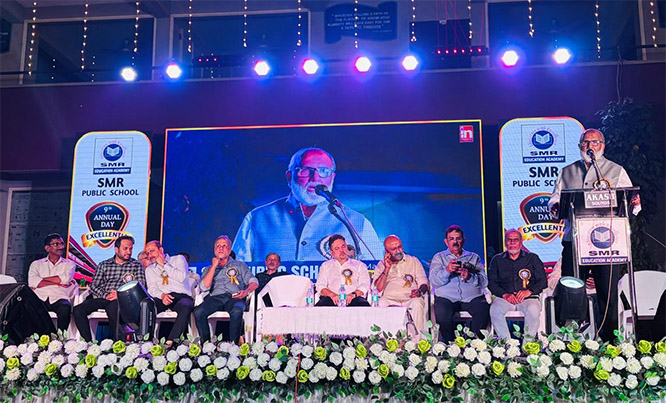
SMR1.jpg

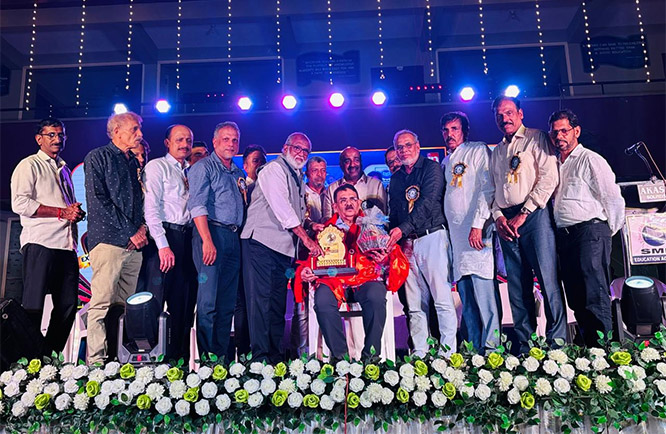
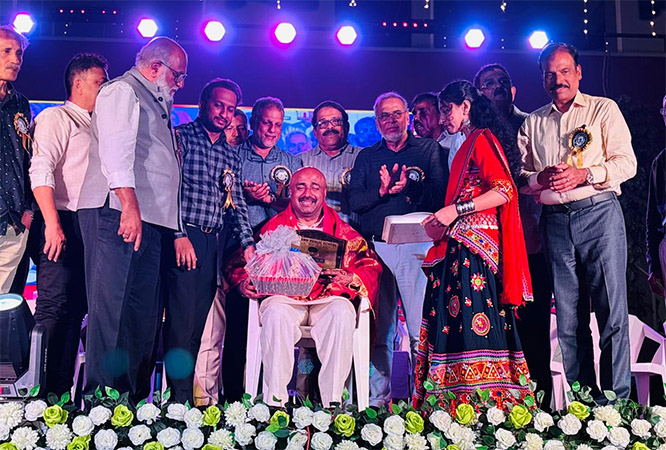
Melkar (Bantwal): The 9th Annual Day celebration of SMR Public School, titled “EXCELLENTIA”, was held on December 15 with great enthusiasm and dignity, marking a significant milestone in the institution’s journey towards academic excellence and holistic development.

The programme was inaugurated by Dr. U. T. Iftikar Ali. The chief guests were Dr. Akhtar Hussain, Mr. P. Moosabba Beary, Mr. Zakaria Jokattre, and Dr. T. M. Abdul Rahuf—whose inspiring addresses motivated the students and appreciated the school’s contributions to education.

Mr. Abdul Nasir, Mr. Ibrahim Gadiyar, Mr. Razak Golthamajal, Mr. Sali Koya, Mr. Arshad Hussain, Mr. Ismail Balanoor, Mr. Feroz Bawa, Mr. Sahul Hameed, Mr. Abubakkar, Mr. Hameed K. Mani, Mr. Abdul Majeed (Principal, Melkar Women’s College), and Mr. Abdul Lathief (Former Principal, Melkar Women’s College) were the guests of honour.

The Annual Report was presented by the Headmistress, Ms. Fathimathul Zaheera, highlighting the school’s achievements and progress during the academic year. The Presidential Address was delivered by the Chairman of SMR Public School, Dr. Haji S. M. Rasheed, who emphasised the vital role of education in shaping students’ futures and stressed the importance of discipline, dedication, and consistent effort in achieving 100 per cent academic results.

Secretary of SMR Public School, Mr. Rifath Ahmed, and PTA President, Mr. Sandeep Kumar, were also present on the occasion.

The Annual Day celebration showcased the collective efforts of students and teachers and reaffirmed the school’s commitment to quality education and all-round development. The programme concluded with a vote of thanks, expressing gratitude to all dignitaries, parents, and well-wishers for their support. The 9th Annual Day—EXCELLENTIA—was a memorable and successful event, leaving a lasting impression on everyone present. 

SMR3.jpg

SMR2.jpg

Comments

Add new comment

  • Coastaldigest.com reserves the right to delete or block any comments.
  • Coastaldigset.com is not responsible for its readers’ comments.
  • Comments that are abusive, incendiary or irrelevant are strictly prohibited.
  • Please use a genuine email ID and provide your name to avoid reject.