India offers to buy 200 foreign combat jets - if they're Made-in-India

October 29, 2016

New Delhi, Oct 29: India is offering to buy hundreds of fighter planes from foreign manufacturers - as long as the jets are made in India and with a local partner, air force officials say.
jet

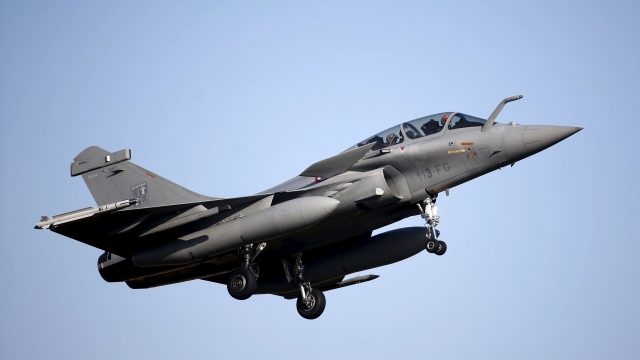
A deal for 200 single-engine planes produced in India - which the air force says could rise to 300 as it fully phases out ageing Soviet-era aircraft - could be worth anything from $13-$15 billion, experts say, potentially one of the country's biggest military aircraft deals.

After a deal to buy high-end Rafale planes from France's Dassault was scaled back to just 36 jets last month, the Indian Air Force is desperately trying to speed up other acquisitions and arrest a fall in operational strength, now a third less than required to face both China and Pakistan.

But Prime Minister Narendra Modi's administration wants any further military planes to be built in India with an Indian partner to kickstart a domestic aircraft industry, and end an expensive addiction to imports.

Lockheed Martin said it is interested in setting up a production line for its F-16 plane in India for not just the Indian military, but also for export.

And Sweden's Saab has offered a rival production line for its Gripen aircraft, setting up an early contest for one of the biggest military plane deals in play.

"The immediate shortfall is 200. That would be the minimum we would be looking at," said an air officer briefed on the Make-in-India plans under which a foreign manufacturer will partner local firms to build the aircraft with technology transfer.

India's defence ministry has written to several companies asking if they would be willing to set up an assembly line for single-engine fighter planes in India and the amount of technology transfer that would happen, another government source said.

"We are testing the waters, testing the foreign firms' willingness to move production here and to find out their expectations," the person said.

Operational gaps

India's air force originally planned for 126 Rafale twin-engine fighters from Dassault, but the two sides could not agree on the terms of local production with a state-run Indian firm and settled for 36 planes in a fly-away condition.

Adding to the military's problems is India's three-decade effort to build a single-engine fighter of its own which was meant to be the backbone of the air force. Only two of those Light Combat Aircraft, called Tejas, have been delivered to the air force which has ordered 140 of them.

The Indian Air Force is down to 32 operational squadrons compared with the 45 it has said are necessary, and in March the vice chief Air Marshal B.S. Dhanoa told parliament's defence committee that it didn't have the operational strength to fight a two front war against China and Pakistan.

Jet makers respond

Saab said it was ready to not only produce its frontline Gripen fighter in India, but help build a local aviation industry base.

"We are very experienced in transfer of technology - our way of working involves extensive cooperation with our partners to establish a complete ecosystem, not just an assembly line," said Jan Widerström, Chairman and Managing Director, Saab India Technologies.

He confirmed Saab had received the letter from the Indian government seeking a fourth generation fighter. A source close to the company said that while there was no minimum order set in stone for it to lay down a production line, they would expect to build at least 100 planes at the facility.

Lockheed Martin said it had responded to the defence ministry's letter with an offer to transfer the entire production of its F-16 fighter to India.

"Exclusive F-16 production in India would make India home to the world's only F-16 production facility, a leading exporter of advanced fighter aircraft, and offer Indian industry the opportunity to become an integral part of the world's largest fighter aircraft supply chain," Abhay Paranjape, National Executive for Lockheed Martin Aeronautics Business Development in India said in an email.

U.S. Top supplier

Lockheed's offer comes on the back of expanding U.S.-India military ties in which Washington has emerged as India's top arms supplier in recent years, ousting old ally Russia.

Earlier this year Boeing also offered India its twin-engine F/A-18 Hornets, but the level of technology transfer was not clear.

India has never previously attempted to build a modern aircraft production line, whether military or civilian. State-run Hindustan Aeronautics (HAL) has assembled Russian combat jets including the Su-30, but these are under licensed production.

"We have never had control over technology. This represents the most serious attempt to build a domestic base. A full or a near-full tech transfer lays the ground for further development," said retired Indian air marshal M. Matheswaran, a former adviser at HAL.

He said the Indian government would be looking at producing at least 200 fighters, and then probably some more, to make up for the decades of delay in modernising the air force.


Comments

Add new comment

  • Coastaldigest.com reserves the right to delete or block any comments.
  • Coastaldigset.com is not responsible for its readers’ comments.
  • Comments that are abusive, incendiary or irrelevant are strictly prohibited.
  • Please use a genuine email ID and provide your name to avoid reject.
News Network
December 16,2025

jordan.jpg

Prime Minister Narendra Modi on Monday held talks with Jordan’s King Abdullah II in Amman, during which the two leaders discussed ways to further strengthen bilateral relations, with the Prime Minister outlining an eight-point vision covering key areas of cooperation.

Describing the meeting as “productive”, PM Modi said he shared a roadmap focused on trade and economy, fertilisers and agriculture, information technology, healthcare, infrastructure, critical and strategic minerals, civil nuclear cooperation, and people-to-people ties.

In a post on social media platform X, the Prime Minister praised King Abdullah II’s personal commitment to advancing India–Jordan relations, particularly as both countries mark the 75th anniversary of the establishment of diplomatic ties this year.

“Held productive discussions with His Majesty King Abdullah II in Amman. His personal commitment towards vibrant India-Jordan relations is noteworthy. This year, we are celebrating the 75th anniversary of our bilateral diplomatic relations,” PM Modi said.

The meeting took place at the Al Husseiniya Palace, where the two leaders also exchanged views on regional and global issues of mutual interest. According to the Ministry of External Affairs (MEA), both sides agreed to further deepen cooperation in areas including trade and investment, defence and security, counter-terrorism and de-radicalisation, fertilisers and agriculture, infrastructure, renewable energy, tourism, and heritage.

The MEA said both leaders reaffirmed their united stand against terrorism.

PM Modi arrived in Amman earlier on Monday and was received by Jordanian Prime Minister Jafar Hassan, who accorded him a formal welcome. Following the talks, King Abdullah II hosted a banquet dinner in honour of the Prime Minister, reflecting the warmth of bilateral ties.

Jordan is the first leg of PM Modi’s three-nation tour. From Amman, the Prime Minister will travel to Ethiopia at the invitation of Prime Minister Abiy Ahmed Ali, marking his first official visit to the African nation. The tour will conclude with a visit to Oman.

Comments

Add new comment

  • Coastaldigest.com reserves the right to delete or block any comments.
  • Coastaldigset.com is not responsible for its readers’ comments.
  • Comments that are abusive, incendiary or irrelevant are strictly prohibited.
  • Please use a genuine email ID and provide your name to avoid reject.
News Network
December 6,2025

indigoticket.jpg

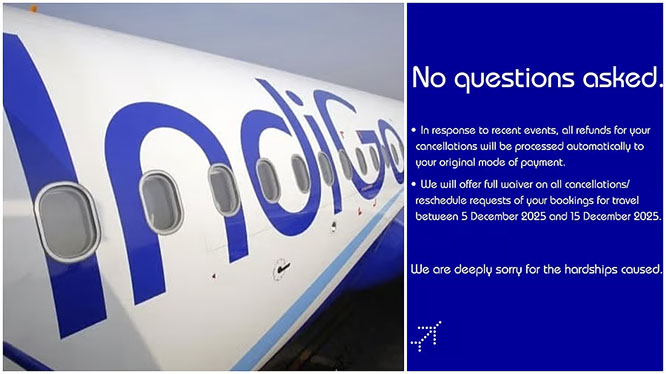
With IndiGo flight disruptions impacting thousands of passengers, the airline on Saturday said that it will offer full waiver on all cancellations/reschedule requests for travel bookings between December 5, 2025 and December 15, 2025.

Earlier in the day, the civil aviation ministry had directed the airline to complete the ticket refund process for the cancelled flights by Sunday evening, as well as ensure baggage separated from the travellers are delivered in the next two days.

In a post on X, titled 'No questions asked', IndiGo wrote, "In response to recent events, all refunds for your cancellations will be processed automatically to your original mode of payment."

"We are deeply sorry for the hardships caused," it further added.

Several passengers, however, complained of not getting full refund as promised by the airline.

Netizens have shared screenchots of getting charged for airline cancellation fee and convenience fee.

"Please tell me why u have did this airline cancellation charges when u say full amount will be refunded (sic)," a user wrote sharing a screenshot of the refund page.

"Well, but you have still debited the convenience charges," wrote another.

Passengers have also raised concerns about the "cancel" option being disabled on the IndiGo app. "First enable the 'Cancel' button on your App & offer full refund on tickets cancelled by customers between the said dates," wrote a user.

A day after the country's largest airline, IndiGo, cancelled more than 1,000 flights and caused disruptions for the fifth day on Saturday, the ministry said that any delay or non-compliance in refund processing will invite immediate regulatory action.

The refund process for all cancelled or disrupted flights must be completed by 8 pm on Sunday, the ministry said in a statement.

"Airlines have also been instructed not to levy any rescheduling charges for passengers whose travel plans were affected by cancellations," it said.

On Saturday, more than 400 flights were cancelled at various airports.

IndiGo has also been instructed to set up dedicated passenger support and refund facilitation cells.

Comments

Add new comment

  • Coastaldigest.com reserves the right to delete or block any comments.
  • Coastaldigset.com is not responsible for its readers’ comments.
  • Comments that are abusive, incendiary or irrelevant are strictly prohibited.
  • Please use a genuine email ID and provide your name to avoid reject.
News Network
December 6,2025

pilot.jpg

New Delhi: IndiGo, India’s largest airline, faced major operational turbulence this week after failing to prepare for new pilot-fatigue regulations issued by the Directorate General of Civil Aviation (DGCA). The stricter rules—designed to improve flight safety—took effect in phases through 2024, with the latest implementation on November 1. IndiGo has acknowledged that inadequate roster planning led to widespread cancellations and delays.

Below are the key DGCA rules that affected IndiGo’s operations:

1. Longer Mandatory Weekly Rest

Weekly rest for pilots has been increased from 36 hours to 48 hours.

The government says the extended break is essential to curb cumulative fatigue. This rule remains in force despite the current crisis.

2. Cap on Night Landings

Pilots can now perform only two night landings per week—a steep reduction from the earlier limit of six.

Night hours, defined as midnight to early morning, are considered the least alert period for pilots.

Given the disruptions, this rule has been temporarily relaxed for IndiGo until February 10.

3. Reduced Maximum Night Flight Duty

Flight duty that stretches into the night is now capped at 10 hours.

This measure has also been kept on hold for IndiGo until February 10 to stabilize operations.

4. Weekly Rest Cannot Be Replaced With Personal Leave

Airlines can no longer count a pilot’s personal leave as part of the mandatory 48-hour rest.

Pilots say this closes a loophole that previously reduced actual rest time.

Currently, all airlines are exempt from this rule to normalise travel.

5. Mandatory Fatigue Monitoring

Airlines must submit quarterly fatigue reports along with corrective actions to DGCA.

This system aims to create a transparent fatigue-tracking framework across the industry.

The DGCA has stressed that these rules were crafted to strengthen flight safety and align India with global fatigue-management standards. The temporary relaxations are expected to remain until February 2025, giving IndiGo time to stabilise its schedules and restore normal air travel.

Comments

Add new comment

  • Coastaldigest.com reserves the right to delete or block any comments.
  • Coastaldigset.com is not responsible for its readers’ comments.
  • Comments that are abusive, incendiary or irrelevant are strictly prohibited.
  • Please use a genuine email ID and provide your name to avoid reject.