



New Delhi/Geneva, Aug 2: India is willing to sign a global trade deal, which it has torpedoed, if other World Trade Organisation members can agree to its parallel demand for concessions on stockpiling food, senior officials in New Delhi said on Friday.
It was not immediately clear if the latest comments by Indian officials would open a window for the deal to be resurrected.
In Geneva, a trade diplomat from a developing nation said: "The trust that countries have in what India says is going to be significantly diminished."
The officials in New Delhi said the deal could be signed as early as September.
"It is ridiculous to say the Bali deal is dead," said a senior official at India's trade ministry, referring to the Trade Facilitation Agreement (TFA) pact that was agreed on the Indonesian island of Bali last year.
"We are totally committed to the TFA, and only asking for an agreement on food security," said the official, who cannot be identified under briefing rules.
Another trade official said: "We expect that the (WTO) director general will call a meeting in September and we are ready to sign the deal in September itself, provided TFA and food security issues are passed together. We are quite hopeful for the deal."
Damaging India's image?
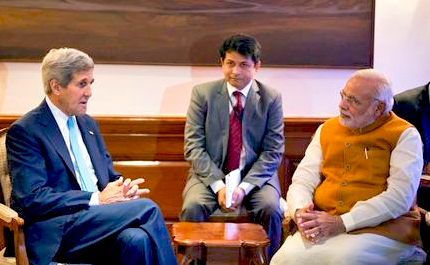
U.S. Secretary of State John Kerry, who was on a visit to India, told Prime Minister Narendra Modi earlier on Friday that India's refusal to sign the trade deal had undermined the country's image.
"Failure to sign the Trade Facilitation Agreement sent a confusing signal and undermined the very image Prime Minister Modi is trying to send about India," a U.S. State Department official told reporters after Kerry's meeting with Modi.
Several WTO member states voiced frustration after India's demands led to the collapse of the first major global trade reform pact in two decades.
WTO ministers had already agreed the global reform of customs procedures known as "trade facilitation" in Bali last December, but were unable to overcome last-minute Indian objections and get it into the WTO rule book by a July 31 deadline.
India has insisted that, in exchange for signing the trade facilitation agreement, it must see more progress on the parallel pact.
India's new nationalist government has insisted that a permanent agreement on its subsidised food stockpiling must be in place at the same time as the trade facilitation deal, well ahead of a 2017 target set in Bali last year.
Most diplomats had expected the pact to be rubber-stamped this week, marking a unique success in the WTO's 19-year history which, according to some estimates, would add $1 trillion and 21 million jobs to the world economy.
India calls these estimates highly exaggerated.
The diplomats were shocked when India revealed its veto and the eleventh-hour failure drew strong criticism, as well as rumblings about the future of the organisation and the multilateral system it underpins.
"Australia is deeply disappointed that it has not been possible to meet the deadline. This failure is a great blow to the confidence revived in Bali that the WTO can deliver negotiated outcomes," Australian Trade Minister Andrew Robb said. "There are no winners from this outcome - least of all those in developing countries which would see the biggest gains."
Move on without India
Some countries, including the United States, the European Union, Australia, Japan and Norway, have already discussed a plan to exclude India from the facilitation agreement and push ahead regardless, officials involved in the talks said.
An Australian trade official involved in the talks said officials were exhausted with the process and that there was already discussion about major reforms at the WTO and the Doha Round of trade negotiations, which began in 2001.
"Some see it as a final trigger for ending Doha and pressing ahead with plurilateral reform, leave behind those that don't want to come along," he said.
A Japanese official familiar with the situation said that while Tokyo reaffirmed its commitment to maintaining and strengthening the multilateral trade system, it was frustrated that such a small group of countries had stymied the overwhelming consensus.
"The future of the Doha Round including the Bali package is unclear at this stage," he said.
New Zealand Minister of Overseas Trade, Tim Groser, told Reuters there had been "too much drama" surrounding the negotiations and added that any talk of excluding India was "naive" and counterproductive.
"India is the second biggest country by population, a vital part of the world economy and will become even more important. The idea of excluding India is ridiculous.
"I don't want to be too critical of the Indians. We have to try and pull this together and at the end of the day putting India into a box would not be productive," he added.
Still, the failure of the agreement should signal a move away from monolithic single undertaking agreements that have defined the body for decades, Peter Gallagher, an expert on free trade and the WTO at the University of Adelaide, told Reuters.
"I think it's certainly premature to speak about the death of the WTO. I hope we've got to the point where a little bit more realism is going to enter into the negotiating procedures," he said.
"It's 153 countries. We can't all move at the same speed on the same things, and it's time to let those that want to do it, do it."


Comments
Add new comment