



India is a secular state with no state religion: AG Mukul Rohatgi to UNHCR

May 5, 2017

Geneva, May 5: India on Thursday said it is a secular state with no state religion and safeguarding the rights of minorities forms an essential core of its polity, as it came under criticism from Pakistan over treatment of minorities. Speaking at the 27th session of the Universal Periodic Review Working Group at the UNHCR in Geneva, Attorney General Mukul Rohatgi said that the Indian Constitution enshrines various provisions for the protection of the rights and interest of the minorities.
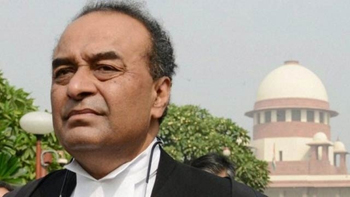
mukul
Rohatgi, who led the Indian delegation at the UN Human Rights Council, said India makes no distinction between caste, creed, colour or religion of a citizen. “India is a secular state with no state religion,” he said, adding that the Indian constitution guarantees freedom of religion to every individual. He said the right to free speech and expression occupies its rightful place in the core of the Indian Constitution.

“As the world’s largest multi-layered democracy, we fully recognise the importance of free speech and expression. Our people are conscious of their political freedoms and exercise their choices at every opportunity,” Rohatgi told the member states. The Pakistan delegation raked up the Kashmir issue and demanded a ban on the use of pellet guns by Indian security forces. It also asked India to allow a UNHRC fact-finding team to visit Kashmir and review the situation.

It also raised the issue of “mob violence” against the minorities Muslims, Sikhs, Christians and Dalits in India. “We believe in peace, non-violence and upholding human dignity. As such, the concept of torture is completely alien to our culture and it has no place in the governance of the nation,” the Indian delegate said.

On the Armed Forces Special Powers Act, Rohatgi said the Act is applied only to disturbed areas and these areas are very few and in proximity to some international borders. “Whether this Act should be repealed or not is a matter of on-going vibrant political debate in my country,” he said.

On transgenders, he said India has been at the forefront of recognising their equal rights. The Supreme Court gave a landmark judgement in 2014 directing the government to declare trans-genders a “third gender” and included them as an “Other Backward Class” entitled to affirmative action benefits. The apex court also reinforced that trans-genders should have all rights under law, including marriage, adoption, divorce, succession and inheritance, Rohatgi added.

He said India has made significant progress in addressing the special needs of persons with disabilities through its Accessible India Campaign, and by overhauling its legislative framework on the rights of persons with disabilities and the rights of persons with mental health issues. On global warming, he said India remains alert to the problem and as part of the thrust towards fulfilling its people’s right to a clean environment, it has launched the Swachh Bharat Abhiyan-Clean India Campaign nationwide.

Rohatgi said India seeks to ensure inclusive development and the protection of rights of vulnerable groups and it has enacted a range of laws to address sexual assault and other gender based crimes. “We have overhauled the legal framework for dealing with child sexual assault,” he said, adding that India remains deeply committed towards reinforcing and accelerating the efforts towards combating human trafficking.

India has taken various steps to ensure a safe and dignified work environment for women and to facilitate their overall socio-economic empowerment, he said. He said India attaches utmost priority to poverty eradication and achieving inclusive sustainable development. Major initiatives like Smart Cities, Make in India, Beti Bachao Beti Padhao–Celebrate the Girl Child and Enable her Education, Swachh Bharat–Clean India, Jan Dhan Yojana–Bank Accounts for All, Digital India, Skill India, Start up India etc. mirror the targets of the Seventeen Sustainable Development Goals for achieving the 2030 Agenda, he added.

Comments

Add new comment

  • Coastaldigest.com reserves the right to delete or block any comments.
  • Coastaldigset.com is not responsible for its readers’ comments.
  • Comments that are abusive, incendiary or irrelevant are strictly prohibited.
  • Please use a genuine email ID and provide your name to avoid reject.
News Network
December 13,2025

New Delhi: School-going children are picking up drug and smoking habits and engaging in consumption of alcohol, with the average age of introduction to such harmful substances found to be around 13 years, suggesting a need for earlier interventions as early as primary school, a multi-city survey by AIIMS-Delhi said.

The findings also showed substance use increased in higher grades, with grade XI/XII students two times more likely to report use of substances when compared with grade VIII students. This emphasised the importance of continued prevention and intervention through middle and high school.

The study led by Dr Anju Dhawan of AIIMS's National Drug Dependence Treatment Centre, published in the National Medical Journal of India this month, looks at adolescent substance use across diverse regions.

The survey included 5,920 students from classes 8, 9, 11 and 12 in urban government, private and rural schools across 10 cities -- Bengaluru, Chandigarh, Delhi, Dibrugarh, Hyderabad, Imphal, Jammu, Lucknow, Mumbai, and Ranchi. The data were collected between May 2018 and June 2019.

The average age of initiation for any substance was 12.9 (2.8) years. It was lowest for inhalants (11.3 years) followed by heroin (12.3 years) and opioid pharmaceuticals (without prescription; 12.5 years).

Overall, 15.1 per cent of participants reported lifetime use, 10.3 per cent reported past year use, and 7.2 per cent reported use in the past month of any substance, the study found.

The most common substances used in the past year, after tobacco (4 per cent) and alcohol (3.8 per cent), were opioids (2.8 per cent), followed by cannabis (2 per cent) and inhalants (1.9 per cent). Use of non-prescribed pharmaceutical opioids was most common among opioid users (90.2 per cent).

On being asked, 'Do you think this substance is easily available for a person of your age' separately for each substance category, nearly half the students (46.3 per cent) endorsed that tobacco products and more than one-third of the students (36.5 per cent) agreed that a person of their age can easily procure alcohol products.

Similarly, for Bhang (21.9 per cent), ganja/charas (16.1 per cent), inhalants (15.2 per cent), sedatives (13.7 per cent), opium and heroin (10 per cent each), the students endorsed that these can be easily procured.

About 95 per cent of the children, irrespective of their grade, agreed with the statement that 'drug use is harmful'.

The rates of substance use (any) among boys were significantly higher than those of girls for substance use (ever), use in the past year and use in the past 30 days. Compared to grade VIII students, grade IX students were more likely, and grade XI/XII students were twice as likely to have used any substance (ever).

The likelihood of past-year use of any substance was also higher for grade IX students and for grade XI/XII students as compared to grade VIII students.

About 40 per cent of students mentioned that they had a family member who used tobacco or alcohol each. The use of cannabis (any product) and opioid (any product) by a family member was reported by 8.2 per cent and 3.9 per cent of students, respectively, while the use of other substances, such as inhalants/sedatives by family was 2-3 per cent, the study found.

A relatively smaller percentage of students reported use of tobacco or alcohol among peers as compared to among family members, while a higher percentage reported inhalants, sedatives, cannabis or opioid use among peers.

Children using substances (past year) compared to non-users reported significantly higher any substance use by their family members and peers.

There were 25.7 per cent students who replied 'yes' to the question 'conflicts/fights often occur in your family'. Most students also replied affirmatively to 'family members are aware of how their time is being spent' and 'damily members are aware of with whom they spend their time'.

Comments

Add new comment

  • Coastaldigest.com reserves the right to delete or block any comments.
  • Coastaldigset.com is not responsible for its readers’ comments.
  • Comments that are abusive, incendiary or irrelevant are strictly prohibited.
  • Please use a genuine email ID and provide your name to avoid reject.