India set to challenge U.S. for election-spending record of $5 billion

March 10, 2014

Vote_for_India

New Delhi, Mar 10: Indian politicians are expected to spend around $5 billion on campaigning for elections next month - a sum second only to the most expensive U.S. presidential campaign of all time - in a splurge that could give India's floundering economy a temporary boost.

India's campaign spend, which can include cash stuffed in envelopes as well as multi-million-dollar ad campaigns, has been estimated at 300 billion rupees ($4.9 billion) by the Centre for Media Studies, which tracks spending.

That is triple the expenditure the centre said was spent on electioneering in the last national poll in 2009 - partly a reflection of a high-octane campaign by pro-business opposition candidate for prime minister, Narendra Modi, who started nationwide rallies and advertising last year.

"They started much before, and they are also focusing on states where they are traditionally not strong. They are leaving no area untouched," said N. Bhaskara Rao, chairman of the Centre for Media Studies.

The campaign spending for this election could give a boost to the economy, which has been heading for its longest slump since the 1980s. Economists have forecast a second year of growth below 5 percent in the financial year ending this month.

Candidate and party funding in India is opaque and the source of much of the spending is hard to ascertain, but the Centre for Media Studies and other transparency advocates say the main contenders have built up large war chests.

"This election spending largesse will help to boost Indian consumption expenditure over the second quarter of 2014, but this will be a temporary spike," said Rajiv Biswas, the Asia-Pacific chief economist at IHS Global Insight.

India's projected campaign spending is only rivalled by the $7 billion spent by candidates, parties and support groups in the 2012 U.S. presidential race, the world's most expensive, according to data provided by the U.S. election commission.

Spending on previous Indian elections have benefited a wide range of businesses, from media groups and advertisers that rake in campaign-ad revenues to consumer-based firms that capitalise indirectly on the overall jump in spending, such as motor-bike manufacturers and brewers like United Spirits.

India's advertising industry expects to see an $800 million injection during the election season, according to an outlook by the country's largest local agency, Madison Media. That should benefit media firms, such as DB Corp, which owns the high-circulation Hindi language daily Dainik Bhaskar.

CASH HIDDEN IN NEWSPAPERS

Much of India's campaign spend will remain in its thriving black economy.

Rules allow candidates to spend 7 million rupees ($114,000) on campaigns for a parliament seat but the real cost of winning is about 10 times that, thanks to spending on rallies, fuel and media campaigns that often include payments for coverage.

Indian politicians regularly bribe voters with cash payouts or alcohol to secure their support. Recent state elections have seen innovations such as getting money to voters via mobile phone credit and envelopes of cash delivered in morning papers.

In the last three years, election authorities seized from politicians a total of about $32.65 million in the form of concealed cash, some if it stashed in helicopters, milk trucks and even funeral vans, a former election commissioner said.

The dates for the month-long election starting on April 7 were announced last week, with polls staggered in nine stages to help security forces prevent polling booth fraud.

Despite evidence of vote-buying, India's elections are now largely seen as free and fair on polling day.

However, chief election commissioner V.S. Sampath said on Wednesday he was worried about "money power" - heavy spending and the use of illegal funds to influence the outcome.

The Centre for Media Studies' spending projections are based on analyses of rising costs in local and state elections in the past five years. It also surveys voters on prevalence of bribes.

MODI FUNDRAISING

Narendra Modi's Bharatiya Janata Party, or BJP, got off to an early start in campaigning, pushing into the south where the BJP is weak and has avoided spending money in the past.

Modi's BJP-led coalition has a strong lead over the ruling Congress party in opinion polls, but it is unlikely to win an outright majority.

Some of Modi's fundraising is led by a seven-member team, including Deepak Kanth, a former investment banker previously with Citibank in London. This team has organized an online fund-raising drive in India and is also targeting donations from wealthy Indians living in Hong Kong and Singapore.

This team has only raised $4 million, a party source said, but shows how far Modi is casting his net for campaign funds.

Comments

Add new comment

  • Coastaldigest.com reserves the right to delete or block any comments.
  • Coastaldigset.com is not responsible for its readers’ comments.
  • Comments that are abusive, incendiary or irrelevant are strictly prohibited.
  • Please use a genuine email ID and provide your name to avoid reject.
News Network
December 6,2025

indigoticket.jpg

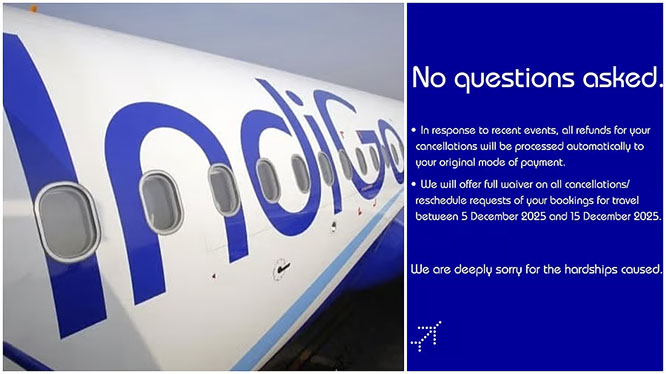
With IndiGo flight disruptions impacting thousands of passengers, the airline on Saturday said that it will offer full waiver on all cancellations/reschedule requests for travel bookings between December 5, 2025 and December 15, 2025.

Earlier in the day, the civil aviation ministry had directed the airline to complete the ticket refund process for the cancelled flights by Sunday evening, as well as ensure baggage separated from the travellers are delivered in the next two days.

In a post on X, titled 'No questions asked', IndiGo wrote, "In response to recent events, all refunds for your cancellations will be processed automatically to your original mode of payment."

"We are deeply sorry for the hardships caused," it further added.

Several passengers, however, complained of not getting full refund as promised by the airline.

Netizens have shared screenchots of getting charged for airline cancellation fee and convenience fee.

"Please tell me why u have did this airline cancellation charges when u say full amount will be refunded (sic)," a user wrote sharing a screenshot of the refund page.

"Well, but you have still debited the convenience charges," wrote another.

Passengers have also raised concerns about the "cancel" option being disabled on the IndiGo app. "First enable the 'Cancel' button on your App & offer full refund on tickets cancelled by customers between the said dates," wrote a user.

A day after the country's largest airline, IndiGo, cancelled more than 1,000 flights and caused disruptions for the fifth day on Saturday, the ministry said that any delay or non-compliance in refund processing will invite immediate regulatory action.

The refund process for all cancelled or disrupted flights must be completed by 8 pm on Sunday, the ministry said in a statement.

"Airlines have also been instructed not to levy any rescheduling charges for passengers whose travel plans were affected by cancellations," it said.

On Saturday, more than 400 flights were cancelled at various airports.

IndiGo has also been instructed to set up dedicated passenger support and refund facilitation cells.

Comments

Add new comment

  • Coastaldigest.com reserves the right to delete or block any comments.
  • Coastaldigset.com is not responsible for its readers’ comments.
  • Comments that are abusive, incendiary or irrelevant are strictly prohibited.
  • Please use a genuine email ID and provide your name to avoid reject.
News Network
December 6,2025

pilot.jpg

New Delhi: IndiGo, India’s largest airline, faced major operational turbulence this week after failing to prepare for new pilot-fatigue regulations issued by the Directorate General of Civil Aviation (DGCA). The stricter rules—designed to improve flight safety—took effect in phases through 2024, with the latest implementation on November 1. IndiGo has acknowledged that inadequate roster planning led to widespread cancellations and delays.

Below are the key DGCA rules that affected IndiGo’s operations:

1. Longer Mandatory Weekly Rest

Weekly rest for pilots has been increased from 36 hours to 48 hours.

The government says the extended break is essential to curb cumulative fatigue. This rule remains in force despite the current crisis.

2. Cap on Night Landings

Pilots can now perform only two night landings per week—a steep reduction from the earlier limit of six.

Night hours, defined as midnight to early morning, are considered the least alert period for pilots.

Given the disruptions, this rule has been temporarily relaxed for IndiGo until February 10.

3. Reduced Maximum Night Flight Duty

Flight duty that stretches into the night is now capped at 10 hours.

This measure has also been kept on hold for IndiGo until February 10 to stabilize operations.

4. Weekly Rest Cannot Be Replaced With Personal Leave

Airlines can no longer count a pilot’s personal leave as part of the mandatory 48-hour rest.

Pilots say this closes a loophole that previously reduced actual rest time.

Currently, all airlines are exempt from this rule to normalise travel.

5. Mandatory Fatigue Monitoring

Airlines must submit quarterly fatigue reports along with corrective actions to DGCA.

This system aims to create a transparent fatigue-tracking framework across the industry.

The DGCA has stressed that these rules were crafted to strengthen flight safety and align India with global fatigue-management standards. The temporary relaxations are expected to remain until February 2025, giving IndiGo time to stabilise its schedules and restore normal air travel.

Comments

Add new comment

  • Coastaldigest.com reserves the right to delete or block any comments.
  • Coastaldigset.com is not responsible for its readers’ comments.
  • Comments that are abusive, incendiary or irrelevant are strictly prohibited.
  • Please use a genuine email ID and provide your name to avoid reject.
News Network
December 20,2025

train.jpg

At least seven elephants were killed and one calf injured after a herd collided with the Sairang-New Delhi Rajdhani Express in Assam's Hojai on Saturday morning, leading to disruption of rail services. 

The Sairang-New Delhi Rajdhani Express struck a herd of elephants, resulting in the derailment of the locomotive and five coaches. No passenger casualties or injuries were reported, officials said.

The New Delhi-bound train met with the accident around 2.17 am, PTI reported. The Sairang-New Delhi Rajdhani Express connects Mizoram's Sairang (near Aizawl) to Anand Vihar Terminal (Delhi). 

Railway has issued helpline numbers at the Guwahati Railway Station:-

•    0361-2731621
•    0361-2731622
•    0361-2731623

The accident site is located about 126 km from Guwahati. Following the incident, accident relief trains and railway officials rushed to the spot to initiate rescue operations.

Train Services Disrupted

Sources said that due to the derailment and elephant body parts scattered on the tracks, train services to Upper Assam and other parts of the Northeast were affected.

Passengers from the affected coaches were temporarily accommodated in vacant berths available in other coaches of the train. Once the train reaches Guwahati, additional coaches will be attached to accommodate all passengers, after which the train will resume its onward journey.

The incident occurred at a location that is not a designated elephant corridor. The loco pilot, upon spotting the herd on the tracks, applied emergency brakes. Despite this, the elephants dashed into the train, leading to the collision and derailment.

Last month, an elephant was killed after being hit by a train in Dhupguri in West Bengal's Jalpaiguri district. The incident took place on November 30. 

The adult elephant was killed on the spot, and a calf was discovered lying injured beside the tracks. 

Over 70 Elephants Killed In Train Collisions Over Last 5 Years

At least 79 elephants have died in train collisions across the country in the last five years, the Environment Ministry had informed Parliament in August.

In a written reply in the Lok Sabha, Minister of State for Environment Kirti Vardhan Singh had said the figure is based on reports from state governments and Union Territory administrations for the period 2020-21 to 2024-25.

He said that the ministry does not maintain consolidated data on the deaths of other wild animals on railway tracks, including in designated elephant corridors.

Singh confirmed that three elephants, including a mother and her calf, were killed on July 18 this year after being hit by a speeding express train on the Kharagpur-Tatanagar section in West Bengal's Paschim Midnapore district. The incident took place near Banstala between Jhargram and Banstala stations.

The minister said several measures have been taken jointly by the Environment Ministry and the Railways to prevent such accidents.

These include imposing speed restrictions in elephant habitats, pilot projects such as seismic sensor-based detection of elephants near tracks and construction of underpasses, ramps and fencing at vulnerable points.

The Wildlife Institute of India, in consultation with the ministry and other stakeholders, has also issued guidelines titled 'Eco-friendly Measures to Mitigate Impacts of Linear Infrastructure' to help agencies design railways and other projects in ways that reduce human-animal conflicts.

Singh added that capacity-building workshops were conducted for railway officials at the Wildlife Institute of India in 2023 and 2024 to raise awareness on elephant conservation and protection.

A detailed report titled 'Suggested Measures to Mitigate Elephant & Other Wildlife Train Collisions on Vulnerable Railway Stretches in India' had also been prepared after surveys across 127 railway stretches covering 3,452 km.

Of these, 77 stretches spanning 1,965 km in 14 states were prioritised for mitigation, with site-specific interventions suggested. 

Comments

Add new comment

  • Coastaldigest.com reserves the right to delete or block any comments.
  • Coastaldigset.com is not responsible for its readers’ comments.
  • Comments that are abusive, incendiary or irrelevant are strictly prohibited.
  • Please use a genuine email ID and provide your name to avoid reject.