PFI chief among over 100 detained in ‘largest-ever’ NIA, ED raids in 11 states

News Network
September 22, 2022

PFIsalam.jpg

Newsroom, Sept 22: More than a hundred functionaries of Popular Front of India, majority of them from Karnataka and Kerala, were arrested today following a multi-agency operation headed by the National Investigation Agency (NIA) and Enforcement Directorate (ED) across 11 states. 

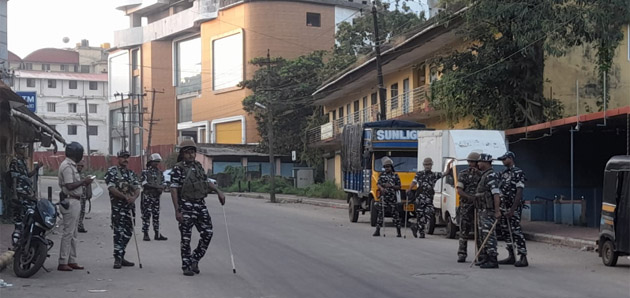
The raids come following allegations levelled against some of PFI activists of supporting terrorist activities in the country. The PFI has rubbished the allegation as blatant lie. 

According to sources, at least 106 functionaries were picked by the NIA, ED and state police in what officials described as the "largest-ever investigation process till date".

As many as 20 people were arrested from Karnataka, while 22 were apprehended from Kerala, followed by Maharashtra (20), Tamil Nadu (10), Assam (9), Uttar Pradesh (8), Andhra Pradesh (5), Madhya Pradesh (4), Puducherry and Delhi (3 each) and Rajasthan (2).

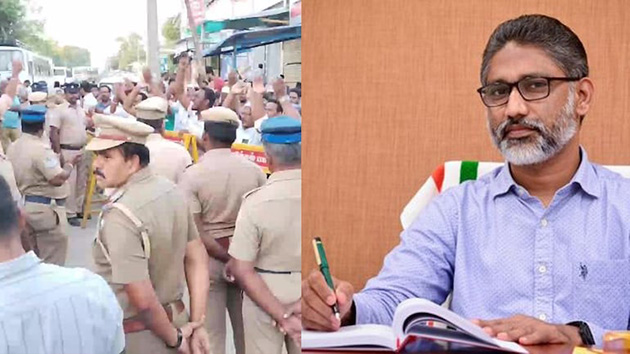
Officials said the searches were conducted at the premises of PFI leaders on suspicion of involving in terror funding, organising training camps. Sources said PFI all India head OMA Salam, PFI Delhi-Haryana Zonal incharge Maulana Waris and PFI Delhi president Parvez Ahmed were among those arrested.

The PFI, formed in Kerala in 2006 and headquartered in Delhi, said in a statement, "The raids are taking place at the homes of national, state and local leaders of PFI. The state committee office is also being raided. We strongly protest the fascist regime's move to use agencies to silence dissenting voices."

Home Minister Amit Shah was briefed about the searches by Union Home Secretary Ajay Bhalla and NIA Director General Dinkar Gupta. National Security Advisor Ajit Doval was also present at the meeting.

On September 18, the NIA had conducted raids at 38 locations in Telangana and two locations in Andhra Pradesh in connection with a case registered against PFI functionaries alleging that they were "organising camps for imparting training to commit terrorist acts and to promote enmity between different groups on the basis of religion".

The PFI, which is accused by law enforcement agencies of promoting radical Islam, is also under the ED scanner for money laundering charges in connection with "fuelling" protests against Citizenship (Amendment) Act, the 2020 Delhi riots, alleged conspiracy in Hathras (a district in Uttar Pradesh) over alleged gang-rape and death of a Dalit woman among others.

In February last year, the ED filed its first charge sheet against PFI and its student-wing Campus Front of India (CFI), claiming its members wanted to "incite communal riots and spread terror" in the aftermath of the Hathras gang-rape case of 2020. The second charge sheet filed this year claimed that a hotel based in the UAE "served" as a money laundering front for the outfit.

The NIA had in 2017 sought a ban on the PFI alleging that it was involved in extremist activities detrimental to national security. It also accused the outfit of imposing strict religious orthodoxy among Muslims.

PFI.jpg

Comments

Add new comment

  • Coastaldigest.com reserves the right to delete or block any comments.
  • Coastaldigset.com is not responsible for its readers’ comments.
  • Comments that are abusive, incendiary or irrelevant are strictly prohibited.
  • Please use a genuine email ID and provide your name to avoid reject.
News Network
February 1,2026

Bengaluru, Feb 1: For travelers landing at Kempegowda International Airport (KIA), the sleek, wood-paneled curves of Terminal 2 promise a world-class welcome. But the famed “Garden City” charm quickly withers at the curb. As India’s aviation sector swells to record numbers—handling over 43 million passengers in Bengaluru alone this past year—the “last mile” has turned into a marathon of frustration.

The Bengaluru Logjam: Rules vs Reality

While the city awaits the 2027 completion of the Namma Metro Blue Line, the interim has been chaotic. Recent “decongestion” rules at Terminal 1 have pushed app-based cab pickups to distant parking zones, forcing weary passengers into a 20-minute walk with luggage.

“I landed after ten months away and felt like a stranger in my own city,” says Ruchitha Jain, a Koramangala resident. “My driver couldn’t find me, staff couldn’t guide me, and the so-called ‘Premium’ lane is just a fancy tax on convenience.”

•    The Cost of Distance: A 40-km cab ride can now easily cross ₹1,500, driven by demand pricing and airport surcharges.

•    The Bus Gap: While Vayu Vajra remains a lifeline, its ₹300–₹400 fare is often cited as the most expensive airport bus service in the country.

A National Pattern of Disconnect

The struggle is not unique to Karnataka. From Chennai’s coast to Hyderabad’s plateau, India’s airports tell a familiar story: brilliant runways, broken exits.

City:    Primary Issue   |    Recent Development

Bengaluru:    Cab pickup restrictions & distance  |    App-based taxis shifted to far parking zones; long walks and fare spikes reported

Chennai:    Multi-Level Parking (MLCP) hike  |    Passengers report 40-minute walks to reach cab pickup points

Hyderabad:    “Taxi mafia” & touting  |    Over 440 touting cases reported; security presence intensified

Mumbai:    Fare scams  |     Tourists charged ₹18,000 for just 400 metres, triggering police action

In Hyderabad, travelers continue to battle entrenched local groups that intimidate Uber and Ola drivers, pushing passengers toward overpriced private taxis. Chennai flyers, meanwhile, complain that reaching the designated pickup zones now takes longer than short-haul flights from cities like Coimbatore.

The ‘Budget Day’ Hope

As Finance Minister Nirmala Sitharaman presents the Union Budget 2026 today, the aviation sector is watching closely. With the government’s renewed emphasis on multimodal integration, there is cautious hope for funding toward seamless airport-metro-bus hubs.

The vision is clear: a future where planes, trains, and metros speak the same language. Until then, passengers at KIA—and airports across India—will continue to discover that the hardest part of flying isn’t the thousands of kilometres in the air, but the last few on the ground.

Comments

Add new comment

  • Coastaldigest.com reserves the right to delete or block any comments.
  • Coastaldigset.com is not responsible for its readers’ comments.
  • Comments that are abusive, incendiary or irrelevant are strictly prohibited.
  • Please use a genuine email ID and provide your name to avoid reject.
News Network
February 1,2026

Bengaluru, Feb 1: For travelers landing at Kempegowda International Airport (KIA), the sleek, wood-paneled curves of Terminal 2 promise a world-class welcome. But the famed “Garden City” charm quickly withers at the curb. As India’s aviation sector swells to record numbers—handling over 43 million passengers in Bengaluru alone this past year—the “last mile” has turned into a marathon of frustration.

The Bengaluru Logjam: Rules vs Reality

While the city awaits the 2027 completion of the Namma Metro Blue Line, the interim has been chaotic. Recent “decongestion” rules at Terminal 1 have pushed app-based cab pickups to distant parking zones, forcing weary passengers into a 20-minute walk with luggage.

“I landed after ten months away and felt like a stranger in my own city,” says Ruchitha Jain, a Koramangala resident. “My driver couldn’t find me, staff couldn’t guide me, and the so-called ‘Premium’ lane is just a fancy tax on convenience.”

•    The Cost of Distance: A 40-km cab ride can now easily cross ₹1,500, driven by demand pricing and airport surcharges.

•    The Bus Gap: While Vayu Vajra remains a lifeline, its ₹300–₹400 fare is often cited as the most expensive airport bus service in the country.

A National Pattern of Disconnect

The struggle is not unique to Karnataka. From Chennai’s coast to Hyderabad’s plateau, India’s airports tell a familiar story: brilliant runways, broken exits.

City:    Primary Issue   |    Recent Development

Bengaluru:    Cab pickup restrictions & distance  |    App-based taxis shifted to far parking zones; long walks and fare spikes reported

Chennai:    Multi-Level Parking (MLCP) hike  |    Passengers report 40-minute walks to reach cab pickup points

Hyderabad:    “Taxi mafia” & touting  |    Over 440 touting cases reported; security presence intensified

Mumbai:    Fare scams  |     Tourists charged ₹18,000 for just 400 metres, triggering police action

In Hyderabad, travelers continue to battle entrenched local groups that intimidate Uber and Ola drivers, pushing passengers toward overpriced private taxis. Chennai flyers, meanwhile, complain that reaching the designated pickup zones now takes longer than short-haul flights from cities like Coimbatore.

The ‘Budget Day’ Hope

As Finance Minister Nirmala Sitharaman presents the Union Budget 2026 today, the aviation sector is watching closely. With the government’s renewed emphasis on multimodal integration, there is cautious hope for funding toward seamless airport-metro-bus hubs.

The vision is clear: a future where planes, trains, and metros speak the same language. Until then, passengers at KIA—and airports across India—will continue to discover that the hardest part of flying isn’t the thousands of kilometres in the air, but the last few on the ground.

Comments

Add new comment

  • Coastaldigest.com reserves the right to delete or block any comments.
  • Coastaldigset.com is not responsible for its readers’ comments.
  • Comments that are abusive, incendiary or irrelevant are strictly prohibited.
  • Please use a genuine email ID and provide your name to avoid reject.
coastaldigest.com news network
January 19,2026

badriya.jpg

Mangaluru: The Phase I project of Badria Vision 2028 was formally launched at a ceremony held at the Badria Campus on January 17, marking an important step in the institution’s long-term development roadmap.

The programme was attended by P.B. Abdul Hameed, Secretary of the MEA, and P.C. Hasir, Correspondent of the MEA, who presided over the event and underscored the institution’s commitment to growth and academic excellence.

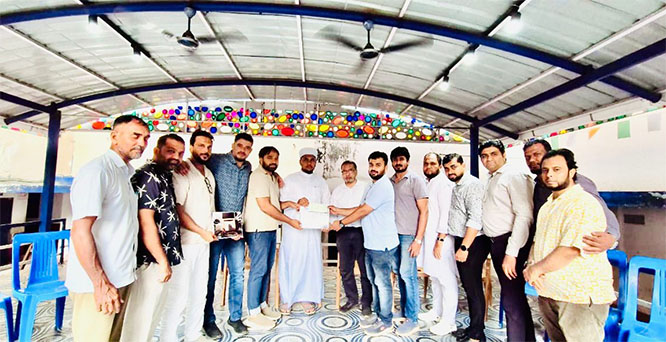
Office-bearers of the Badria Alumni Association were present in large numbers, including A.K. Sajid (President), Shamsuddin and S.M. Farooq (Vice-Presidents), Shaheed (General Secretary), and Khaleel (Treasurer), reflecting strong alumni engagement in the initiative.

The gathering was blessed by Sayyid Shamsuddeen Basith Thangal Kukkaje, Qateeb of Zeenat Yatheem Bakshi, who led a special dua seeking divine guidance and success for the project.

The ceremony also witnessed the participation of prominent alumnus and local corporate professional Abdul Latheef, along with alumni members Naushad, Kalandar, Safwan, members of the core committee, and several other former students.

A key moment of the event was the formal handover of a cheque to Ameen Woodland Architect, signalling the immediate commencement of construction work under Phase I of the project.

Organisers said the launch of Phase I reflects a shared vision, institutional unity, and collective resolve to realise the objectives of Badria Vision 2028.

Comments

Add new comment

  • Coastaldigest.com reserves the right to delete or block any comments.
  • Coastaldigset.com is not responsible for its readers’ comments.
  • Comments that are abusive, incendiary or irrelevant are strictly prohibited.
  • Please use a genuine email ID and provide your name to avoid reject.