




College students' mental health worst-hit by covid-19 lockdown, says study

News Network
August 29, 2020

tensed.JPG

New Delhi, Aug 29: A mental health study done on over 8,000 individuals found that college students were the most affected by the novel coronavirus pandemic and the lockdown.

Conducted by YourDost, an online mental health platform, the study found that the second worst-affected segment of people was working professionals. They were not affected at the beginning of lockdown but were severely hit with a drastic deterioration in feelings of anxiety, anger and loneliness.

The study compiled and analysed data from a survey done at the beginning of the coronavirus lockdown and another in June at the beginning of 'Unlock 1.0'. It also included data from individual sessions with experts on the YourDost platform.

Students recorded a six-per-cent increase in the emotions of anger and irritability at the beginning of the restrictions and a 13-per-cent increase in the emotions of loneliness and boredom. according to the study.

As the lockdown progressed, students continued to be the worst-hit emotionally, reporting the highest net deterioration in their emotions, particularly in terms of their anger, anxiety, loneliness, hopelessness, and happiness.

The study showed significant deterioration in emotions through several categories.

"Students registered 41 per cent increase in emotions of anxiety/fear/worry, 54 per cent increase in anger/irritability/frustration, 27 per cent in hopelessness, sense of sadness was increased by 17 per cent, and 38 per cent increase in the feeling of loneliness/boredom," it noted.

At the beginning of the coronavirus restrictions, the student respondents of the study registered a one per cent increase in their sense of happiness. However, the feeling of joy went down by 15 per cent as the lockdown progressed.

The report also found that the change in the mental stage of students was also affected by facing difficulties in adjusting to life at home.

"They miss college, they miss their peers and they miss the string of activities that keep happening on campus. Most of all, they report difficulty in reconnecting with their parents which has caused them to feel severely frustrated. They also report a 'loss of freedom' with their parents around," it read.

While the reason for students' falling emotional state was mostly being confined to homes, working professionals were troubled by the uncertainty and a feeling of "what's next?"

"Working professionals registered 41 per cent increase in emotions of anxiety/fear/worry, 34 per cent increase in anger/irritability/frustration, 17 per cent in hopelessness, the feeling of sadness was increased by 18 per cent and the sense of loneliness/boredom increased by 26 per cent," the report noted.

Many reported feeling anxious, frustrated and bored from being stuck at home and the consequent lack of social interactions. These feelings are further exacerbated by the sudden change in lifestyle that many working professionals are still struggling to come to terms with, according to the study.

"The uncertainty and a feeling of 'What's next?' seems to be particularly dominant and distressing for many working professionals," it said.

The study also found that at the beginning of the lockdown, a total of 33 per cent of respondents were highly stressed and 51 per cent said they were moderately stressed. However, the stress levels of Indians rose significantly over the course of the next two months.

Over a period from 'Lockdown 1.0' on March 25 to 'Unlock 1.0' on June 7, 55 per cent of the respondents reported an increase in their stress levels, the study said.

Sleep quality continued to deteriorate for most, with a net change up to 11 per cent. Indians experienced a drastic increase in emotional outbursts with a net change of up to 22 per cent, the report said.

However, it was not all negative as the lockdown extended.

"Respondents reported an improvement in their diet with a net change of up to 12 per cent and family life with a net change of up to 21 per cent."

Comments

Add new comment

  • Coastaldigest.com reserves the right to delete or block any comments.
  • Coastaldigset.com is not responsible for its readers’ comments.
  • Comments that are abusive, incendiary or irrelevant are strictly prohibited.
  • Please use a genuine email ID and provide your name to avoid reject.
News Network
November 27,2025

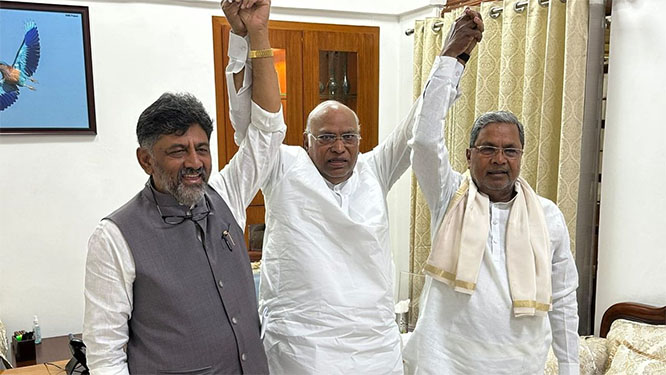
siddDKS.jpg

Congress president Mallikarjun Kharge on Thursday announced that he will convene a high-level meeting in New Delhi with senior leaders — including Rahul Gandhi, Karnataka Chief Minister Siddaramaiah and Deputy Chief Minister D.K. Shivakumar — to resolve the escalating leadership turmoil in Karnataka and “put an end to the confusion.”

Kharge said the discussions would focus on the way forward for the ruling party, as rumours of a possible leadership change continue to swirl. The speculation has intensified after the Congress government crossed the halfway mark of its five-year term on November 20, reviving talk of an alleged 2023 “power-sharing agreement” between Siddaramaiah and Shivakumar.

“After reaching Delhi, I will call three or four important leaders and hold discussions. Once we talk, we will decide how to move ahead and end this confusion,” Kharge told reporters in Bengaluru, according to PTI.

When asked specifically about calling Siddaramaiah and Shivakumar to Delhi, he responded: “Certainly, we should call them. We will discuss with them and settle the issue.”

He confirmed that Rahul Gandhi, the Chief Minister, the Deputy Chief Minister and other senior members would be part of the deliberations. “After discussing with everyone, a decision will be made,” he said.

Meanwhile, Siddaramaiah held a separate strategy meeting at his Bengaluru residence with ministers and leaders seen as his close confidants, including G. Parameshwara, Satish Jarkiholi, H.C. Mahadevappa, K. Venkatesh and K.N. Rajanna.
Signalling calm, the Chief Minister told reporters, “Will go to Delhi if the high command calls.”

Shivakumar echoed a similar stance, saying he too would head to the national capital if summoned by the party leadership.

Comments

Add new comment

  • Coastaldigest.com reserves the right to delete or block any comments.
  • Coastaldigset.com is not responsible for its readers’ comments.
  • Comments that are abusive, incendiary or irrelevant are strictly prohibited.
  • Please use a genuine email ID and provide your name to avoid reject.
News Network
November 27,2025

Bengaluru, Nov 27: Karnataka Chief Minister Siddaramaiah’s camp is reportedly on alert as the Congress leadership tussle in the state intensifies, particularly amid speculation over the potential promotion of Deputy Chief Minister D.K. Shivakumar. Siddaramaiah is said to be in a “wait-and-watch” mode after admitting to “confusion” earlier this week and urging the party to “put a full stop” to it.

Sources say his supporters are ready to act if senior leaders — including party chief Mallikarjun Kharge, Sonia Gandhi, and Rahul Gandhi — give any indication of backing Shivakumar. If the party insists on a leadership change, Siddaramaiah’s camp has a list of alternatives, underscoring the deep rift between the two leaders. One possible candidate is Home Minister G. Parameshwara, a Siddaramaiah loyalist and influential Dalit leader.

The strategy was reportedly finalized at a meeting led by PWD Minister Satish Jarkiholi, another Siddaramaiah supporter, who stressed that Delhi leaders need to resolve the issue. Kharge and the Gandhis are expected to meet soon, after which Siddaramaiah and Shivakumar may be summoned to Delhi.

Shivakumar has largely stayed non-confrontational, publicly endorsing Siddaramaiah and downplaying speculation about his own ambitions. However, he has made pointed comments emphasizing the importance of honoring promises, directed at Siddaramaiah.

The feud traces back to the 2023 state election, when Siddaramaiah was chosen as Chief Minister while Shivakumar, who led the party’s campaign, was made Deputy CM and state party chief — a departure from the Congress’ usual “one post per person” rule.

There were also hints of a prior understanding that Siddaramaiah would step down midway through the term. As the halfway mark passed last week, Shivakumar-aligned lawmakers have ramped up pressure on the party for a leadership change, with Shivakumar himself hinting at stepping down as state party chief to pursue the top job.

Comments

Add new comment

  • Coastaldigest.com reserves the right to delete or block any comments.
  • Coastaldigset.com is not responsible for its readers’ comments.
  • Comments that are abusive, incendiary or irrelevant are strictly prohibited.
  • Please use a genuine email ID and provide your name to avoid reject.
News Network
December 6,2025

pilot.jpg

New Delhi: IndiGo, India’s largest airline, faced major operational turbulence this week after failing to prepare for new pilot-fatigue regulations issued by the Directorate General of Civil Aviation (DGCA). The stricter rules—designed to improve flight safety—took effect in phases through 2024, with the latest implementation on November 1. IndiGo has acknowledged that inadequate roster planning led to widespread cancellations and delays.

Below are the key DGCA rules that affected IndiGo’s operations:

1. Longer Mandatory Weekly Rest

Weekly rest for pilots has been increased from 36 hours to 48 hours.

The government says the extended break is essential to curb cumulative fatigue. This rule remains in force despite the current crisis.

2. Cap on Night Landings

Pilots can now perform only two night landings per week—a steep reduction from the earlier limit of six.

Night hours, defined as midnight to early morning, are considered the least alert period for pilots.

Given the disruptions, this rule has been temporarily relaxed for IndiGo until February 10.

3. Reduced Maximum Night Flight Duty

Flight duty that stretches into the night is now capped at 10 hours.

This measure has also been kept on hold for IndiGo until February 10 to stabilize operations.

4. Weekly Rest Cannot Be Replaced With Personal Leave

Airlines can no longer count a pilot’s personal leave as part of the mandatory 48-hour rest.

Pilots say this closes a loophole that previously reduced actual rest time.

Currently, all airlines are exempt from this rule to normalise travel.

5. Mandatory Fatigue Monitoring

Airlines must submit quarterly fatigue reports along with corrective actions to DGCA.

This system aims to create a transparent fatigue-tracking framework across the industry.

The DGCA has stressed that these rules were crafted to strengthen flight safety and align India with global fatigue-management standards. The temporary relaxations are expected to remain until February 2025, giving IndiGo time to stabilise its schedules and restore normal air travel.

Comments

Add new comment

  • Coastaldigest.com reserves the right to delete or block any comments.
  • Coastaldigset.com is not responsible for its readers’ comments.
  • Comments that are abusive, incendiary or irrelevant are strictly prohibited.
  • Please use a genuine email ID and provide your name to avoid reject.
