Did you know? Each Indian wastes 50 kg of food per year!

News Network
March 5, 2021

food.jpg

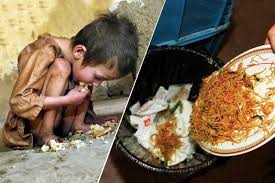
An estimated 931 million tonnes of food was wasted globally in 2019, enough to circle the Earth seven times, according to a UN report which said that household food waste in India is about 68.7 million tonnes a year.

The Food Waste Index Report 2021, from the United Nations Environment Programme (UNEP) and partner organisation WRAP, said that around 931 million tonnes of food waste was generated in 2019, sixty-one per cent of which came from households, 26 per cent from foodservice and 13 per cent from retail.
“This suggests that 17 per cent of total global food production may be wasted,” it said.

“The weight roughly equals that of 23 million fully-loaded 40-tonne trucks — bumper-to-bumper, enough to circle the Earth seven times,” the UN agency said.

In India, the household food waste estimate is 50 kg per capita per year, or 68,760,163 tonnes a year.

The household food waste estimate in the US is 59 kg per capita per year, or 19,359,951 tonnes a year, while for China these estimates are 64 kg per capita per year or 91,646,213 tonnes a year.

The report looks at food waste that occurs in retail outlets, restaurants and homes – counting both food and inedible parts like bones and shells and presents the most comprehensive food waste data collection, analysis and modelling to date.

It finds that in nearly every country that has measured food waste, it was substantial, regardless of income level.

It shows that most of this waste comes from households, which discard 11 per cent of the total food available at the consumption stage of the supply chain.

Food services and retail outlets waste 5 per cent and 2 per cent respectively.

On a global per capita-level, 121 kgs of consumer-level food is wasted each year, with 74 kgs of this happening in households, the UNEP said in a statement.

“If we want to get serious about tackling climate change, nature and biodiversity loss, and pollution and waste, businesses, governments and citizens around the world have to do their part to reduce food waste,” Executive Director of the UNEP Inger Andersen said.

The report said that food waste has substantial environmental, social and economic impacts. At a time when climate action is still lagging, 8-10 per cent of global greenhouse gas emissions are associated with food that is not consumed, when losses before consumer level are taken into account.

“Reducing food waste would cut greenhouse gas emissions, slow the destruction of nature through land conversion and pollution, enhance the availability of food and thus reduce hunger and save money at a time of global recession,” Andersen said.

The report noted that with 690 million people affected by hunger in 2019, an estimate that is expected to rise sharply due to the Covid-19 pandemic, and three billion people unable to afford a healthy diet, consumers need help to reduce food waste at home.

It said countries can raise climate ambition by including food waste in Nationally Determined Contributions to the Paris Agreement while strengthening food security and cutting costs to households.

This makes food waste prevention also a primary area for inclusion in Covid-19 recovery strategies.

“For a long time, it was assumed that food waste in the home was a significant problem only in developed countries,” said Marcus Gover, CEO of WRAP.

“With the publication of the Food Waste Index report, we see that things are not so clear cut. With only nine years to go, we will not achieve SDG 12 Target 3 if we do not significantly increase investment in tackling food waste in the home globally. This must be a priority for governments, international organisations, businesses and philanthropic foundations,” Gover said.

Sustainable Development Goal (SDG) target 12.3 aims at halving per-capita global food waste at the retail and consumer levels and reducing food losses along production and supply chains. One of the two indicators for the target is the Food Waste Index.

Andersen said that there is growing evidence of success in reducing food waste – though not at the scale needed to achieve the target.

“Much more can be done. We need, for example, to address the role of consumer behaviour, in all cultural contexts, in achieving the target. Let us all shop carefully, cook creatively and make wasting food anywhere socially unacceptable while we strive to provide healthy, sustainable diets to all,” Andersen added. 

Comments

Add new comment

  • Coastaldigest.com reserves the right to delete or block any comments.
  • Coastaldigset.com is not responsible for its readers’ comments.
  • Comments that are abusive, incendiary or irrelevant are strictly prohibited.
  • Please use a genuine email ID and provide your name to avoid reject.
News Network
November 27,2025

DKSvokkaliga.jpg

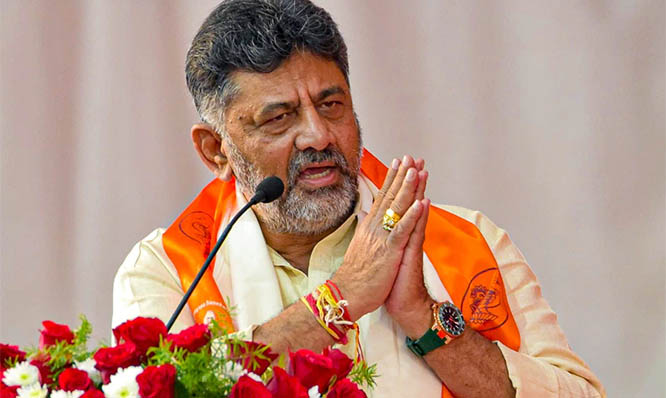
Bengaluru: The Vokkaligara Sangha on Thursday issued a stern warning to the Congress, saying the party could face serious electoral repercussions if Deputy Chief Minister D.K. Shivakumar is not appointed as Chief Minister.

The warning follows the public backing of Shivakumar’s chief ministerial ambition by top Vokkaliga pontiff Nirmalanandanatha Swami, who urged the Congress high command to honor his claim.

“The community supported Congress in the 2023 Assembly elections only because Shivakumar had a real chance to become CM. If he is cheated, we’ll teach the party a big lesson,” said newly elected Sangha president L. Srinivas. He added that Vokkaligas would organize protests under the guidance of community leaders.

General Secretary C.G. Gangadhar pointed out that Congress won more seats in the Vokkaliga-dominated Old Mysuru region due to Shivakumar’s influence, adding, “If Congress wants to retain power, Shivakumar should be made the CM.”

Outgoing president Kenchappa Gowda emphasized Shivakumar’s contribution to Congress’ victory. “Our community voted for Congress thinking he would become CM. Siddaramaiah has also served the party well, but Shivakumar should now be given a chance,” he said.

Former general-secretary Konappa Reddy appealed to Sonia and Rahul Gandhi to recognize Shivakumar’s loyalty and service, saying, “Congress is known to keep its promises. We hope it won’t break the promise made to him.”

Comments

Add new comment

  • Coastaldigest.com reserves the right to delete or block any comments.
  • Coastaldigset.com is not responsible for its readers’ comments.
  • Comments that are abusive, incendiary or irrelevant are strictly prohibited.
  • Please use a genuine email ID and provide your name to avoid reject.
News Network
November 26,2025

students.jpg

Bengaluru, Nov 26: Karnataka is taking its first concrete steps towards lifting a three-decade-old ban on student elections in colleges and universities. Deputy Chief Minister D.K. Shivakumar announced Wednesday that the state government will form a small committee to study the reintroduction of campus polls, a practice halted in 1989 following incidents of violence.

Speaking at a 'Constitution Day' event organised by the Karnataka Congress, Mr. Shivakumar underscored the move's aim: nurturing new political leadership from the grassroots.

"Recently, (Leader of the Opposition in Lok Sabha) Rahul Gandhi wrote a letter to me and Chief Minister (Siddaramaiah) asking us to think about restarting student elections," Shivakumar stated. "I'm announcing today that we'll form a small committee and seek a report on this."

Student elections were banned in Karnataka in 1989, largely due to concerns over violence and the infiltration of political party affiliates into campus life. The ban effectively extinguished vibrant student bodies and the pipeline of young leaders they often produced.

Mr. Shivakumar, who also serves as the Karnataka Congress president, said that former student leaders will be consulted to "study the pros and cons" of the re-introduction.

Acknowledging the history of the ban, he added, "There were many criminal activities taking place back then. We’ll see how we can conduct (student) elections by regulating such criminal activities."

The Deputy CM reminisced about his own journey, which began on campus. He recalled his political activism at Sri Jagadguru Renukacharya College leading to his first Assembly ticket in 1985 at the age of 23. "That's how student leadership was at the time. Such leadership has gone today. College elections have stopped," he lamented, adding that for many, college elections were "like a big movement" where leaders were forged.

The move, driven by the Congress high command's push to cultivate young talent, will face scrutiny from academics and university authorities who have, in the past, expressed concern that the return of polls could disrupt the peaceful academic environment and turn campuses into political battlegrounds.

Comments

Add new comment

  • Coastaldigest.com reserves the right to delete or block any comments.
  • Coastaldigset.com is not responsible for its readers’ comments.
  • Comments that are abusive, incendiary or irrelevant are strictly prohibited.
  • Please use a genuine email ID and provide your name to avoid reject.
News Network
December 6,2025

pilot.jpg

New Delhi: IndiGo, India’s largest airline, faced major operational turbulence this week after failing to prepare for new pilot-fatigue regulations issued by the Directorate General of Civil Aviation (DGCA). The stricter rules—designed to improve flight safety—took effect in phases through 2024, with the latest implementation on November 1. IndiGo has acknowledged that inadequate roster planning led to widespread cancellations and delays.

Below are the key DGCA rules that affected IndiGo’s operations:

1. Longer Mandatory Weekly Rest

Weekly rest for pilots has been increased from 36 hours to 48 hours.

The government says the extended break is essential to curb cumulative fatigue. This rule remains in force despite the current crisis.

2. Cap on Night Landings

Pilots can now perform only two night landings per week—a steep reduction from the earlier limit of six.

Night hours, defined as midnight to early morning, are considered the least alert period for pilots.

Given the disruptions, this rule has been temporarily relaxed for IndiGo until February 10.

3. Reduced Maximum Night Flight Duty

Flight duty that stretches into the night is now capped at 10 hours.

This measure has also been kept on hold for IndiGo until February 10 to stabilize operations.

4. Weekly Rest Cannot Be Replaced With Personal Leave

Airlines can no longer count a pilot’s personal leave as part of the mandatory 48-hour rest.

Pilots say this closes a loophole that previously reduced actual rest time.

Currently, all airlines are exempt from this rule to normalise travel.

5. Mandatory Fatigue Monitoring

Airlines must submit quarterly fatigue reports along with corrective actions to DGCA.

This system aims to create a transparent fatigue-tracking framework across the industry.

The DGCA has stressed that these rules were crafted to strengthen flight safety and align India with global fatigue-management standards. The temporary relaxations are expected to remain until February 2025, giving IndiGo time to stabilise its schedules and restore normal air travel.

Comments

Add new comment

  • Coastaldigest.com reserves the right to delete or block any comments.
  • Coastaldigset.com is not responsible for its readers’ comments.
  • Comments that are abusive, incendiary or irrelevant are strictly prohibited.
  • Please use a genuine email ID and provide your name to avoid reject.