




India’s fertility rate drops below replacement level as population hits 1.46 billion

News Network
June 10, 2025

indpopulation.jpg

New Delhi: India’s population is projected to reach 1.46 billion in 2025, maintaining its status as the world's most populous nation, according to a new UN demographic report. However, the report highlights a significant demographic shift: India's total fertility rate has fallen below the replacement level.

The 2025 State of World Population (SOWP) Report, titled The Real Fertility Crisis, published by the United Nations Population Fund (UNFPA), urges a shift from concerns about declining fertility rates to addressing unmet reproductive goals. 

It asserts that millions of people cannot achieve their desired fertility outcomes, which poses a greater challenge than underpopulation or overpopulation. The solution, the report suggests, lies in greater reproductive agency—ensuring individuals have the freedom to make informed choices about sex, contraception, and family planning.

Key Findings

•    India’s total fertility rate has declined to 1.9 births per woman, below the replacement level of 2.1. This indicates that, on average, women are having fewer children than needed to maintain population levels over generations, without migration.

•    Despite this trend, India’s youth population remains significant, with:

o    24% aged 0-14
o    17% aged 10-19
o    26% aged 10-24

•    The working-age population (15-64 years) constitutes 68% of the total population, presenting a potential demographic dividend—provided it is met with adequate employment opportunities and policy support.

•    The elderly population (65 and older) currently stands at 7%, and is expected to rise as life expectancy improves.

•    As of 2025, life expectancy at birth is projected to be 71 years for men and 74 years for women.

India's Demographic Transition

According to UN estimates, India's current population is approximately 1.463 billion. While India is now the world's most populous country, projections indicate that the number will continue to grow to around 1.7 billion before gradually declining—a shift expected in about 40 years.

The report highlights how demographic change is influenced by the choices and constraints experienced by millions of couples. While some families actively decide to start or expand their households, others face limited autonomy in reproductive decisions.

In 1960, India's population was 436 million, and the average woman had nearly six children. At the time, fewer than 25% of women used contraception, and less than half attended primary school (World Bank Data, 2020). Over the following decades, educational attainment increased, healthcare access improved, and more women gained decision-making power over their reproductive lives. Today, the average fertility rate is approximately two children per woman.

However, the report emphasizes that despite progress, women in India—and across the globe—still face barriers in achieving full reproductive autonomy. The nation remains part of a group of middle-income countries undergoing rapid demographic shifts, with its population doubling time now estimated at 79 years.

Expert Insights

"India has made remarkable strides in reducing fertility rates—from nearly five children per woman in 1970 to about two today, thanks to better education and expanded reproductive healthcare, leading to significant reductions in maternal mortality," said Andrea M. Wojnar, UNFPA India Representative.

"This progress means millions more mothers are alive today, raising children and strengthening communities. Yet, deep inequalities persist across states, castes, and income groups.

"The real demographic dividend comes when individuals have the freedom and resources to make informed reproductive choices. India has a unique opportunity to demonstrate how reproductive rights and economic prosperity can advance in tandem," Wojnar added.

Comments

Add new comment

  • Coastaldigest.com reserves the right to delete or block any comments.
  • Coastaldigset.com is not responsible for its readers’ comments.
  • Comments that are abusive, incendiary or irrelevant are strictly prohibited.
  • Please use a genuine email ID and provide your name to avoid reject.
News Network
November 27,2025

Bengaluru, Nov 27: Karnataka Chief Minister Siddaramaiah’s camp is reportedly on alert as the Congress leadership tussle in the state intensifies, particularly amid speculation over the potential promotion of Deputy Chief Minister D.K. Shivakumar. Siddaramaiah is said to be in a “wait-and-watch” mode after admitting to “confusion” earlier this week and urging the party to “put a full stop” to it.

Sources say his supporters are ready to act if senior leaders — including party chief Mallikarjun Kharge, Sonia Gandhi, and Rahul Gandhi — give any indication of backing Shivakumar. If the party insists on a leadership change, Siddaramaiah’s camp has a list of alternatives, underscoring the deep rift between the two leaders. One possible candidate is Home Minister G. Parameshwara, a Siddaramaiah loyalist and influential Dalit leader.

The strategy was reportedly finalized at a meeting led by PWD Minister Satish Jarkiholi, another Siddaramaiah supporter, who stressed that Delhi leaders need to resolve the issue. Kharge and the Gandhis are expected to meet soon, after which Siddaramaiah and Shivakumar may be summoned to Delhi.

Shivakumar has largely stayed non-confrontational, publicly endorsing Siddaramaiah and downplaying speculation about his own ambitions. However, he has made pointed comments emphasizing the importance of honoring promises, directed at Siddaramaiah.

The feud traces back to the 2023 state election, when Siddaramaiah was chosen as Chief Minister while Shivakumar, who led the party’s campaign, was made Deputy CM and state party chief — a departure from the Congress’ usual “one post per person” rule.

There were also hints of a prior understanding that Siddaramaiah would step down midway through the term. As the halfway mark passed last week, Shivakumar-aligned lawmakers have ramped up pressure on the party for a leadership change, with Shivakumar himself hinting at stepping down as state party chief to pursue the top job.

Comments

Add new comment

  • Coastaldigest.com reserves the right to delete or block any comments.
  • Coastaldigset.com is not responsible for its readers’ comments.
  • Comments that are abusive, incendiary or irrelevant are strictly prohibited.
  • Please use a genuine email ID and provide your name to avoid reject.
News Network
November 21,2025

Bengaluru, Nov 21: The Karnataka government is facing pressure to overhaul its employment system after a high-level Cabinet sub-committee recommended the complete phase-out of job outsourcing in government offices, boards, and corporations by March 2028. The move is aimed at tackling a systemic issue that has led to the potential violation of constitutional reservation policies and the exploitation of workers.

The Call for Systemic Change

With over three lakh vacant posts currently being filled through private agencies on an outsource, insource, or daily wage basis, the sub-committee highlighted a significant lapse. "As a result, reservations are not being followed as per the Constitution and state laws. It’s an urgent need to take serious steps to change the system. It has been recommended to completely stop the system of outsourcing by March 2028," the panel stated in a document.

The practice of outsourcing involves private companies hiring workers to perform duties for a government agency. Critics argue this model results in lesser salaries, a lack of social security benefits (otherwise available to permanent government employees), and a failure to adhere to the provisions of Articles 14 and 15 of the Constitution, which guarantee equality before the law and prohibit discrimination.

The 'Bidar Model' as a Stop-Gap Solution

To regulate the current mode of employment and reduce worker exploitation until the 2028 deadline, the government plans to establish workers’ services multi-purpose cooperative societies across all districts, following the successful "Bidar Model."

The Bidar District Services of Labour Multi-purpose Cooperative Society Ltd., which operates under the District Commissioner, is cited as a successful example of providing a measure of social security to outsourced staff. Labour Department officials argue this society ensures workers receive their due wages and statutory facilities like ESI (Employees' State Insurance) and PF (Provident Fund), in exchange for a 1% service fee collected from the employees.

legislative push and Priority Insourcing

The recommendations, led by the sub-committee headed by Law and Parliamentary Affairs Minister H K Patil, are set to be discussed at the next Cabinet meeting. The committee has proposed the introduction of the Karnataka Outsourced Employees (Regulation, Placement and Welfare) Bill 2025.

In a move addressing immediate concerns, Labour Minister Santosh Lad, a member of the sub-committee, has reportedly assured that steps will be taken over the next 2-3 years to insource workers in "life-threatening services" on a priority basis. This includes essential personnel like pourakarmikas (sanitation workers), drivers, electrical staff in the Energy Department, and Health Department staff handling contagious diseases. The transition aims to grant these workers the long-term security and benefits they currently lack under the outsourcing system. 

Comments

Add new comment

  • Coastaldigest.com reserves the right to delete or block any comments.
  • Coastaldigset.com is not responsible for its readers’ comments.
  • Comments that are abusive, incendiary or irrelevant are strictly prohibited.
  • Please use a genuine email ID and provide your name to avoid reject.
News Network
November 30,2025

girlnomore.jpg

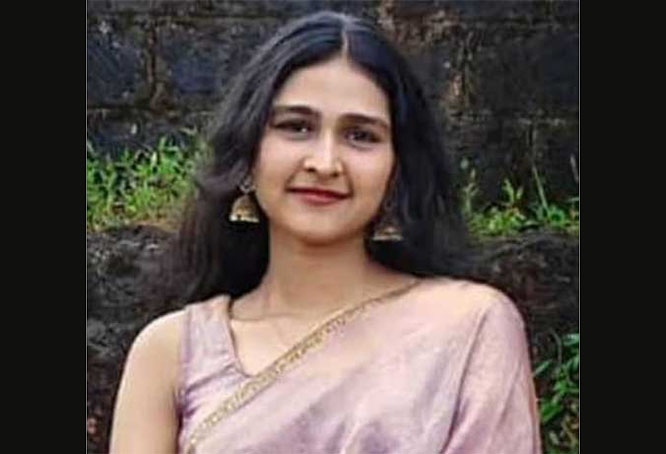
Mangaluru, Nov 30: A 22-year-old college student succumbed to her injuries at a private hospital in Mangaluru today, days after she was hit by a goods tempo while crossing a road in Padubidri.

The deceased has been identified as Preksha, a resident of Nadsalu Billitota in Padubidri. The fatal incident occurred as Preksha, who was returning home after completing her examination, attempted to cross the service road towards Mangaluru. She was struck by a goods tempo approaching from the Udupi side, causing her to fall and sustain a severe head injury.

Prompt action from local residents ensured she received immediate first aid before being rushed to a hospital in Mangaluru for specialised treatment. Despite medical efforts, she passed away while undergoing care.

Preksha was a student at Karavali College, Vamanjoor on the outskirts of Mangaluru city. The tragedy is compounded by the fact that she belonged to a financially vulnerable family, having previously lost her father. She is survived by her mother and brother.

A case related to the accident has been registered at the Padubidri police station, and an investigation is underway to determine the exact circumstances that led to the collision. The incident highlights the growing concerns over road safety, particularly on busy service roads, and serves as a tragic reminder of the human cost of traffic accidents.

Comments

Add new comment

  • Coastaldigest.com reserves the right to delete or block any comments.
  • Coastaldigset.com is not responsible for its readers’ comments.
  • Comments that are abusive, incendiary or irrelevant are strictly prohibited.
  • Please use a genuine email ID and provide your name to avoid reject.