India’s GDP expected to contract by 9.6% this fiscal: World Bank

News Network
October 8, 2020

gdp.JPG

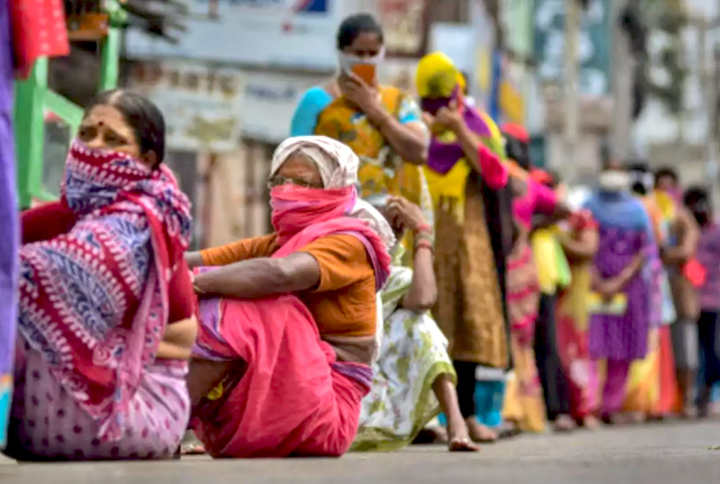
The World Bank on Thursday said that India’s GDP is expected to contract by 9.6 per cent this fiscal which is reflective of the national lockdown and the income shock experienced by households and firms due to the Covid-19 pandemic, noting that the country's economic situation is “much worse” than ever seen before.

The Washington-based global lender, in its latest South Asia Economic Focus report ahead of the annual meeting of the World bank and International Monetary Fund, forecasts a sharper than expected economic slump across the region, with regional growth expected to contract by 7.7 per cent in 2020, after topping six per cent annually in the past five years.

“India’s GDP is expected to contract by 9.6 per cent in the fiscal year that started in March,” the World Bank said in the report released here.

Regional growth is projected to rebound to 4.5 per cent in 2021, it said.

Factoring in population growth, however, income-per-capita in the region will remain 6 per cent below 2019 estimates, indicating that the expected rebound will not offset the lasting economic damage caused by the pandemic, it said.

“The situation is much worse in India than we have ever seen before,” Hans Timmer, World Bank Chief Economist for South Asia told reporters during a conference call.

“It is an exceptional situation in India. A very dire outlook,” he said.

There was a 25 per cent decline in GDP in the second quarter of the year, which is the first quarter of the current fiscal year in India.

In the report, the World bank said that the spread of the coronavirus and containment measures have severely disrupted supply and demand conditions in India.

With the intent to contain the spread of COVID-19, Prime Minister Narendra Modi, with effect from March 25, announced a nationwide complete lockdown that brought as much as 70 per cent of economic activity, investment, exports and discretionary consumption to a standstill. Only essential goods and services such as agriculture, mining, utility services, some financial and IT services and public services were allowed to operate.

Dubbed as the world's biggest lockdown, it shut a majority of the factories and businesses, suspended flights, stopped trains and restricted movement of vehicles and people.

According to the World Bank, monetary policy has been deployed aggressively and fiscal resources have been channeled to public health and social protection, but additional counter-cyclical measures will be needed, within a revised medium-term fiscal framework.

Despite measures to shield vulnerable households and firms, the trajectory of poverty reduction has slowed, if not reversed, it said.

“We have seen from the rapid survey that many people have lost their jobs,” Timmer said, adding that this is happening against a background when India's economy was already slowing down before the pandemic.

“We had seen a rise in non-performing loans. Those are all vulnerabilities that India has to deal with,” he said.

Responding to a question, Timmer said what the Indian government has done with limited resources and limited fiscal space is very impressive.

“We have seen a loosening of monetary policy. You have seen attempts to increase credit to the private sector to help a company survive,” he said, adding that there have been big efforts in the health sector and expansion of a social safety net.

“But with every big crisis, I think, we have to realise that this will not go over anytime soon. And it will actually change the longer-term future also. What this reveals is really as good as federal policies, especially the policies related to the informal sector.

“There's a big problem that the informal sector has no coverage in social insurance. What we see now is that especially the informal workers in the middle of the income distribution have lost their jobs. There are no systems in place to support those people,” Timmer said.

Responding to another question, Timmer said that as a result of Covid-19, the World Bank estimates that in one year, the number of people living below the poverty line has increased by 33 per cent.

In its report, the World Bank said that the response of the government of India to the COVID-19 outbreak was swift and comprehensive. A strict lockdown was implemented to contain the health emergency.

To mitigate its impact on the poorest, it was complemented by social protection measures; to ensure that businesses could maintain their operations, the Reserve Bank of India and the government also provided liquidity and other regulatory support, it said.

“Nonetheless, there was a massive contraction in output and poor and vulnerable households experienced significant social hardships – specifically urban migrants and workers in the informal economy,” the bank said.

After fiscal 2017, during which the economy grew at 8.3 per cent, growth decelerated in each subsequent year to 7.0, 6.1 and 4.2 per cent.

This was on account of two mutually reinforcing dynamics: emerging weaknesses in non-bank financial companies (a major source of credit growth, making up for risk aversion from banks) and slowing private consumption growth, the bank added.

Comments

Add new comment

  • Coastaldigest.com reserves the right to delete or block any comments.
  • Coastaldigset.com is not responsible for its readers’ comments.
  • Comments that are abusive, incendiary or irrelevant are strictly prohibited.
  • Please use a genuine email ID and provide your name to avoid reject.
News Network
November 27,2025

siddDKS.jpg

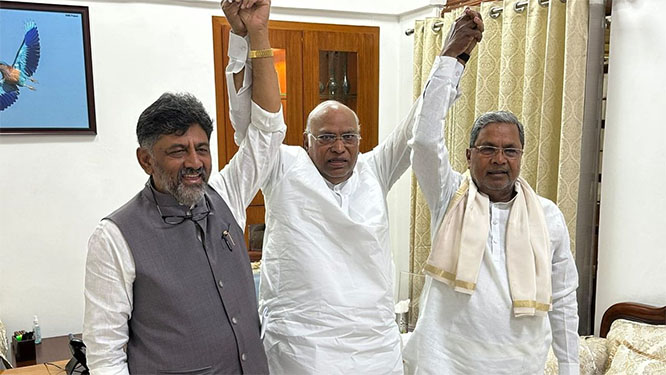
Congress president Mallikarjun Kharge on Thursday announced that he will convene a high-level meeting in New Delhi with senior leaders — including Rahul Gandhi, Karnataka Chief Minister Siddaramaiah and Deputy Chief Minister D.K. Shivakumar — to resolve the escalating leadership turmoil in Karnataka and “put an end to the confusion.”

Kharge said the discussions would focus on the way forward for the ruling party, as rumours of a possible leadership change continue to swirl. The speculation has intensified after the Congress government crossed the halfway mark of its five-year term on November 20, reviving talk of an alleged 2023 “power-sharing agreement” between Siddaramaiah and Shivakumar.

“After reaching Delhi, I will call three or four important leaders and hold discussions. Once we talk, we will decide how to move ahead and end this confusion,” Kharge told reporters in Bengaluru, according to PTI.

When asked specifically about calling Siddaramaiah and Shivakumar to Delhi, he responded: “Certainly, we should call them. We will discuss with them and settle the issue.”

He confirmed that Rahul Gandhi, the Chief Minister, the Deputy Chief Minister and other senior members would be part of the deliberations. “After discussing with everyone, a decision will be made,” he said.

Meanwhile, Siddaramaiah held a separate strategy meeting at his Bengaluru residence with ministers and leaders seen as his close confidants, including G. Parameshwara, Satish Jarkiholi, H.C. Mahadevappa, K. Venkatesh and K.N. Rajanna.
Signalling calm, the Chief Minister told reporters, “Will go to Delhi if the high command calls.”

Shivakumar echoed a similar stance, saying he too would head to the national capital if summoned by the party leadership.

Comments

Add new comment

  • Coastaldigest.com reserves the right to delete or block any comments.
  • Coastaldigset.com is not responsible for its readers’ comments.
  • Comments that are abusive, incendiary or irrelevant are strictly prohibited.
  • Please use a genuine email ID and provide your name to avoid reject.
News Network
November 27,2025

DKSvokkaliga.jpg

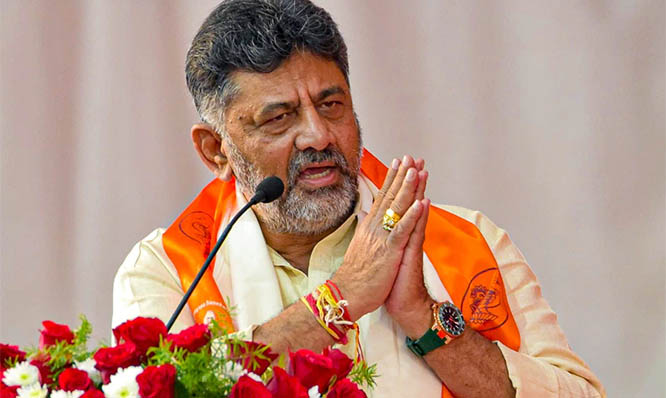
Bengaluru: The Vokkaligara Sangha on Thursday issued a stern warning to the Congress, saying the party could face serious electoral repercussions if Deputy Chief Minister D.K. Shivakumar is not appointed as Chief Minister.

The warning follows the public backing of Shivakumar’s chief ministerial ambition by top Vokkaliga pontiff Nirmalanandanatha Swami, who urged the Congress high command to honor his claim.

“The community supported Congress in the 2023 Assembly elections only because Shivakumar had a real chance to become CM. If he is cheated, we’ll teach the party a big lesson,” said newly elected Sangha president L. Srinivas. He added that Vokkaligas would organize protests under the guidance of community leaders.

General Secretary C.G. Gangadhar pointed out that Congress won more seats in the Vokkaliga-dominated Old Mysuru region due to Shivakumar’s influence, adding, “If Congress wants to retain power, Shivakumar should be made the CM.”

Outgoing president Kenchappa Gowda emphasized Shivakumar’s contribution to Congress’ victory. “Our community voted for Congress thinking he would become CM. Siddaramaiah has also served the party well, but Shivakumar should now be given a chance,” he said.

Former general-secretary Konappa Reddy appealed to Sonia and Rahul Gandhi to recognize Shivakumar’s loyalty and service, saying, “Congress is known to keep its promises. We hope it won’t break the promise made to him.”

Comments

Add new comment

  • Coastaldigest.com reserves the right to delete or block any comments.
  • Coastaldigset.com is not responsible for its readers’ comments.
  • Comments that are abusive, incendiary or irrelevant are strictly prohibited.
  • Please use a genuine email ID and provide your name to avoid reject.
coastaldigest.com news network
November 29,2025

health1.jpg

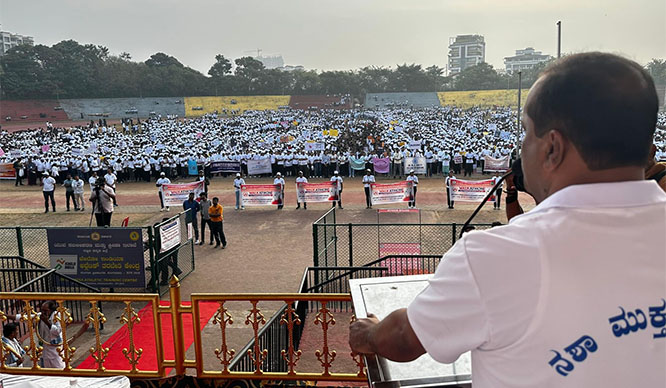
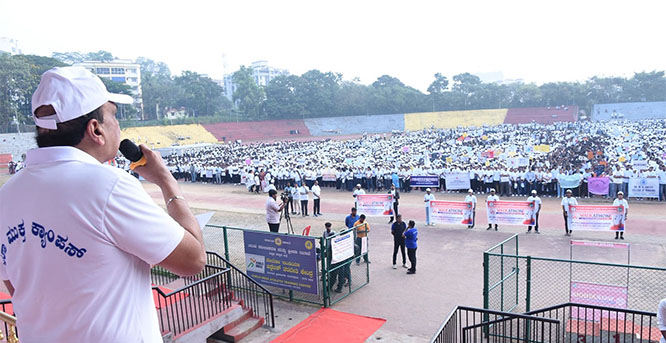
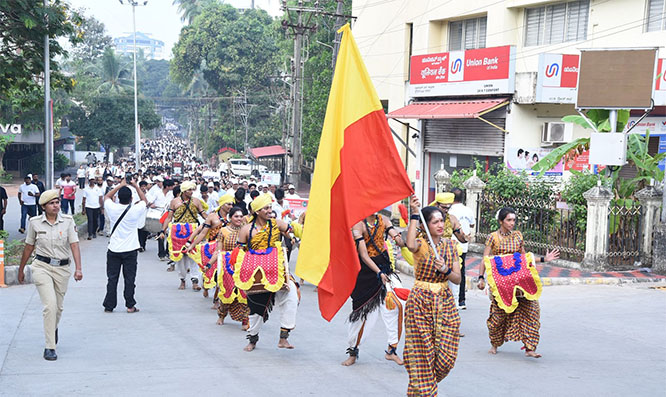
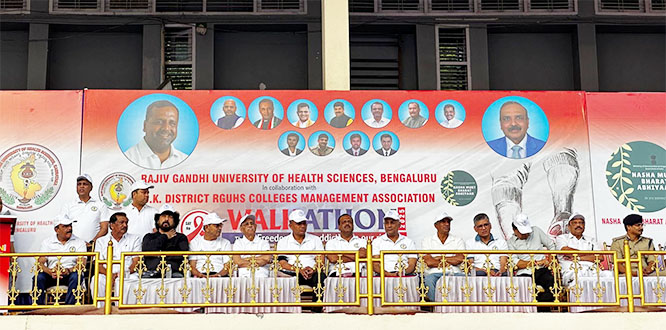
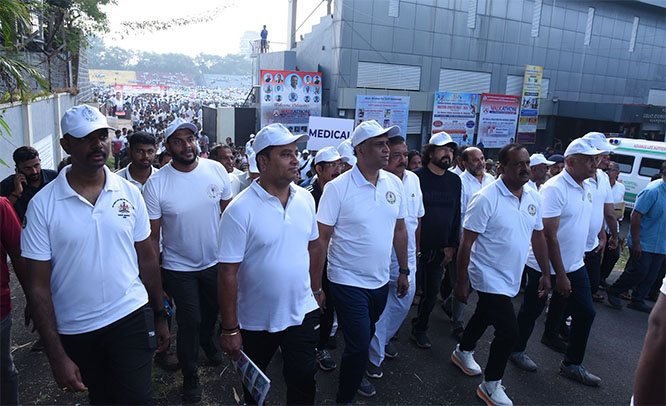
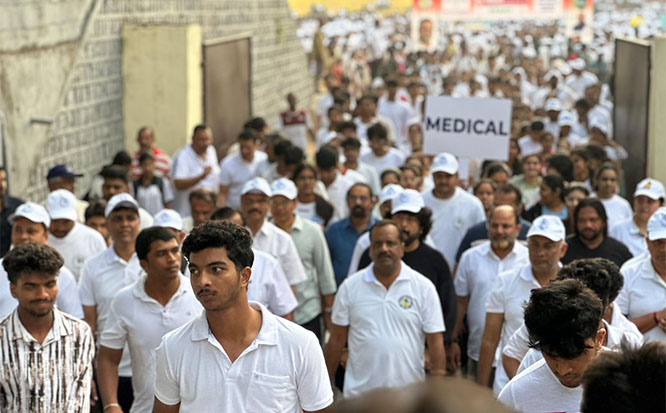
Mangaluru, Nov 29: Around 12,500 healthcare students from Medical, Dental, AYUSH, Pharmacy, Nursing, Physiotherapy and Allied Health Sciences colleges of Dakshina Kannada, affiliated to Rajiv Gandhi University of Health Sciences (RGUHS), took part in a massive walkathon to promote awareness on Organ Donation and Nasha Mukth Bharat.

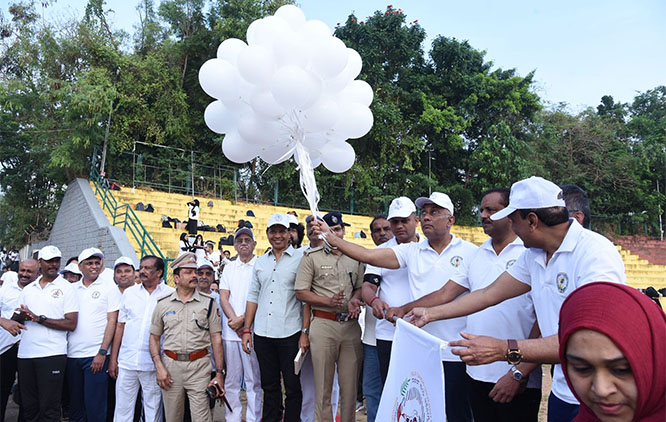
The inaugural ceremony was held at Mangala Stadium. Dr Bhagavan B C, Hon’ble Vice-Chancellor of RGUHS, delivered the welcome address. The walkathon was flagged off by Shri U T Khader, Hon’ble Speaker of the Karnataka Legislative Assembly, and presided over by Shri Dinesh Gundu Rao, Hon’ble Minister for Health, Family Welfare and Dakshina Kannada District In-charge. Dakshina Kannada MP Shri Brijesh Chowta also addressed the students.

Music director Guru Kiran, MLA Dr Bharat Shetty (Mangalore North), Police Commissioner Shri Sudheer Kumar Reddy, Shri Manjunath Bhandary and Shri Harish Kumar were among those present.

Institution heads including Dr Haji U K Monu (Kanachur Colleges), Dr Shantharam Shetty (Tejaswini College), Dr Bhaskar Shetty (City Group of Colleges), Mr Abdul Rahiman (Kanachur Institute of Medical Sciences), and the District Health Officer, Mangalore, also participated.

The vote of thanks was delivered by Prof U T Ifthikar Fareed, Syndicate Member, RGUHS.

The event was organised by Dr U T Ifthikar Ali and Dr Shiva Sharan (Syndicate Members), Prof Vaishali (Senate Member), Prof Mohammad Suhail (Chairman, BOS Physiotherapy), Dr Sharan Shetty (Former Senate Member), along with principals and faculty of various colleges.

Students marched from Mangala Stadium to Karavali Grounds via MCC and Lalbagh signal. The event set a record as one of the largest gatherings of healthcare students for a social cause in the RGUHS Dakshina Kannada Zone.

health7.jpg

health6.jpg

health5.jpg

health4.jpg

health3.jpg

health2.jpg

Comments

Add new comment

  • Coastaldigest.com reserves the right to delete or block any comments.
  • Coastaldigset.com is not responsible for its readers’ comments.
  • Comments that are abusive, incendiary or irrelevant are strictly prohibited.
  • Please use a genuine email ID and provide your name to avoid reject.