Modi govt Refuses to Join SCO’s condemnation of Israeli Strikes on Iran – Here’s Why

News Network
June 16, 2025

New Delhi: The Narendra Modi-led government of India has declined to endorse the Shanghai Cooperation Organisation’s (SCO) condemnation of Israel’s ongoing military strikes on Iran, exposing a potential fault line within the Eurasian bloc over the rapidly escalating conflict.

While global leaders have issued urgent calls for restraint, Israel has intensified its offensive against Iran, targeting nuclear and military infrastructure in what many analysts describe as an unprecedented escalation. The latest wave of attacks, which began last Friday, has drawn condemnation from several countries — but not from the Modi government.

The renewed fighting follows two direct confrontations between Iran and Israel earlier in 2024, triggered by Israeli airstrikes on Iranian targets and retaliatory attacks from Tehran. Iran reports that recent Israeli strikes have hit residential and military zones across Tehran and other cities, killing at least 80 people — including civilians, senior commanders of the Revolutionary Guard, and prominent nuclear scientists.

On Saturday, Israeli missiles targeted oil reserves, power stations, and refineries across Iran. In response, Tehran launched a barrage of drones and missiles at Tel Aviv and Haifa, killing at least 13 and injuring many more. Simultaneously, Iran announced a pause in its nuclear negotiations with the United States.

Why Did the Modi Government Stay Silent?

The Modi administration’s refusal to participate in the SCO’s condemnation raises several critical questions: Is New Delhi quietly aligning with Israel? What geopolitical risks does this stance pose for India and the broader region?

What Did the SCO Say?

Founded in 2001, the SCO comprises China, Russia, India, Iran, Pakistan, and several Central Asian nations. Iran, the bloc’s newest member, joined in 2023 under India’s own chairmanship.

Currently chaired by China, the SCO on Saturday issued a joint statement expressing “serious concern” over the rising Israel-Iran tensions and “strongly condemning” Israeli strikes on Iranian territory. The statement called Israel’s attacks on civilian infrastructure and energy facilities “a gross violation of international law and the UN Charter,” warning that such actions threaten global peace and stability.

It further emphasized the bloc’s support for resolving the Iranian nuclear issue through peaceful, diplomatic means, and extended condolences to the Iranian government and people.

New Delhi’s Diplomatic Balancing Act

In the immediate aftermath of Israel’s strikes, Indian External Affairs Minister S. Jaishankar spoke with his Iranian counterpart, Abbas Araghchi, conveying “the deep concern of the international community” and urging restraint and a return to diplomacy. A statement from India’s Ministry of External Affairs reiterated New Delhi’s commitment to “monitoring the evolving situation” and promoting dialogue.

“India enjoys close and friendly relations with both countries and stands ready to extend all possible support,” the statement read.
However, when the SCO released its statement condemning Israel, the Modi-led government clarified that it had not participated in drafting or endorsing the declaration. “The overall position of India as stated above was communicated to other SCO members,” the Foreign Ministry said.

Analysts suggest this reflects a broader strategic calculation.

“Unlike other SCO countries, the Modi government has to juggle defence ties with Israel and economic cooperation with Iran,” said Dr. Shanthie D’Souza, a senior fellow at the University of Massachusetts-Amherst. India is Israel’s largest arms buyer and has reportedly supplied munitions to Israel during the war in Gaza. At the same time, New Delhi is investing in Iran’s Chabahar Port, a critical trade corridor to Central Asia and Afghanistan.

“India is walking a very fine line in this conflict,” D’Souza added.

Quiet Backing for Israel?

Although the Modi government hasn’t openly backed Israel, its refusal to condemn the strikes and its abstention from a recent UN General Assembly vote demanding a ceasefire in Gaza raise questions about its true alignment.

Kabir Taneja, a strategic analyst at the Observer Research Foundation, called the abstention “perplexing,” speculating that it may be linked to India’s growing ties with the United States. India is currently finalizing a trade agreement with Washington, and maintaining strategic harmony with both the US and Israel could be influencing its position.

“India’s reluctance to endorse the SCO’s statement reflects its somewhat outsider status within the bloc,” Taneja noted. “Russia and China are aligned closely with Iran, but New Delhi’s tilt toward the US-Israel axis makes such statements politically sensitive.”

US Pressure on Iran – A Strategic Setback for India?

New Delhi’s balancing act is further complicated by renewed US sanctions under the second Trump administration. These include suspending waivers that previously allowed India to develop Iran’s Chabahar Port — a key part of its regional connectivity strategy.

The port is critical to bypassing Pakistan for trade with landlocked Afghanistan and Central Asian markets. Now, Trump’s sanctions put at risk India’s multimillion-dollar investment in Chabahar and limit its options in Central Asia.

Yet India’s interest in Iran is not just economic. Iran’s geography is a strategic asset, offering India a vital corridor into regions that are central to its energy, trade, and security objectives.

By choosing not to back the SCO’s condemnation of Israel, the Modi-led government has signalled its preference for strategic autonomy — or what some might see as quiet alignment with the West and Israel. This decision may serve short-term interests, but it also risks long-term consequences for India’s role in regional diplomacy and the future cohesion of multilateral forums like the SCO.

Comments

Add new comment

  • Coastaldigest.com reserves the right to delete or block any comments.
  • Coastaldigset.com is not responsible for its readers’ comments.
  • Comments that are abusive, incendiary or irrelevant are strictly prohibited.
  • Please use a genuine email ID and provide your name to avoid reject.
Agencies
November 22,2025

indiapak.jpg

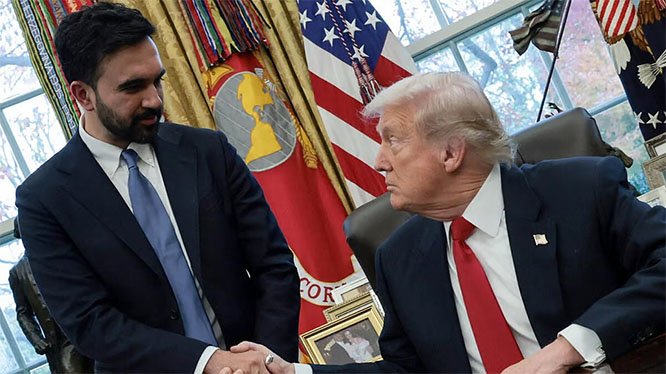
New York/Washington: US President Donald Trump has again claimed to have solved the conflict between India and Pakistan, repeating his assertion during a meeting with New York City Mayor-elect Zohran Mamdani in the Oval Office.

Mamdani flew to Washington DC for his first meeting with Trump in the White House on Friday. Trump said he “enjoyed” the meeting, which he described as “great.”

During remarks in the Oval Office, with Mamdani standing next to him, Trump repeated his claim that he solved the May conflict between India and Pakistan.

"I did eight peace deals of countries, including India and Pakistan,” he said.

On Wednesday, Trump had said he threatened to put 350 per cent tariffs on India and Pakistan if they did not end their conflict, repeating his claim that he solved the fighting between the nuclear-armed neighbours and that Prime Minister Narendra Modi had called him to say “we're not going to go to war.”

Since May 10, when Trump announced on social media that India and Pakistan had agreed to a “full and immediate” ceasefire after a “long night” of talks mediated by Washington, he has repeated his claim over 60 times that he “helped settle” the tensions between India and Pakistan.

India has consistently denied any third-party intervention. India launched Operation Sindoor on May 7, targeting terror infrastructure in Pakistan and Pakistan-occupied Kashmir in retaliation for the April 22 Pahalgam attack that killed 26 civilians. India and Pakistan reached an understanding on May 10 to end the conflict after four days of intense cross-border drone and missile strikes.

Mamdani emerged victorious in the closely-watched battle for New York City Mayor, becoming the first South Asian and Muslim to be elected to sit at the helm of the largest city in the US.

He had been the front-runner in the NYC Mayoral election for months and defeated Republican nominee Curtis Sliwa and political heavyweight former New York State Governor Andrew Cuomo, who ran as an independent candidate and was officially endorsed by Trump just hours before the elections.

Indian-descent Mamdani is the son of renowned filmmaker Mira Nair and Columbia University professor Mahmood Mamdani. He was born and raised in Kampala, Uganda and moved to New York City with his family when he was 7. Mamdani became a naturalised US citizen only recently, in 2018.

Comments

Add new comment

  • Coastaldigest.com reserves the right to delete or block any comments.
  • Coastaldigset.com is not responsible for its readers’ comments.
  • Comments that are abusive, incendiary or irrelevant are strictly prohibited.
  • Please use a genuine email ID and provide your name to avoid reject.
News Network
December 3,2025

arrival.jpg

Mangaluru, Dec 3: A group of Congress workers gathered at the Mangaluru International Airport on Wednesday to welcome AICC general secretary K C Venugopal, but the reception quickly turned into a display of support for Deputy Chief Minister D K Shivakumar.

Venugopal arrived in the city to participate in the centenary commemoration of the historic dialogue between Mahatma Gandhi and Narayana Guru. The event, organised by the Sivagiri Mutt, Varkala, in association with the Mangalore University Sri Narayana Guru Study Chair, is being held on the university’s Konaje campus.

KPCC general secretary Mithun Rai and several party workers had assembled at the airport to receive Venugopal. However, the moment he stepped out, workers began raising slogans backing Shivakumar.

The university programme will be inaugurated by Chief Minister Siddaramaiah.

This show of support comes just a day after Siddaramaiah remarked that Shivakumar would lead the government “when the high command decides.” The chief minister made the comment after a breakfast meeting at Shivakumar’s residence—another public display of camaraderie between the two leaders amid ongoing attempts by the party high command to downplay their leadership rivalry.

Comments

Add new comment

  • Coastaldigest.com reserves the right to delete or block any comments.
  • Coastaldigset.com is not responsible for its readers’ comments.
  • Comments that are abusive, incendiary or irrelevant are strictly prohibited.
  • Please use a genuine email ID and provide your name to avoid reject.
News Network
November 24,2025

israelsyra.jpg

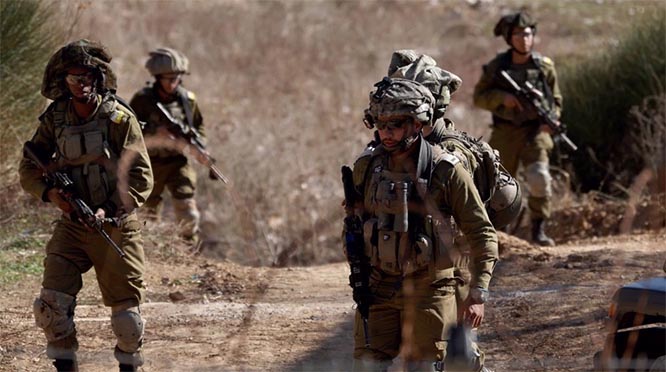
Israeli forces have pushed over the Syrian frontier, erecting a checkpoint and stopping vehicles in the southwestern city of Quneitra, in yet another breach of the Arab country’s sovereignty.

The violation took place on Sunday, when the troops made their way across the border, setting up the outpost near the Ain al-Bayda junction in northern Quneitra, Syrian outlets reported.

According to the al-Ikhbariya paper, an Israeli detachment positioned itself at the junction, halting cars and conducting searches.

The Syrian Arab News Agency (SANA) reported that three Israeli military vehicles then moved further into the northern countryside, deploying between the town of Jubata al-Khashab and the villages of Ofaniya and Ain al-Bayda. The agency added that a separate Israeli unit mounted a new incursion in the central region, approaching the villages of Umm Batina and al-Ajraf.

Residents said such activities have surged in recent months, pointing to Israeli advances onto farmland, leveling of extensive forested areas, arrests, and spread of mobile checkpoints.

The Israeli regime began markedly increasing its military aggression against Syria last year.

The escalation coincided with increasingly ferocious onslaughts throughout the country by the so-called Hay'at Tahrir al-Sham (HTS) Takfiri terrorist group, which the government of President Bashar al-Assad had confined to northwestern Syria. The HTS, however, managed to overthrow the government as the Israeli attacks would pummel the country’s civilian and defensive infrastructure.

Various reports have shown that, during the escalation, the regime conducted more than 1,000 airstrikes on the Syrian territory and over 400 ground raids into the south.

Following the collapse of the Assad government, Tel Aviv also widened its grip over the occupied Golan Heights by taking control of a demilitarized buffer zone, in defiance of a 1974 Disengagement Agreement. Earlier this month, senior Israeli officials, including Prime Minister Benjamin Netanyahu, visited the buffer zone, prompting expressions of alarm on the part of the United Nations.

The United States, the regime’s biggest ally, has, meanwhile, been fraternizing the HTS head Abu Mohammed al-Jolani amid the widely reported prospect of rapprochement with Tel Aviv.

Comments

Add new comment

  • Coastaldigest.com reserves the right to delete or block any comments.
  • Coastaldigset.com is not responsible for its readers’ comments.
  • Comments that are abusive, incendiary or irrelevant are strictly prohibited.
  • Please use a genuine email ID and provide your name to avoid reject.