



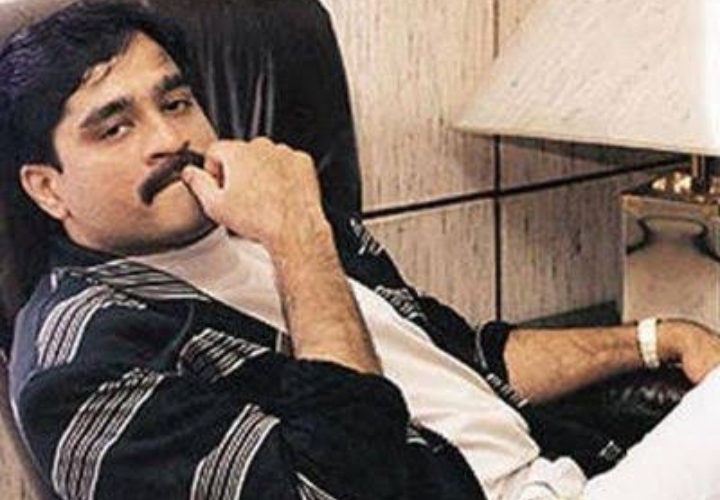
Pakistan admits Dawood Ibrahim lives in Karachi, imposes financial restrictions

News Network
August 23, 2020

Resizer_15981536650980.jpg

Islamabad, Aug 23: Pakistan has for the first time acknowledged the presence of Dawood Ibrahim on its soil after the government imposed sweeping sanctions on 88 banned terror groups and their leaders which also included the name of the underworld don wanted by India.

There was no official confirmation on Pakistan government including Ibrahim's name in the list of terror groups and its leaders on whom fresh restrictions have been imposed. But if Pakistani media reports are true, this could be the first time Islamabad has acknowledged the presence of Ibrahim on its soil.

Seeking to wriggle out of the FATF's grey list, Pakistan on Friday imposed tough financial sanctions on 88 banned terror groups and their leaders, including Hafiz Saeed, Masood Azhar and Ibrahim, by ordering the seizure of all of their properties and freezing of bank accounts, Pakistani newspaper 'The News' reported on Saturday.

Ibrahim, who heads a vast and multifaceted illegal business, has emerged as India's most wanted terrorist after the 1993 Mumbai bombings.

It is for the first time that Pakistan has admitted the presence of the underworld don in the country.

In 2003, the US declared Ibrahim as a Specially Designated Global Terrorist.

India has repeatedly asked the Government of Pakistan to hand over Ibrahim to India so that he can be prosecuted for the crimes committed by him. It is reported that Ibrahim is based in the southern port city of Karachi.

The Paris-based Financial Action Task Force (FATF) put Pakistan on the grey list in June 2018 and asked Islamabad to implement a plan of action by the end of 2019, but the deadline was extended later due to Covid-19 pandemic.

The government issued two notifications on August 18 announcing sanctions on key figures of terror outfits such as 26/11 Mumbai attack mastermind and Jamaat-ud-Dawa (JuD) chief Saeed, Jaish-e-Mohammed (JeM) chief Azhar, and underworld don Ibrahim.

The Pakistan government has proscribed 88 leaders and members of terrorist groups, in compliance with the new list issued by the United Nations Security Council (UNSC) recently, The News reported.

The notifications announced sanctions on key figures of terror outfits such as the Jamaat-ud-Dawa (JuD), JeM, Taliban, Daesh, Haqqani Group, al-Qaeda, and others.

The government ordered the seizure of all movable and immovable properties of these outfits and individuals, and freezing of their bank accounts, the report said.

These terrorists have been barred from transferring money through financial institutions, purchasing of arms and travelling abroad, it said.

The notifications ratified a complete ban on all leaders and members of defunct Tehreek-e-Taliban Pakistan (TTP) hiding in the Pakistan-Afghanistan border areas.

The paper reported that Saeed, Azhar, Mullah Fazlullah (alias Mullah Radio), Zakiur Rehman Lakhvi, Muhammad Yahya Mujahid, Abdul Hakeem Murad, wanted by Interpol, Noor Wali Mehsud, Fazal Raheem Shah of Uzbekistan Liberation Movement, Taliban leaders Jalaluddin Haqqani, Khalil Ahmad Haqqani, Yahya Haqqani, and Ibrahim and his associates were on the list.

The notifications said that leadership of the defunct TTP, and other organisations including Lashkar-e-Taiba, JeM, Lashkar-e-Jhangvi, Tariq Geedar group of TTP, Harkatul Mujahideen, Al Rasheed Trust, Al Akhtar Trust, Tanzim Jaish-al Mohajireen Ansar, Jamaat-ul Ahrar, Tanzim Khutba Imam Bukhari, Rabita Trust Lahore, Revival of Islamic Heritage Society of Pakistan, Al-Haramain Foundation Islamabad, Harkat Jihad Al Islami, Islami Jihad Group, Uzbekistan Islami Tehreek, Daesh of Iraq, Emirates of Tanzim Qafqaz working against Russia, and Abdul Haq of Uyghurs of Islamic Freedom Movement of China have been banned.

Though various sanctions were in place against almost all of those listed by the UNSC, the government through the new notifications consolidated and documented the previously announced measures, the report said.

The UNSC Sanctions Committee deals with sanctions on entities and individuals declared as terrorists. All states, including Pakistan, are bound to implement the sanctions which include assets freeze, an arms embargo, and travel ban.

It is believed that the latest move by the Pakistan government is part of its efforts to wriggle out of the grey list of the global money laundering and terrorist financing watchdog FATF.

On August 12, Pakistan Parliament's lower house passed four bills related to the tough conditions set by the FATF after the government and the Opposition reached a consensus.

The legislation was part of the efforts by Pakistan to move from the FATF's grey list to the white list.

In its third and final plenary held virtually due to the Covid-19 pandemic in June, the FATF decided to keep Pakistan in the "grey list" as Islamabad failed to check the flow of money to terror groups like Lashkar-e-Taiba (LeT) and Jaish-e-Mohammed (JeM). The plenary was held under the Chinese Presidency of Xiangmin Liu.

With Pakistan's continuation in the 'grey list', it will be difficult for the country to get financial aid from the IMF, World Bank, ADB, and the European Union, thus further enhancing problems for the nation which is in a precarious financial situation.

If Pakistan fails to comply with the FATF directive by October, there is every possibility that the global body may put the country in the 'Black List' along with North Korea and Iran.

The FATF is an inter-governmental body established in 1989 to combat money laundering, terrorist financing, and other related threats to the integrity of the international financial system.

The FATF currently has 39 members including two regional organisations - the European Commission and Gulf Cooperation Council.

Comments

Add new comment

  • Coastaldigest.com reserves the right to delete or block any comments.
  • Coastaldigset.com is not responsible for its readers’ comments.
  • Comments that are abusive, incendiary or irrelevant are strictly prohibited.
  • Please use a genuine email ID and provide your name to avoid reject.
News Network
December 6,2025

indigoticket.jpg

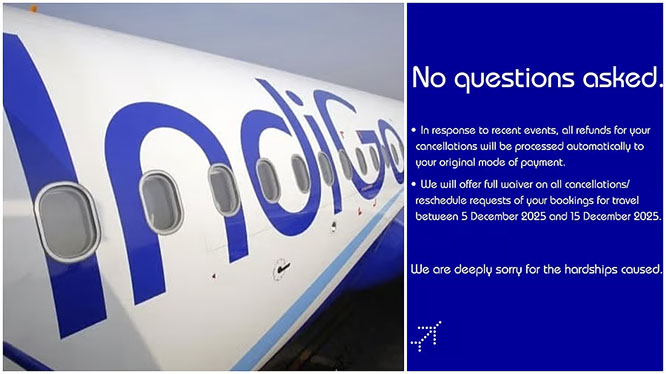
With IndiGo flight disruptions impacting thousands of passengers, the airline on Saturday said that it will offer full waiver on all cancellations/reschedule requests for travel bookings between December 5, 2025 and December 15, 2025.

Earlier in the day, the civil aviation ministry had directed the airline to complete the ticket refund process for the cancelled flights by Sunday evening, as well as ensure baggage separated from the travellers are delivered in the next two days.

In a post on X, titled 'No questions asked', IndiGo wrote, "In response to recent events, all refunds for your cancellations will be processed automatically to your original mode of payment."

"We are deeply sorry for the hardships caused," it further added.

Several passengers, however, complained of not getting full refund as promised by the airline.

Netizens have shared screenchots of getting charged for airline cancellation fee and convenience fee.

"Please tell me why u have did this airline cancellation charges when u say full amount will be refunded (sic)," a user wrote sharing a screenshot of the refund page.

"Well, but you have still debited the convenience charges," wrote another.

Passengers have also raised concerns about the "cancel" option being disabled on the IndiGo app. "First enable the 'Cancel' button on your App & offer full refund on tickets cancelled by customers between the said dates," wrote a user.

A day after the country's largest airline, IndiGo, cancelled more than 1,000 flights and caused disruptions for the fifth day on Saturday, the ministry said that any delay or non-compliance in refund processing will invite immediate regulatory action.

The refund process for all cancelled or disrupted flights must be completed by 8 pm on Sunday, the ministry said in a statement.

"Airlines have also been instructed not to levy any rescheduling charges for passengers whose travel plans were affected by cancellations," it said.

On Saturday, more than 400 flights were cancelled at various airports.

IndiGo has also been instructed to set up dedicated passenger support and refund facilitation cells.

Comments

Add new comment

  • Coastaldigest.com reserves the right to delete or block any comments.
  • Coastaldigset.com is not responsible for its readers’ comments.
  • Comments that are abusive, incendiary or irrelevant are strictly prohibited.
  • Please use a genuine email ID and provide your name to avoid reject.
News Network
December 4,2025

Mangaluru: Chaos erupted at Mangaluru International Airport (MIA) after IndiGo flight 6E 5150, bound for Mumbai, was repeatedly delayed and ultimately cancelled, leaving around 100 passengers stranded overnight. The incident highlights the ongoing country-wide operational disruptions affecting the airline, largely due to the implementation of new Flight Duty Time Limitations (FDTL) norms for crew.

The flight was initially scheduled for 9:25 PM on Tuesday but was first postponed to 11:40 PM, then midnight, before being cancelled around 3:00 AM. Passengers expressed frustration over last-minute communication and the lack of clarity, with elderly and ailing travellers particularly affected. “Though the airline arranged food, there was no proper communication, leaving us confused,” said one family member.

An IndiGo executive at MIA cited the FDTL rules, designed to prevent pilot fatigue by limiting crew working hours, as the cause of the cancellation. While alternative arrangements, including hotel stays, were offered, about 100 passengers chose to remain at the airport, creating tension. A replacement flight was arranged but also faced delays due to the same constraints, finally departing for Mumbai around 1:45 PM on Wednesday. Passengers either flew, requested refunds, or postponed their travel.

The Mangaluru delay is part of a broader crisis for IndiGo. The airline has been forced to make “calibrated schedule adjustments”—a euphemism for widespread cancellations and delays—after stricter FDTL norms came into effect on November 1.

While an IndiGo spokesperson acknowledged unavoidable flight disruptions due to technology issues, operational requirements, and the updated crew rostering rules, the DGCA has intervened, summoning senior airline officials to explain the chaos and outline corrective measures.

The ripple effect has been felt across the country, with major hubs like Bengaluru and Mumbai reporting numerous cancellations. The Mangaluru incident underscores the systemic operational strain currently confronting India’s largest carrier, leaving passengers nationwide grappling with uncertainty and delays.

Comments

Add new comment

  • Coastaldigest.com reserves the right to delete or block any comments.
  • Coastaldigset.com is not responsible for its readers’ comments.
  • Comments that are abusive, incendiary or irrelevant are strictly prohibited.
  • Please use a genuine email ID and provide your name to avoid reject.
News Network
November 26,2025

students.jpg

Bengaluru, Nov 26: Karnataka is taking its first concrete steps towards lifting a three-decade-old ban on student elections in colleges and universities. Deputy Chief Minister D.K. Shivakumar announced Wednesday that the state government will form a small committee to study the reintroduction of campus polls, a practice halted in 1989 following incidents of violence.

Speaking at a 'Constitution Day' event organised by the Karnataka Congress, Mr. Shivakumar underscored the move's aim: nurturing new political leadership from the grassroots.

"Recently, (Leader of the Opposition in Lok Sabha) Rahul Gandhi wrote a letter to me and Chief Minister (Siddaramaiah) asking us to think about restarting student elections," Shivakumar stated. "I'm announcing today that we'll form a small committee and seek a report on this."

Student elections were banned in Karnataka in 1989, largely due to concerns over violence and the infiltration of political party affiliates into campus life. The ban effectively extinguished vibrant student bodies and the pipeline of young leaders they often produced.

Mr. Shivakumar, who also serves as the Karnataka Congress president, said that former student leaders will be consulted to "study the pros and cons" of the re-introduction.

Acknowledging the history of the ban, he added, "There were many criminal activities taking place back then. We’ll see how we can conduct (student) elections by regulating such criminal activities."

The Deputy CM reminisced about his own journey, which began on campus. He recalled his political activism at Sri Jagadguru Renukacharya College leading to his first Assembly ticket in 1985 at the age of 23. "That's how student leadership was at the time. Such leadership has gone today. College elections have stopped," he lamented, adding that for many, college elections were "like a big movement" where leaders were forged.

The move, driven by the Congress high command's push to cultivate young talent, will face scrutiny from academics and university authorities who have, in the past, expressed concern that the return of polls could disrupt the peaceful academic environment and turn campuses into political battlegrounds.

Comments

Add new comment

  • Coastaldigest.com reserves the right to delete or block any comments.
  • Coastaldigset.com is not responsible for its readers’ comments.
  • Comments that are abusive, incendiary or irrelevant are strictly prohibited.
  • Please use a genuine email ID and provide your name to avoid reject.