India's economic growth held back due to demonetisation, GST: Raghuram Rajan

Agencies
November 10, 2018

Washington, Nov 10: Demonetisation and the Goods and Services Tax (GST) are the two major headwinds that held back India's economic growth last year, former RBI Governor Raghuram Rajan has said, asserting that the current seven per cent growth rate is not enough to meet the country's needs.

Addressing an audience at the University of California in Berkley on Friday, Rajan said for four years -- 2012 to 2016 -- India was growing at a faster pace before it was hit by two major headwinds. 

"The two successive shocks of demonetisation and the GST had a serious impact on growth in India. Growth has fallen off interestingly at a time when growth in the global economy has been peaking up," he said delivering the second Bhattacharya Lectureship on the Future of India.

On the second anniversary of demonetisation on November 8, Finance Minister Arun Jaitley staunchly defended the demonetisation drive, saying 'prophets of doom' have been proven wrong as hard data of two years shows an increase in tax base, greater formalisation of the economy and India retaining the fastest growing economy tag for the fifth year in a row.

"By the time the first five years of this government are over, we will be close to doubling the assessee base," he said in a Facebook blog 'Impact of Demonetisation'.

Jaitley said India clocking the fastest growth rate has proved "prophets of doom", who had predicted that demonetisation will shave off 2 per cent of growth rate, conclusively wrong.

Rajan, in his address, said a growth rate of seven per cent per year for 25 years is "very very strong" growth, but in some sense this has become the new Hindu rate of growth, which earlier used to be three-and-a-half per cent, Rajan said.

"The reality is that seven is not enough for the kind of people coming into the labour market and we need jobs for them, So, we need more and cannot be satisfied at this level," he said. 

Observing that India is sensitive to global growth, he said India has become a much more open economy, and if the world grows, it also grows more. 

"What happened in 2017 is that even as the world picked up, India went down. That reflects the fact that these blows (demonetisation and GST) have really really been hard blows...Because of these headwinds we have been held back, he said. 

While India's growth is picking up again, there is the issue of oil prices, the economist noted referring to the huge reliance of India on import of oil for its energy needs.

With the oil prices going up, Rajan said things are going to be little tougher for the Indian economy, even though the country is recovering from the headwinds of demonetisation and initial hurdles in the implementation of the GST.

Commenting on the rising Non-Performing Assets (NPA), he said the best thing to do in such a situation is to "clean up". 

It is essential to "deal up with the bad stuff", so that with clean balance sheets, banks can be put back on the track. "It has taken India far long to clean up the banks, partly because the system did not had instruments to deal with bad debts," Rajan said.

The bankruptcy code, he asserted, cannot be the only way to clean up the banks. It is the only one element of the larger cleanup plan, he said and called for a multi-prong approach to address the challenge of NPAs in India.

India, he asserted, is capable of a strong growth. As such the seven per cent growth is now being taken granted. 

"If we go below seven per cent, then we must be doing something wrong," he said adding that that is the base on which India has to grow at least for next 10-15 years. 

India, he said, needs to create one million jobs a month for the people joining the labour force.

The country today is facing three major bottlenecks. One is the torn infrastructure, he said, observing that construction is the one industry that drives the economy in early stages. Infrastructure creates growth, he said. 

Second, short term target should be to clean up the power sector and to make sure that the electricity produced actually goes to the people who want the power, he said. 

Cleaning up the banks is the third major bottleneck in India's growth, he said.

Part of the problem in India is that there is an excessive centralisation of power in the political decision making, he said. 

"India can't work from the centre. India works when you have many people taking up the burden. And today the central government is excessively centralised," Rajan said. 

An example of this is the quantum of decisions that requires the ascent of the Prime Minister's Office, Rajan said as he highlighted the recent unveiling of the 'Statue of Unity' of Sardar Vallabhbhai Patel as an example of a massive project that required the approval of the PMO. 

On the 143rd birth anniversary of Sardar Vallabhbhai Patel on October 31, Prime Minister Narendra Modi unveiled the 'Statue of Unity' in Gujarat's Narmada district.

Touted to be the tallest statue in the world, the 182-metre tall statue was built at a cost of Rs 2,989 crore. The concrete and brass-clad statue is the quickest to be completed in 33 months.


Comments

Add new comment

  • Coastaldigest.com reserves the right to delete or block any comments.
  • Coastaldigset.com is not responsible for its readers’ comments.
  • Comments that are abusive, incendiary or irrelevant are strictly prohibited.
  • Please use a genuine email ID and provide your name to avoid reject.
News Network
December 21,2025

hadith.jpg

Invoking the teachings of Prophet Muhammad—“pay the worker before his sweat dries”—the Madras High Court has directed a municipal corporation to settle long-pending legal dues owed to a former counsel. The court observed that this principle reflects basic fairness and applies equally to labour and service-related disputes.

Justice G. R. Swaminathan made the observation while hearing a petition filed by advocate P. Thirumalai, who claimed that the Madurai City Municipal Corporation failed to pay him legal fees amounting to ₹13.05 lakh. Earlier, the High Court had asked the corporation to consider his representation. However, a later order rejected a major portion of his claim, prompting the present petition.

The court allowed Thirumalai to approach the District Legal Services Authority (DLSA) and submit a list of cases in which he had appeared. It also directed the corporation to settle the verified fee bills within two months, without interest. The court noted that the petitioner had waited nearly 18 years before challenging the non-payment and that the corporation could not be fully blamed, as the fee bills were not submitted properly.

‘A Matter of Embarrassment’

Justice Swaminathan described it as a “matter of embarrassment” that the State has nearly a dozen Additional Advocate Generals. He observed that appointing too many law officers often leads to unnecessary allocation of work and frequent adjournments, as government counsel claim that senior officers are engaged elsewhere.

He expressed hope that such practices would end at least in the Madurai Bench of the High Court and added that Additional Advocate Generals should “turn a new leaf” from 2026 onwards.

‘Scandalously High Amounts’

While stating that the court cannot examine the exact fees paid to senior counsel or law officers, Justice Swaminathan stressed that good governance requires public funds to be used prudently. He expressed concern over the “scandalously high amounts” paid by government and quasi-government bodies to a few favoured law officers.

In contrast, the court noted that Thirumalai’s total claim was “a pittance” considering the large number of cases he had handled.

Background

Thirumalai served as the standing counsel for the Madurai City Municipal Corporation for more than 14 years, from 1992 to 2006. During this period, he represented the corporation in about 818 cases before the Madurai District Courts.

As the former counsel was unable to hire a clerk to obtain certified copies of judgments in all 818 cases, the court directed the District Legal Services Authority to collect the certified copies within two months. The court further ordered the corporation to bear the cost incurred by the DLSA and deduct that amount from the final settlement payable to the petitioner.

Comments

Add new comment

  • Coastaldigest.com reserves the right to delete or block any comments.
  • Coastaldigset.com is not responsible for its readers’ comments.
  • Comments that are abusive, incendiary or irrelevant are strictly prohibited.
  • Please use a genuine email ID and provide your name to avoid reject.
News Network
December 7,2025

SHRIMP.jpg

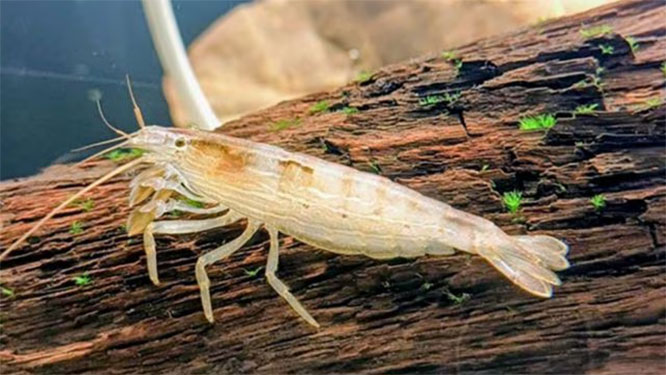
Mangaluru, Dec 7: A rare bamboo shrimp has been rediscovered on mainland India more than 70 years after it was last reported, confirming for the first time the presence of Atyopsis spinipes in the country. The find was made by researchers from the Centre for Climate Change Studies at Sathyabama Institute of Science and Technology, Chennai, during surveys in Karnataka and Odisha.

The team — shrimp expert Dr S Prakash, PhD scholar K Kunjulakshmi, and Mangaluru-based researcher Maclean Antony Santos — combined field surveys, ecological assessments and DNA analysis to identify the elusive species. Their findings, published in Zootaxa, resolve decades of taxonomic confusion stemming from a 1951 report that misidentified the species as Atyopsis moluccensis without strong evidence.

The shrimp has now been confirmed at two locations: the Mulki–Pavanje estuary near Mangaluru and the Kuakhai River in Bhubaneswar. Historical specimens from the Andaman Islands, previously labelled as A. moluccensis, were also found to be misidentified and actually belong to A. spinipes.

The rediscovery began after an aquarium hobbyist in Odisha spotted a shrimp in 2022, prompting systematic surveys across Udupi, Karwar and Mangaluru. Four female specimens were collected in Mulki and one in Odisha, all genetically matching.

Researchers warn the species may exist in very small, vulnerable populations as freshwater habitats face increasing pressure from pollution, sand mining and infrastructure development. All verified specimens have been deposited with the Zoological Survey of India for future reference.

Comments

Add new comment

  • Coastaldigest.com reserves the right to delete or block any comments.
  • Coastaldigset.com is not responsible for its readers’ comments.
  • Comments that are abusive, incendiary or irrelevant are strictly prohibited.
  • Please use a genuine email ID and provide your name to avoid reject.
News Network
December 20,2025

train.jpg

At least seven elephants were killed and one calf injured after a herd collided with the Sairang-New Delhi Rajdhani Express in Assam's Hojai on Saturday morning, leading to disruption of rail services. 

The Sairang-New Delhi Rajdhani Express struck a herd of elephants, resulting in the derailment of the locomotive and five coaches. No passenger casualties or injuries were reported, officials said.

The New Delhi-bound train met with the accident around 2.17 am, PTI reported. The Sairang-New Delhi Rajdhani Express connects Mizoram's Sairang (near Aizawl) to Anand Vihar Terminal (Delhi). 

Railway has issued helpline numbers at the Guwahati Railway Station:-

•    0361-2731621
•    0361-2731622
•    0361-2731623

The accident site is located about 126 km from Guwahati. Following the incident, accident relief trains and railway officials rushed to the spot to initiate rescue operations.

Train Services Disrupted

Sources said that due to the derailment and elephant body parts scattered on the tracks, train services to Upper Assam and other parts of the Northeast were affected.

Passengers from the affected coaches were temporarily accommodated in vacant berths available in other coaches of the train. Once the train reaches Guwahati, additional coaches will be attached to accommodate all passengers, after which the train will resume its onward journey.

The incident occurred at a location that is not a designated elephant corridor. The loco pilot, upon spotting the herd on the tracks, applied emergency brakes. Despite this, the elephants dashed into the train, leading to the collision and derailment.

Last month, an elephant was killed after being hit by a train in Dhupguri in West Bengal's Jalpaiguri district. The incident took place on November 30. 

The adult elephant was killed on the spot, and a calf was discovered lying injured beside the tracks. 

Over 70 Elephants Killed In Train Collisions Over Last 5 Years

At least 79 elephants have died in train collisions across the country in the last five years, the Environment Ministry had informed Parliament in August.

In a written reply in the Lok Sabha, Minister of State for Environment Kirti Vardhan Singh had said the figure is based on reports from state governments and Union Territory administrations for the period 2020-21 to 2024-25.

He said that the ministry does not maintain consolidated data on the deaths of other wild animals on railway tracks, including in designated elephant corridors.

Singh confirmed that three elephants, including a mother and her calf, were killed on July 18 this year after being hit by a speeding express train on the Kharagpur-Tatanagar section in West Bengal's Paschim Midnapore district. The incident took place near Banstala between Jhargram and Banstala stations.

The minister said several measures have been taken jointly by the Environment Ministry and the Railways to prevent such accidents.

These include imposing speed restrictions in elephant habitats, pilot projects such as seismic sensor-based detection of elephants near tracks and construction of underpasses, ramps and fencing at vulnerable points.

The Wildlife Institute of India, in consultation with the ministry and other stakeholders, has also issued guidelines titled 'Eco-friendly Measures to Mitigate Impacts of Linear Infrastructure' to help agencies design railways and other projects in ways that reduce human-animal conflicts.

Singh added that capacity-building workshops were conducted for railway officials at the Wildlife Institute of India in 2023 and 2024 to raise awareness on elephant conservation and protection.

A detailed report titled 'Suggested Measures to Mitigate Elephant & Other Wildlife Train Collisions on Vulnerable Railway Stretches in India' had also been prepared after surveys across 127 railway stretches covering 3,452 km.

Of these, 77 stretches spanning 1,965 km in 14 states were prioritised for mitigation, with site-specific interventions suggested. 

Comments

Add new comment

  • Coastaldigest.com reserves the right to delete or block any comments.
  • Coastaldigset.com is not responsible for its readers’ comments.
  • Comments that are abusive, incendiary or irrelevant are strictly prohibited.
  • Please use a genuine email ID and provide your name to avoid reject.