India’s richest 1% get richer by 39% in 2018; Mere 3% rise for bottom-half: Oxfam

Agencies
January 21, 2019

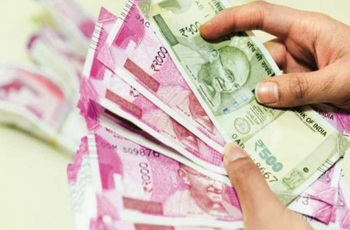
Davos,Jan 21: Indian billionaires saw their fortunes swell by ₹ 2,200 crore a day last year, with the top 1 per cent of the country’s richest getting richer by 39 per cent as against just 3 per cent increase in wealth for the bottom-half of the population, an Oxfam study said on Monday.
Globally, billionaires’ fortunes rose by 12 per cent or $ 2.5 billion a day in 2018, whereas the poorest half of the world’s population saw their wealth decline by 11 per cent, the international rights group said in its annual study released before the start of the five-day World Economic Forum (WEF) Annual Meeting in this Swiss ski resort town.

Oxfam further said that 13.6 crore Indians, who make up the poorest 10 per cent of the country, continued to remain in debt since 2004.

Asking the political and business leaders who have gathered in Davos for the annual jamboree of the rich and powerful of the world to take urgent steps to tackle the growing rich-poor divide, Oxfam said this increasing inequality is undermining the fight against poverty, damaging economies and fuelling public anger across the globe.

Oxfam International Executive Director Winnie Byanyima, one of the key participants at the WEF summit, said it is “morally outrageous” that a few wealthy individuals are amassing a growing share of India’s wealth, while the poor are struggling to eat their next meal or pay for their child’s medicines.

“If this obscene inequality between the top 1 percent and the rest of India continues then it will lead to a complete collapse of the social and democratic structure of this country,” she added.

Noting that wealth is becoming even more concentrated, Oxfam said 26 people now own the same as the 3.8 billion people who make up the poorest half of humanity, down from 44 people last year.

The world’s richest man Jeff Bezos, founder of Amazon, saw his fortune increase to USD 112 billion and just 1 per cent of his fortune is equivalent to the whole health budget for Ethiopia, a country of 115 million people.

“India’s top 10 per cent of the population holds 77.4 per cent of the total national wealth. The contrast is even sharper for the top 1 per cent that holds 51.53 per cent of the national wealth.

“The bottom 60 per cent, the majority of the population, own merely 4.8 per cent of the national wealth. Wealth of top 9 billionaires is equivalent to the wealth of the bottom 50 per cent of the population,” Oxfam said while noting that high level of wealth disparity subverts democracy.

Growing inequality

Between 2018 and 2022, India is estimated to produce 70 new dollar millionaires every day, Oxfam said.

“It (the survey) reveals how governments are exacerbating inequality by underfunding public services, such as healthcare and education, on the one hand, while under taxing corporations and the wealthy, and failing to clamp down on tax dodging on the other,” Oxfam India CEO Amitabh Behar said.

The survey also shows that women and girls are hardest hit by rising economic inequality, he added.

“The size of one’s bank account should not dictate how many years your children spend in school, or how long you live - yet this is the reality in too many countries across the globe. While corporations and the super-rich enjoy low tax bills, millions of girls are denied a decent education and women are dying for lack of maternity care,” Byanyima said.

According to the Oxfam report, India added 18 new billionaires last year, raising the total number of billionaires to 119, while their wealth crossed the $ 400 billion (₹ 28 lakh crore) mark for the first time.

It rose from $ 325.5 billion in 2017 to $ 440.1 billion in 2018, making it the single largest annual increase since the 2008 global financial crisis.

Oxfam further said getting India’s richest 1 per cent pay just 0.5 per cent extra tax on their wealth could raise enough money enough to increase the government spending on health by 50 per cent.

It said the combined revenue and capital expenditure of the Centre and states for medical, public health, sanitation and water supply is ₹ 2,08,166 crore, which is less than the country’ richest man Mukesh Ambani’s wealth of ₹ 2.8 lakh crore.

Globally, Oxfam said the tax rates for wealthy individuals and corporations have been cut dramatically.

While billionaire wealth soars, public services are suffering from chronic underfunding or being outsourced to private companies that exclude the poorest people, Oxfam said.

The rights group said in many countries including India, a decent education or quality healthcare has become a luxury only the rich can afford.

“Children from poor families in India are three times more likely to die before their first birthday than children from rich families,” it added.

Oxfam said its calculations are based on the latest comprehensive data sources available publicly, including from the Credit Suisse Wealth Databook and the annual Forbes Billionaires List.

Comments

Add new comment

  • Coastaldigest.com reserves the right to delete or block any comments.
  • Coastaldigset.com is not responsible for its readers’ comments.
  • Comments that are abusive, incendiary or irrelevant are strictly prohibited.
  • Please use a genuine email ID and provide your name to avoid reject.
News Network
December 16,2025

SMR1.jpg

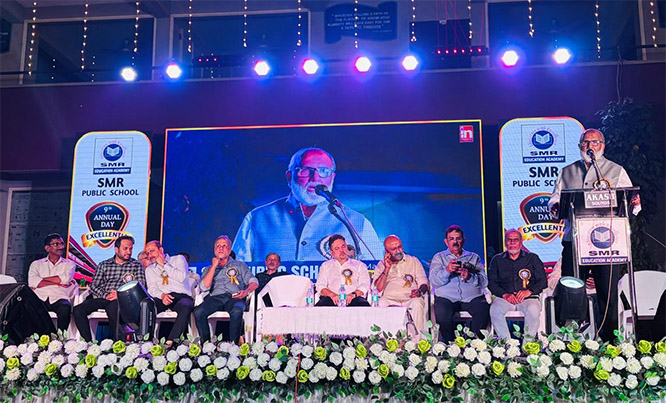
Melkar (Bantwal): The 9th Annual Day celebration of SMR Public School, titled “EXCELLENTIA”, was held on December 15 with great enthusiasm and dignity, marking a significant milestone in the institution’s journey towards academic excellence and holistic development.

The programme was inaugurated by Dr. U. T. Iftikar Ali. The chief guests were Dr. Akhtar Hussain, Mr. P. Moosabba Beary, Mr. Zakaria Jokattre, and Dr. T. M. Abdul Rahuf—whose inspiring addresses motivated the students and appreciated the school’s contributions to education.

Mr. Abdul Nasir, Mr. Ibrahim Gadiyar, Mr. Razak Golthamajal, Mr. Sali Koya, Mr. Arshad Hussain, Mr. Ismail Balanoor, Mr. Feroz Bawa, Mr. Sahul Hameed, Mr. Abubakkar, Mr. Hameed K. Mani, Mr. Abdul Majeed (Principal, Melkar Women’s College), and Mr. Abdul Lathief (Former Principal, Melkar Women’s College) were the guests of honour.

The Annual Report was presented by the Headmistress, Ms. Fathimathul Zaheera, highlighting the school’s achievements and progress during the academic year. The Presidential Address was delivered by the Chairman of SMR Public School, Dr. Haji S. M. Rasheed, who emphasised the vital role of education in shaping students’ futures and stressed the importance of discipline, dedication, and consistent effort in achieving 100 per cent academic results.

Secretary of SMR Public School, Mr. Rifath Ahmed, and PTA President, Mr. Sandeep Kumar, were also present on the occasion.

The Annual Day celebration showcased the collective efforts of students and teachers and reaffirmed the school’s commitment to quality education and all-round development. The programme concluded with a vote of thanks, expressing gratitude to all dignitaries, parents, and well-wishers for their support. The 9th Annual Day—EXCELLENTIA—was a memorable and successful event, leaving a lasting impression on everyone present. 

SMR3.jpg

SMR2.jpg

Comments

Add new comment

  • Coastaldigest.com reserves the right to delete or block any comments.
  • Coastaldigset.com is not responsible for its readers’ comments.
  • Comments that are abusive, incendiary or irrelevant are strictly prohibited.
  • Please use a genuine email ID and provide your name to avoid reject.
News Network
December 7,2025

Mangaluru, Dec 7: A 34-year-old fruit and vegetable trader in Mangaluru has reportedly lost ₹33.1 lakh after falling victim to an online investment scam run through a fake mobile app.

Police said the scam began in September, when the victim received a link on Facebook. Clicking it connected him to a WhatsApp number, where an unidentified person introduced a high-return investment scheme and instructed him to download an app.

To build trust, the fraudster asked him to invest ₹30,000 on September 24. The trader soon received ₹34,000 as “profit,” convincing him the scheme was genuine. Over the next two months, he transferred money in multiple instalments via Google Pay and IMPS to different scanner codes and bank accounts shared by the scammers. Between September 24 and December 3, he ended up sending a total of ₹33.1 lakh.

When he later requested a refund of his investment and promised returns, the scammers demanded additional payments, claiming he needed to pay a “service tax” first. Even after he paid a small amount, no money was returned, and the scammers continued pressuring him for more.

A case has been registered at the CEN Crime Police Station.

Comments

Add new comment

  • Coastaldigest.com reserves the right to delete or block any comments.
  • Coastaldigset.com is not responsible for its readers’ comments.
  • Comments that are abusive, incendiary or irrelevant are strictly prohibited.
  • Please use a genuine email ID and provide your name to avoid reject.
News Network
December 19,2025

Mangaluru: Public transport in Mangaluru is set for a state-led transformation as the government moves to deploy 100 new electric govt buses to replace unreliable private services. The initiative aims to provide a dependable alternative to private operators who have been frequently "cutting trips," leaving thousands of commuters stranded.

The announcement was made by Deputy Commissioner and MCC Administrator Darshan HV during a public phone-in session. The move specifically targets routes where private bus service has become erratic, ensuring that citizens no longer have to rely on a fluctuating private sector for their daily commute.

Restoring the Govt Presence

The transport crisis was brought to the forefront by Ramayya, a resident of Bajal, who highlighted a growing trend of private buses skipping morning and night trips. With the previous KSRTC (govt) services discontinued, residents have been left without a fallback option.

To fix this, the DC confirmed that the PM-eBus Sewa Scheme will bring 100 government-owned electric buses to the city:

•    Phased Deployment: The first 50 of the new 100 government buses are scheduled to arrive by March 2026.

•    State Infrastructure: Two new government depots, including one at Mudipu, are being prepared for operations.

•    Recruitment: The state has already begun training a new batch of government bus drivers to ensure the fleet is operational the moment it arrives.

Comments

Add new comment

  • Coastaldigest.com reserves the right to delete or block any comments.
  • Coastaldigset.com is not responsible for its readers’ comments.
  • Comments that are abusive, incendiary or irrelevant are strictly prohibited.
  • Please use a genuine email ID and provide your name to avoid reject.