Iran death toll rises as protests continue; hundreds arrested

Al Jazeera
January 2, 2018

Tehran, Jan 2: A number of Iranians have died  amid ongoing nationwide anti-government protests that began last week in various cities across Iran.

Nine Iranians were killed in Isfahan province alone during anti-government protests on Monday night.

State TV said on Tuesday that six people were killed in Isfahan's central town Qahderijan - during a raid on a police station - and one more in Khomeinishahr.

According to state media, the rioters were attempting to break into the station to obtain weapons.

An 11-year-old boy and a 20-year-old man were among those killed in Khomeinishahr.

In addition, Iran's semi-official Mehr news agency said a member of Basij militia and a police officer were killed in Najafabad, 350km south of the capital Tehran, on Monday.

According to reports, an Iranian Revolutionary Guard Corps (IRGC) soldier was shot by an assailant using a hunting rifle in Najafabad.

Al Jazeera could not independently verify whether the IRGC member was the same police officer who was reported as being shot.

Overall, at least 21 people have died in Iran during six days of protests, according to state media.

In the same period, at least 20 people have been killed and about 450 people n arrested, with the Tehran governor's deputy giving the following breakdown: 200 on Saturday; 150 on Sunday; and 100 on Monday.

The detention figures for other Iranian cities were not available.

Khamenei's comments

On Tuesday, Iran's top authority, Supreme Leader Ayatollah Ali Khamenei, accused "enemies" of the state of stirring unrest in the country.

He said that "enemies" of Iran have allied and used the various means they have available including "money, weapons, politics, and intelligence services" to stir unrest as nationwide anti-government rallies continue.

"The dignity, security, and progress of the Iranian nation is owed to the self-sacrifice of the martyrs. What prevents enemies from exerting their atrocities is the spirit of courage, sacrifice, and faith within the nation," he said in a statement posted on his official website.

"I have something to say on these events, and I will speak to the dear people when the time is right.

"The Iranian nation will forever owe the dear martyrs, who left behind their homes and families, to stand against the wicked enemies."

Despite threats by the IRGC to put down the demonstrations, protesters have continued taking to the streets in various parts of Iran, in what has been described as the biggest show of dissent in the country since huge rallies took place in 2009.

The rallies began on December 28 in the second-largest city of Mashhad, prompted by anger over rising cost of living and the state of the economy.

"We cannot predict a time when the protests will come to an end," said Sadegh Zibakalam, an author and academic.

"But the protests will shake the people in power who must give priority to the people's demands and needs."

On Sunday, President Hassan Rouhani said Iranians have the right to protest but not violently.

"People are free to express their criticism and to protest," he said in televised remarks, his first since the rallies began.

"However, we need to pay attention to the manner of that criticism and protest. It should be in such a way that it will lead to the improvement of the people and state," he added.

"People have the right to protest, but those demonstrations should not make the public feel concerned about their lives and security."

Why are there protests taking place in Iran?

In May 2017, Rouhani, who belongs to the reformist bloc of Iran's political spectrum, decisively won re-election after garnering 57 percent of the vote in the country's presidential election.

That poll was the first since Rouhani negotiated a historic deal with world powers in 2015 to curb Iran's nuclear programme in exchange for sanctions relief.

Many in Iran hoped that the deal, by lifting many international sanctions, would ease the country's financial struggles. Yet, the benefits do not seem to have trickled down.

Ali Vaez, the Iran project director at the International Crisis Group who worked with all sides during the negotiations for the nuclear deal, said the fact that the nuclear deal did not quite deliver the results people expected played a key part in what is happening currently in Iran.

"The government inflated public expectations a lot," Vaez told Al Jazeera, noting that factors such as falling oil prices and doubts over the US commitment to the deal were also adversely affecting the Iranian economy.

"The reality is, however, that President Rouhani failed to pave the ground for the potential the nuclear deal created, and that has led to a lot of frustration in Iran," he said.

"President Rouhani over-promised and under-delivered."

Mohammad Ali Shabani, an Iranian political analyst and scholar, agreed.

"The issue is elevated expectations, that's where the danger comes in," he told Al Jazeera.

"People have been expecting better lives, partly as a result of Rouhani's promises in connection with the nuclear deal.

"It's not a matter of absolute poverty driving people into the streets.

"It's mostly about people thinking that 'We need more than this, we were actually promised more than what's happening, and we don't have the jobs that we were anticipating'."


Comments

Add new comment

  • Coastaldigest.com reserves the right to delete or block any comments.
  • Coastaldigset.com is not responsible for its readers’ comments.
  • Comments that are abusive, incendiary or irrelevant are strictly prohibited.
  • Please use a genuine email ID and provide your name to avoid reject.
coastaldigest.com news network
November 28,2025

roadshow.jpg

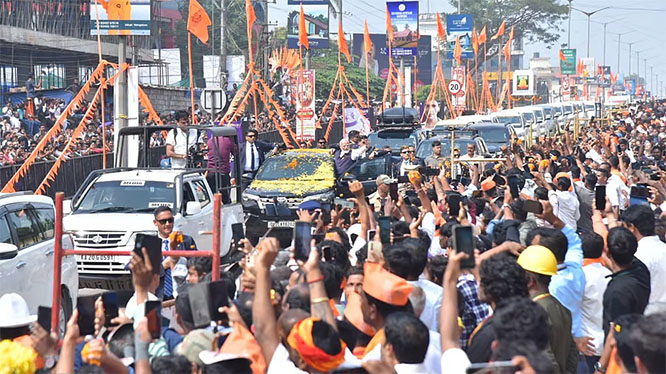
Udupi district transformed into a sea of saffron and celebration on Friday, November 28, as Prime Minister Narendra Modi’s roadshow swept through the coastal temple town. Thousands of residents lined the streets, turning the event into a vibrant public spectacle filled with cheers, flags, and festive energy.

The procession route—from the helipad to the historic Sri Krishna Math—was decked with buntings, saffron flags, and multilayered security barricades. One of the district’s largest-ever security deployments was put in place for the high-profile visit, with over 3,000 police personnel on duty. The arrangement included ten SPs, 27 DSPs, 49 inspectors, 127 sub-inspectors, 232 assistant sub-inspectors, 1,608 constables, and 39 women staff.

Six platoons of the Karnataka State Reserve Police, six Quick Response Teams, bomb detection units, and dog squads were stationed across Udupi. Enhanced surveillance covered Adi Udupi, Bannanje bus stand, and the Sri Krishna Math parking zone, with combing operations carried out along the roadshow corridor.

At the 800-year-old Sri Krishna Math, preparations reached a ceremonial peak. Paryaya Puttige Math seer Sugunendra Teertha Swamiji said the Prime Minister would take part in the Laksha Kantha Geetha Parayana, a mass chanting of the Bhagavad Gita by one lakh devotees, and inaugurate the new Suvarna Teertha Mantapa.

“He will first offer floral tributes to saint-poet Kanakadasa and then unveil the golden covering over the Kanakana Kindi,” the seer said.

The Prime Minister will also receive a Poorna Kumbha welcome and have darshan of Lord Sri Krishna, Mukhyaprana Devaru, and the Suvarna Paduke. Union Minister Pralhad Joshi, Karnataka Governor Thaawarchand Gehlot, Minister Bairathi Suresh, Dharmadhikari D. Veerendra Heggade, and seers from the Ashta Maths are expected to join the ceremony.

Ahead of his arrival, the Prime Minister posted on X that he felt “honoured” to attend the spiritually significant gathering. “This is a special occasion that brings together people from different sections of society for a recital of the Gita. This Matha has a very special significance in our cultural life,” he wrote, noting the institution’s long-standing legacy rooted in the teachings of Sri Madhvacharya.

roadshow2.jpg

Comments

Add new comment

  • Coastaldigest.com reserves the right to delete or block any comments.
  • Coastaldigset.com is not responsible for its readers’ comments.
  • Comments that are abusive, incendiary or irrelevant are strictly prohibited.
  • Please use a genuine email ID and provide your name to avoid reject.
News Network
November 22,2025

gaza.jpg

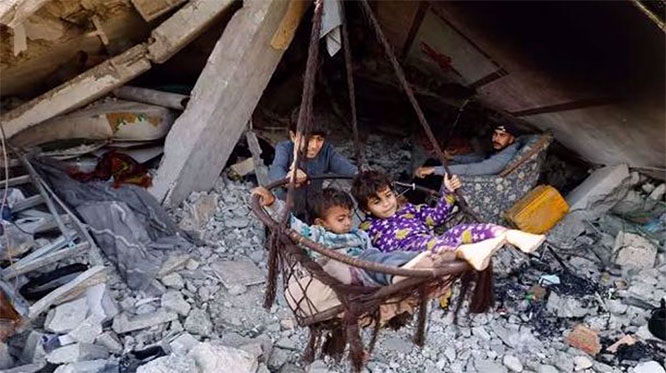
The Israeli regime’s forces have killed two Palestinian children in the Gaza Strip every day since the ceasefire began in early October, UNICEF has warned.

The UN children’s agency said on Friday that Israeli forces continue to attack Palestinians in Gaza even though the agreement was meant to stop the killing.

“Since 11 October, while the ceasefire has been in effect, at least 67 children have been killed in conflict-related incidents in the Gaza Strip. Dozens more have been injured. That is an average of almost two children killed every day since the ceasefire took effect,” UNICEF spokesperson Ricardo Pires said in Geneva, reminding that each number in the statistics represents a child whose life had ended violently.

“These are not statistics,” he said. “Each child had a story, a family, and a future that was stolen from them.”

Data from Palestinian factions, human rights groups, and government bodies recorded since the US-brokered ceasefire deal went into effect on October 10 show that Israeli forces have carried out numerous attacks, each constituting a separate ceasefire violation.

UNICEF teams say they repeatedly continue to witness heart-wrenching scenes of fearful Palestinian children sleeping outdoors with amputated limbs, while others live as orphans in flooded, makeshift shelters.

“I saw this myself in August. There is no safe place for them. The world cannot normalize their suffering,” Pires said, lamenting that the UN could “do a lot more if the aid that is really needed was entering faster.”

The UNICEF spokesperson warned that with the advent of winter, the risks for hundreds of thousands of displaced children will increase.

He warned, “The stakes are incredibly high” for children as winter acts as a threat multiplier, where children have no heating, no insulation, and few blankets. He said respiratory infections rise.

“Too many children have already paid the highest price,” Pires said. “Too many are still paying it, even under a ceasefire. The world promised them it would stop and that we would protect them.”

“Now we must act like it,” the UNICEF spokesperson added.

Since the Israeli regime launched its genocidal war against Palestinians in Gaza in October 2023, it has killed nearly 70,000 people in the territory, most of them women and children, and injured over 170,000 more, while reducing most of the structures in the enclave to rubble.

Comments

Add new comment

  • Coastaldigest.com reserves the right to delete or block any comments.
  • Coastaldigset.com is not responsible for its readers’ comments.
  • Comments that are abusive, incendiary or irrelevant are strictly prohibited.
  • Please use a genuine email ID and provide your name to avoid reject.
Agencies
November 22,2025

indiapak.jpg

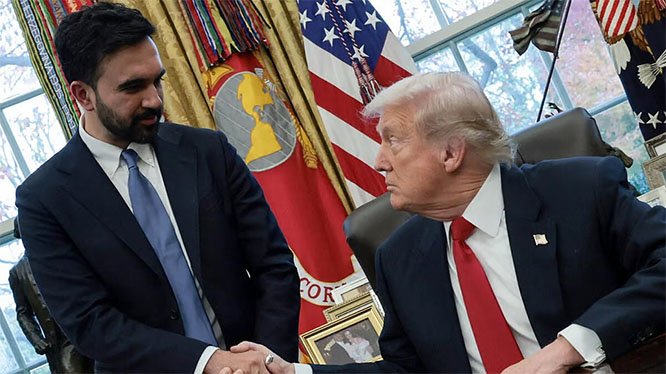
New York/Washington: US President Donald Trump has again claimed to have solved the conflict between India and Pakistan, repeating his assertion during a meeting with New York City Mayor-elect Zohran Mamdani in the Oval Office.

Mamdani flew to Washington DC for his first meeting with Trump in the White House on Friday. Trump said he “enjoyed” the meeting, which he described as “great.”

During remarks in the Oval Office, with Mamdani standing next to him, Trump repeated his claim that he solved the May conflict between India and Pakistan.

"I did eight peace deals of countries, including India and Pakistan,” he said.

On Wednesday, Trump had said he threatened to put 350 per cent tariffs on India and Pakistan if they did not end their conflict, repeating his claim that he solved the fighting between the nuclear-armed neighbours and that Prime Minister Narendra Modi had called him to say “we're not going to go to war.”

Since May 10, when Trump announced on social media that India and Pakistan had agreed to a “full and immediate” ceasefire after a “long night” of talks mediated by Washington, he has repeated his claim over 60 times that he “helped settle” the tensions between India and Pakistan.

India has consistently denied any third-party intervention. India launched Operation Sindoor on May 7, targeting terror infrastructure in Pakistan and Pakistan-occupied Kashmir in retaliation for the April 22 Pahalgam attack that killed 26 civilians. India and Pakistan reached an understanding on May 10 to end the conflict after four days of intense cross-border drone and missile strikes.

Mamdani emerged victorious in the closely-watched battle for New York City Mayor, becoming the first South Asian and Muslim to be elected to sit at the helm of the largest city in the US.

He had been the front-runner in the NYC Mayoral election for months and defeated Republican nominee Curtis Sliwa and political heavyweight former New York State Governor Andrew Cuomo, who ran as an independent candidate and was officially endorsed by Trump just hours before the elections.

Indian-descent Mamdani is the son of renowned filmmaker Mira Nair and Columbia University professor Mahmood Mamdani. He was born and raised in Kampala, Uganda and moved to New York City with his family when he was 7. Mamdani became a naturalised US citizen only recently, in 2018.

Comments

Add new comment

  • Coastaldigest.com reserves the right to delete or block any comments.
  • Coastaldigset.com is not responsible for its readers’ comments.
  • Comments that are abusive, incendiary or irrelevant are strictly prohibited.
  • Please use a genuine email ID and provide your name to avoid reject.