ISRO's big leap, embarks on launching Indian space shuttle

May 15, 2016

Thiruvananthapuram, May 15: For the very first time in its history, the Indian Space Research Organisation (ISRO) is actually growing wings as it embarks this month on a never before space flight that would make history.

space
The Indian space agency is all set to undertake the maiden launch of its very own indigenously version of a 'space shuttle', a fully made-in-India effort.

Today, a sleek winged body almost the weight and size of a sports utility vehicle (SUV) is being given final touches at Sriharikota awaiting the final countdown.

Yes, the big powers abandoned the idea of a winged reusable launch vehicle but India's frugal engineers believe the solution to reducing cost of launching satellites into orbit is to recycle the rocket or make it reusable. Scientists at ISRO believe that they could reduce the cost of launching stuff into space by as much as 10 times if reusable technology succeeds, bringing it down to USD 2,000 per kg.

Very soon and if all goes well possibly before the monsoon sets in, India's space port at Sriharikota on the coast of the Bay of Bengal in Andhra Pradesh will witness the launch of the indigenously made Reusable Launch Vehicle - Technology Demonstrator (RLV-TD).

This will be the first time ISRO will launch a space craft, which actually has delta wings and after launch it will be glided back onto a virtual runway in the Bay of Bengal.

The RLV-TD is unlikely to be recovered from sea during this experiment as it is expected that the vehicle will disintegrate on impact with water since it is not designed to float.

The purpose of the experiment is not to see it float but to glide and navigate from a velocity five times higher than the speed of sound onto a designated virtual runway in the Bay of Bengal some 500 km from the coast.

Very similar in its looks to the American space shuttle, the RLV-TD being experimented is a scale model which is almost 6 times smaller than the final version.

K Sivan, director of the Vikram Sarabhai Space Centre, Thiruvananthapuram, says, "These are just the first baby steps towards the big Hanuman leap."

The final version will take at least 10-15 years to get ready since designing a human rated reusable rocket is no kid stuff.

The only countries that have attempted operational flights of a space shuttle are America, which flew its space shuttle 135 times and then retired it in 2011 and since then it lost its capacity to send astronauts in space on American made rockets. The Russians made only a single space shuttle and called it Buran it flew into space just once in 1989.

After that the French and Japanese have made some experimental flights and from available literature it seems the Chinese have never attempted a space shuttle.

India embarked on making its own version of the space shuttle by thinking about it more than 15 years ago, but work in earnest it seems started only five years ago when a dedicated team of engineers and scientists plunged into making RLV-TD a reality. The 6.5-m-long 'aeroplane'-like spacecraft will weigh 1.75 tons and will be hoisted into the atmosphere on a special rocket booster.

The special booster or the first stage is powered using a solid fuel and it will hoist the RLV-TD experiment to about 70 km into the atmosphere from where the descent will begin. During the descent, phase which is essentially a glider like event small thrusters will help the vehicle to be navigated on to the exact spot where it is supposed to land.

Ships, satellites and radars will monitor its descent. The current experimental version has no undercarriage so it cannot be brought back onto land and India lacks a runway that is longer than 5 km in length to accommodate such a landing.

Some private billionaires with very active support from NASA have been trying to master vertical lift-off and vertical landing as part of trying to recycle rocket engines.

SpaceX is a company owned by South Africa-born billionaire Elon Musk which became big through the Internet economy and has been able to land its Falcon-9 rocket onto a sea-based platform.

On the same lines the company Blue Origin owned by Jeff Bezos landed its New Shepard rocket on land in Texas. Bezos, another billionaire, made it big by building the Amazon online trading platform.

In fact NASA chief General Charles Bolden, when he was in New Delhi recently, said the competition has shifted to a fight among billionaires to reduce the cost of launching satellites into space.

The making of the Indian space shuttle or RLV-TD has taken 5 years and the government has invested Rs 95 crore in the project. This flight will test the capability of the vehicle to survive a re-entry at speeds higher than that of sound so it is called a hyper sonic experiment (HEX).

Later, in the next few flights the RLV will be subjected to a landing experiment and another return flight experiment. Once these are successful, ISRO will then decide on what should be the final configuration of the Reusable Launch Vehicle.

One key technology the scientists at VSSC had to develop was to make materials that can withstand the very very high temperatures that the exterior of the vehicle is faced with as it comes back into the dense atmosphere after its journey through near vacuum in space.

The friction from the air turns the exterior like a red-hot iron plate. To be able to withstand these 5000-7000 degrees Celsius temperature the scientists have developed very lightweight heat resistant silica tiles that are plastered on the underbelly of the so-called Indian space plane.

The nose cone takes the brunt of the high temperatures and is made up of a special carbon-carbon composite that can withstand high temperature. These special materials are necessary to protect the insides of the vehicle where the temperature should never go higher than 50 degrees Celsius.

In fact, it is these heat resistant tiles and thermal coating that failed on the American Space Shuttle, Columbia that resulted in the death of Indian born American astronaut Kalpana Chawla's in 2003. Consequently, ISRO has laid a lot of emphasis on the thermal management of the RLV.

After the successful deployment of the swadeshi Global Positioning System through NAVIC or Navigation with Indian Constellation, ISRO is again reaching for the stars.

Technology development is tough and space fairing is certainly not for the faint hearted and the 600 scientists and engineers who have toiled hard in making the RLV-TD a reality will be watching with baited breath if their baby succeeds.

Shyam Mohan, the project director from VSSC for this landmark experiment, says his team has spent sleepless nights in perfecting this new rocket but adds that space technologies are inherently risky.

So will ISRO succeed where other super powers have failed, Indians certainly hope for the best, as success has become a habit at ISRO.

May be sooner than later the RLV should be named the 'Kalamyaan' after India's legendary former President APJ Abdul Kalam, an aeronautics engineer par excellence who made top class rockets and dreamt big of India being propelled to become a developed country.

For ISRO, no dream is too big as it carefully forges ahead to have a fully 'swadeshi space shuttle'.


Comments

Add new comment

  • Coastaldigest.com reserves the right to delete or block any comments.
  • Coastaldigset.com is not responsible for its readers’ comments.
  • Comments that are abusive, incendiary or irrelevant are strictly prohibited.
  • Please use a genuine email ID and provide your name to avoid reject.
News Network
December 16,2025

jordan.jpg

Prime Minister Narendra Modi on Monday held talks with Jordan’s King Abdullah II in Amman, during which the two leaders discussed ways to further strengthen bilateral relations, with the Prime Minister outlining an eight-point vision covering key areas of cooperation.

Describing the meeting as “productive”, PM Modi said he shared a roadmap focused on trade and economy, fertilisers and agriculture, information technology, healthcare, infrastructure, critical and strategic minerals, civil nuclear cooperation, and people-to-people ties.

In a post on social media platform X, the Prime Minister praised King Abdullah II’s personal commitment to advancing India–Jordan relations, particularly as both countries mark the 75th anniversary of the establishment of diplomatic ties this year.

“Held productive discussions with His Majesty King Abdullah II in Amman. His personal commitment towards vibrant India-Jordan relations is noteworthy. This year, we are celebrating the 75th anniversary of our bilateral diplomatic relations,” PM Modi said.

The meeting took place at the Al Husseiniya Palace, where the two leaders also exchanged views on regional and global issues of mutual interest. According to the Ministry of External Affairs (MEA), both sides agreed to further deepen cooperation in areas including trade and investment, defence and security, counter-terrorism and de-radicalisation, fertilisers and agriculture, infrastructure, renewable energy, tourism, and heritage.

The MEA said both leaders reaffirmed their united stand against terrorism.

PM Modi arrived in Amman earlier on Monday and was received by Jordanian Prime Minister Jafar Hassan, who accorded him a formal welcome. Following the talks, King Abdullah II hosted a banquet dinner in honour of the Prime Minister, reflecting the warmth of bilateral ties.

Jordan is the first leg of PM Modi’s three-nation tour. From Amman, the Prime Minister will travel to Ethiopia at the invitation of Prime Minister Abiy Ahmed Ali, marking his first official visit to the African nation. The tour will conclude with a visit to Oman.

Comments

Add new comment

  • Coastaldigest.com reserves the right to delete or block any comments.
  • Coastaldigset.com is not responsible for its readers’ comments.
  • Comments that are abusive, incendiary or irrelevant are strictly prohibited.
  • Please use a genuine email ID and provide your name to avoid reject.
News Network
December 20,2025

train.jpg

At least seven elephants were killed and one calf injured after a herd collided with the Sairang-New Delhi Rajdhani Express in Assam's Hojai on Saturday morning, leading to disruption of rail services. 

The Sairang-New Delhi Rajdhani Express struck a herd of elephants, resulting in the derailment of the locomotive and five coaches. No passenger casualties or injuries were reported, officials said.

The New Delhi-bound train met with the accident around 2.17 am, PTI reported. The Sairang-New Delhi Rajdhani Express connects Mizoram's Sairang (near Aizawl) to Anand Vihar Terminal (Delhi). 

Railway has issued helpline numbers at the Guwahati Railway Station:-

•    0361-2731621
•    0361-2731622
•    0361-2731623

The accident site is located about 126 km from Guwahati. Following the incident, accident relief trains and railway officials rushed to the spot to initiate rescue operations.

Train Services Disrupted

Sources said that due to the derailment and elephant body parts scattered on the tracks, train services to Upper Assam and other parts of the Northeast were affected.

Passengers from the affected coaches were temporarily accommodated in vacant berths available in other coaches of the train. Once the train reaches Guwahati, additional coaches will be attached to accommodate all passengers, after which the train will resume its onward journey.

The incident occurred at a location that is not a designated elephant corridor. The loco pilot, upon spotting the herd on the tracks, applied emergency brakes. Despite this, the elephants dashed into the train, leading to the collision and derailment.

Last month, an elephant was killed after being hit by a train in Dhupguri in West Bengal's Jalpaiguri district. The incident took place on November 30. 

The adult elephant was killed on the spot, and a calf was discovered lying injured beside the tracks. 

Over 70 Elephants Killed In Train Collisions Over Last 5 Years

At least 79 elephants have died in train collisions across the country in the last five years, the Environment Ministry had informed Parliament in August.

In a written reply in the Lok Sabha, Minister of State for Environment Kirti Vardhan Singh had said the figure is based on reports from state governments and Union Territory administrations for the period 2020-21 to 2024-25.

He said that the ministry does not maintain consolidated data on the deaths of other wild animals on railway tracks, including in designated elephant corridors.

Singh confirmed that three elephants, including a mother and her calf, were killed on July 18 this year after being hit by a speeding express train on the Kharagpur-Tatanagar section in West Bengal's Paschim Midnapore district. The incident took place near Banstala between Jhargram and Banstala stations.

The minister said several measures have been taken jointly by the Environment Ministry and the Railways to prevent such accidents.

These include imposing speed restrictions in elephant habitats, pilot projects such as seismic sensor-based detection of elephants near tracks and construction of underpasses, ramps and fencing at vulnerable points.

The Wildlife Institute of India, in consultation with the ministry and other stakeholders, has also issued guidelines titled 'Eco-friendly Measures to Mitigate Impacts of Linear Infrastructure' to help agencies design railways and other projects in ways that reduce human-animal conflicts.

Singh added that capacity-building workshops were conducted for railway officials at the Wildlife Institute of India in 2023 and 2024 to raise awareness on elephant conservation and protection.

A detailed report titled 'Suggested Measures to Mitigate Elephant & Other Wildlife Train Collisions on Vulnerable Railway Stretches in India' had also been prepared after surveys across 127 railway stretches covering 3,452 km.

Of these, 77 stretches spanning 1,965 km in 14 states were prioritised for mitigation, with site-specific interventions suggested. 

Comments

Add new comment

  • Coastaldigest.com reserves the right to delete or block any comments.
  • Coastaldigset.com is not responsible for its readers’ comments.
  • Comments that are abusive, incendiary or irrelevant are strictly prohibited.
  • Please use a genuine email ID and provide your name to avoid reject.
News Network
December 22,2025

bhagavat.jpg

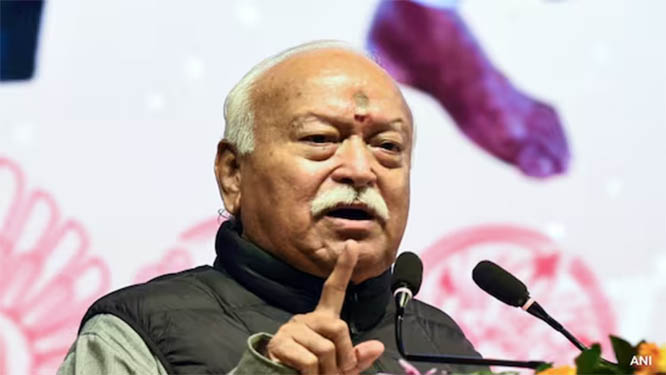
Kolkata: Stressing that India is a "Hindu nation," Rashtriya Swayamsevak Sangh (RSS) Chief Mohan Bhagwat on Sunday said that no constitutional approval is needed as it is the "truth".

Addressing an event marking 100 years of the RSS, Bhagwat said that India is, and will remain, a Hindu nation until Indian culture is appreciated in the country.

"The Sun rises in the east; we don't know since when this has been happening. So, do we need constitutional approval for that, too? Hindustan is a Hindu nation. Whoever considers India their motherland appreciates Indian culture, as long as there is even one person alive on the land of Hindustan who believes in and cherishes the glory of Indian ancestors, India is a Hindu nation. This is the ideology of the Sangh," he said at the '100 Vyakhyan Mala' program of RSS in Kolkata.

"If Parliament ever decides to amend the Constitution and add that word, whether they do it or not, it's fine. We don't care about that word because we are Hindus, and our nation is a Hindu nation. That is the truth. The caste system based on birth is not the hallmark of Hindutva," he added.

RSS has always argued that India is a "Hindu Nation," given the culture and majority's affiliations to Hinduism. However, 'secular' was not originally part of the Preamble of the Constitution, but it was added along with the word 'socialist' by the Constitution (42nd Amendment) Act, 1976, during the Emergency imposed by then Prime Minister Indira Gandhi.

Bhagwat also urged people to visit the organisation's offices and 'shakhas' to understand its work, so that what he dubbed as the “false perception” of the organisation as anti-Muslim can be dispelled!

Bhagwat said that people have understood that the organisation advocates for the protection of Hindus, and are "staunch nationalists," but not anti-muslim.

"If there is a perception that we are anti-Muslim, then, as I said, the RSS work is transparent. You can come anytime and see for yourself, and if you see anything like that happening, then you keep your views, and if you don't see it, then you change your views. There is a lot to understand (about RSS), but if you don't want to understand, then no one can change your mind," Bhagwat said.

He said, but anyone unwilling to learn cannot be helped.

"After seeing, people have said that you are staunch nationalists. You organise Hindus, and you advocate for the protection of Hindus. But you are not anti-Muslim. Many people have accepted this, and those who want to know more should come and see the RSS for themselves," he said.

Comments

Add new comment

  • Coastaldigest.com reserves the right to delete or block any comments.
  • Coastaldigset.com is not responsible for its readers’ comments.
  • Comments that are abusive, incendiary or irrelevant are strictly prohibited.
  • Please use a genuine email ID and provide your name to avoid reject.